
Reviewed · WALKING TOURS
Workers Cottages of Oldtown Triangle Walking Tour
Old Town looks different when you know what to spot. This walking tour in Chicago focuses on workers cottages and landmark buildings from about 150 years ago, then connects the dots to the city’s growth before and after the Great Chicago Fire.
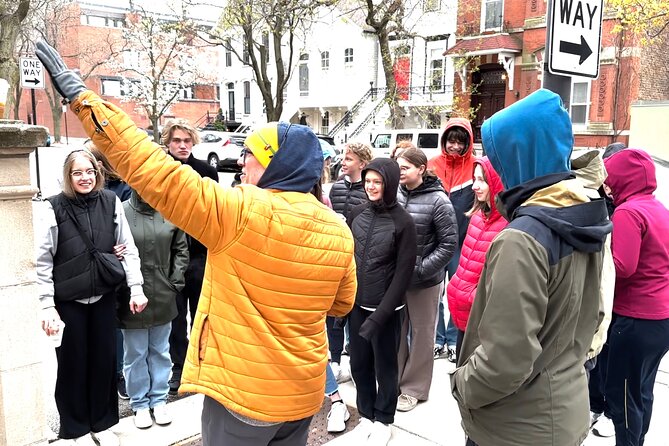
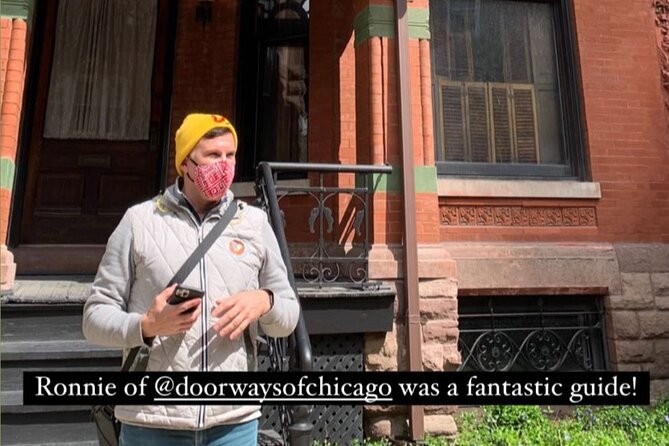
I love how small-group size keeps the pace easy and questions quick. I also love the detailed architecture storytelling, from cottage designs to specific streets and builders, including guide Ronnie’s enthusiasm and professional way of teaching.
One thing to consider is that this is a walking tour with moderate fitness needs, and it depends on good weather to run.
In This Review
- Key things that make this tour worth your time
- Old Town Triangle is Chicago history you can actually see
- Price and time, what $45 buys you
- Meeting at Eugenie Street and the small-group pacing
- The workers cottages on Old Town Triangle, 40 to 50 homes to spot
- West Eugenie Street rowhouses, Harald Hansen’s rare five-house set
- North Crilly Court, famous residents and a National Landmark property
- St. Michael House of Prayer, a church with a tallest-building story
- Twin Anchors, ribs, and the Frank Sinatra connection
- Wacker Drive homes, then early Louis Sullivan rowhouses
- The last farmhouse, when Old Town was still outside city limits
- Who should book this Old Town Triangle cottages tour
- Practical tips to make the most of the walk
- Should you book this tour or skip it?
- FAQ
- How long is the Workers Cottages of Oldtown Triangle Walking Tour?
- What is the price per person?
- How many people are on the tour?
- Where do I meet the guide?
- What time does the tour start?
- Is a mobile ticket used?
- What if the weather is poor?
Key things that make this tour worth your time
- Up to 8 people, so you are not lost in a crowd when the guide points out details on facades
- A true cottage-focused route, with about 40 to 50 workers cottages shown up close
- Street-by-street architectural variety, including rare rows of Queen Anne and Second Empire houses
- Landmark moments built into the walk, like St. Michael House of Prayer and a National Landmark property
- A guide like Ronnie, clearly passionate, organized, and tuned in to what you want to understand
A few more ways to spend a day in Chicago
Old Town Triangle is Chicago history you can actually see
I like history most when it is not trapped in a museum room. Old Town Triangle is one of those places where the buildings do the talking, especially because the neighborhood survived the Great Chicago Fire of 1871. You get a feel for what Chicago looked like before that event reshaped so much of the city.
The tour concentrates on workers cottages, which is exactly what makes it interesting. Most architecture walks focus on big mansions. Here, you see the homes that helped regular workers and families survive and build their lives, and you notice the design choices that repeat from street to street.
And because the group is limited to eight, you can pause where it matters. That matters with cottages, because the differences are often in the small stuff: the arrangement, roof lines, and how certain rows create a neighborhood look.
Price and time, what $45 buys you
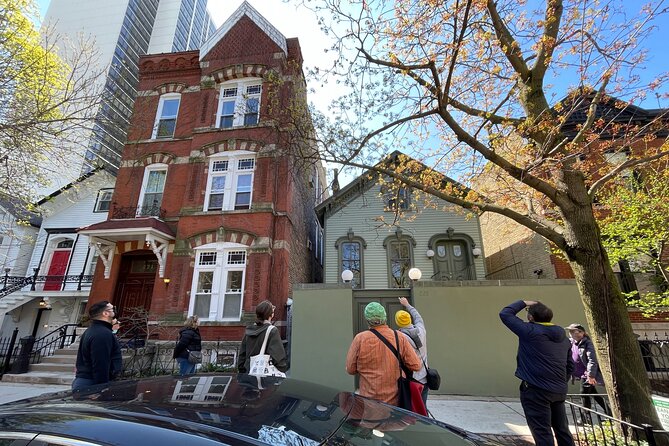
At $45 per person, you are paying for more than a stroll. You are paying for a focused guide who can explain why these buildings look the way they do, including who designed or shaped them and when. Over about 1 hour 45 minutes, that adds up to a lot of interpretation per block.
The value is strongest if you care about architecture and neighborhood history, not just photo stops. The tour is structured around distinct streets and notable buildings, so you come away with a mental map of Old Town Triangle. It also helps that the guide route is designed for walking, so you are not spending half your time figuring out where to go next.
If you are looking for a long, sit-down style experience, this may feel short. But if you want a compact, high-impact introduction that still goes detail-first, this fits well.
Meeting at Eugenie Street and the small-group pacing
You meet at 164 W Eugenie St, and the tour ends at 216 W Menomonee St. That end point is only a few blocks from the start area, so you are not left shuffling around afterward.
The start time is 11:00 am, and you get a mobile ticket. That is a simple, modern touch for a tour built around old buildings. Service animals are allowed, and the route is near public transportation, which makes the whole plan easier if you are mixing the walk with other parts of your day.
The physical requirement is described as moderate. Translation: plan for steady walking and time outdoors. If you prefer a very relaxed, slow stroll with no breaks, this may feel like a brisk paced look at houses. On the flip side, because the group is small, the guide can slow down when you stop noticing details.
The workers cottages on Old Town Triangle, 40 to 50 homes to spot
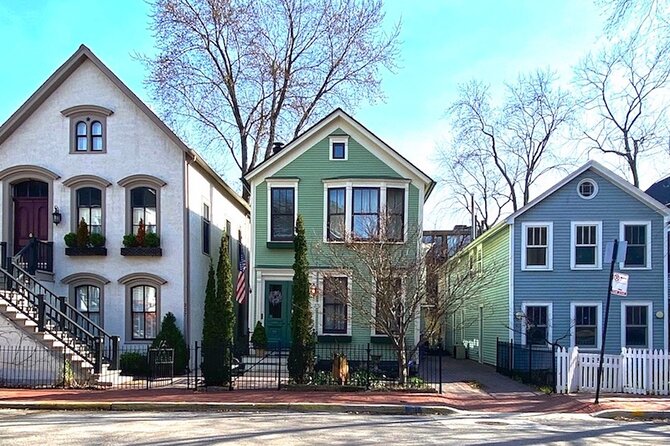
This is the heart of the experience. On the first stretch, you will see about 40 to 50 workers cottages, showcasing different styles and how they were constructed in the mid-1800s. That alone is a big reason to book, because cottages tend to be easy to walk past without realizing they are telling a story.
One of the more memorable parts is how the walk highlights unusual concentrations. You are shown rare situations where several cottages sit in a row, and even an entire block where cottages appear on both sides of the street. That helps you picture what the neighborhood felt like in the late 1800s and before the 1871 fire changed so much.
What I like about this opening segment is that it teaches you to look. Once you understand the layout and why certain buildings sit close together, the rest of Chicago starts to make more sense. These cottages are not random. They represent a practical way of building housing, and they show how design evolved even at the neighborhood level.
A practical note: cottages are made for close viewing. Bring your eyes, not just your phone. If you enjoy comparing roof shapes and frontage details, this segment rewards you fast.
West Eugenie Street rowhouses, Harald Hansen’s rare five-house set
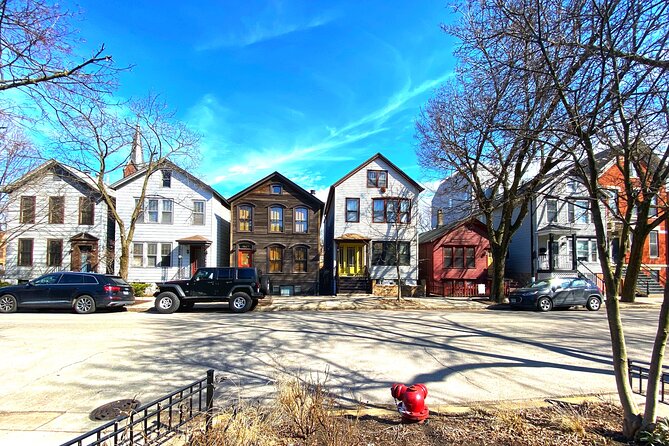
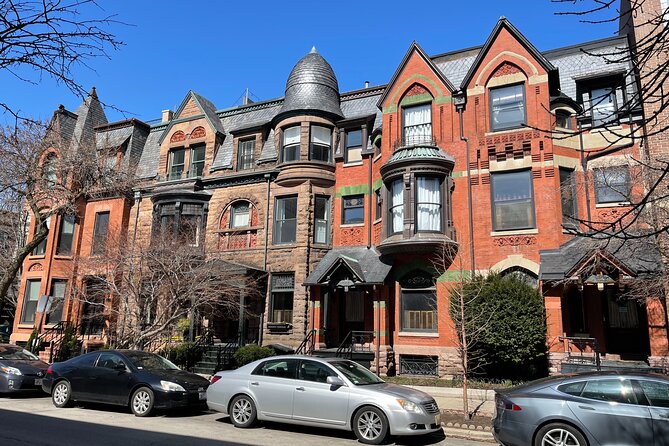
After the cottage concentration, the tour shifts to a more polished, showier block on West Eugenie Street. Here you focus on rowhouses designed by Harald Hansen, built in 1886.
The highlight is a rare variegated row of five Queen Anne and Second Empire style houses. Rare is the key word. Even if you have seen Queen Anne architecture before, you usually do not see it packed into a single dramatic row like this. It gives you a quick visual lesson in how styles can mix while still reading as a coordinated streetscape.
You also get background that ties this spot to the city’s early growth. That matters because architecture does not exist in a vacuum. Seeing these houses in their specific location helps you connect how early Chicago developed, not just what it built.
Beyond the skyline, the neighborhoods have their own tours and their own stories.
- Chicago Architecture River Cruise★ 5.0 · 15,756 reviews
- Chicago River 90-Minute Architecture Tour★ 4.5 · 9,629 reviews
- Chicago River: 1.5-Hour Guided Architecture Cruise★ 4.8 · 8,046 reviews
- Chicago Architecture Center River Cruise aboard First Lady★ 5.0 · 5,536 reviews
- Chicago: Willis Tower Skydeck and The Ledge Ticket★ 4.6 · 4,350 reviews
North Crilly Court, famous residents and a National Landmark property
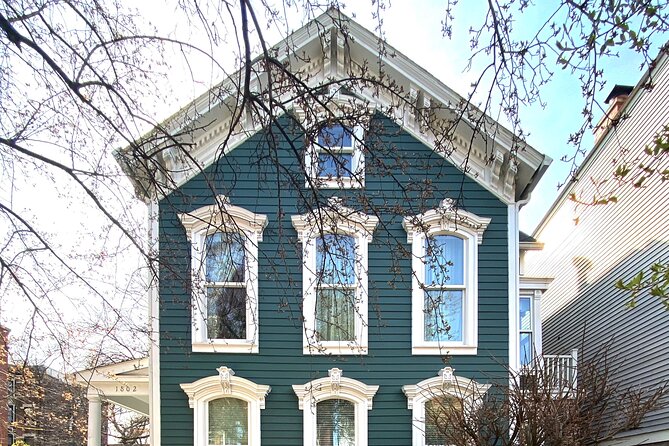
On North Crilly Court, the tour leans into people as much as buildings. You learn about notable individuals who lived here and you get a sense of why this pocket mattered.
You also see a property that is designated as a National Landmark. That single detail can change how you see the street. Instead of thinking of it as a charming side street, you start thinking of it as a preserved piece of a bigger story.
This stop also gives your brain a breather. After cottage and rowhouse viewing, shifting to “who lived here” is a nice reset. It also helps you remember facts, because names and anecdotes stick better than only dates.
St. Michael House of Prayer, a church with a tallest-building story
Next you reach St. Michael House of Prayer, the Roman Catholic St. Michael Church of Old Town. The church complex was built between 1866 and 1869, and it has a standout claim: it was the tallest building in the United States for 16 years.
That is the kind of fact that makes you look twice at a building. Even if you are not thinking about engineering or skyscrapers, the idea of what “tallest” meant in that era puts the architecture in context. The tour uses the height claim to show how ambitious Chicago was becoming, long before the skyline stereotypes you know today.
A practical consideration here: churches and landmark buildings can change how the light hits facades. If you like photos, this is where you may want to slow down. If you prefer a quieter moment, you can also just stand and take it in since the stop is scheduled longer than the smallest house peeks.
Twin Anchors, ribs, and the Frank Sinatra connection
Not every great architecture tour includes a food-and-celebrity tie-in, and this one does. You stop by Twin Anchors Restaurant & Tavern, described as one of the oldest restaurants in Chicago.
The key details: it was founded in 1932, and it has long been known for tender barbequed baby-back ribs. It is also noted as a favorite haunt of Frank Sinatra for many years.
This stop works even if you do not plan to eat. It grounds the neighborhood story in something modern enough to feel alive. You are seeing the way a neighborhood keeps evolving, but also keeps its character, especially when a local institution lasts for decades.
If you want to turn your walk into a full Old Town Triangle day, this is a strong cue to return later. The tour gives you the historical hook, then lets you decide how hungry you are.
Wacker Drive homes, then early Louis Sullivan rowhouses
The tour brings you back to Old Town Triangle for a quick run of big names and design stories.
First, you see the incredible homes of Charles and Frederick Wacker on what is referred to as Wacker Drive. The guide also explains how these father and son were instrumental in early Chicago design. Even though this segment is brief, it helps you understand that the neighborhood was part of the city’s planning and ambitions, not only its housing.
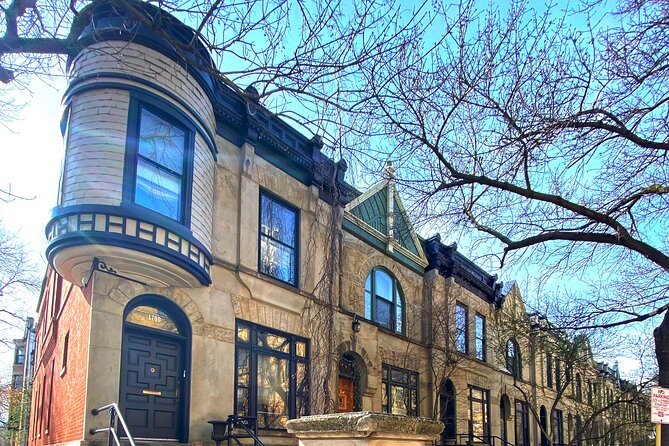
Then you get Ann Halsted Rowhouses, tied to architect Louis Sullivan. You learn these were designed when Sullivan was in his early 20s, before he was widely known. That detail is extra satisfying if you like architecture history, because it frames early work as something that still mattered and still shaped streetscapes.
This two-part sequence is excellent because it offers contrast. After cottages and humble housing examples, you see how the neighborhood also connects to major figures and bigger design influence.
The last farmhouse, when Old Town was still outside city limits
The final image you are left with is one of the most evocative: the tour shows the only remaining farmhouse from when the Old Town area was still farmland, outside the city limits.
That stop is short, but it does a lot of work. It gives you a timeline you can picture. You start with farmland, then you see how the area fills in with cottages and rowhouses, and you understand how Chicago grew outward before it became a dense city core.
If you like a satisfying end point, this is it. It helps your brain close the loop on the tour’s big theme: Chicago did not just rebuild after 1871. It had deeper roots and multiple phases of growth, and this neighborhood shows them close up.
Who should book this Old Town Triangle cottages tour
This is a great choice if you:
- want a compact walking tour with strong architecture focus
- enjoy learning why buildings look the way they do, including who designed them and when
- like neighborhood history that connects to real places, not just broad timelines
- prefer a small group so the guide can spend a bit more time with your questions
It may not be the best fit if you need a mostly indoors tour, or if you struggle with standing and walking for about two hours outdoors. Also note the tour requires good weather, so plan for flexibility.
Practical tips to make the most of the walk
A few things will help you enjoy this more:
- Wear shoes you like on sidewalks and curb cuts, since the whole experience is built around walking from street to street.
- Bring a charged phone if you want photos, but remember the cottages are often best when you look with your eyes first.
- If you care about design, prepare a few questions in your head. With a group capped at eight, your questions are more likely to get direct answers.
- If you are doing this as part of a longer day in Chicago, build in buffer time at the end since the route ends a few blocks from the start.
Should you book this tour or skip it?
I would book it if you want a high-value Old Town Triangle overview that goes beyond pretty facades. For $45 you get a structured path through cottages, rare rowhouses, and landmark buildings, plus a guide who clearly knows how to explain what you are seeing.
Skip it only if walking on a set schedule feels like a hassle, or if you are expecting a long, museum-style experience. This is a neighborhood tour with a focused arc, and it works best when you treat it like a field class, not just a sightseeing loop.
If your ideal Chicago day includes Old Town streets, architecture details, and the story of how ordinary homes shaped the city’s look, this one is a strong match.
FAQ
How long is the Workers Cottages of Oldtown Triangle Walking Tour?
The tour runs for about 1 hour 45 minutes.
What is the price per person?
The price is $45.00 per person.
How many people are on the tour?
The tour has a maximum of 8 travelers.
Where do I meet the guide?
You meet at 164 W Eugenie St, Chicago, IL 60614.
What time does the tour start?
The tour start time is 11:00 am.
Is a mobile ticket used?
Yes, the tour uses a mobile ticket.
What if the weather is poor?
The experience requires good weather. If it is canceled due to poor weather, you are offered a different date or a full refund.
Just Added



Walking Tours, compared.

Chicago Favorites Ultimate Food and Walking Tour
Read our review →
Chicago in a Day: Food, History & Architecture Walking Tour
Read our review →
Chicago’s Secret Interiors Architectural Walking Tour
Read our review →
Browse the lists this tour appears in