
Reviewed · ARCHITECTURE TOURS
Chicago: Secret Interiors Architecture Walking Tour
Chicago can be a maze, but the Loop has a secret rhythm. This 2 hour architecture walk focuses on what you usually miss, the interior craftsmanship and the design choices that made Chicago a global model. I love how the route mixes famous facades with real access into standout spaces, so you connect the skyline to the rooms people actually walked into.
I also like the way the guide explains the why behind the wow, from lighting tricks to structural problem solving. One possible drawback is the pace of a downtown walk and the fact that some stops involve stairs, so plan for uneven footing and take breaks when you need them.
Bundle up and bring good shoes. Most of the experience is outdoors, and the tour swaps stops on Sundays since the Rookery is closed that day.
In This Review
- Key reasons this tour works so well
- Secret interiors in the Loop: what you are really buying for $35
- Union Station, the Great Hall meeting point, and why the start matters
- South La Salle Street: the photo stop that turns facades into clues
- Rookery Building: why this stop feels like a secret for a reason
- Field Building and Marquette Building: skyscraper design explained room by room
- Palmer House and the Cultural Center: two very different interiors, same design thinking
- Marshall Field and Company Building: a fitting end, and a reason to keep looking down
- The guide is the real engine: what to expect from the commentary
- Weather, shoes, and pacing: the practical stuff that decides whether you enjoy it
- Value check: is this better than the river boat version, or a perfect companion?
- Who should book this Secret Interiors tour
- Should you book it?
Key reasons this tour works so well
- Union Station launch point in the Great Hall, under the Clinton Street sign, so you start oriented.
- Real interior access in major Loop buildings, not just quick peeks from the sidewalk.
- Chicago Loop stories tied to design, including the ambitions and personalities of the Gilded Age through the Roaring Twenties.
- Design details you can spot after the tour, especially ornament, materials, and interior layout choices.
- Engineers and architects get credit, with explanations of illumination and structure.
- Top guides vary, but the style stays strong, with repeat high marks for guides like Grant, Angel, Talia, Annie, Matthew, and others.
Chicago's skyline, explained block by block
Secret interiors in the Loop: what you are really buying for $35
For $35, you are not just paying for a walk. You are paying for someone to translate Chicago architecture from big and pretty into specific and understandable. In two hours, you get a route built around interiors like domes, shimmering mosaic type details, and elaborate craftsmanship, plus a clear link between those details and the bigger story of skyscrapers and modern design.
This tour also has real momentum behind it. It carries a 4.9 rating across nearly 500 reviews, which usually means the guide experience lands consistently, not just the building list.
The fine print to keep in mind is that you are walking downtown for about two hours. Some days are slower, some faster, and winter can feel colder since the group is largely outside. If you want low walking and minimal stairs, you might find a different style tour more comfortable.
Union Station, the Great Hall meeting point, and why the start matters
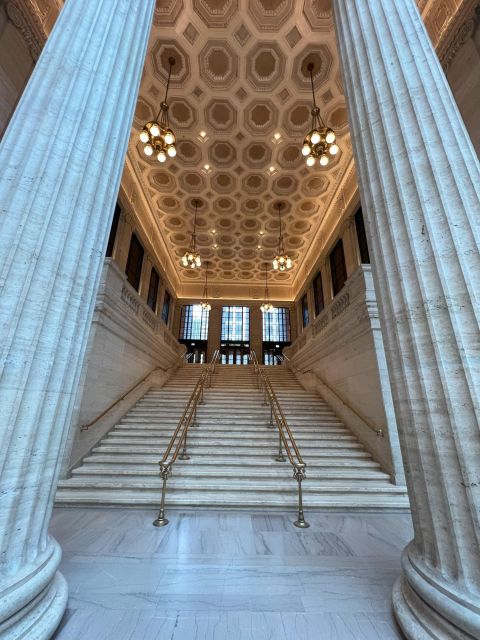
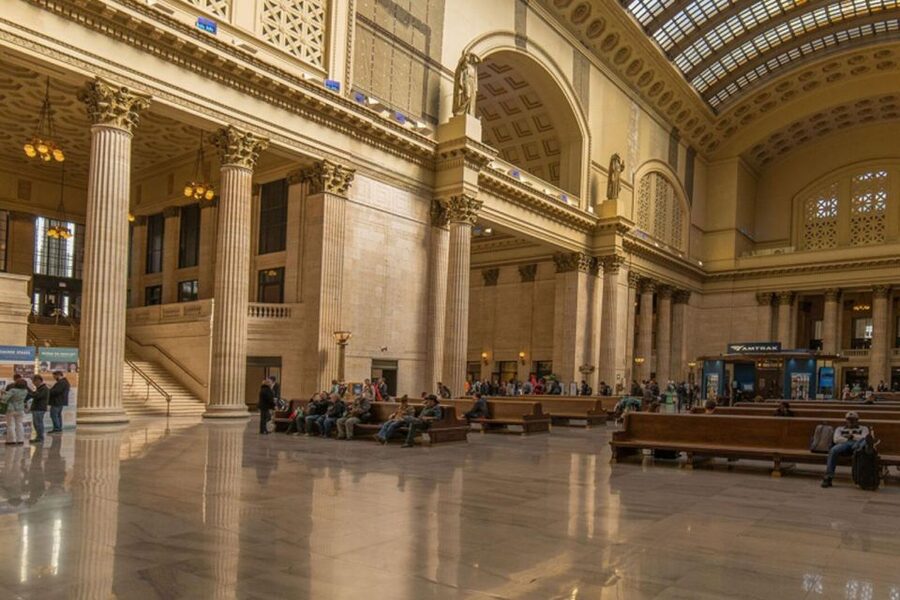
The tour starts inside Union Station at the Great Hall, under the Clinton Street sign. That is a smart setup for first timers because you are starting in a landmark that already sets the tone. Instead of wandering, you meet your guide, get the basic framing for what to look for, and then head into the Loop.
From there, you build a mental map fast. You go from train station grandeur to downtown density, and the guide uses that shift to explain how Chicago became a place where building interiors mattered, not just the street view.
Practical tip: plan to arrive a few minutes early and stand where the sign is easy to spot. Union Station is busy, so being early helps you avoid stress.
South La Salle Street: the photo stop that turns facades into clues
The tour includes South La Salle Street as an early photo stop and guided segment. This part is valuable because it teaches you how to read the Loop’s design logic before you step into the interiors.
You are looking for details that do not scream from the sidewalk, but show up when someone points them out. Think about how ornament relates to the building’s purpose, how entrances signal status and function, and how urban architecture carried its identity upward as Chicago went vertical.
A small drawback: photo stops can feel quick if you are hoping for long pauses for pictures. If you want lots of time with your camera, come ready with a few must-shots in mind so you can grab them quickly when the guide gives you the angle.
Rookery Building: why this stop feels like a secret for a reason
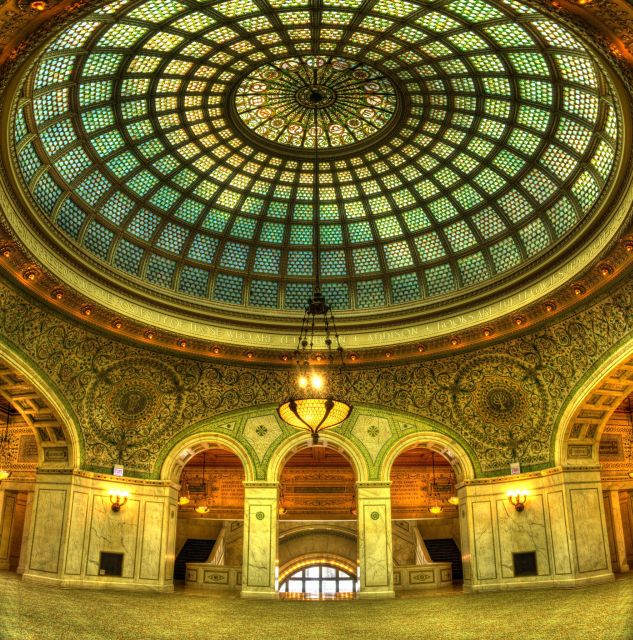
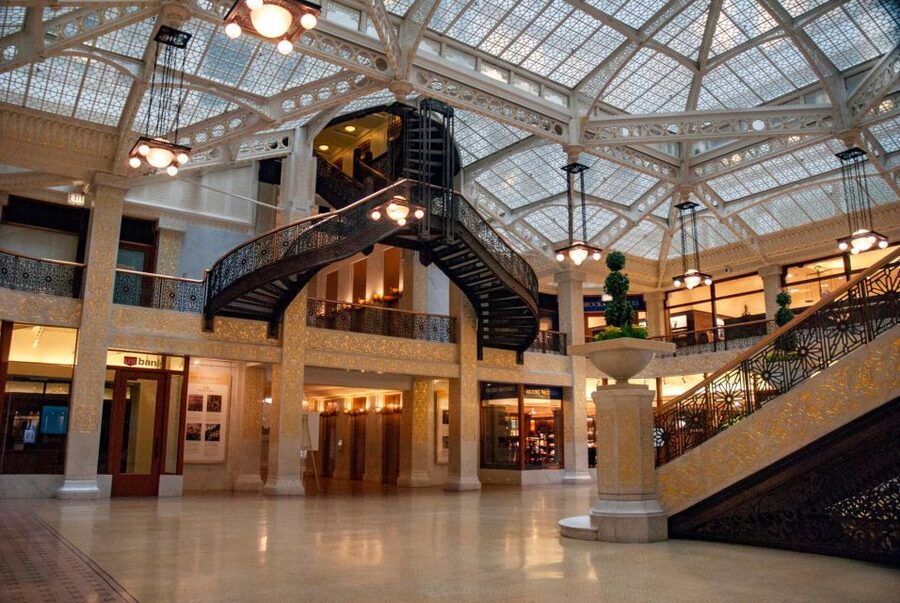
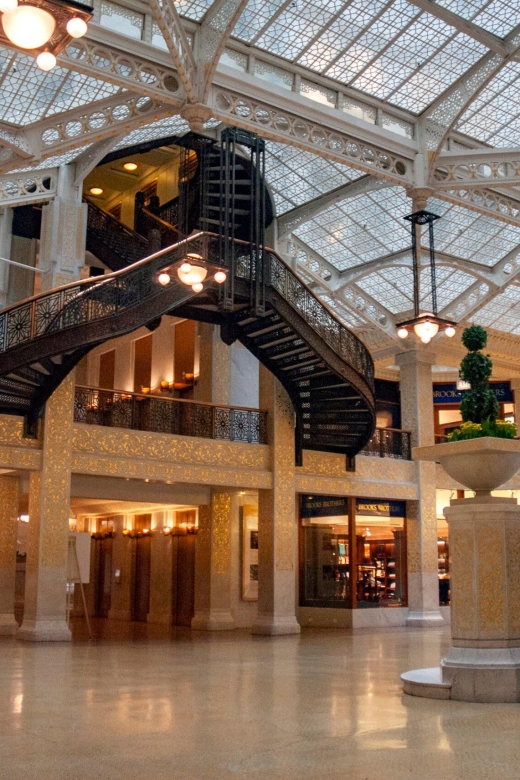
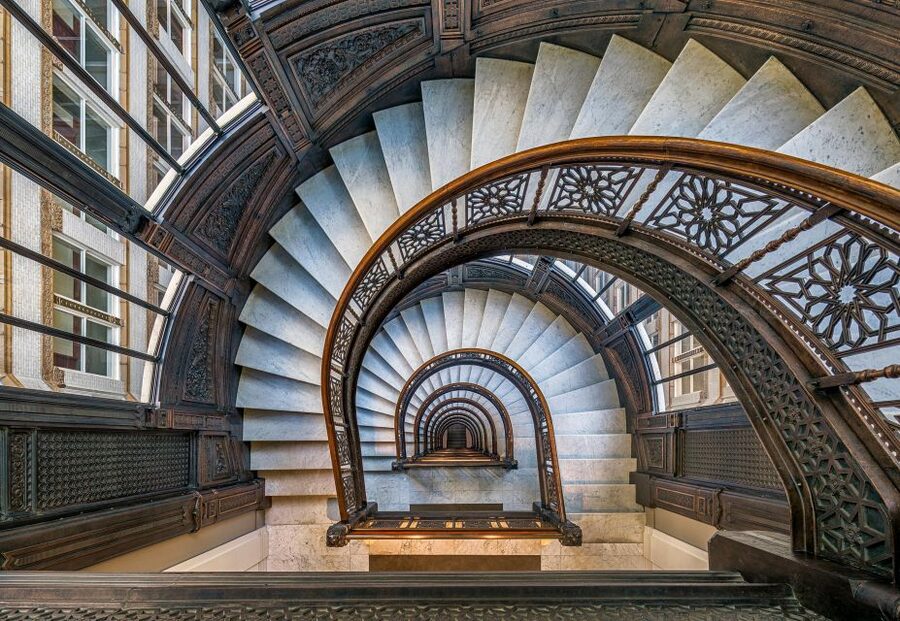
The Rookery Building is one of the key interior stops, and it fits the tour’s theme perfectly: domes and craftsmanship in a space that rewards attention. The guide’s job here is to show you how the building balances beauty with real-world constraints, including light and structural challenges.
This is also where the tour’s tone clicks. You stop treating architecture as a background and start seeing it as a set of engineering decisions with aesthetic consequences. That is the kind of learning that sticks, especially if you like to come away able to spot patterns on future walks.
Sunday note: the Rookery is closed on Sundays, so the tour includes an alternative stop. It is worth remembering if you are planning a weekend visit, because the interior highlight may shift.
Another consideration: expect some stairs and transitions between indoor and outdoor space. If you have mobility concerns, go slow and tell your guide what you need.
Field Building and Marquette Building: skyscraper design explained room by room
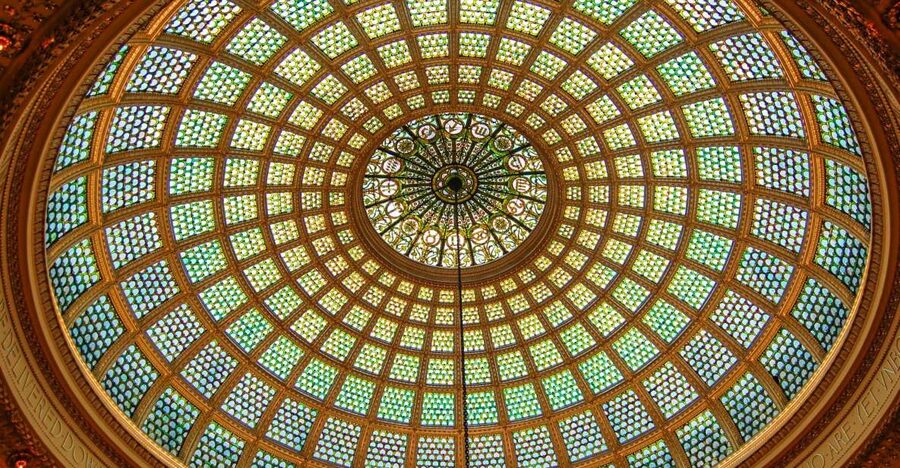
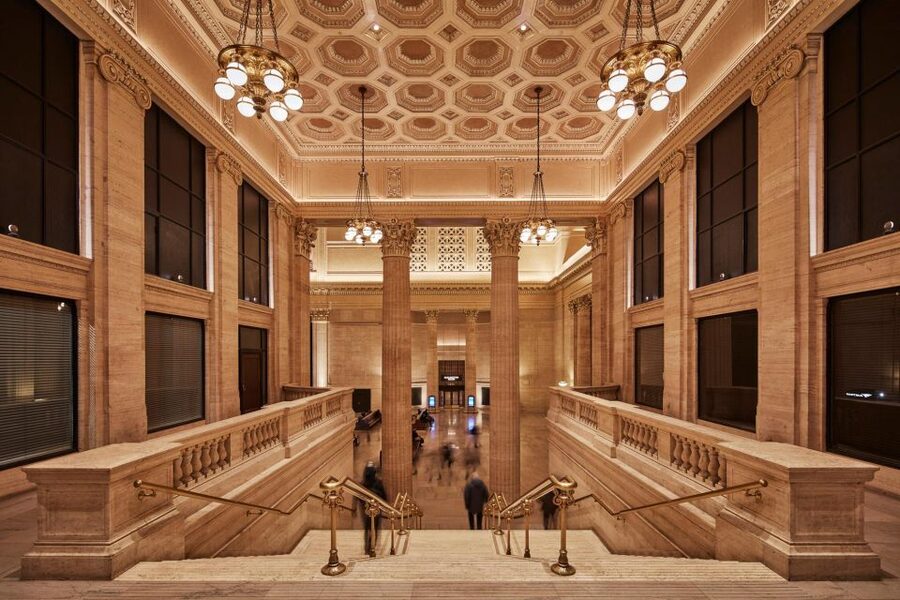
After Rookery, you hit two more interior stops that help connect Chicago’s early skyscraper breakthroughs to the ongoing evolution of style. The Field Building and the Marquette Building are both on the route with photo stops plus guided time inside.
What you are learning here is how Chicago solved problems at height. The tour highlights ingenious approaches to illumination and structural integrity, and these buildings are perfect classrooms. Instead of abstract talk, you get to see where design choices show up in the building’s composition and the way public spaces feel.
These stops are also where you start understanding why Chicago’s architecture influenced buildings far beyond Illinois. The guide ties the dots between the pioneering skyscrapers that changed city skylines and the later modernist direction that kept reshaping the city.
If you are someone who tends to skip details on the first pass, these interiors are the opposite. The guide points out design elements you would never notice on your own, like doorways, proportions, and transitions that show how people moved through the building.
A few more ways to spend a day in Chicago
- Chicago: Gangsters and Ghosts Walking Tour★ 5.0 · 7,155 reviews
- Chicago Favorites Ultimate Food and Walking Tour★ 5.0 · 1,962 reviews
- Chicago: Gangsters and Ghosts Guided Walking Tour★ 4.7 · 1,697 reviews
- Chicago in a Day: Food, History & Architecture Walking Tour★ 5.0 · 1,153 reviews
- Chicago’s Secret Interiors Architectural Walking Tour★ 5.0 · 635 reviews
Palmer House and the Cultural Center: two very different interiors, same design thinking
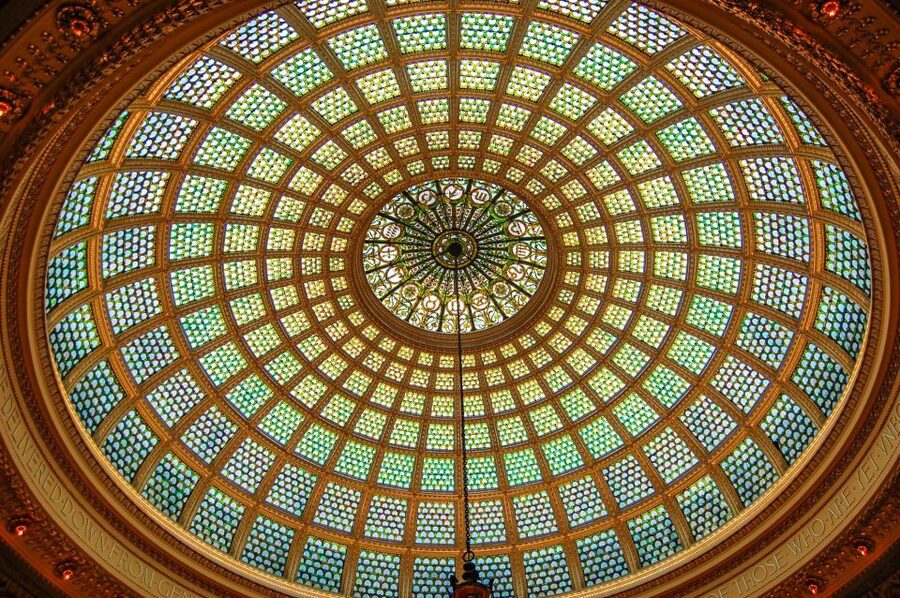
The route brings you to Palmer House a Hilton Hotel and then to the Chicago Cultural Center. I like this pairing because it shows that Chicago’s interior architecture is not one single style. Even when the tour’s theme stays consistent, the character changes.
At Palmer House, the focus is on craftsmanship and the human side of design, how entrances and public rooms communicate confidence and identity. Then the Cultural Center shifts the feel toward civic culture, making the point that good design does not only serve private clients or corporate power. Public-facing interiors also deserve architectural intelligence.
This part of the tour can be a favorite if you enjoy storytelling that includes the people behind the buildings, including industrial magnates and the personalities tied to the Gilded Age and Roaring Twenties. The guide helps you see architecture as a stage for ambition and reputation.
If your feet are tired by this point, you can still get a lot out of the stops because the guide typically slows down to let you look. Just keep your energy for the walk segments in between.
Marshall Field and Company Building: a fitting end, and a reason to keep looking down
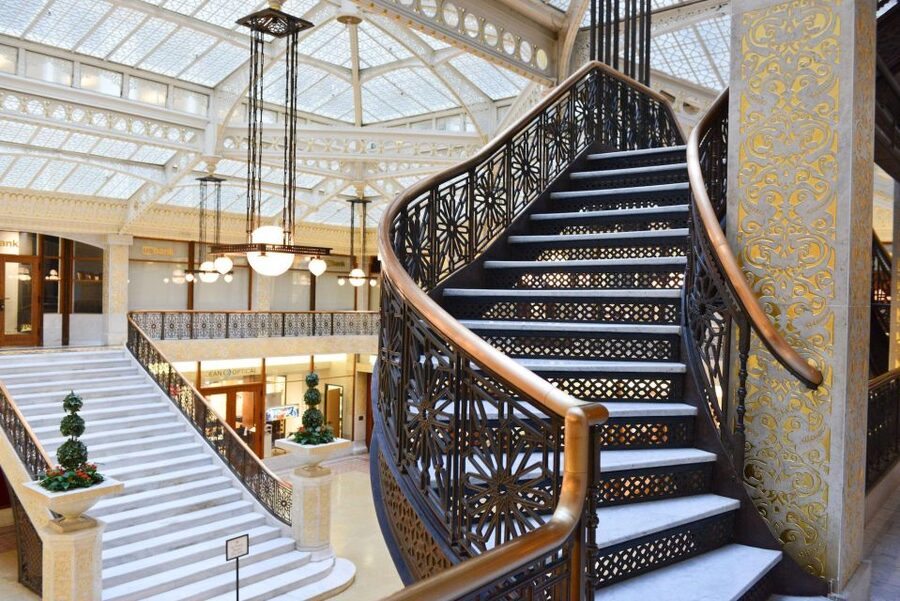
The tour finishes at Marshall Field and Company Building, which makes sense. By the time you arrive, you have learned how to look, so the finale becomes more than a last stop. You can connect the building’s exterior presence to the interior experience, and you start noticing how design reinforces function.
This is also a good place to review what the guide taught you about lighting and structure. Even if you are not an architecture nerd, those concepts become practical. You start asking questions like, How is light guided here? How does the structure allow open feeling spaces? What details are used to make the building feel welcoming or impressive?
The route ends with the right kind of closure: a building that carries Chicago’s commercial confidence and craft. If you want to keep exploring afterward, you will leave with a sense of what to look for next in the surrounding blocks.
The guide is the real engine: what to expect from the commentary
Across the tour’s history, one thing shows up again and again: strong guiding. Names that have earned standout praise include Grant, Angel, Talia, Annie, Matthew, and Avery. People often describe the guides as friendly and engaging, and that matters because the content is detail heavy.
Here is what you should expect from the commentary:
- A clear explanation of architectural styles and innovations as you move from stop to stop
- Stories that connect buildings to the people and eras that built Chicago’s reputation
- Points where the guide pauses you at the exact place you would otherwise miss
What makes this tour worth it is how the guide teaches you to “read” a building in seconds. After you see why certain elements are there, you notice them outside the tour too. That is the real upgrade from a simple photo walk.
A balanced caution: some people found parts of the pace a bit brisk, plus there are stairs when you enter and exit buildings. If you have limited mobility, take it easy at the entry points and tell the guide early so you can adjust.
Weather, shoes, and pacing: the practical stuff that decides whether you enjoy it
This is a walking tour, about two hours, and the route includes a lot of downtown foot traffic. Bring comfortable shoes that handle indoor building floors and outdoor sidewalks.
Winter matters. If you are visiting in cold months, plan for a chill walk and layer up. The tour still works in winter, but the outdoors time can feel longer than you expect.
Access: the tour is wheelchair accessible, which is great news. Still, wheelchair access does not always mean “no stairs anywhere,” since individual building access can vary. If you use a wheelchair, it is wise to be prepared for slower transitions and ask your guide about step-free routes at each stop.
Value check: is this better than the river boat version, or a perfect companion?
The tour gives you the architecture in close-up form: interiors, details, and engineering ideas tied to specific rooms. A river boat architecture experience is different. It emphasizes views and skyline comparisons, which can be awesome on its own.
For most people, the best value comes from matching the format to what you want most:
- If you want to understand details and interiors, this walking tour is a strong pick.
- If you want big skyline views and a relaxed ride, a boat tour can be the easier choice.
- If you do both, you get a fuller picture, interiors for meaning, and skyline views for context.
At $35 for two hours with a live guide, the cost feels fair if your goal is learning. If your goal is only photos and casual sightseeing, you might prefer a cheaper self-guided route. But if you like being taught, the guided explanation is the value.
Who should book this Secret Interiors tour
This tour fits best if you:
- Love Chicago architecture and want the interior side of the story
- Like guides who connect details to bigger design and engineering ideas
- Want a short outing that still includes multiple major Loop buildings
It is also a good option for people who feel overwhelmed by Chicago’s building density. The route gives you a focused set of stops so you leave with a clear understanding, not a blur.
If you strongly dislike stairs or prefer a slow, mostly seated experience, you should choose a more mobility-friendly style tour.
Should you book it?
Yes, if you want to see Chicago’s architectural identity from the inside. The price is reasonable for a guided tour with multiple interior stops, and the overall satisfaction is consistently high, with a 4.9 rating. The route also gives you a smart sequence, starting at Union Station and moving through the Loop toward Marshall Field, so the story builds as you walk.
Book it with confidence if you enjoy learning architecture details like domes, mosaic type effects, and the logic behind light and structure. Just go in expecting real walking and possible stairs, especially if you are visiting in winter or you need extra pacing breaks.
If that sounds like your kind of trip, this one is a straightforward way to get more out of the Loop than you would on your own.
Just Added






Architecture Tours, compared.


Chicago Architecture Center River Cruise aboard First Lady
Read our review →
Architecture River Cruise Skip-the-Ticket Line
Read our review →
Chicago River 45-Minute Architecture Tour from Magnificent Mile
Read our review →

45-Minute Family-Friendly Architecture River Cruise
Read our review →Browse the lists this tour appears in