
Reviewed · ARCHITECTURE TOURS
Chicago’s Secret Interiors Architectural Walking Tour
Chicago hides luxury in plain sight. On this Chicago Loop walking tour, you get skyline views, then step into rarely open spaces with domes, light courts, rooftop garden hints, and mosaic details explained in plain language. I love rare interior access and I love that it costs just $35 for about two hours. One drawback to plan for, The Rookery is closed on Sundays, so that stop will not be part of the route.
The vibe here is small and focused, with a max 15 person group and a mobile ticket that keeps you from standing around waiting. I also like that the guides, including names like Grant and Ethan, are described as warm, organized, and good at keeping the group together when weather turns cold or rainy.
In This Review
- Key Things You’ll Notice on This Chicago Secret Interiors Tour
- Why Chicago Interiors Feel Different From the Skyline
- Meeting at Union Station, Then Learning the City’s Front Door
- Walking the Loop’s Financial Canyon: Board of Trade to Willis Tower
- The Rookery Building: Light Court, Ironwork, and Wright’s Lobby Change
- Field Building and Marquette Building: Art Deco Power and Chicago School Craft
- Palmer House Hotel Luxury, Then Tiffany at Marshall Field
- Palmer House a Hilton Hotel: Gilded Age Finishing Details
- Marshall Field and Company Building: Macy’s-Day Still Looks Like a Landmark
- Chicago Cultural Center vs. Monadnock Building: Your Indoor Choice
- Timing, Weather, and How to Get the Most From Two Hours
- Is $35 Good Value for Secret Interiors in the Loop?
- Who This Tour Fits Best (And Who Might Want to Skip It)
- Should You Book This Chicago Secret Interiors Tour?
- FAQ
- How long is the Chicago Secret Interiors Architectural Walking Tour?
- What does the tour cost?
- Where do I meet the tour, and where does it end?
- Is there an extra ticket cost for the stops?
- What happens if I book on a Sunday?
- What if the weather is bad?
Key Things You’ll Notice on This Chicago Secret Interiors Tour
- Interior architecture beats photo ops, because you’re shown what to look for, not just where the buildings are.
- The Loop gets translated into a story, from commerce down to engineering and design choices.
- Rookery Building details matter, especially the light court, ironwork, and the oriel staircase.
- Art Deco and Chicago School designs share the route, so you see more than one style.
- A hotel and a department store still feel like landmarks, not just businesses with fancy lobbies.
- You get a built-in weather rhythm, with time inside at multiple stops.
Chicago's skyline, explained block by block
Why Chicago Interiors Feel Different From the Skyline
Chicago is famous for its skyline, but that is only half the story. What makes this tour work is that you do short walks, then you get ushered into spaces where the design choices become obvious. You start to notice how Chicago architects and builders solved structural problems, and how style was used to signal power, money, taste, and progress.
You also get a smart balance of well-known landmarks and “I did not realize that was there” moments. The tour is designed for people who like history and architecture, but do not want a long museum day. Most stops are brief, so the day stays energy-friendly, and you still cover a lot of famous real estate.
Meeting at Union Station, Then Learning the City’s Front Door
The tour starts at Chicago Union Station, 225 S Canal St. Even before you reach the first big architecture lesson, Union Station sets the tone. This is Daniel Burnham’s work, completed in 1925, and it shows you how early 20th-century Chicago wanted to present itself: confident, grand, and built to move people efficiently.
Inside, the focus is the Beaux-Arts facade and the Great Hall with its magnificent skylight. What I like about this stop for first-timers is that it teaches you how to read the building. You can spot the structure and layout instead of just admiring it from the entrance.
Practical note: Union Station can be busy in general, so it helps to arrive a few minutes early, get your bearings fast, and be ready for a quick orientation before you head back outside.
Walking the Loop’s Financial Canyon: Board of Trade to Willis Tower
Once you hit the Loop, the tour shifts from “big landmark” to “architecture at street level.” You are in Chicago’s economic powerhouse, where commerce shaped what rose and how fast it grew.
The first major segment concentrates on the icons lining the Loop. You hear the stories behind the magnates and stars of the Gilded Age and Roaring Twenties, and you connect those personalities to the buildings themselves. It also helps that you get names you can actually place: the Board of Trade and Willis Tower come up in a way that makes the skyline less abstract.
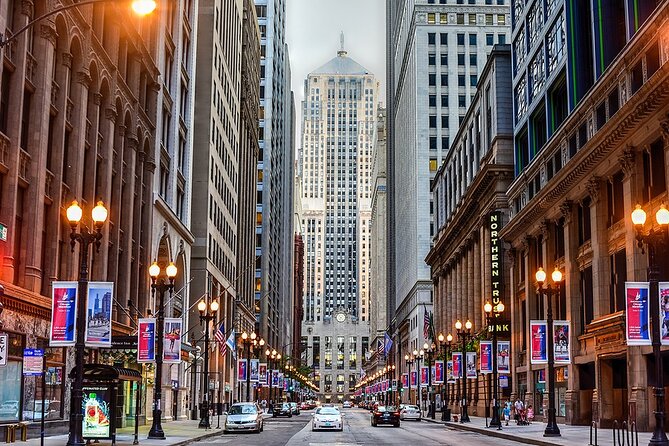
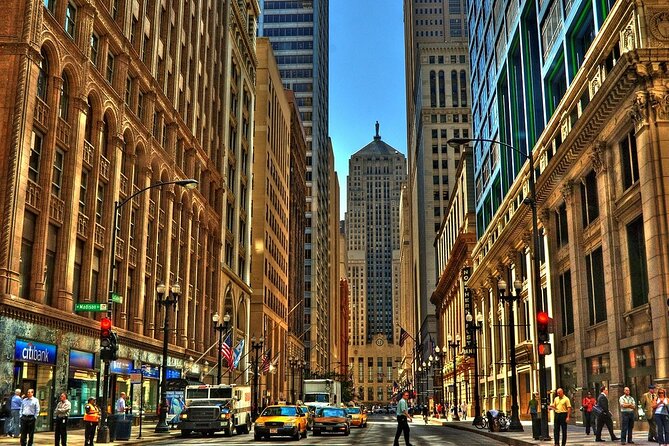
A special part of this section is the idea of La Salle / the Financial Canyon. The Loop can look like a wall of glass and steel until someone points out the “canyon” effect created by tall buildings. You walk through that scale, learn who designed what, and connect the streets to the economic activity they were built to support.
What you’ll enjoy most here:
- You see the skyline from a new angle, then connect it to architecture choices.
- The tour keeps stopping for specific interior moments, like lobbies and ornamental details, not just exterior photos.
The main drawback is simple: street time adds up. If you have mobility limits, plan for short outdoor stretches between interior entries. The good news is that the tour is structured so you are not outside constantly.
The Rookery Building: Light Court, Ironwork, and Wright’s Lobby Change
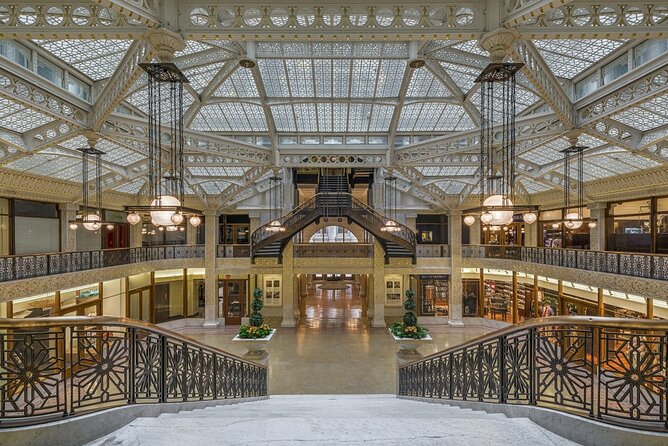
If you are coming on a day when the Rookery is open, this is the stop many people remember. The Rookery is tied to two major names: Burnham and Root, who designed it in 1888, and Frank Lloyd Wright, who later reimagined the lobby.
The design mix is part of the appeal. You get the building’s Romanesque and Moorish influences, then you step into the spaces where the architecture does real work. The famous light court is the star, because it turns an interior into something bright and dramatic. You also spend time noticing the intricate ironwork and the oriel staircase, which is the kind of feature you would miss if you were rushing.
Important scheduling detail: The Rookery is closed on Sundays, so it will not be included on that day. If you want this stop specifically, pick your day carefully.
Field Building and Marquette Building: Art Deco Power and Chicago School Craft
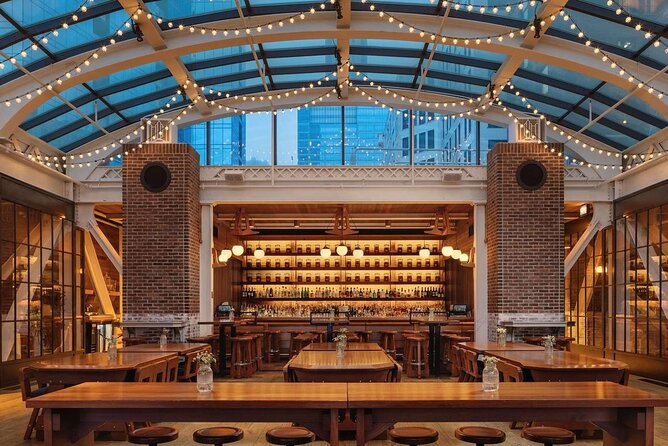
After the Rookery, the route shifts in style. This is where you see how Chicago design changed while staying unmistakably Chicago.
At the Field Building, the focus is its historic Art Deco look and the detailed craftsmanship that gives the building its identity. Even in brief time inside, you get the impression that this is not decoration for decoration’s sake. It is a visual language, built to communicate modernity and status.
Then you move to the Marquette Building, a key stop if you like the Chicago School approach. You hear about its pioneering Chicago window concept and its terra cotta facade. Indoors, the lobby mosaics are the payoff. They tell a story tied to Jacques Marquette’s exploration of Illinois, so the architecture is doing more than looking pretty. It is acting like a city-friendly history lesson.
This section is a big reason the tour feels more interesting than a generic architecture walk. It is not just “here is a pretty building.” It is “here is why the materials and the forms were chosen.”
A few more ways to spend a day in Chicago
- Chicago: Gangsters and Ghosts Walking Tour★ 5.0 · 7,155 reviews
- Chicago Favorites Ultimate Food and Walking Tour★ 5.0 · 1,962 reviews
- Chicago: Gangsters and Ghosts Guided Walking Tour★ 4.7 · 1,697 reviews
- Chicago in a Day: Food, History & Architecture Walking Tour★ 5.0 · 1,153 reviews
- Chicago’s Chinatown Food and Walking Tour★ 5.0 · 600 reviews
Palmer House Hotel Luxury, Then Tiffany at Marshall Field
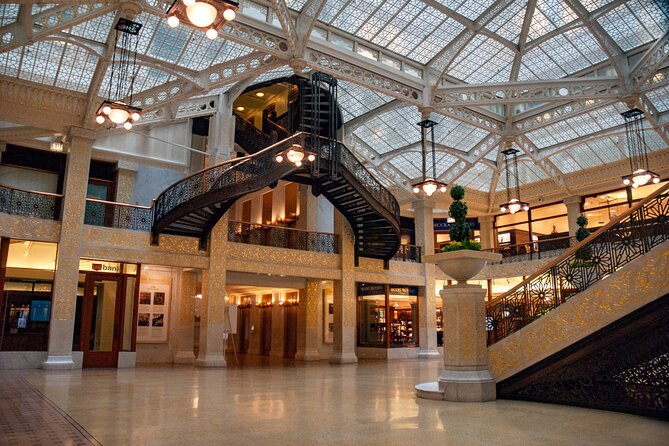
Two of the best “wow” moments are saved for places that people often walk past while focused on shopping or trains.
Palmer House a Hilton Hotel: Gilded Age Finishing Details
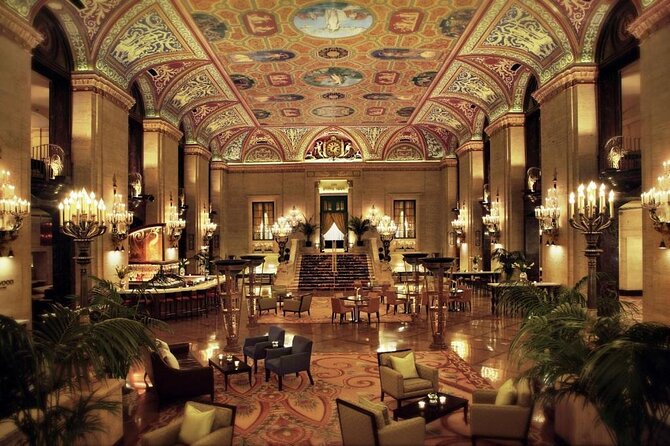
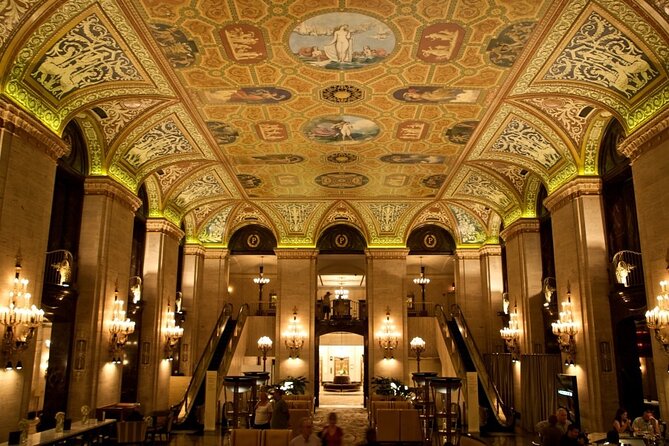
At Palmer House a Hilton Hotel, you step into a grand hotel identity. It is described as one of Chicago’s grandest hotels, with Beaux-Arts architecture and opulent interior elements. The story is also tied to survival and rebuilding: it was rebuilt in 1871 after the Great Chicago Fire.
In the lobby, you focus on features like the frescoed ceiling, mosaic floors, and the bronze peacock doors. This is the kind of detail that makes you slow down, because you realize how much effort went into finishes that guests would notice up close. The hotel has also hosted celebrities and dignitaries over the years, which helps explain why the interiors were designed to impress.
Marshall Field and Company Building: Macy’s-Day Still Looks Like a Landmark
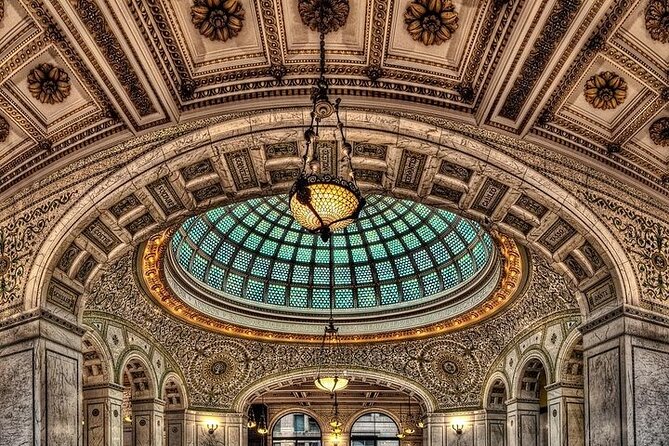
The tour ends at 111 N State St, at the Marshall Field and Company Building, now housing Macy’s. This stop is built around luxury retail architecture, including the Tiffany glass mosaic dome and the walnut-paneled Tea Room.
Even if department stores are not your thing, this one is worth it because you see how early 20th-century retail tried to feel like an event. The building is still a working commercial space, so the design is not locked behind a museum wall. You experience it in the flow of real life.
Chicago Cultural Center vs. Monadnock Building: Your Indoor Choice
At one point, you will switch to either the Chicago Cultural Center or the Monadnock Building. Both options matter because they change the “feel” of the day.
- The Chicago Cultural Center stop is framed around architectural beauty plus cultural heritage. It is a good choice if you like the idea of a landmark that functions as more than a structure.
- The Monadnock Building stop focuses on the late 19th-century commercial style and how that era shaped the look of downtown offices.
Either way, this part of the tour is valuable for two reasons. First, it gives your legs a break. Second, it reinforces that Chicago’s architecture is not only about skyscrapers. Commercial buildings and public spaces played their own roles too.
Timing, Weather, and How to Get the Most From Two Hours
The tour runs about 2 hours, and the stops are short, roughly around 10 minutes each in the route plan. That brevity is not a flaw, it is the point. You get a guided taste of many interiors without turning your day into a full marathon.
The tour also requires good weather. That is common for walking tours, and it matters. If the weather is poor, the experience can be canceled and you will be offered a different date or a full refund.
One practical tip based on the guide approach: bring layers and a way to manage rain or wind. Even on colder days, the structure of multiple indoor stops can make the outing feel doable, and a well-run guide helps you move efficiently between locations.
If you are also doing a Chicago River boat tour, you can still do this one comfortably. This walking tour focuses on interior architecture and Loop landmarks, so it works as a separate angle rather than a repeat.
Is $35 Good Value for Secret Interiors in the Loop?
At $35 for about two hours, you are paying for a guide and for access to architecture details that you would not reliably notice on your own. The tour is listed with expert tour guide support, and the route is built around famous buildings plus interiors where knowing what to look for really changes your experience.
Another value factor is that the stops are presented with free admission on the route. That matters because you are not stacking extra ticket fees on top of the base price. In practice, you are getting guidance and structured entry moments, not just a stroll with a few quick photo stops.
Also, the tour caps at a maximum of 15 travelers, which usually means you can hear the guide and move as a group without the chaos you sometimes see on larger city walks.
Bottom line: if you like architecture, design details, and “how did they build that” stories, this price is hard to argue with.
Who This Tour Fits Best (And Who Might Want to Skip It)
You will likely love this tour if:
- You enjoy architecture and want more than exterior sightseeing.
- You like short, structured outings with a clear route and indoor highlights.
- You want to see Loop landmarks but also get inside a few places where details matter.
You might want to choose another option if:
- You need long seated time, since it is still a walking tour with short stops.
- You are set on seeing the Rookery and you are traveling on a Sunday, since that stop is excluded that day.
Should You Book This Chicago Secret Interiors Tour?
If you want a smart first pass at Chicago’s design story, I think this is a strong book. It gives you the Loop’s famous buildings, then adds the part people often miss, the interior craft. The best version of the day is when you get a guide who can keep the group moving and make details click fast, and the experience repeatedly highlights guides like Grant and Ethan for that kind of energy.
Just plan your day around the one major condition, the Rookery closure on Sundays. Add comfortable walking shoes, expect short outdoor stretches, and treat the tour as your architecture starter kit. For $35, it is one of the more practical ways to learn Chicago’s “why” instead of only photographing its “what.”
FAQ
How long is the Chicago Secret Interiors Architectural Walking Tour?
It runs for about 2 hours.
What does the tour cost?
The price listed is $35.
Where do I meet the tour, and where does it end?
You start at Chicago Union Station, 225 S Canal St, Chicago, IL 60606, and you end at the Marshall Field and Company Building, 111 N State St, Chicago, IL 60602.
Is there an extra ticket cost for the stops?
The route lists admission as free for the stops included in the itinerary.
What happens if I book on a Sunday?
The Rookery is closed on Sundays, so it will not be included in the route on that day.
What if the weather is bad?
This tour requires good weather. If it is canceled due to poor weather, you will be offered a different date or a full refund.
Just Added




Architecture Tours, compared.

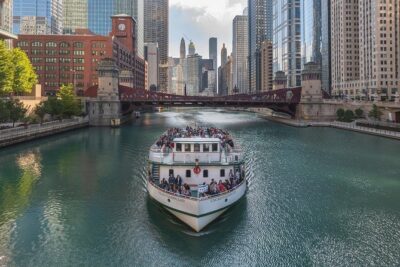
Chicago Architecture Center River Cruise aboard First Lady
Read our review →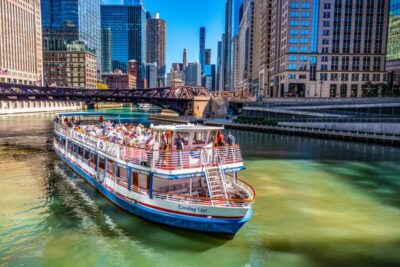
Architecture River Cruise Skip-the-Ticket Line
Read our review →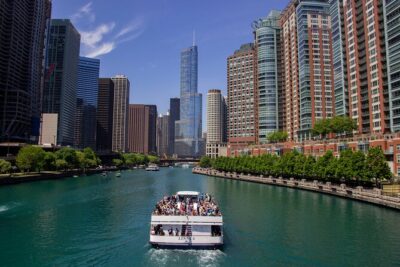
Chicago River 45-Minute Architecture Tour from Magnificent Mile
Read our review →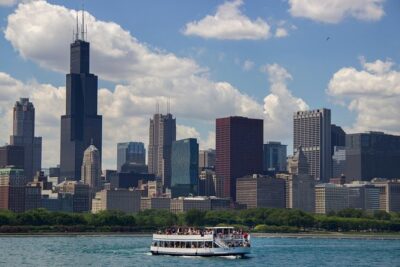

45-Minute Family-Friendly Architecture River Cruise
Read our review →Browse the lists this tour appears in