
Reviewed · ARCHITECTURE TOURS
Chicago in a Day: Food, History & Architecture Walking Tour
Chicago can feel like a blur, unless you have a plan. This small-group walk strings together iconic food and big architecture with enough stops to learn what you are looking at, not just snap photos. I love that it feels like a guided day around the Loop, not a checklist. I also love that the food portions are designed to add up to a full lunch. One thing to consider: the bigger food moments can start partway through the walk, so an empty stomach early may slow your focus.
The route is about more than eating and sightseeing. You get a real sense of how Chicago moves, from the commuter-style Pedway to the skyline views along the Chicago River, and then into Millennium Park. If you book, I suggest wearing comfortable shoes and packing a water plan in advance, since the included food covers lunch but drinks are not included.
In This Review
- Key Things to Know Before You Go
- Starting at the Chicago Theatre and Getting Oriented Fast
- Chicago Pedway: The Underground Shortcut Locals Use
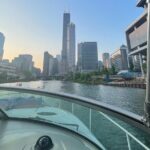
- Chicago River and the Riverwalk View That Locks In the Skyline
- Architecture Highlights: City Hall-County Building, Wrigley Building, and Tribune Tower
- Millennium Park, Cloud Gate, and The Bean Photo Energy
- Food Breaks That Actually Add Up to Lunch
- Pacing, Group Size, and Real-World Comfort
- Where It Goes, Where It Ends, and How to Use It in Your Plan
- Price and Value for a Half-Day Food and Architecture Plan
- Who Should Book This Tour, and Who Might Skip It
- Should You Book Chicago in a Day: Food, History & Architecture Walking Tour?
- FAQ
- How long is the Chicago in a Day tour?
- What is the price per person?
- How big is the group?
- What food is included?
- Can the tour accommodate vegetarian diets?
- Does the tour run in bad weather?
- Is there walking involved?
- Is it child-friendly?
- Where do I meet the guide?
- Where does the tour end?
Key Things to Know Before You Go
- Max 12 people keeps the tour conversational, with time for questions
- Small bites that add up to a meal, not just a couple samples
- Pedway stop shows how locals travel in winter and bad-weather days
- Millennium Park and The Bean are built into the route for quick, easy photos
- City icons in one loop: Wrigley Building, Tribune Tower, Riverwalk views
- Your guide can help with pacing if someone needs a slower rhythm
Chicago's skyline, explained block by block
Starting at the Chicago Theatre and Getting Oriented Fast
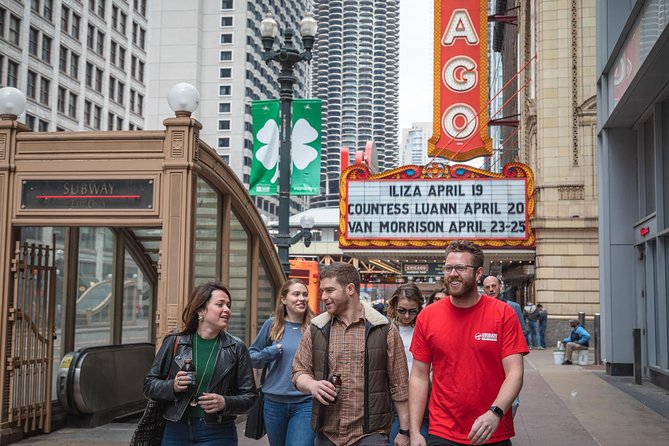
You start at the Chicago Theatre on N State Street, right in the energy zone of the Loop. The marquee is movie-famous, and it is a good way to start, because you are in the middle of the action before you even begin walking. From there, your guide sets the tone with stories you can actually connect to what is in front of you.
I like the way the early minutes work. You get a quick sense of where the “main story” is in Chicago, and then the tour starts pointing you toward the details that usually get missed by people rushing through downtown. If you end up on a tour led by guides like Dave, Dash, Rich, or John, you are likely to get a mix of humor and clear explanations that help the buildings make sense.
Practical note: you are starting in a very walkable area, and the tour stays near transit and major landmarks. That helps if you are the type who likes to jump back out on your own after the tour ends.
Chicago Pedway: The Underground Shortcut Locals Use
One of the most distinctive parts is the Chicago Pedway stop. Weather permitting, you get to explore this network of underground tunnels that commuters use day after day, especially when winter makes life annoying above ground.
Even if you have never been to Chicago before, this is the kind of stop that changes how you understand the city. You see how the downtown core is designed to keep people moving, protected from wind and snow. It also gives your legs a break from constant street-level climbing and lights-on-a-clouds walking.
What to expect here is mostly guided walking through a working downtown space. There is no “museum moment” at this stop, but that is the point. You are seeing how the city actually functions.
Chicago River and the Riverwalk View That Locks In the Skyline
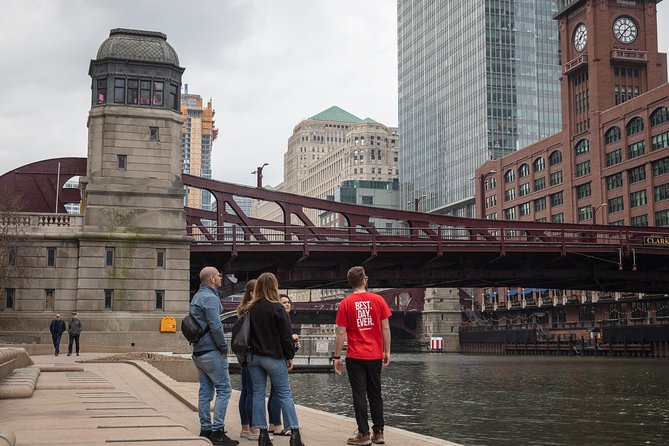
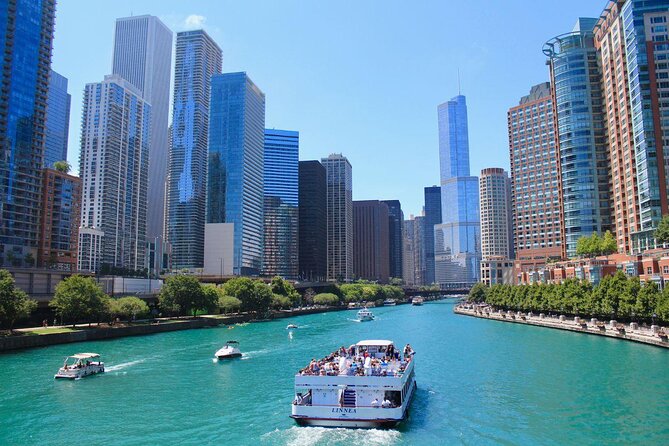
Next you move toward the Chicago River area, where you get skyline views and a look at the city’s most important artery. Your guide uses the commute rhythm as a way to connect the architecture you see to how Chicago built itself, expanded, and kept working.
This part is also where you start feeling why the tour is designed as a half-day format. You are moving through high-impact areas, but you still get moments to look up, point out specific building features, and take photos without feeling completely herded.
You may also pass through or near the Riverwalk zone as you connect the dots between buildings. That walk gives you a different angle on the skyline compared with the street-level views around the Loop.
Architecture Highlights: City Hall-County Building, Wrigley Building, and Tribune Tower
This tour has the kind of architecture stops that most people can only see properly if they do multiple tours on separate days. Here, you get several big names in one run.
First, you pass the City Hall-County Building, the seat of Chicago and Cook County governments. It is one of those landmarks that people recognize, even if they do not know what it represents. Your guide’s narration helps connect what you are seeing to why it matters.
Then comes the Wrigley Building, built between 1920 and 1924 as the Wrigley Company headquarters. This stop is especially good if you like “why it was built” stories, because it sits right at the intersection of business history and Chicago’s architectural style.
After that, you reach the Tribune Tower, the neo-Gothic skyscraper at 435 North Michigan Avenue. It is described as 463 feet tall and 36 stories. That detail helps when you are looking up, because you can actually “place” the building in your mind instead of treating it like one more tall structure.
These architecture moments work best if you allow time to slow down for a few minutes at each stop. The tour does not move too fast, and the payoff is that you start noticing features, not just silhouettes.
Millennium Park, Cloud Gate, and The Bean Photo Energy
If you have ever seen a photo of The Bean, you know the shape. Seeing it in person is different. The curving metal surface turns the whole park into a funhouse mirror of Chicago’s skyline and faces.
This stop happens at Millennium Park, and you also get guide recommendations for what to do next, especially for lunch spots or drinks nearby. That is one of those “small” benefits that makes the tour feel useful after you leave.
Cloud Gate, also known as The Bean, is the centerpiece, and you will have time to snap pictures and take in the park’s layout. If you are traveling with kids, this is often the most memorable moment because the sculpture is interactive in a way that is obvious, even without a history lecture.
Tip: plan on spending a few extra minutes after the group heads off, if you want a calmer photo. If the park is packed, you can still get good shots by waiting for a lull.
A few more ways to spend a day in Chicago
- Chicago Favorites Ultimate Food and Walking Tour★ 5.0 · 1,962 reviews
- Chicago Loop District Food Tour with Deep Dish & Beef Sandwich★ 5.0 · 870 reviews
- Chicago’s Chinatown Food and Walking Tour★ 5.0 · 600 reviews
- Chicago Gangster and Food Walking Tour★ 5.0 · 471 reviews
- Chicago: Gangsters and Food Tasting Walking Tour★ 4.6 · 228 reviews
Food Breaks That Actually Add Up to Lunch
This tour is called a food, history, and architecture walk for a reason. The tastings are designed so the total food included equals a full meal, not just “a taste.”
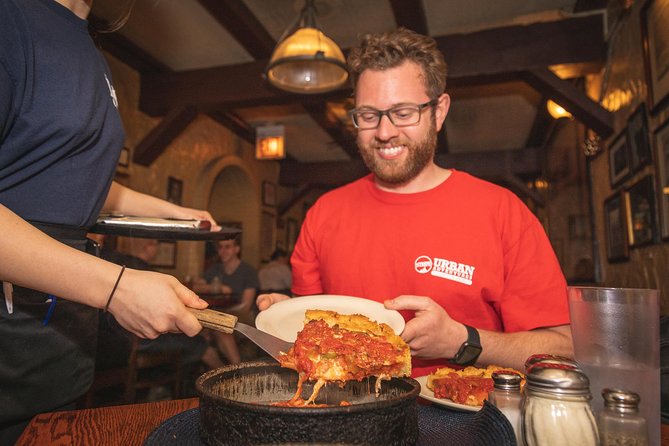
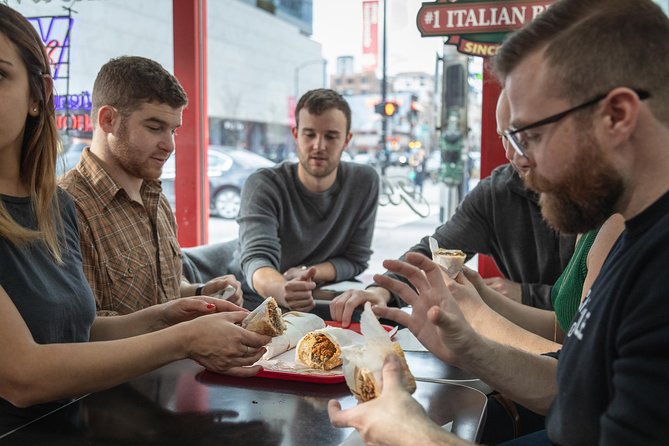
You should expect Chicago classics such as deep-dish pizza, a Chicago hot dog, and Italian beef, plus other small bites. Depending on the day and season, portions and offerings may vary, but the goal stays the same: enough food to function like lunch.
Timing is the main thing to watch. Some guides start with smaller bites earlier in the walk, and then the bigger food moments come later. That is why I strongly recommend eating a simple breakfast before you go, especially if you booked a morning departure. A few people noted that the first major meal-like stop comes after the first chunk of walking, so you will feel better if you arrive fed.
Another practical note: drinks and extra food are not included, and while you may get water around the food stops, you should not treat the tour as a full drinks plan. If you tend to get thirsty during city walks, bring water if your day allows it.
If you are vegetarian, you can get options, but the tour cannot handle other allergies or specific dietary preferences beyond vegetarian. If that is your situation, you will want to message in advance and confirm what is possible.
Pacing, Group Size, and Real-World Comfort
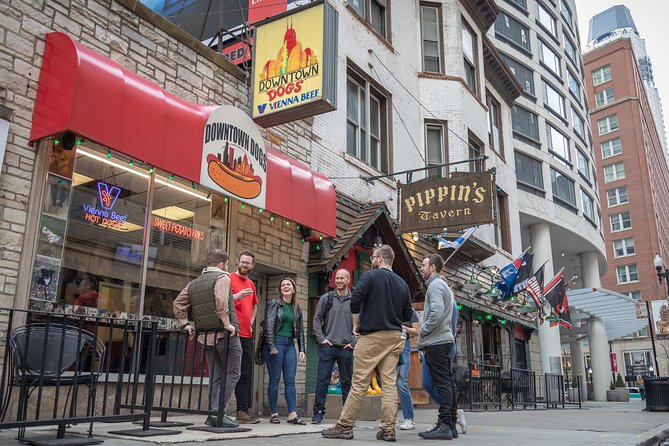
The tour keeps group size to a maximum of 12, and that is a big part of why people rate it so highly. With a smaller group, your guide can adjust the flow, check in, and keep everyone together without sounding stressed.
There are also clues in the experience details that point to practical care. People have been helped with mobility concerns, including slower movement around stairs and finding elevator access areas. If you have any knee or balance issues, tell your guide at the start. You do not need to make it a big event, just communicate your pace needs early.
Walking is part of the deal. The official distance is about 3 to 4 miles (4.8 to 6.4 km) at a relaxed pace with regular stops. Still, some people found it closer to 4 to 5 miles in feel, depending on how often you pause for photos and how your group keeps its timing. So think “moderate walking day,” not “light stroll.”
Weather is another big factor. The tour runs rain, shine, or snow, so wear layers and bring a real rain solution if the forecast looks wet.
One more comfort note: city sidewalks are noisy, with traffic and trains nearby. If you know you struggle to hear in busy streets, position yourself closer to your guide when outside.
Where It Goes, Where It Ends, and How to Use It in Your Plan
This tour is very Loop-centered. You start at the Chicago Theatre and end in River North near major transit routes. That matters because River North is convenient for lots of next-step plans, whether you want to walk to a museum, grab a drink, or head back to your hotel.
During the walk you will pass a lot of landmark territory: the Loop’s government buildings, the commercial powerhouses around Michigan Avenue, Millennium Park, and the dense mix of restaurants and bars in the core. By the time you finish, you are not just “aware” of Chicago, you have a working map in your head.
It also helps if you like to keep your schedule flexible. The guide is expected to offer recommendations for lunch and additional sights after the Bean stop. That turns the last hour into a choose-your-own-adventure moment instead of just finishing at a location.
Price and Value for a Half-Day Food and Architecture Plan
The price is $100.95 per person for about 4 hours 30 minutes. Is that a lot? In Chicago, a guided walking tour with food can cost less, but the value here comes from the combination.
You are getting:
- A small group limited to 12
- Major architecture stops clustered in one area
- A Pedway stop that most self-guided walks skip
- Food that totals a full meal, with iconic Chicago choices like deep-dish pizza, hot dog, and Italian beef
So the real question is whether you want to “buy time” and “buy clarity.” If you arrive without a plan for what to look at, this tour can save you the frustration of guessing which building details matter. If you already know Chicago history and you only want food, you might prefer a purely food-focused tour. But if you want food plus city context in one afternoon, this looks like good value.
Who Should Book This Tour, and Who Might Skip It
This tour is a strong fit if you:
- Want major Chicago architecture in a short window
- Like guided storytelling that helps you understand what you are seeing
- Prefer a small group where you can ask questions
- Are hungry for classic Chicago foods and want the convenience of tasting multiple dishes
You might think twice if you:
- Get easily thrown off by delayed meal timing, especially if you skip breakfast
- Have very limited walking tolerance, since it is still several miles even at a relaxed pace
- Need help with allergies beyond vegetarian, because dietary accommodations are limited
Also, it is family-friendly, with children under 4 joining free and a reduced price for kids aged 4 to 11. That makes it a practical choice for parents who want to spend a half-day doing something structured, not random wandering.
Should You Book Chicago in a Day: Food, History & Architecture Walking Tour?
Yes, if you want a fast, high-impact Chicago introduction with real food stops and big-name architecture in one afternoon. The small-group size, the Pedway experience, and the way Millennium Park is placed near the end make it an efficient way to get your bearings.
Book it if you like structured city walks and you want your lunch plan handled for you. Just go in ready for walking, eat something before you arrive, and wear shoes you can trust for several miles of city sidewalks.
If that sounds like your style, you will likely come away with both a fuller stomach and a sharper sense of Chicago.
FAQ
How long is the Chicago in a Day tour?
It lasts about 4 hours 30 minutes.
What is the price per person?
The price is $100.95 per person.
How big is the group?
The tour is limited to a maximum of 12 travelers.
What food is included?
Included tastings feature iconic Chicago foods like deep-dish pizza, a Chicago hot dog, and Italian beef, along with additional bites. Total included food is designed to equal a full meal.
Can the tour accommodate vegetarian diets?
Yes. Vegetarian options are available if you let the operator know in advance. Other allergies or dietary preferences cannot be accommodated.
Does the tour run in bad weather?
Yes, it runs rain, shine, or snow. You should dress appropriately for the weather on the day.
Is there walking involved?
Yes. The tour involves about 4.8 to 6.4 km (3 to 4 miles) of walking at a relaxed pace with regular stops.
Is it child-friendly?
Yes. Children under 4 can join free of charge, and a reduced child price applies for ages 4 to 11.
Where do I meet the guide?
The meeting point is the Chicago Theatre, 175 N State St, Chicago, IL 60601.
Where does the tour end?
The tour ends in River North, Chicago.
More Historical Tours in Chicago
- Chicago: Field Museum of Natural History Ticket or VIP Tour
★ 4.7 · 717 reviews - Field Museum of Natural History Admission Tickets
★ 4.5 · 489 reviews - Chicago Walking Tour: Historic Treasures of Chicago
★ 5.0 · 362 reviews - Historical and Architectural Chicago Fireboat River & Lake Cruise
★ 5.0 · 246 reviews
More Food in Chicago
- Chicago: Classic Food & Walking Tour with Free Bike or Kayak
★ 4.9 · 145 reviews - Chicago’s West Side Foodie Ride Bike Tour
★ 5.0 · 112 reviews - Chicago Food Tour: Taste the City’s Most Iconic Eats
★ 5.0 · 111 reviews - Chicago: Food, History and Architecture Tour
★ 4.8 · 104 reviews
Just Added



Architecture Tours, compared.

Chicago Architecture Center River Cruise aboard First Lady
Read our review →
Architecture River Cruise Skip-the-Ticket Line
Read our review →
Chicago River 45-Minute Architecture Tour from Magnificent Mile
Read our review →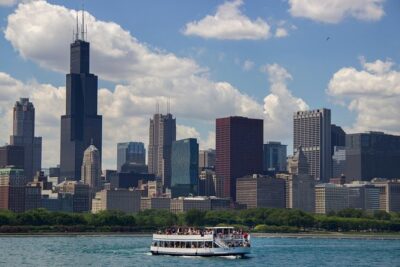
45-Minute Family-Friendly Architecture River Cruise
Read our review →Browse the lists this tour appears in