

Reviewed · WALKING TOURS
Chicago Walking Tour: Must-See Chicago
Chicago can feel huge, fast. This small-group walking tour gives you a smart, 90-minute way to see the city’s most iconic architecture and learn how it all fits together, without spending the whole day guessing where to go. You start at the Chicago Architecture Center, then walk past landmark buildings and major public spaces to get your bearings.
What I especially like is the professional, certified guide narration, which turns big-city landmarks into clear stories you can remember. I also like that admission to the Chicago Architecture Center galleries is included, so the tour isn’t just outdoor photos, it’s a quick dose of context you can use all trip.
One possible drawback: it’s a short walk with lots of exterior viewing, so if you want long stops inside buildings or deep dives into one site, this format may feel a bit brief.
In This Review
- Key Highlights You Should Know
- Why This 90 Minute Chicago Loop Works for First-Timers
- Price and Value: $35 Includes More Than a Sidewalk Walk
- Where You Start and What the Walk Feels Like
- Stop 1, Wrigley Building: Spanish Colonial Revival on Lakefront Energy
- Stop 2, Chicago Riverwalk View: The Shortcut to Understanding the City
- Stop 3, Aqua Tower: Why Lakeshore East Became a New Focus
- Stop 4, Tribune Tower: An Architecture Competition That Had a Big Claim
- Stop 5, Art Institute Exterior: The Modern Wing as a Visual Bridge
- Stop 6, John Hancock Center: A Quick Hit of Iconic Height
- Stop 7, Millennium Park and Cloud Gate: Timing Your Photos
- The Guide Factor: What Makes the Best Version of This Tour
- Who This Tour Suits Best (And Who Might Skip It)
- Small-Group Comfort and Practical Prep
- Should You Book This Chicago Walking Tour?
- FAQ
- How long is the Chicago Walking Tour: Must-See Chicago?
- How much does the tour cost?
- Where does the tour start?
- What’s included in the price?
- Is admission included for all the stops?
- Is there a free stop during the tour?
- What group size can I expect?
- Are pets allowed?
Key Highlights You Should Know
- Small-group size (max 15) keeps the pace manageable and questions more likely to get answered
- 90-minute overview that helps you plan what to revisit later, especially if it’s your first day in town
- Chicago Architecture Center galleries included, so you’re not learning architecture only from the sidewalk
- Stops built around iconic exteriors, with fast photo and look-for-details breaks
- Millennium Park stop is free, and Cloud Gate, The Bean, is the obvious photo magnet
A few more ways to spend a day in Chicago
Why This 90 Minute Chicago Loop Works for First-Timers
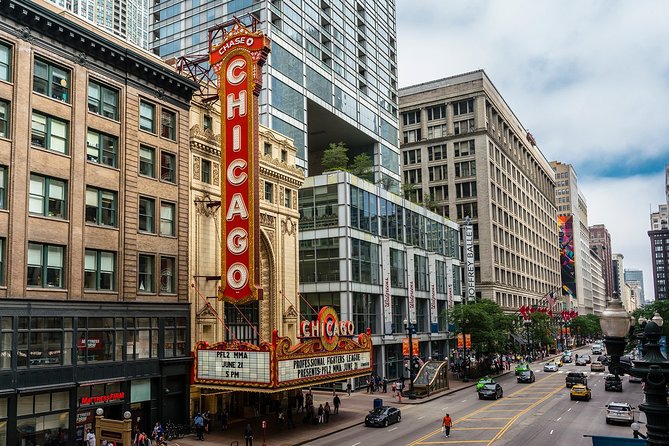
A good Chicago tour does two things at once: it shows you what to see, and it teaches you how to see it. This one is designed for exactly that. In about an hour and a half, you cover a tight downtown route packed with architecture favorites and major landmarks, so you leave with a mental map you can actually use.
If you’re on a tight schedule, the value is not just the list of buildings. It’s the way your guide connects the dots between styles, eras, and the city’s building culture. You’ll walk away knowing why certain facades, towers, and civic spaces matter, and which areas are worth circling back to on your own.
Also, the tour is built for real life. It’s short enough for most visitors, it’s a small group, and you start and end in the same convenient area by the Chicago Architecture Center.
Price and Value: $35 Includes More Than a Sidewalk Walk
At $35 per person, this tour sits in the “worth it” category for first-time visitors, mainly because of what’s included. The big win is admission to the Galleries of the Chicago Architecture Center. That means you’re not just paying for a route, you’re paying for context, and that context helps you get more out of the outdoor stops.
Here’s how I think about value with a tour like this:
- If you’re staying in or near downtown, the included gallery time can save you time later.
- If you’re not sure where Chicago’s architecture hotspots are, you save effort and missteps.
- If you’re the type who takes photos anyway, a guided stop helps you shoot smarter, not longer.
One more point: reviews back up that the tour length is a sweet spot. People call it an excellent overview and a fun way to learn and get memorable photos. That matters, because a “must-see” tour that’s too long can feel like leg punishment. This one is built to be manageable.
Where You Start and What the Walk Feels Like
You meet at 111 E Wacker Dr, at the Chicago Architecture Center. The tour ends back at the same meeting point, so you’re not trekking across town when your legs are done.
This meeting area is a practical choice. It’s a recognized hub for architecture information, and it’s close enough to public transportation that you’re not forced into a car-only plan. Service animals are allowed, which is always good to know if that applies to your group.
The overall format is straightforward: you’ll walk between major sites, your guide narrates as you go, and you get short look-and-learn moments at each stop. Since it’s a small group, the guide can answer questions without the whole walk grinding to a halt.
Stop 1, Wrigley Building: Spanish Colonial Revival on Lakefront Energy
The first real jolt of style comes at the Wrigley Building. Even if you’ve never studied architecture, you’ll probably notice the distinctive white terra cotta facade. The building’s look is part of Chicago’s charm. It shows how the city’s architecture isn’t only sleek and modern, it can also be ornate and character-driven.
In a quick stop like this, the goal is usually not a full interior tour. Instead, it’s learning what to look for: materials, symmetry, and the way an older style still fits into a downtown skyline. If you’re used to cities where landmarks feel random, this helps Chicago feel ordered.
Stop 2, Chicago Riverwalk View: The Shortcut to Understanding the City

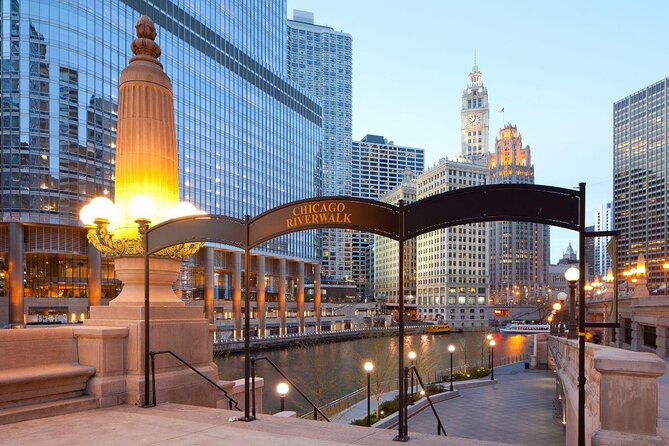
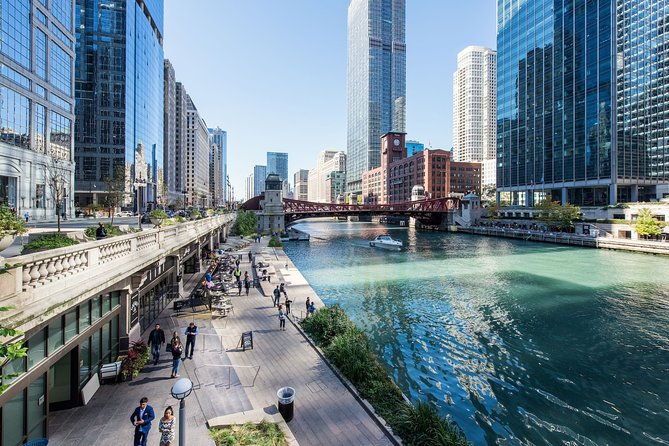
Next, you get a view of the Chicago Riverwalk. This is one of those stops where the payoff is bigger than the minutes spent. The Riverwalk is one of the easiest ways to understand how Chicago treats the water in the middle of the city.
From street level, you can usually see how the riverfront connects streets, buildings, and public space. It’s also a nice breather, since the route continues afterward and you’ll want a moment to reset your eyes after looking at tall facades.
If you like planning, this riverfront view can help you decide whether you want a separate walk along the Riverwalk later. This stop basically tells you, yes, that area is worth more time.
Beyond the skyline, the neighborhoods have their own tours and their own stories.
- Chicago Architecture River Cruise★ 5.0 · 15,756 reviews
- Chicago River 90-Minute Architecture Tour★ 4.5 · 9,629 reviews
- Chicago River: 1.5-Hour Guided Architecture Cruise★ 4.8 · 8,046 reviews
- Chicago Architecture Center River Cruise aboard First Lady★ 5.0 · 5,536 reviews
- Chicago: Willis Tower Skydeck and The Ledge Ticket★ 4.6 · 4,350 reviews
Stop 3, Aqua Tower: Why Lakeshore East Became a New Focus
Then you head to Aqua Tower. This is the kind of building people photograph because it looks like it belongs on a sci-fi poster. It’s also useful because it connects to a bigger story: Aqua’s completion in 2009 helped put Lakeshore East in the spotlight.
What I like about stopping here is that the guide can show you modern Chicago without making it feel like random new construction. You get a building tied to the city’s recent growth and design attention, and you understand why people talk about Chicago architecture as a continuing conversation, not a museum piece.
If you’re comparing old and new city styles, this is a good pivot stop. It helps your brain categorize what you’re seeing next.
Stop 4, Tribune Tower: An Architecture Competition That Had a Big Claim
At the Tribune Tower, you get a classic Chicago icon and a memorable origin story. The building was designed by Howells & Hood, and it came out of an international design competition. That competition was aimed at creating the most beautiful building in the world, which is exactly the kind of ambition Chicago loves.
This stop works well even for people who do not care about architectural theory. Why? Because it gives you a concrete reason the building has its status. It’s not only visually striking, it has a documented pedigree in how the city wanted to brand itself.
Also, if you’re trying to spot details from the outside, the exterior viewing at the Tribune Tower can teach you a simple habit: slow down your eyes and look for the design idea the facade is trying to communicate.
Stop 5, Art Institute Exterior: The Modern Wing as a Visual Bridge
At the Art Institute of Chicago, the tour focuses on exterior viewing, including the Modern Wing. Even without walking inside, this stop is smart because it shows you the Art Institute as more than a single classic building.
The modern wing helps you see the Art Institute as a living institution with multiple eras. For first-time visitors, that matters. You come away understanding that Chicago’s cultural landmarks do not sit still, they evolve, like the rest of the city.
This is also a good “photo and pause” moment. You’ll have a short window to take in proportions and how architecture frames art institutions in the city.
Stop 6, John Hancock Center: A Quick Hit of Iconic Height
Then it’s over to the John Hancock Center at 875 N Michigan Avenue. This is the kind of stop that gives you a skyline anchor. You may have seen it from far away already, but the walk-by look helps you register it as part of Chicago’s identity, not just a distant silhouette.
For me, this stop is a reminder that Chicago architecture often works on two levels:
- It’s impressive up close.
- It also shapes how the skyline reads from different angles.
You don’t need a long stop here. Even a brief view can make you feel like you’re getting oriented in a real city, not just checking off names.
Stop 7, Millennium Park and Cloud Gate: Timing Your Photos
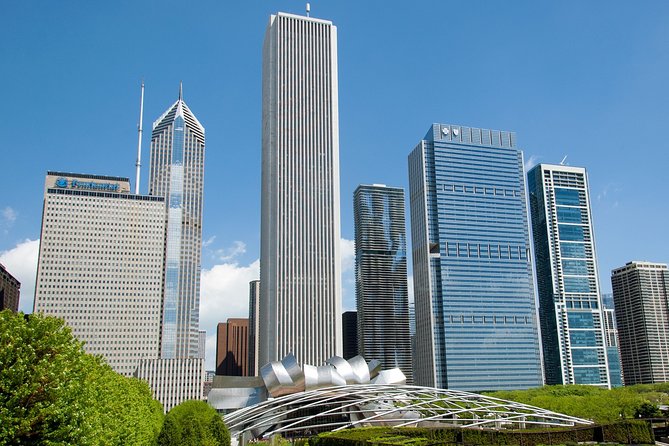
Finally, the tour reaches Millennium Park with a key stop at Cloud Gate, known as The Bean. This part is easy to love because it’s public, it’s central, and it’s impossible to miss.
One practical note: your photo experience may depend on conditions around the sculpture. For example, there was mention that The Bean was closed for construction at one point, so you might find it temporarily limited depending on timing. Still, the park stop itself is valuable, because Millennium Park is one of Chicago’s easiest places to understand the city’s mix of architecture and public life.
The Bean viewing is free, and the quick stop gives you just enough time to grab a shot and move on, without turning the whole tour into a long wait.
The Guide Factor: What Makes the Best Version of This Tour
This tour’s reputation is tied to its guides. The narration is by a professional and certified guide, and the delivery is what turns the route from a list into a story. In the reviews, people repeatedly praise that the guide is passionate and answers questions, which is exactly what you want when you’re standing in front of buildings that all look impressive but can feel confusing.
You’ll also see examples of guides like Claudia Winkler, Rich, and Maurice being singled out for being engaging and hitting the right level of detail for a short tour. The best guides do two things: they keep the pace friendly, and they give you enough facts to make you feel smart in front of the skyline.
If you get a guide who sticks closely to written notes, you can still get value, but you’ll want to ask questions to pull the experience into something more personal. Bring a couple of prompts, like what style this building represents or what Chicago was trying to prove at the time.
Who This Tour Suits Best (And Who Might Skip It)
This is a great fit if you:
- Are in Chicago for a short time and want a fast architecture overview
- Prefer walking tours that help you plan what to revisit
- Like photo stops but want captions in your head, not just pictures on your phone
It may be less ideal if you:
- Want extensive interior access at each major site
- Are looking for a one-building deep study
- Don’t enjoy walking in a dense downtown core, even for about 90 minutes
Because most stops are exterior viewing and the tour is tight, it’s built for breadth, not length at any single location.
Small-Group Comfort and Practical Prep
With a maximum of 15 travelers, the experience is designed to feel like a guided walk rather than a mass shuffle. The pace is still active, though, so plan like you’re doing a downtown sightseeing walk, not a casual stroll.
A few practical reminders based on what’s not included:
- There’s no coat check, so if you have bulky outerwear, plan to carry it.
- There’s no food or drink provided.
- There isn’t storage for luggage or strollers.
Also, since the route is in central downtown, wear shoes that can handle city sidewalks and curb cuts.
If you’re arriving from elsewhere, give yourself a little extra margin for downtown movement. One practical tip from reviews was that parking can be a challenge, so building in buffer time makes the day feel smoother.
Should You Book This Chicago Walking Tour?
I think you should book this tour if you want a smart, time-efficient way to see Chicago’s big-name architecture and learn what you’re looking at. The included Chicago Architecture Center galleries plus a certified guide makes it more than a quick photo walk, and the small-group size keeps it from feeling chaotic.
Skip it if your top priority is deep interior access or you want to spend half a day in just one museum or building. This tour gives you the spark, not the long stay.
If you’re deciding between a self-guided wander and guided time, I’d choose this. You’ll cover a strong “first-weekend in Chicago” route, learn the story behind the skyline, and leave with a plan for what to revisit when you have more time.
FAQ
How long is the Chicago Walking Tour: Must-See Chicago?
The tour lasts about 1 hour 30 minutes.
How much does the tour cost?
It costs $35.00 per person.
Where does the tour start?
The tour starts at the Chicago Architecture Center, 111 E Wacker Dr, Chicago, IL 60601, USA.
What’s included in the price?
You get narration by a professional and certified guide, a walking tour featuring well-known buildings and sites, and admission to the Galleries of the Chicago Architecture Center.
Is admission included for all the stops?
Admission to the galleries at the Chicago Architecture Center is included. For the other listed exterior viewing stops, admission tickets are noted as not included.
Is there a free stop during the tour?
Yes. The Millennium Park stop is listed as free.
What group size can I expect?
The tour has a maximum of 15 travelers.
Are pets allowed?
No, pets are not allowed. Service animals are allowed.
Just Added






Walking Tours, compared.

Chicago Favorites Ultimate Food and Walking Tour
Read our review →
Chicago in a Day: Food, History & Architecture Walking Tour
Read our review →
Chicago’s Secret Interiors Architectural Walking Tour
Read our review →
Browse the lists this tour appears in