
Reviewed · WALKING TOURS
Chicago Walking Tour: Connecting Past and Present
Architecture meets street-level storytelling. This small-group walk connects Chicago’s architectural eras to landmark buildings you can actually see up close, with a professional, certified guide leading the way.
I especially like that you start with Galleries of the Chicago Architecture Center so you get the big picture before you hit the sidewalks. I also love how the route names major creators, with stops tied to designers such as Renzo Piano and Frank Gehry, not just a slideshow of facades.
One possible drawback: most of the experience is short exterior viewing, so you will not get long time inside each landmark beyond the gallery stop.
In This Review
- Key things to love on this Chicago architecture walk
- Starting at the Chicago Architecture Center galleries, before you step outside
- Wrigley Building, Marina City, and the quick wow-factor stops downtown
- Daley Center and Reliance Building, where the story stays anchored in place
- Jay Pritzker Pavilion views, architecture meets public space
- How the guide and group size shape your experience
- Price and value, what you get for $35 in 1 hour 45 minutes
- Practical tips for your walk near 111 E Wacker Dr
- Should you book this Chicago architecture walking tour?
- FAQ
- How long is the Chicago walking tour?
- Where do I meet for the tour?
- How much does the tour cost?
- What is included in the ticket price?
- Are admissions included for all the stops?
- What is the cancellation policy?
Key things to love on this Chicago architecture walk
- Galleries admission included at the Chicago Architecture Center, a smart warm-up before the street views
- Certified narration from a trained architectural expert who keeps the stories clear and practical
- Icon-focused route in 1 hour 45 minutes so you get a lot without wasting a whole day
- Short, timed photo stops that work well for sightseeing without dragging
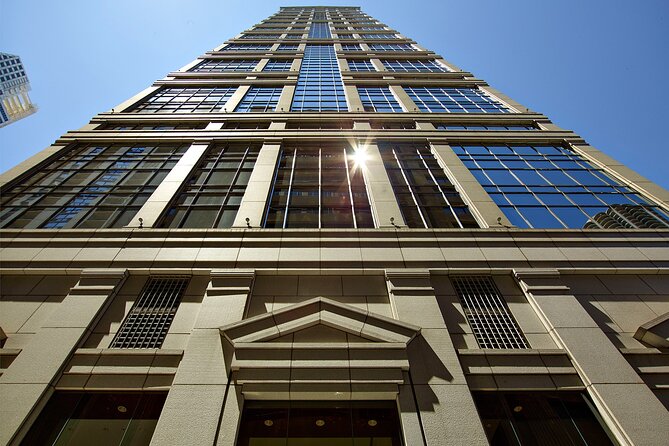
- Designs by big names like Renzo Piano and Frank Gehry, woven into the downtown walk
- Max group size of 15 people, which makes it feel personal instead of chaotic
A few more ways to spend a day in Chicago
Starting at the Chicago Architecture Center galleries, before you step outside
Most architecture tours try to teach you things while you are already walking fast. This one does a better job of easing you in. You meet at the Chicago Architecture Center (111 E Wacker Dr), and the tour begins there with time set aside for the Galleries at the center.
That first stop matters more than it sounds. Architecture can feel like a bunch of styles, dates, and names unless someone gives you a way to connect the dots. The galleries ticket is included, so you can use those minutes to get your bearings and understand what you are about to see on the street.
I like that the pace respects your attention span. The galleries stop is brief, about 10 minutes, which is perfect if you want context without turning the tour into a museum marathon. It is also a solid option if you arrive thinking you only care about the famous towers, then realize you are curious about how Chicago’s design story keeps evolving.
Wrigley Building, Marina City, and the quick wow-factor stops downtown
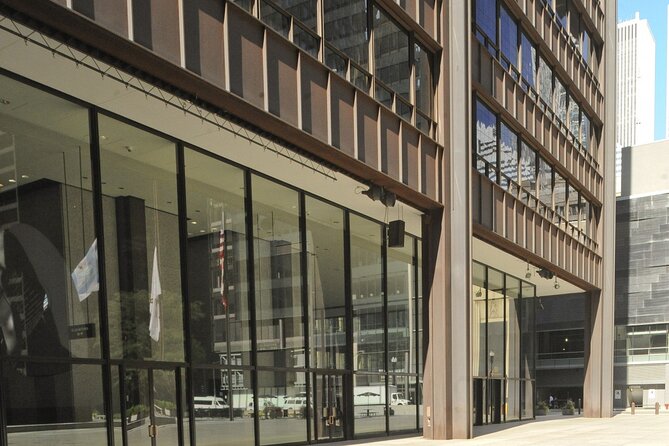
After the galleries, the tour turns into a street-level sequence of downtown highlights. One early exterior you will view is the Wrigley Building, with a short stop focused on the building and its surrounding area (about 5 minutes).
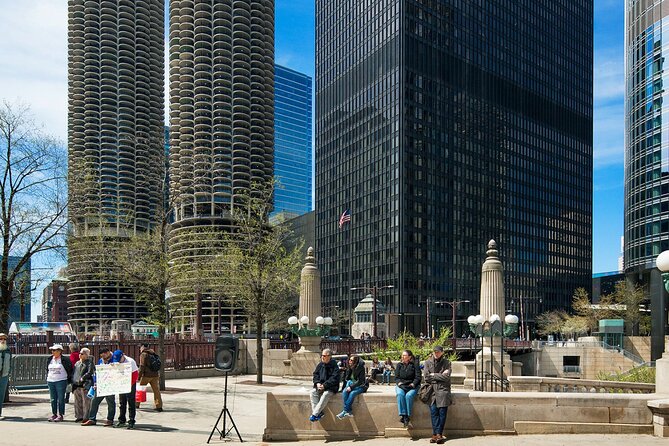
You are also set up to spot the kind of Chicago landmark energy that makes people fall for the city. The tour overview specifically calls out highlights like the Wrigley Building and Marina City. Even if you only catch certain angles, the walking format helps because you see how buildings relate to the street, not just how they look in photos.
Here is the practical truth about timed stops: they keep you moving, but they do not let you go deep at each site. That is fine for this tour’s goal, which is to connect architectural eras and important designers in a single pass. If you want long time to study stonework up close or linger to read every detail, you may need a follow-up visit. The walk is the orientation. Your return visit is where you slow down.
What helps is that the guide narration keeps everything from feeling random. With a good guide, a quick stop can still turn into a meaningful moment, because you understand what you are looking at and why it matters.
Daley Center and Reliance Building, where the story stays anchored in place
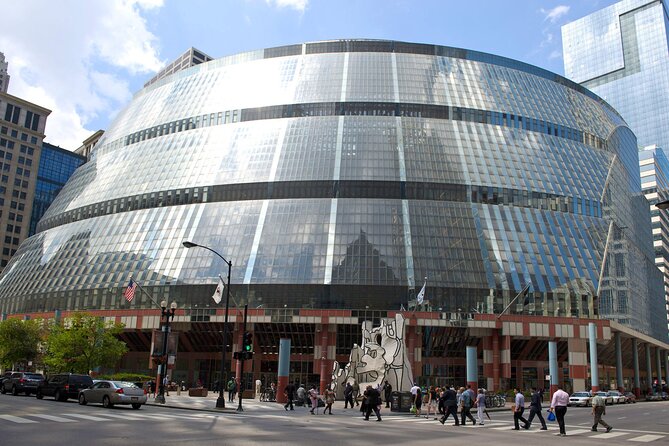
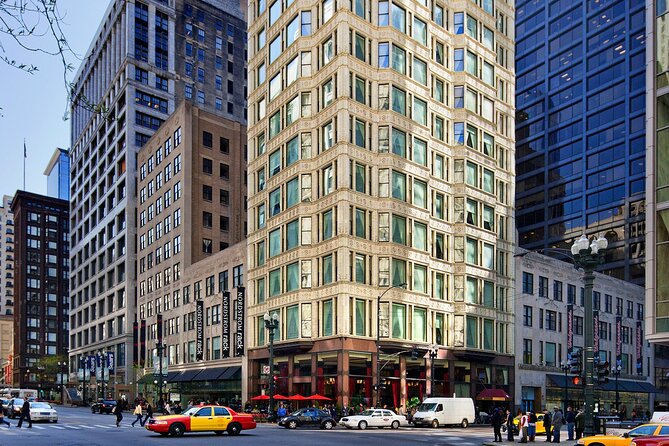
Next up, you get more exterior viewing with the Daley Center and then the Reliance Building. Each of these is a short look, about 5 minutes, focused on seeing the buildings and the surrounding context.
This part of the tour is less about ticking off famous names and more about learning how Chicago’s architecture feels at street level. When you walk between two major landmarks, you start to notice that architecture is not only about individual buildings. It is also about how a city organizes space, movement, and identity block by block.
Because the stops are quick, the value depends on how well you absorb the narration. The tour is designed around a trained architectural expert who can connect what you are seeing with the larger themes of Chicago’s architectural eras. That is where the “past and present” idea becomes real. You are not only learning about famous structures. You are learning how newer work sits alongside older design approaches, creating a continuous city conversation.
If you enjoy photos but also like understanding the why behind the wow, this section plays to your strengths. If you are the type who wants quiet time alone to roam, the tight stop timing may feel a bit structured. Still, the format keeps the tour from turning into wandering without purpose.
Jay Pritzker Pavilion views, architecture meets public space
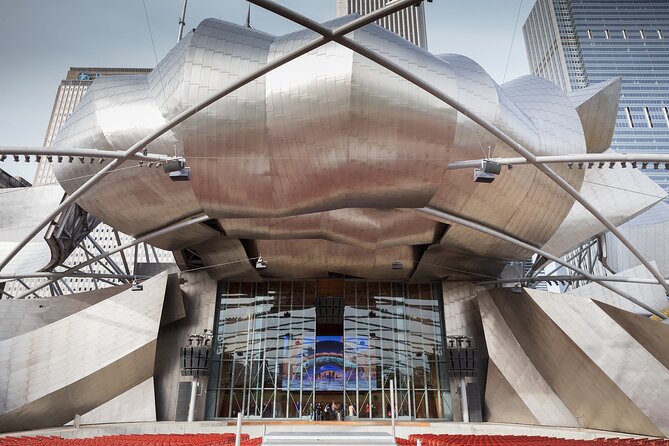
One of the most memorable stops is Jay Pritzker Pavilion. You get another short exterior viewing window, about 5 minutes, with narration guiding what you should pay attention to.
This stop is a nice change of pace because pavilions and public spaces tend to bring architecture into real life. Buildings are not only backdrops, they shape how people gather. Even with limited time, the walking approach helps you notice how the structure fits into the larger waterfront or public area feel that makes Chicago so distinctive.
If you are visiting Chicago for the first time, this stop can help you reframe architecture from “things to look at” into “places that change how you experience the city.” The guide’s stories are what turn the view into something you can remember.
The trade-off is the usual one for a walking tour: you will not have long to sit, sketch, or wander far from the group. But the tour length is designed around efficiency, about 1 hour 45 minutes total, so you still get a full sequence of highlights without fatigue.
How the guide and group size shape your experience
This tour is built around professional, certified guide narration and a small group size, with a maximum of 15 people. That matters because architecture can be dense. When a group is larger, guides tend to rush through themes. With a smaller group, it is easier to keep things clear and still answer the questions that come up.
The reviews you might read on this experience highlight guides by name, including Betsy, Matthew, and Jill. That is a good sign for consistency. At minimum, it tells you the tour provider emphasizes strong guiding, not just reciting facts.
The pacing also helps. The entire walking experience runs about 1 hour 45 minutes, and the stops are short: 10 minutes at the Chicago Architecture Center galleries, then roughly 5 minutes at each exterior viewpoint. This is a good length for day-one visitors because it gives you a framework you can use the rest of your trip.
If your goal is to get oriented fast, this is a solid fit. If your goal is to spend hours absorbing details without moving much, you might feel slightly constrained by the schedule. Think of it as a curated street briefing, not a slow study session.
Beyond the skyline, the neighborhoods have their own tours and their own stories.
- Chicago Architecture River Cruise★ 5.0 · 15,756 reviews
- Chicago River 90-Minute Architecture Tour★ 4.5 · 9,629 reviews
- Chicago River: 1.5-Hour Guided Architecture Cruise★ 4.8 · 8,046 reviews
- Chicago Architecture Center River Cruise aboard First Lady★ 5.0 · 5,536 reviews
- Chicago: Willis Tower Skydeck and The Ledge Ticket★ 4.6 · 4,350 reviews
Price and value, what you get for $35 in 1 hour 45 minutes
The price is $35.00 per person, and that is best understood as a “what you get, not just what you pay” situation.
Here is what makes it feel fair:
- You get narration by a professional, certified guide who helps you connect architecture eras and designers.
- You also get admission to the Galleries of the Chicago Architecture Center included. The galleries stop is not just a line item, it is an actual early investment in context.
- The walk brings you through multiple famous building viewpoints in a compact timeframe, so you are not spending your sightseeing day zigzagging.
What is not included is also important to know. Admission tickets are not listed as included for the exterior viewing stops like the Wrigley Building view, Daley Center, Reliance Building, and Jay Pritzker Pavilion. That means you can expect short outdoor looks and guide stories, not a series of paid building interiors.
I like that this structure keeps costs predictable. You are spending money where it counts, on the galleries and the guided interpretation, not stacking optional ticket expenses.
One more practical note: there is no food or drink included. If you take the tour in the middle of your day, plan a snack stop afterward so you do not end the walk hungry and cranky.
Practical tips for your walk near 111 E Wacker Dr

The meeting point and end point are both at the Chicago Architecture Center, at 111 E Wacker Dr, Chicago, IL 60601. That is convenient because you do not have to figure out a separate pickup location at the end.
This tour is also near public transportation, which helps if you are juggling other parts of your Chicago plan. Walking time can add up in a city like Chicago, so I recommend dressing for comfort and having shoes you can stand in for a while.
A few “know before you go” details that matter on foot:
- There is no coat check, so if you are carrying outerwear, you may need to hold it.
- There is no storage for luggage or strollers, so keep your hands free.
- Pets are not allowed, but service animals are allowed.
- The itinerary can change without notice, which is common for city walks, construction, or timing issues.
Also, you will want to bring your phone or camera, because most of what you experience is visual: building views and city angles. The good news is that the stops are short, so you are not missing out if you are not a slow photographer.
If weather is a concern, keep an eye on forecasts. A walking tour is a walking tour, and you will move between stops.
Should you book this Chicago architecture walking tour?
Book it if you want a fast, friendly architecture primer that helps you connect Chicago’s past and present without needing to be an architecture student first. This one is especially good for first-time visitors because it pairs an included starting point at the Chicago Architecture Center galleries with a sequence of major exterior viewpoints in about 1 hour 45 minutes.
Skip it, or plan differently, if you want long interior access at multiple landmarks. This tour is structured around outside viewing and guide stories, so it is not designed to be a deep, hours-long museum format.
One more smart reason to choose it: the guide narration and small group size mean you are more likely to get clear explanations, not just a walk-by list of buildings. If you like learning as you move, this is a strong match for your time in Chicago.
FAQ
How long is the Chicago walking tour?
It runs approximately 1 hour 45 minutes.
Where do I meet for the tour?
You meet at the Chicago Architecture Center, 111 E Wacker Dr, Chicago, IL 60601, and the tour ends back at the meeting point.
How much does the tour cost?
The price is $35.00 per person.
What is included in the ticket price?
Admission to the Galleries of the Chicago Architecture Center is included, along with narration by a professional and certified guide. The tour is a walking tour featuring famous buildings.
Are admissions included for all the stops?
Admission to the galleries at the Chicago Architecture Center is included. Admission tickets are not included for the other listed viewing stops.
What is the cancellation policy?
You can cancel for a full refund up to 24 hours before the experience starts. If you cancel less than 24 hours before, the amount paid is not refunded.
Just Added






Walking Tours, compared.


Chicago Favorites Ultimate Food and Walking Tour
Read our review →

Chicago in a Day: Food, History & Architecture Walking Tour
Read our review →
Chicago’s Secret Interiors Architectural Walking Tour
Read our review →

Browse the lists this tour appears in