

Reviewed · AUDIO TOURS
Chicago Self-Guided Audio Tour
Chicago has a way of surprising you. This self-guided audio route strings together big-name landmarks with practical stories, so you can see the city and still understand why it looks the way it does. You get a mobile-friendly experience, with audio hosted on SoundCloud and an interactive map to jump between stops.
Two things I really like: you set your own pace, and you can rearrange the day without losing the guide. I also like that the tour is built around short stops (about 20 minutes each) across 15 major places, so it works whether you want a half-day sampler or a full day of museum time.
One consideration: this is not a long, lecture-style guided tour. If you want marathon narration, you might feel like the audio is brief, so plan to spend real time looking around and use the guide as your on-site prompt.
In This Review
- Key Highlights You’ll Actually Use
- How the Audio Tour Works (Links, Map, and No GPS)
- Price and Time Value: What $6 Gets You, and What It Doesn’t
- Union Station to Buckingham Fountain: Chicago’s Big Finish-First Energy
- Field Museum and the Art Institute: When Museums Become Story Engines
- Millennium Park, Cloud Gate, and the Cultural Center: Modern Chicago With Character
- The Chicago Riverwalk and Navy Pier: Water-Level Stories and Lakefront Energy
- 360 Chicago Observation Deck: Skyline Insights You Can’t Get From Street Level
- Lincoln Park Zoo and Chicago History Museum: Conservation and City Identity
- Newberry Library and Griffin Science and Industry: Quiet Learning and Big Hands-On Curiosity
- Richard H. Driehaus Museum and How to Pair It With the Rest
- Should You Book This Chicago Audio Tour?
- FAQ
- How do I access the audio and map after booking?
- Is this tour GPS-guided?
- How long should I plan for each stop?
- Are museum and observation deck admission tickets included?
- What do I need to use the tour?
- Are the access links valid only on the day I book?
- Is this experience refundable?
Key Highlights You’ll Actually Use

- Choose your own route and even split the stops across multiple days
- SoundCloud playlist with a suggested order, plus tap-to-play for individual stops
- Google map with headphone icons so you can match each location to the right audio
- Mix of iconic and off-the-beaten-track stories, from hidden tunnels to design symbolism
- Good value at $6, since many stops are free to access (but some paid attractions are not)
A few more ways to spend a day in Chicago
How the Audio Tour Works (Links, Map, and No GPS)

This is a self-guided audio tour, meaning you are not following turn-by-turn instructions. The tour gives you private access links through your booking platform messaging system, and those links appear before your selected start time.
You get two key tools:
- A SoundCloud playlist with audio for all 15 attractions in a suggested order
- A Google My Maps itinerary map where each stop has a headphone icon and a clickable audio link
One practical tip: use the map to get your bearings fast, then hit play when you’re standing right at the stop. Because it is not GPS-guided, you will want to pay attention to the map pin and take a moment to confirm you are in the right spot before you start listening.
You also need a few basic things: headphones/earphones, a fully charged smartphone, and internet access. If your phone battery is shaky, charge it before you head out, because you will be using it as your control panel.
Finally, the access links stay valid for up to 6 days (until your tour is complete, maxed at that limit). That is a big help if Chicago weather or your energy level changes your plans.
Price and Time Value: What $6 Gets You, and What It Doesn’t
At $6.00 per person, this is priced like a “story starter,” not like a full-day live tour. That can be exactly right in Chicago, because a lot of the best sights are outdoors or easy to reach on foot, and you will spend your real time looking at architecture, art, and city design.
Here is the key value point: many stops are listed as Admission Ticket Free, including Union Station, Buckingham Fountain, Millennium Park, Cloud Gate, the Chicago Cultural Center, the Chicago Riverwalk, Navy Pier, Lincoln Park Zoo, and the Newberry Library. You can get plenty out of the tour without paying additional attraction fees at every stop.
Some of the heavier-ticket stops are not included (you pay entry separately where required). Those are Field Museum, Art Institute of Chicago, Richard H. Driehaus Museum, 360 Chicago Observation Deck, Chicago History Museum, and Griffin Museum of Science and Industry.
Timing is also part of the deal. Each stop is built for about 20 minutes, and the overall duration is listed as roughly 3 to 9 hours depending on how many places you do and how long you linger. If you treat each stop like a mini assignment (listen, look, then keep exploring), the time range feels realistic.
My advice: think of the audio as a high-quality checklist of what to notice, not as a substitute for actually being there. That mindset makes the format feel satisfying, instead of rushed.
Union Station to Buckingham Fountain: Chicago’s Big Finish-First Energy
Start with Union Station if you can. The audio guide frames it as more than a transportation hub, with Beaux-Arts grandeur and a Hollywood connection you might not expect. You will also hear how the station played a role as a secret World War II training ground, plus details about the Great Hall skylight and the hidden tunnels underneath.
Why this works as a first stop: Union Station sets the theme for the day. Chicago often feels like a city of reinvention, and the station is a perfect opening chapter because it mixes architecture, stories, and a sense of hidden layers.
Then head to Clarence F. Buckingham Fountain. The audio turns the fountain into a destination with meaning: the family legacy behind it, the engineering that lets it operate on a huge scale, and the symbolism tied to the Great Lakes. You will also hear about cultural renaissance and restoration efforts that saved it from decay.
If you like photos, this is a strong two-stop combo. Union Station gives you dramatic stone and ceiling light, and the fountain gives you a city centerpiece you can frame in many directions.
Potential drawback here: outdoor listening depends on street noise and crowds. Bring headphones and keep the volume at a level that still lets you stay aware of your surroundings.
Field Museum and the Art Institute: When Museums Become Story Engines
The Field Museum is a smart stop if you want variety beyond the usual T-Rex focus. The guide’s angle is the museum’s origin story, rising from the ashes of the 1893 World’s Fair. It also points you toward collections that people often skip, including the Ancient Americas material and the stories tied to Egyptian mummies. You will also hear about ongoing research happening in laboratories above you.
Two ways to get more out of this: first, use the audio to pick one or two themes before you enter so you do not wander aimlessly. Second, take 10 minutes after the audio ends just to see if your interests changed. Museums often work best when you choose your own lane.
Next is the Art Institute of Chicago, another place where the audio’s purpose is to steer your attention. Instead of treating the collection like a list of famous names, the guide focuses on how artworks ended up in the museum, including notes about donors and the more complicated realities around acquisitions. You also get the Chicago link, with the idea that the city’s industrial boom fed its artistic renaissance.
Art can be personal, so I’d use the audio like a navigation tool. Pick a small set of galleries and let the guide explain why certain works became cultural icons, such as Grant Wood’s American Gothic. Then spend time in front of a few pieces without multitasking.
Worth noting: both Field Museum and the Art Institute are marked as admission not included. If you plan to do them, budget for those tickets up front so you do not get surprised mid-route.
Millennium Park, Cloud Gate, and the Cultural Center: Modern Chicago With Character

Millennium Park is where Chicago’s “reinvention” story becomes visible. The audio talks about the transformation of industrial wasteland into a downtown cultural destination, plus the political and architectural challenges behind it. You will hear about underground engineering that supports the park’s features, and that matters because it changes how you read the space. It is not just pretty, it is built.
You will also get specific focus on Crown Fountain’s technology and the Lurie Garden’s ecological significance. Even if you only spend a short amount of time here, the guide helps you notice details that casual wandering misses.
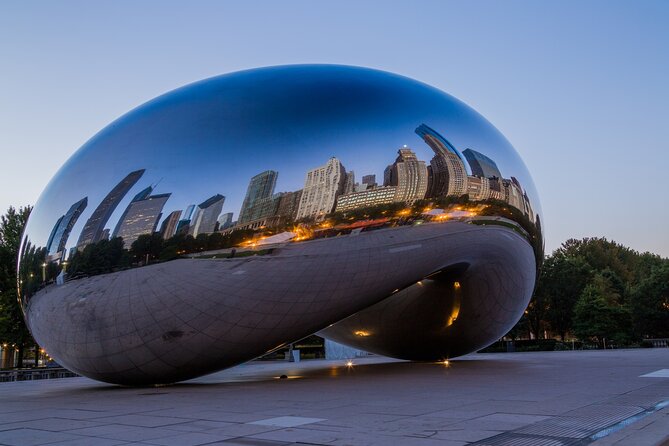
From there, it is an easy move to Cloud Gate, the famous Bean. The audio turns a photo stop into a thinking stop. You learn about the controversial creation process, how the surface works, and engineering challenges that almost derailed it. There is also attention to the sculpture’s mathematical properties and why visitors love to touch it.
The most practical part: Cloud Gate is one of those places where your angle matters. Use the audio early, then stop listening and just watch how your reflections shift around the sculpture.
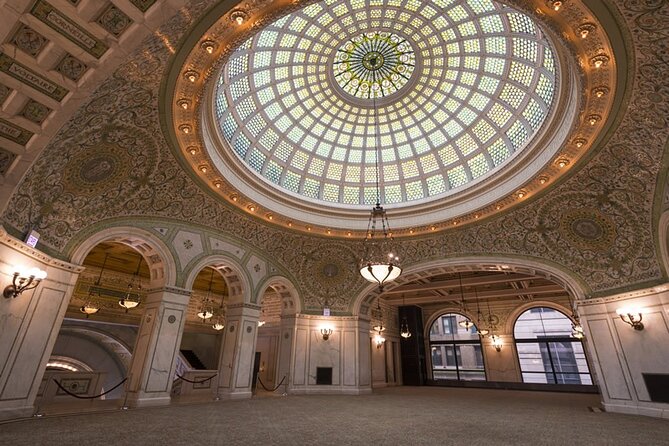
Then bring it home with the Chicago Cultural Center. This is described as the city’s People’s Palace, and the guide points you toward what makes it special: Tiffany glass domes in a building that began as something else. You will hear the story of its transformation, who the craftsmen were, and how political battles helped save the building from demolition.
If you want a break from crowds and outdoor noise, this stop is a great pivot. It is still in the downtown core, but it feels more contemplative than the fountain-and-park circuit.
Explore Chicago on your own clock
- Eastside Chicago The Heist Exploration Game and Tour★ 4.0 · 10 reviews
- Chicago Riverwalk Self-Guided Walking Tour★ 4.0 · 6 reviews
- Haunted Chicago Exploration Game and Tour★ 4.0 · 6 reviews
- Chicago Millennium Park Self-Guided Walking Tour★ 4.5 · 5 reviews
- Chicago Haunted Ghost Tour GPS Self-Guided Walking Tour★ 4.5 · 3 reviews
The Chicago Riverwalk and Navy Pier: Water-Level Stories and Lakefront Energy
The Chicago Riverwalk is a core stop because the audio explains the city’s relationship to water in a way that changes how you see the walkway. You will hear about the river’s role in Chicago’s founding and the story of reversing the river’s flow. The guide also points out modern renewal, hidden architectural treasures visible from the water level, and the idea of urban ecosystems thriving along the river.
This is also where the “self-guided” format shines. The Riverwalk is easy to roam at different speeds, so you can pause for photos, keep walking, and only listen when you want the story to match what you’re seeing.
Then shift to Navy Pier. The guide frames it with military history, including its role in World War training, and then tracks its near-demolition and rescue. After that, you learn how it evolved into an entertainment destination.
One consideration here: Navy Pier can feel like a lot when you’re doing it right after other major stops. I’d keep your schedule flexible, do the audio, then decide whether you want to keep exploring on your own or move on.
360 Chicago Observation Deck: Skyline Insights You Can’t Get From Street Level
From the River and parks, jump to 360 Chicago for a different perspective. The audio is designed for height: it explains what you can notice in the skyline and how the city’s architectural evolution shaped the view in front of you.
Instead of only naming buildings, the guide focuses on why Chicago looks like it does, and it highlights architects and the idea of Chicago as a skyscraper city. It also points you toward neighborhoods and how geographic and cultural forces shaped development.
This is one of the stops where the audio is worth turning on at the start. You might not understand what you’re looking at until you get those framing details, and then your photos and mental map get much better.
Admission for 360 Chicago is marked as not included, so treat it as a “pay for the view” moment in your day.
Lincoln Park Zoo and Chicago History Museum: Conservation and City Identity
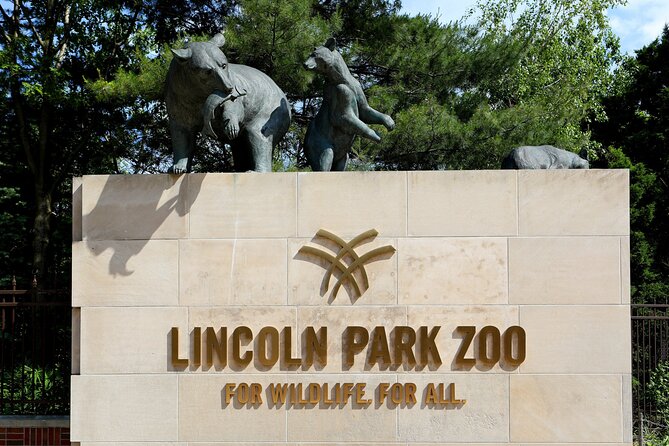
Lincoln Park Zoo is listed as admission free, which is a rare and valuable perk in a city with big-ticket attractions. The audio focuses on conservation and animal care, including captive breeding programs and how the zoo evolved into a globally respected center. You will also hear about habitat design, research on-site, and the way the zoo balances education, science, and animal welfare.
Even if you only do a short visit, the audio helps you read the zoo beyond cuteness. You catch the conservation angle and that makes the time feel more purposeful.
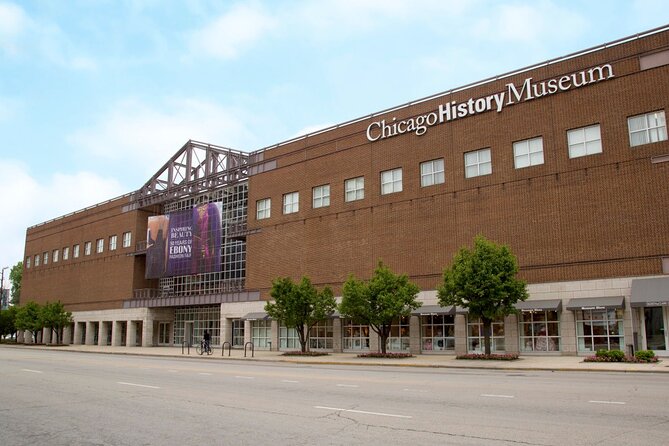
Next, Chicago History Museum adds local context. The guide is aimed at helping you connect Chicago’s biggest moments to ordinary people. You will hear about the aftermath of the Great Fire and the global impact of the World’s Fair, plus lesser-known stories that shaped the city’s character. The audio also connects cultural movements to Chicago’s ongoing cycles of resilience and reinvention.
If you want a break from outdoors, this is a good indoor anchor. And since admission is not included for this stop, it is also a good place to decide whether your day needs another ticketed moment or if you want to keep costs lower.
Newberry Library and Griffin Science and Industry: Quiet Learning and Big Hands-On Curiosity
Newberry Library is listed as admission free, and the guide treats it like a destination for readers and researchers. You will hear about the library’s founding story, its collections across centuries, and the kinds of treasures that live in its reading rooms. There is emphasis on rare manuscripts and historic maps, plus how the library supports scholarly research and public programs.
Even if you are not a serious researcher, the audio sets the tone for how to enjoy the building. Think of it as a chance to slow down, recharge, and learn Chicago through books and ideas, not just buildings.
Then end on science with Griffin Museum of Science and Industry. The audio highlights that the museum lives in the last remaining building from the 1893 World’s Columbian Exposition. It also brings in specific featured stories, including the captured German U-boat and the Pioneer Zephyr train.
If you like hands-on exhibits and want a more playful break from art and architecture, this is a good match. Admission is marked as not included, so plan it as your big-ticket science stop if your budget allows.
Richard H. Driehaus Museum and How to Pair It With the Rest
Richard H. Driehaus Museum is a high-impact indoor stop because it is a gilded-age mansion. The audio focuses on the story of Richard H. Driehaus’s passion for decorative arts and why the mansion feels like a time capsule of American luxury and craftsmanship.
You will hear about the restoration process, plus the secrets of the original family and the stories behind furnishings in specific rooms. The guide points you toward details such as Tiffany windows and hand-painted ceilings.
Pairing advice: this mansion works best if you have the patience to look closely. If your day is already packed with intense outdoor highlights, do Driehaus a bit earlier in the schedule or save it for a calmer stretch when you can appreciate the room-by-room details.
Admission is marked as not included here as well, so it is another place where you decide if you want your day to include paid museums.
Should You Book This Chicago Audio Tour?
I’d book this if you want flexibility and value, and you like being at the site instead of watching from a bus seat. At $6, it is a low-risk way to structure a day across iconic Chicago places, and the audio choices help you go beyond just snapping photos.
I would not book it if you want long, deep narration at every stop. The tour is designed as short, story-driven snippets, so you will get the best results if you use it as a guide for what to notice, then spend extra time looking with your own eyes.
If you want an audio plan that fits both a quick downtown loop and a museum-heavy day, this one gives you that control.
FAQ
How do I access the audio and map after booking?
After you select your date and start time, you receive private access links through your booking platform messaging system. One link opens a SoundCloud playlist for the audio, and the other opens a Google My Maps itinerary map with headphone icons.
Is this tour GPS-guided?
No. This is a self-guided audio tour. You can choose your starting point and ending point, and you follow the map yourself rather than using GPS turn-by-turn directions.
How long should I plan for each stop?
Each attraction is designed for about 20 minutes. Your full tour time can range from about 3 to 9 hours depending on how many stops you do and how long you stay.
Are museum and observation deck admission tickets included?
Not for every stop. Admission is marked as not included for Field Museum, The Art Institute of Chicago, Richard H. Driehaus Museum, 360 Chicago Observation Deck, Chicago History Museum, and Griffin Museum of Science and Industry. Other stops are marked as admission ticket free.
What do I need to use the tour?
Bring headphones or earphones, a fully charged smartphone, and internet access. The audio is accessed through links, so your phone needs connectivity.
Are the access links valid only on the day I book?
They stay valid until you finish the tour, with a maximum validity of up to 6 days.
Is this experience refundable?
No. The experience is non-refundable and cannot be changed for any reason.
Just Added






Audio Tours, compared.

Medieval Torture Museum Ticket with Audio Guide and Ghost Hunting
Read our review →
Chicago’s Gold Coast Hidden History: A Self-Guided Audio Walk
Read our review →

Chicago Scavenger Hunt and Highlights Self Guided Audio Tour
Read our review →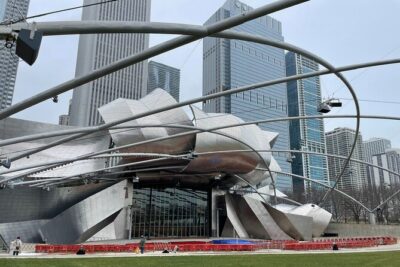
The Loop, River North and Chicago’s Theater District: A Self-Guided Audio Tour
Read our review →Browse the lists this tour appears in