
Reviewed · WALKING TOURS
Chicago Loop Walking Tour
The Loop sings when you walk it. This small-group Chicago Loop walking tour turns Downtown blurs into clear stories, with personal guide time and architecture plus social history that make the city feel understandable. One drawback: the route is not recommended if you have mobility issues, since it is a moderate walking experience.
I also like how the meeting point is dead simple and central, right at Chicago Cultural Center, and the tour ends near major transit at the Marquette Building. With strong ratings (4.9) and high recommendation rates, it is the kind of tour that tends to work for first-timers and families.
You’ll cover highlights on foot in about two hours, even when the weather is less than perfect. Expect a mobile ticket, an English-speaking guide, and inside-and-outside stops around the Loop core.
In This Review
- Key takeaways before you go
- The Loop makes more sense when it is walkable
- Starting at Chicago Cultural Center, with art-glass in your face
- How the guide turns buildings into real Chicago stories
- Expect Loop highlights tied to institutions and the El
- Reading the former Chicago Public Library and Marshall Field Building
- Timing, walking pace, and weather that can change your comfort
- Price and value: $60 for a small-group downtown history walk
- Who this Chicago Loop tour suits best
- Should you book this Chicago Loop walking tour?
- FAQ
- How long is the Chicago Loop walking tour?
- What does the tour cost?
- How many people are in the group?
- Where does the tour start and what time does it begin?
- Where does the tour end?
- Is the tour conducted in English?
- Is Chicago Cultural Center admission included?
- Are food and drinks included?
- Does the tour run in bad weather?
- What is the cancellation policy?
Key takeaways before you go
- Max 10 guests keeps the tour personal, with room for questions
- Chicago Cultural Center start means you begin with art-glass and mosaic wow right away
- Tiffany dome stop gives you a major Chicago landmark in a short time window
- Architecture plus social history helps you read the city beyond the skyline
- No food included, so plan a snack or meal on your own
- Moderate walking fitness is the real requirement, not a museum marathon
A few more ways to spend a day in Chicago
The Loop makes more sense when it is walkable
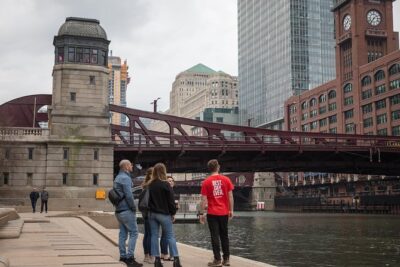
Chicago’s Downtown looks best from a distance, but it’s the details up close that make the Loop click. This tour is designed for that exact shift. In roughly two hours, you get a guided path through the core streets and notable buildings, so you do not waste time guessing what matters or what to look at.
The small group size (up to 10) is more than a comfort perk. It is practical. You can ask why a building looks the way it does, what changed in the city, or how one era shaped what you are seeing now. In a bigger group, that type of conversation usually disappears.
One more thing I appreciate: this is aimed at people who are short on time. If you only have a day or two in Chicago, this kind of walk helps you get your bearings fast, which makes the rest of your trip easier. You’ll still want to explore on your own after, but you will know what you are looking at.
Starting at Chicago Cultural Center, with art-glass in your face
The tour begins at 78 E Washington St, Chicago Cultural Center, at 11:00 am. That is a smart start for two reasons. First, it is central and easy to reach using public transportation. Second, you start inside a place that instantly explains the tone of Chicago’s architecture and design.
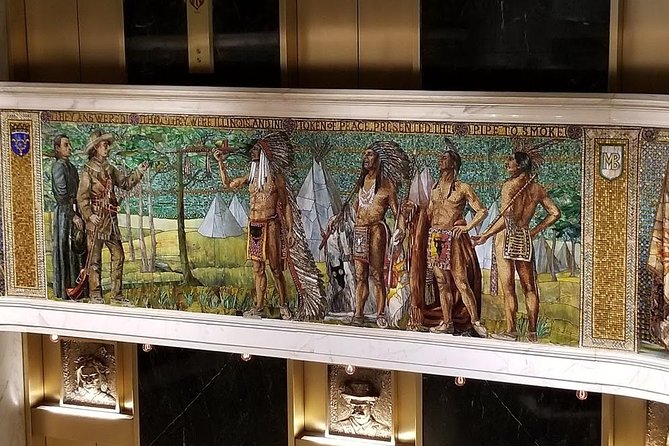
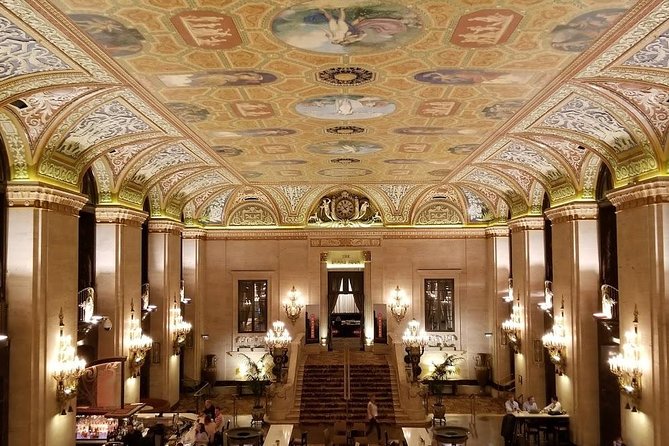
Your first stop is Chicago Cultural Center, where you spend about 20 minutes. Admission there is free for this tour stop, which is a nice add-on value. And the reason people get excited is obvious when you see it: the mosaics and the art glass associated with Healy and Millet, plus the largest Tiffany dome in the world.
Even if you are not a design fanatic, this stop works because it is visually loud. It grabs your attention, then your guide ties it to the story of Chicago. You are not just staring at pretty decoration. You are learning why these kinds of design choices appeared, and what they were trying to say to the public.
If you want to be extra efficient, arrive a few minutes early and take a quick glance around before the group gathers. Cultural Center interiors can make you slow down naturally, and you will thank yourself for giving your eyes a warm-up minute.
How the guide turns buildings into real Chicago stories
This tour is built around guide storytelling, not just photo stops. The best part is the way the guide connects architecture to everyday life, not only to famous names. You will hear architecture and history commentary, plus the social threads that make the city feel like more than a postcard.
Guides have been described as engaging and highly connected to the city. Kevin is one name that shows up repeatedly, along with other guides like Marlin and Keith. The through-line in their styles is the same: they explain details in a way you can follow, and they adjust the pace when conditions are tough. One review even mentioned hot, humid weather, and the guide adjusted instead of pushing the group.
That matters because two hours can feel long if the pace is rigid. Here, the focus is on keeping the experience comfortable enough that you can actually absorb it. If you like to ask questions, this is where the small group size pays off.
Also, one very practical tip from how the tour gets described: pay attention to how the guide points things out that you might walk past on your own. The Loop is packed with impressive structures, but it is also easy to miss what makes each one worth a closer look.
Expect Loop highlights tied to institutions and the El
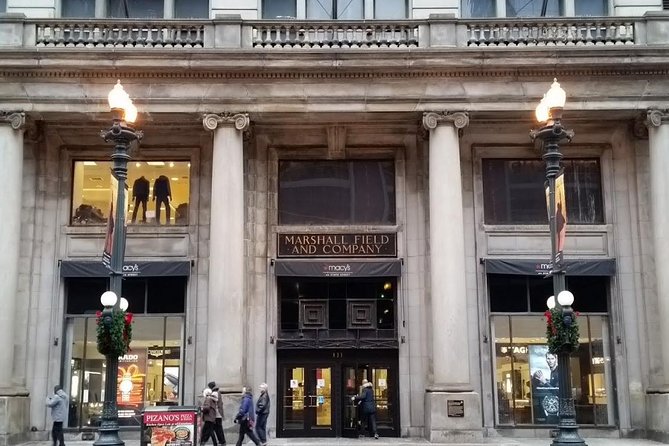
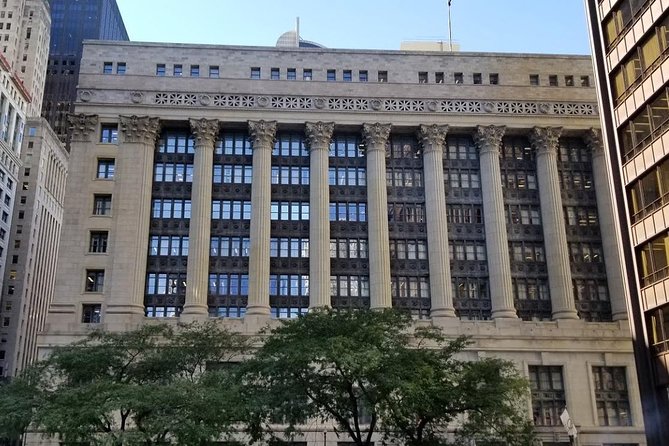
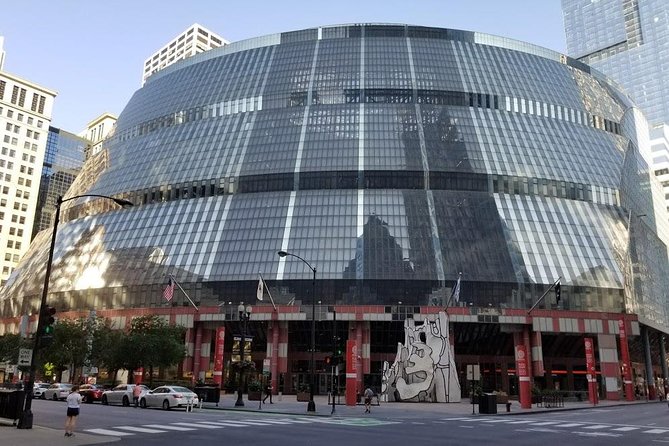
Beyond Chicago Cultural Center, the walk generally orbits around major Loop landmarks and public-facing buildings. Some specific stops that have been mentioned include the former Chicago Public Library and the Marshall Field Building. If you are curious about grand downtown institutions, this is exactly the lane the tour lives in.
Another theme that shows up is the El. Even if you are not riding it, the El is part of the Loop’s identity, and the tour approach connects transit and urban growth to what you see in the street-level and building patterns. That is a helpful framing because Chicago’s architecture is not separate from how people actually move through the city.
One more detail that stands out from guide descriptions: the tour has been said to cover Chicago’s development from the 1670s through the 1970s. You should not expect a textbook timeline in a two-hour walk. Still, that time range signals something important. The stories are not only about one decade of building boom. They connect eras, and they explain why the city ends up with the mix of styles you can spot while walking.
Drawback to consider: because the focus is on highlights and explanation, you will not see everything the Loop has to offer in one go. That’s normal and honestly useful. You come away with a framework, then you can choose what to chase further afterward.
Reading the former Chicago Public Library and Marshall Field Building
Two buildings get singled out in descriptions: the former Chicago Public Library and the Marshall Field Building. If those names ring a bell, you are already thinking in the right direction. These are the kinds of structures where architecture, civic purpose, and downtown commerce intersect.
What you will gain from a guided pass is interpretation. You might see the same grand forms without the context, but a guide can help you notice what changed over time and why the city invested in buildings meant for public life and major business. It turns a stop from a quick look into a takeaway you remember later when you see similar design choices elsewhere.
Also, if you care about interiors, this kind of tour tends to get you into notable indoor spaces when possible. Reviews specifically mention inside-and-outside stops and magnificent interiors. That means your experience is not just surface-level street views.
If you are the type who loves details, bring that energy. One review mentioned that a solo guest loved the details and the guide spent extra time pointing them out. That is a good sign that the tour can flex toward your curiosity.
Beyond the skyline, the neighborhoods have their own tours and their own stories.
- Chicago Architecture River Cruise★ 5.0 · 15,756 reviews
- Chicago River 90-Minute Architecture Tour★ 4.5 · 9,629 reviews
- Chicago River: 1.5-Hour Guided Architecture Cruise★ 4.8 · 8,046 reviews
- Chicago Architecture Center River Cruise aboard First Lady★ 5.0 · 5,536 reviews
- Chicago: Willis Tower Skydeck and The Ledge Ticket★ 4.6 · 4,350 reviews
Timing, walking pace, and weather that can change your comfort
The duration is about 2 hours. That is a sweet spot: long enough to see meaningful pieces of the Loop and absorb explanations, short enough to stay productive even on a tight schedule.
The tour operates in all weather conditions. That means you should dress for rain, wind, or cold depending on the season you visit. This matters more than you might think in Chicago, since one gust can make walking feel longer than it is. If the forecast looks rough, plan for layers and a rain layer you actually trust.
Physical requirements are also clear. You should have a moderate fitness level, and it is not recommended for those with mobility issues. If you use a mobility device or need frequent stops, this tour may not be the best fit. The short Cultural Center stop helps, but most of the experience is still a downtown walking route.
Food and drinks are not included. So if your tour lands near lunch or late afternoon, have a plan. Carry a bottle of water if you know you tend to get thirsty on walks, and consider a snack before or after.
Price and value: $60 for a small-group downtown history walk
At $60 per person, you are paying for three things: a local guide, a structured path, and time saved from figuring it out yourself.
The tour includes a local guide and a 2-hour small-group walking tour with insider architecture and history commentary. It caps at a maximum of 10 guests, which is a big part of the value. You are not paying for a generic audio route. You are paying for a person who can respond to your questions and adjust pace.
There is also value in how the starting stop is handled. Admission to Chicago Cultural Center for the first stop is free under the tour plan. That helps keep the experience feeling like you are getting your money’s worth from the start.
On the other hand, there are limits. Hotel pickup and drop-off are not included, and you are responsible for your own meals. If you are used to tours that solve everything, you might feel a little more ownership is required here.
Still, for first-time or time-pressed visitors, this kind of guided Loop primer can be a high return. It sets you up to explore more effectively for the rest of your trip.
Who this Chicago Loop tour suits best
This fits best when you want downtown context fast. It is especially good for:
- First-time visitors who want to understand the Loop instead of just photographing it
- Architecture and design fans who like stories behind the surfaces
- Families with teens who need engagement that keeps attention (several descriptions mention teenagers learning a lot)
- Couples or solo travelers who want a structured walk with room for questions
It may not be ideal if:
- You have mobility limitations or need more accessibility support than the route can offer
- You want a long, slow museum-style day with lots of seated time
- You are hoping for food included in the cost
Should you book this Chicago Loop walking tour?
I think you should book it if you want a smart, guided start to the Loop. The combination of a strong first stop at Chicago Cultural Center, the visual impact of the Tiffany dome, and the guide’s focus on architecture plus social history is exactly what makes a short trip feel fuller.
If you hate walking, you can ignore this one. But if you are comfortable with a moderate walk and you like explanations that connect the past to what you see today, it is a very solid choice. You also benefit from the small group setup, which is a real upgrade over crowded sightseeing.
My practical checklist before you book:
- Plan to arrive on time at 78 E Washington St, and wear shoes you can trust
- Dress for the weather, since it runs in all conditions
- Bring a question or two, or at least a curiosity level that lets you engage with the guide
- Eat beforehand or plan your meal afterward, since food is not part of the tour
If that sounds like your style, this is the kind of tour that helps you leave Chicago knowing what you saw and why it matters.
FAQ
How long is the Chicago Loop walking tour?
It runs for about 2 hours.
What does the tour cost?
The price is $60.00 per person.
How many people are in the group?
The tour is limited to a maximum of 10 travelers.
Where does the tour start and what time does it begin?
It starts at Chicago Cultural Center, 78 E Washington St, Chicago, IL 60602, at 11:00 am.
Where does the tour end?
It ends at the Marquette Building, 140 S Dearborn St, Chicago, IL 60603.
Is the tour conducted in English?
Yes, it is offered in English.
Is Chicago Cultural Center admission included?
The first stop at Chicago Cultural Center is included with free admission under the tour plan.
Are food and drinks included?
No, food and drinks are not included.
Does the tour run in bad weather?
Yes, it operates in all weather conditions, so you should dress appropriately.
What is the cancellation policy?
Free cancellation is available if you cancel up to 24 hours in advance for a full refund. If you cancel less than 24 hours before the start time, the amount paid will not be refunded.
Just Added






Walking Tours, compared.

Chicago Favorites Ultimate Food and Walking Tour
Read our review →
Chicago in a Day: Food, History & Architecture Walking Tour
Read our review →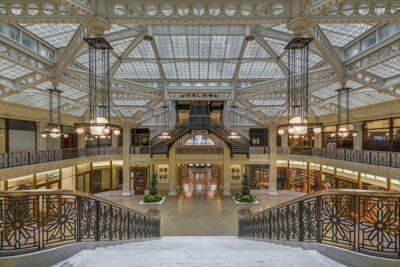
Chicago’s Secret Interiors Architectural Walking Tour
Read our review →
Browse the lists this tour appears in