
Reviewed · WALKING TOURS
Chicago: Graceland Cemetery Guided Walking Tour
Chicago’s skyline names have final peace here.
This guided walk through Graceland Cemetery turns marble, trees, and monuments into a practical mini course on how Chicago got so big. I love that you get architects tied to the skyline right on the ground, not in a textbook. I also love the pace through winding paths and century-old trees, where the setting does half the storytelling for you.
My favorite part is the mix, you’ll see the design legends plus the early money and influence that shaped the city. One possible drawback, it is a steady walking tour and it is not suitable for wheelchair users, so you should be ready for uneven ground.
In This Review
- Key tour takeaways at a glance
- Graceland Cemetery as an Architectural Classroom
- The 2 hour walking rhythm you should plan for
- Following Chicago’s design names: Burnham, Root, Jenney, Sullivan, Mies
- Marshall Field and George Pullman, where money meets marble
- Mausoleums, modest stones, and what to look for
- Photography rules that keep the experience respectful
- Getting your money’s worth from a $40, 2 hour guide
- Who should book this Graceland Cemetery tour
- Should you book this Graceland Cemetery guided walk?
- FAQ
- How long is the Graceland Cemetery guided walking tour?
- What is the price per person?
- What is included in the tour?
- Is transportation to and from the cemetery included?
- What language is the live tour guide?
- Is photography allowed?
- Is smoking allowed during the tour?
- Is the tour suitable for wheelchair users?
- Can I get a refund if I cancel?
Key tour takeaways at a glance
• Architects’ tombs on a guided route, including Burnham, Root, Jenney, Sullivan, and Mies
• Dramatic mausoleums plus simpler markers, so the cemetery feels both grand and real
• Power players’ monuments you’ll connect to early Chicago influence, including Marshall Field and George Pullman
• Century-old trees and quieter paths, a welcome break from the city’s noise
• Photography is allowed, just keep it respectful while you look
A few more ways to spend a day in Chicago
Graceland Cemetery as an Architectural Classroom
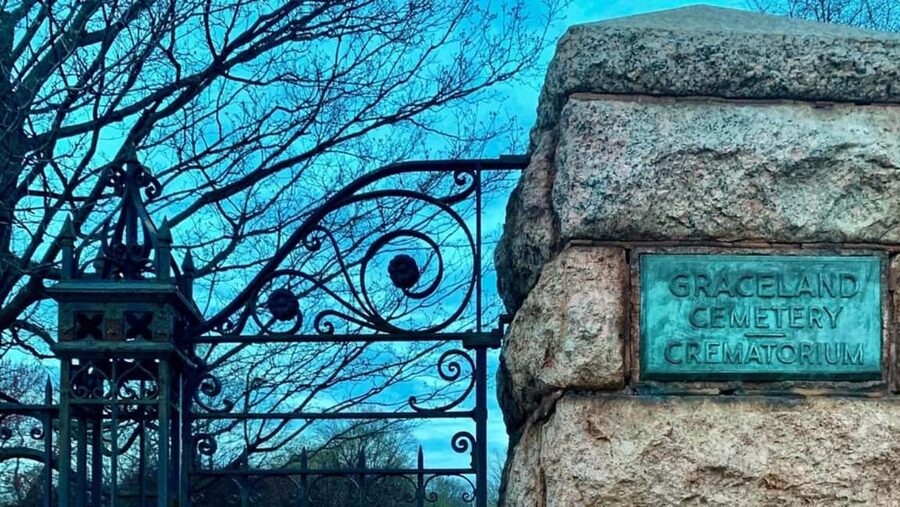
If you like Chicago, this kind of tour makes the city feel more human. Graceland Cemetery is not just a place to pass through. It is a place where design, wealth, and memory all sit in plain sight, with century-old trees framing the walk.
What makes this experience work is the guide’s focus. You start seeing the cemetery as a map of influence. The tour ties major architects to their real resting places, so their names feel less like trivia and more like part of Chicago’s story. And then, just when you think it will be all marble and style, you also meet the early power players who helped steer the city, including Marshall Field and George Pullman.
A big bonus: the atmosphere stays calm. Even with the heavy subjects, the walk is peaceful, the paths are meant for strolling, and the monuments land with more impact because you slow down.
The 2 hour walking rhythm you should plan for
This is a 2 hour guided walking tour. That timing matters because it is long enough to hit multiple notable stops, but short enough that you do not feel trapped. You get a structured route with enough time to actually look, not just move from point to point.
Bring comfortable shoes. I cannot stress that enough, because even when the grounds are beautiful, you will still be on your feet for the whole session. Also bring a camera, since photography is allowed. I recommend you wear weather-appropriate clothing because Chicago conditions can change fast and you will be outside most of the time.
One small reality check: the tour is not listed as wheelchair accessible. If you use mobility aids or need flat, smooth surfaces, you’ll want to skip this one and look for a more accessible option.
Following Chicago’s design names: Burnham, Root, Jenney, Sullivan, Mies
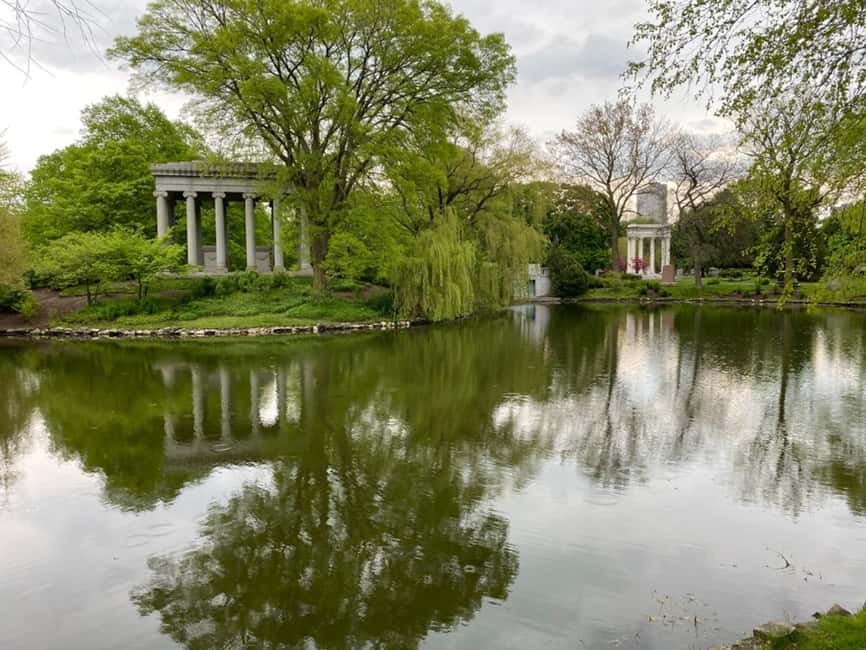
The heart of this experience is walking among the final resting places of the architects who shaped Chicago’s skyline. The names you will hear include Burnham, Root, Jenney, Sullivan, and Mies. Even if you only know one or two of these figures, the guide’s job is to connect each name to what you are seeing around you.
As you move through the cemetery, you’ll notice how often architecture shows up in stone. Mausoleums, carvings, and the way monuments are placed along paths all communicate status and intent. It is a reminder that architecture is not just what people build to impress living crowds. It is also what people use to define how they want to be remembered.
The cemetery setting helps your understanding. Instead of rushing through photos of buildings downtown, you’re standing in a quieter space where scale and detail are easier to register. If you like design, you will likely find yourself looking longer at the craftsmanship, not just reading the names.
Marshall Field and George Pullman, where money meets marble
Chicago’s skyline was not built by architects alone. It was built by people with deep pockets and strong opinions about what kind of city they wanted. This tour makes that connection by stopping at monuments of early power players, including Marshall Field and George Pullman.
What I like about this portion is the balance of admiration and complication. The tour frames these figures as part of the city’s fabric, including both legacies of beauty and some controversy. That matters because it keeps the experience honest. You are not just touring pretty monuments. You are seeing how influence gets memorialized.
Practically, this part of the walk is also a good mental reset. After focusing on architecture, you switch to people. Who were they? Why do you see their scale of memorial here? As you stand in front of their monuments, you can feel how much money and ambition shaped the visual language of Chicago, and how that language survives in death.
Mausoleums, modest stones, and what to look for
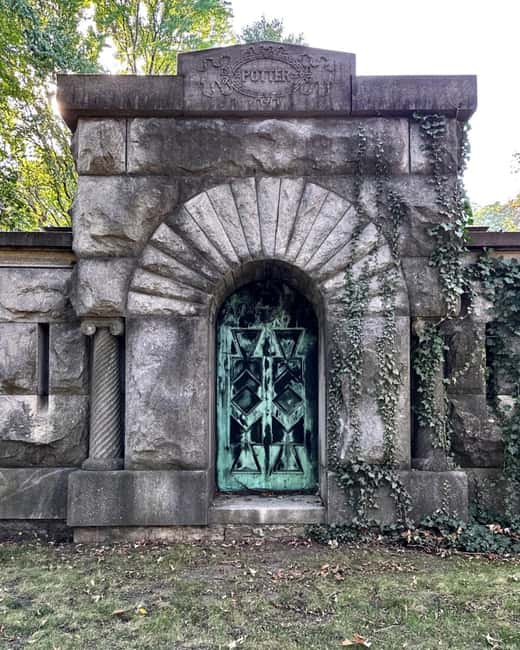
Graceland Cemetery is known for dramatic mausoleums, but the tour also includes the contrast of modest stones with big stories. That mix is one of the best ways to experience the place without getting overwhelmed by only the grandest structures.
When you hit a mausoleum, slow down and look at it like an artwork. Think about what the structure is doing beyond decoration. It is claiming permanence. It is announcing importance. It is also showing how families and institutions used design to express identity.
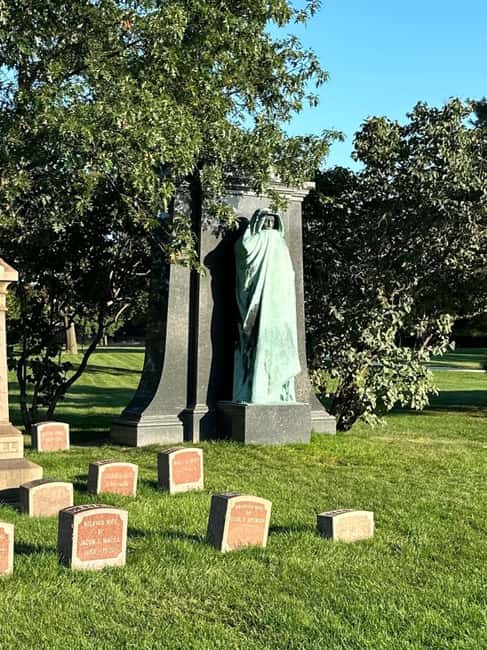
Then, when the route turns to simpler markers, you can compare. The cemetery starts to feel less like a theme park of famous names and more like a real community shaped over time. That contrast is where the walk becomes emotionally effective. You leave with a sense that Chicago’s story is not only about the famous skyline, but also about ordinary lives and decisions that still matter.
I also liked the tree-lined paths for this reason. They make the change in monument size feel smoother. You are not zigzagging across the grounds, you are drifting along a route that makes comparisons easier.
Beyond the skyline, the neighborhoods have their own tours and their own stories.
- Chicago Architecture River Cruise★ 5.0 · 15,756 reviews
- Chicago River 90-Minute Architecture Tour★ 4.5 · 9,629 reviews
- Chicago River: 1.5-Hour Guided Architecture Cruise★ 4.8 · 8,046 reviews
- Chicago Architecture Center River Cruise aboard First Lady★ 5.0 · 5,536 reviews
- Chicago: Willis Tower Skydeck and The Ledge Ticket★ 4.6 · 4,350 reviews
Photography rules that keep the experience respectful
Photography is allowed. You just need to be respectful. That is an important note because cemetery tours are about quiet attention, not quick shots.
My practical advice:
- Use your camera for the monuments and architectural details, not for posing over other people’s family spaces
- Pause before stepping close to markers, so you do not block the view for others
- Keep your voice low, especially if the group pauses for interpretation
If the weather is bright, mausoleum stone can glare. In that case, turn slightly or wait a minute for the light to change, rather than forcing overexposed photos.
Also, smoking is not allowed. Plan to stick to the rules and you’ll help keep the whole walk serene.
Getting your money’s worth from a $40, 2 hour guide
At $40 per person for a 2 hour guided walk, you’re paying for two things: someone to point out what to look at, and the time saved by having a route that connects the big names to the place itself.
This is not a DIY cemetery stroll. Without guidance, it’s easy to see monuments but miss the meaning behind them. With a guide, the names you hear like Burnham, Root, Jenney, Sullivan, and Mies become anchors for understanding. And when you add stops for figures such as Marshall Field and George Pullman, the tour gives you a fuller picture of how Chicago’s money and design culture overlap.
The best part for value is the duration. Two hours is enough to feel you covered a lot, but short enough to stay engaged. If you only have a limited window in the city, this is a focused choice that still feels like a real experience, not a rushed checklist.
One more note on quality: the small amount of available feedback has been strongly positive, including praise that the guide knows his stuff and that the cemetery is beautiful. That aligns with what you want from a guided memorial walk, clear explanations and respectful pacing.
Who should book this Graceland Cemetery tour
You’ll likely enjoy this if:
- You care about architecture and want to see famous names in a real setting
- You like hidden or lesser-told city stories that connect money, design, and legacy
- You want a calm, scenic break from typical sightseeing
- You enjoy looking closely at stonework, mausoleums, and monument details
You may want to skip it if you need wheelchair accessibility, since it is not suitable for wheelchair users. Also, if you hate walking outdoors or have limited mobility, the basic format might feel like too much.
Should you book this Graceland Cemetery guided walk?
I think it’s a strong pick if you want your Chicago sightseeing to include substance, not just scenery. The tour connects major architectural names tied to the skyline with power players like Marshall Field and George Pullman, and it does it in a peaceful, tree-filled setting where the details actually matter.
Book it if you’re the type who likes to pause, read, and learn while walking. Skip it if you cannot handle a steady 2 hour walk or need wheelchair-friendly routes.
If you go in with comfortable shoes, a camera you know how to use, and a willingness to look closely at stone and symbolism, you’ll come away with a sharper feel for Chicago than you’d get from photos alone.
FAQ
How long is the Graceland Cemetery guided walking tour?
The tour lasts 2 hours.
What is the price per person?
The price is $40 per person.
What is included in the tour?
The tour includes a guided tour of Graceland Cemetery.
Is transportation to and from the cemetery included?
No, transportation is not included.
What language is the live tour guide?
The live tour guide provides the tour in English.
Is photography allowed?
Photography is allowed, as long as you are respectful.
Is smoking allowed during the tour?
No, smoking is not allowed.
Is the tour suitable for wheelchair users?
The tour is not suitable for wheelchair users.
Can I get a refund if I cancel?
Free cancellation is available up to 7 days in advance for a full refund.
Just Added






Walking Tours, compared.


Chicago Favorites Ultimate Food and Walking Tour
Read our review →

Chicago in a Day: Food, History & Architecture Walking Tour
Read our review →
Chicago’s Secret Interiors Architectural Walking Tour
Read our review →


Browse the lists this tour appears in