
Reviewed · WALKING TOURS
️ Chicago Instagram Walking Tour (Private & All- Inclusive)
Downtown Chicago is made for photo breaks. This private 4-hour walking tour is built around getting great shots fast, moving through the Magnificent Mile skyline, Millennium Park, and the Chicago Riverfront with a guide who keeps your route tight and your camera ready. If you care about Instagram-level angles, you’ll love how the walk hits the city’s most recognizable landmarks in a logical loop, with complimentary bottled water to keep you comfortable.
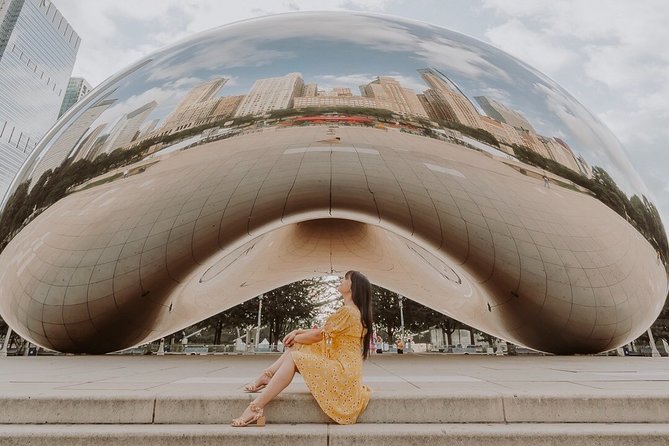
My favorite part is the photo-first pacing, especially around Millennium Park. You’ll have time at Cloud Gate for that signature mirrored look and a chance to frame nearby public art and waterfront views without feeling rushed. The main thing to consider is the weather, since the tour requires good conditions and is designed for outdoor walking for a half-day.
In This Review
- Key takeaways before you lace up your shoes
- A photo-first route through downtown Chicago
- Starting at the CTA Grand Station Red Line, then working toward Millennium Park
- The Magnificent Mile, from Water Tower to big-city skyline frames
- Wrigley Building and Tribune Tower, tight angles and classic facades
- Pioneer Court and the river junction, a calmer pause for story shots
- Millennium Park and Cloud Gate, the Chicago shot you’ll want to repeat
- Crown Fountain to Riverwalk, art plus water for wide-angle frames
- Grant Park and the Loop, where the walk turns into bigger city vibes
- What you really get for $236 per person
- How this tour fits your travel style
- Book it or skip it, my practical decision guide
- FAQ
- What is the duration of the Chicago Instagram Walking Tour?
- Is this tour private?
- Where does the tour start and where does it end?
- What is included with the tour?
- Are there admission fees for the stops?
- Does the tour run in any weather?
- What is the cancellation policy?
- Should you book this private photo walk?
Key takeaways before you lace up your shoes
- Private guide, just your group, so you can ask for photo tips and move at your pace.
- Millennium Park focus, with dedicated time near Cloud Gate and Crown Fountain.
- Architectural hits along Michigan Avenue, including the Wrigley Building and Tribune Tower.
- Riverwalk time for wide, scenic frames from the water.
- Bottled water included, plus a mobile ticket for easier check-in.
A few more ways to spend a day in Chicago
A photo-first route through downtown Chicago
This is the kind of tour you book when you want Chicago to look like Chicago, in pictures. The route stays centered on the most camera-friendly areas in downtown, so you are not spending half your day commuting across town just to find one good spot. You start in the Near North Side area and gradually work your way into the Loop, then finish near Millennium Park, which makes it easy to keep exploring afterward on your own.
Because it is private, the guide can nudge you toward the best angles for your gear, whether you shoot on a phone or a camera. And because the stops are built around well-known landmarks, you do not need to be a professional photographer to get results. Think of it as a guided shortcut to the places you already see in Chicago posts, with someone to help you stand where the lighting and composition work.
The “all-inclusive” feel here mainly comes from practical details. You get a mobile ticket, complimentary bottled water, and the key photo stops are marked as Admission Ticket Free. That means less time worrying about entry fees and more time shooting, wandering, and soaking up street-level Chicago.
Starting at the CTA Grand Station Red Line, then working toward Millennium Park
You meet at CTA Grand Station on the Red Line, at 521 N State St. That matters because downtown Chicago can be tricky if you rely only on rideshare. If you are staying anywhere near the core, the train is often the simplest way to get close to the start.
The tour also ends in a smart spot. Your guide drops you near Millennium Station at 151 Michigan Ave, specifically at the entrance of the Millennium Subway Station right by Millennium Park. That is convenient for two reasons. First, you are not forced into an awkward return journey. Second, if you spot one more photo chance on the way out, you can stay right there and keep going.
Timing-wise, plan around a half-day schedule, about 4 hours. The walk is downtown-focused, so you’ll be dealing with sidewalks, crosswalks, and the usual city bustle. If you like moving steadily and you want a checklist of iconic scenes, this route style fits well.
The Magnificent Mile, from Water Tower to big-city skyline frames
Your first major stretch is the Magnificent Mile, Chicago’s big-name shopping and skyline corridor. You get a solid 40 minutes here, which is a good amount of time to shoot both wide views and close architectural details.
A few landmark points pull the attention. The historic Chicago Water Tower adds charm and texture, especially when you catch it against the surrounding towers. Nearby, the neo-Gothic Tribune Tower style shows up as you move along Michigan Avenue, giving you that classic Chicago architecture look. And then the Wrigley Building brings a warm terracotta color that photographs well, particularly in daylight.
One more name matters for photo composition: the John Hancock Center. Even if you do not go up to the rooftop deck, just photographing the scale of it in relation to street-level landmarks makes your photos feel more “Chicago.” The area also tends to deliver good street scenes, with people, signage, and storefront variety that can add energy to your shots.
Practical note: Michigan Avenue can be crowded at peak times. If you want cleaner shots with fewer people in the frame, you’ll get better results by taking advantage of the guide’s timing choices and by being flexible with your exact camera position.
Wrigley Building and Tribune Tower, tight angles and classic facades
After the Magnificent Mile segment, you shift to two closely related architectural stop points. The Wrigley Building gets around 10 minutes, and the Tribune Tower gets about 10 minutes as well. That short window sounds quick, but in a photography-focused walk, it’s enough time to grab multiple angles without dragging the schedule.
For the Wrigley Building, positioning is everything. It sits on Michigan Avenue, and it is directly across from the Tribune Tower. That proximity lets you create side-by-side comparisons in your photos, even if you are mostly standing in one area. Look for how the terracotta tones and vertical lines interact with the modern downtown backdrop behind you.
For the Tribune Tower, focus on the neo-Gothic detailing. This is one of those buildings where close-up textures can photograph beautifully, not just the full facade. If you like architectural close shots, you will likely enjoy spending a few minutes switching between a wide frame and tight crops.
If you are shooting with a phone, this portion is especially efficient. You can take quick sets, adjust exposure if needed, and still move on without losing momentum.
Pioneer Court and the river junction, a calmer pause for story shots
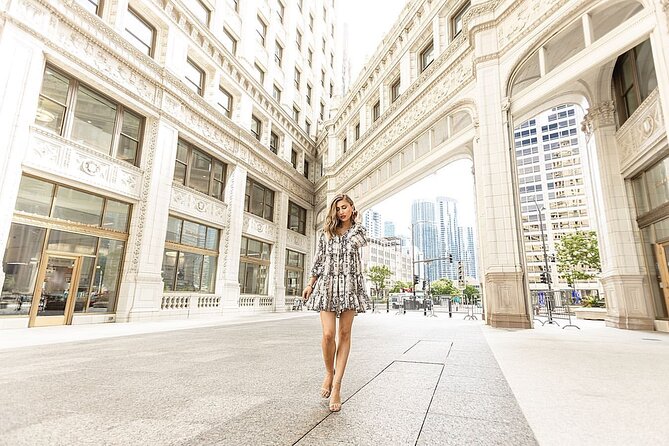
Next comes Pioneer Court, a plaza near the junction of the Chicago River and Upper Michigan Avenue. You get about 30 minutes here, which is longer than it might seem for a small stop, and that’s a good sign for anyone who likes to slow down and collect photos that feel like scenes, not just landmarks.
This spot also has a built-in narrative. It’s believed to be the site of Jean Baptiste Point du Sable’s original residence and trading post. Even if you only take in that context for a minute, it helps your photos feel more meaningful. Instead of snapping a pretty building, you are photographing a place that ties into the origin stories people associate with the city.
Practically, plazas and river-adjacent spaces can give you better breathing room than the main retail corridor. It can be easier to find a vantage point where your background lines do not look cluttered.
If you are someone who likes photos that tell a story, this is the kind of stop that adds variety to your final set, especially after the tall building focus earlier.
Beyond the skyline, the neighborhoods have their own tours and their own stories.
- Chicago Architecture River Cruise★ 5.0 · 15,756 reviews
- Chicago River 90-Minute Architecture Tour★ 4.5 · 9,629 reviews
- Chicago River: 1.5-Hour Guided Architecture Cruise★ 4.8 · 8,046 reviews
- Chicago Architecture Center River Cruise aboard First Lady★ 5.0 · 5,536 reviews
- Chicago: Willis Tower Skydeck and The Ledge Ticket★ 4.6 · 4,350 reviews
Millennium Park and Cloud Gate, the Chicago shot you’ll want to repeat
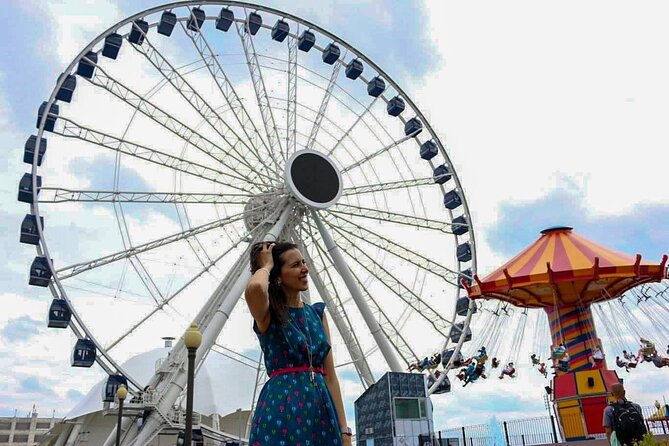
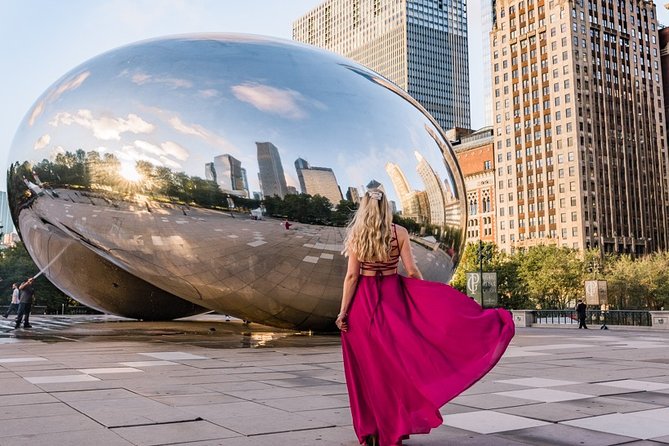
Then you hit the big one: Millennium Park. You get about 45 minutes here, plus a separate chunk for Cloud Gate of about 15 minutes. That extra time helps, because Cloud Gate photography is rarely one-and-done. You often want to try a couple viewpoints, check how the reflections look, and decide if you prefer people-in-the-frame or more empty-looking surfaces.
Cloud Gate itself is the centerpiece of AT&T Plaza in Millennium Park. It’s the sculptural form that people recognize instantly, and the mirrored surface is what makes it so fun. The trick is to vary your framing. Move a few steps left or right, change your camera angle, and you’ll see your surroundings warp in different ways. That is where “Instagram magic” comes from, and it is also where having someone guide you through timing and positioning pays off.
This is also a great time to shoot midday and late afternoon, if your tour timing lands you there. In general, reflections and shadows make the sculpture look different throughout the day. Even within the same hour, you can capture multiple moods.
One consideration: Cloud Gate can be popular. If you want fewer people in your reflection, aim for pauses when the crowd shifts and be ready to wait briefly.
Crown Fountain to Riverwalk, art plus water for wide-angle frames
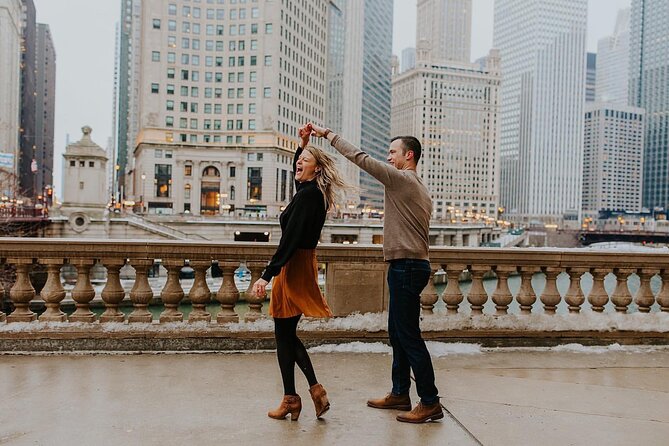
After Cloud Gate, the tour continues with Crown Fountain, which takes about 10 minutes. Crown Fountain is an interactive public art feature with video sculptures, designed by Jaume Plensa and executed by Krueck and Sexton Architects. Even if you keep your interaction minimal, it’s a visually strong subject. The lighting and the way it changes on-screen can add movement to your videos and energetic texture to your photos.
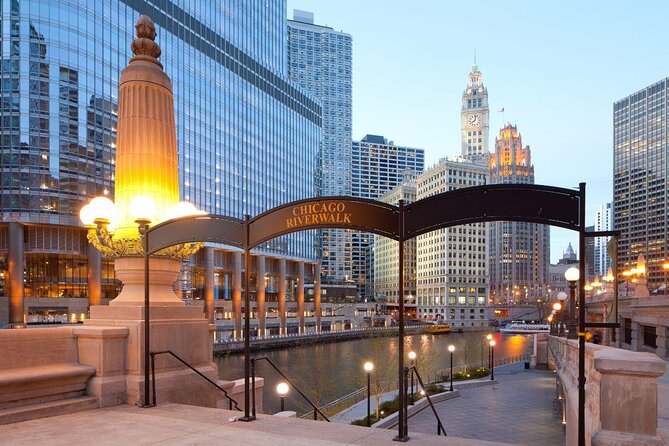
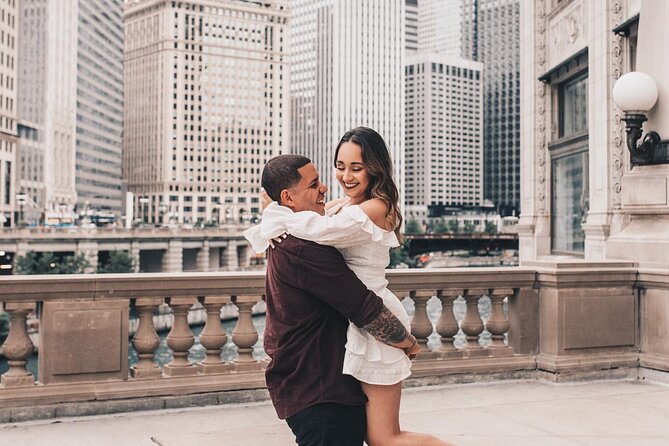
Then you move toward the Chicago Riverwalk, with about 45 minutes. You get one of the best downtown photo backgrounds here: a waterfront promenade with city architecture rising above the river. The Riverwalk is pedestrian-friendly and visually rich, and it is the kind of location where wide-angle shots work well. If you like “front to back” photos, this is a natural place to shoot.
The Riverwalk extends from Lake Shore Drive to Lake Street, so even if you do not cover the full length, you can still capture a sense of continuity. The reflections, the water line, and the geometry of nearby buildings help make your photos look like you are actually standing in Chicago, not just filming a landmark.
If you are tired, this is also a good portion to lean into. You can slow down, take photos, then let the environment carry your shot ideas.
Grant Park and the Loop, where the walk turns into bigger city vibes
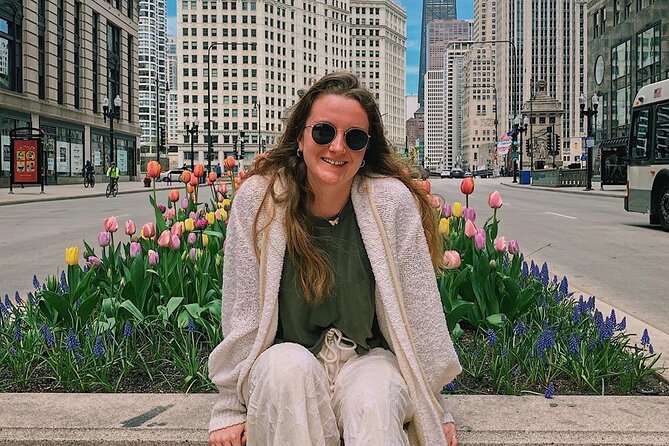
As your walk stays anchored in the center, you also spend time around the Grant Park area and key nearby cultural landmarks. Grant Park is a large urban park in the Loop, and it connects directly with the overall Millennium Park area. If you like parks that feel like extensions of the city, you will enjoy this.
The Art Institute of Chicago is associated with Grant Park, and it’s one of the oldest and largest art museums in the United States, founded in 1879. You may not need to go inside to get value from this stop. Even just seeing it in context, with the surrounding park atmosphere, can add a layer of “big city” to your photo set.
The Chicago Theatre also appears in the Loop area as part of what you see along the way. The theatre originally opened in 1921 and is a local landmark for classic downtown architecture. If you enjoy photographing buildings with character, the theatre facade can be a nice change of pace from the skyline and public sculpture scenes.
Because the data does not specify exact times for these final area stops, treat this portion as flexible and photo-friendly. The guide will likely keep you moving, but you should still be able to grab a few strong frames and then decide if you want to keep exploring independently.
What you really get for $236 per person
Let’s talk value, because $236 can either feel high or very fair, depending on how you travel.
You are paying for a private guide and a focused half-day route. In practice, that can save you time and guesswork. Instead of designing your own photo itinerary across multiple neighborhoods, you follow a path that concentrates on the most recognizable Chicago scenes. That is especially valuable if it is your first trip and you only have a short window.
You also get some “small but meaningful” inclusions. Complimentary bottled water helps during summer or any season when you end up walking more than you expected. A mobile ticket simplifies entry or meeting point confirmation. And the fact that the main stop points are marked as Admission Ticket Free means you avoid surprise entry costs for the landmarks that are usually the top photo priorities.
Where the price can feel less attractive is if you are a slow walker or if you already know exactly where you want to shoot and you plan to spend extra time at only one or two spots. In that case, a self-guided walk might do the job. But if you want variety and you want your time to count, a private route like this often turns out to be the efficient choice.
How this tour fits your travel style
This experience fits best if you check at least two of these boxes:
- You like photography and want guidance on where to stand for iconic shots
- You want a tight, half-day plan that stays centered around major landmarks
- You prefer a private group setup so you can ask questions and move comfortably
- You want to cover more ground than you can easily manage on your own in one afternoon
It may be less ideal if you dislike crowds around famous public places like Millennium Park and Cloud Gate. Even with a guide, you cannot fully escape popularity in that area. It also requires good weather, so if your trip window is unpredictable, you should plan for a backup plan.
Also, since the tour starts and ends near CTA stations and the route is downtown, it suits travelers who can handle walking on city sidewalks and navigating crosswalks.
Book it or skip it, my practical decision guide
Book this tour if you want a photo-focused, private way to hit Chicago’s best downtown scenes in one half-day. The combination of Millennium Park, Cloud Gate, Crown Fountain, and the Chicago Riverwalk gives you a photo set with variety, not just one repeat landmark. Add in the Magnificent Mile stops plus the Wrigley Building and Tribune Tower, and you get architecture, sculpture, and waterfront in a single day.
Skip it if your priority is deep museum time or you are only interested in one or two stops, because the price is tied to the private guided route. Also skip, or at least reconsider, if you are traveling with strong mobility limits, since this is designed for outdoor walking and requires good weather.
If your goal is simple, get great Chicago photos without spending your vacation planning, this one is a smart bet.
FAQ
What is the duration of the Chicago Instagram Walking Tour?
The tour runs for about 4 hours.
Is this tour private?
Yes. It is a private tour/activity, and only your group participates.
Where does the tour start and where does it end?
It starts at CTA Grand Station Red Line, 521 N State St, Chicago, IL 60654. It ends at Millennium Station, 151 Michigan Ave, and your guide drops you off at the entrance of the Millennium Subway Station right by Millennium Park.
What is included with the tour?
You get a mobile ticket and complimentary bottled water is included.
Are there admission fees for the stops?
The listed stops are marked as Admission Ticket Free for the places that include that note. The tour is focused on outdoor and landmark viewing.
Does the tour run in any weather?
The experience requires good weather. If it is canceled due to poor weather, you will be offered a different date or a full refund.
What is the cancellation policy?
Free cancellation is available up to 24 hours in advance for a full refund. If you cancel less than 24 hours before the start time, the amount you paid will not be refunded.
Should you book this private photo walk?
If you want a well-paced, downtown-centered route that hits Chicago’s biggest photo targets in a single half-day, this is a strong choice. The private setup and photo-first timing are what you are really paying for, and the included bottled water plus free-access landmark stops help keep the experience easy on your budget. If weather is shaky or you only care about one or two locations, you may be better off building a self-guided plan around those specific spots.
Just Added


Walking Tours, compared.
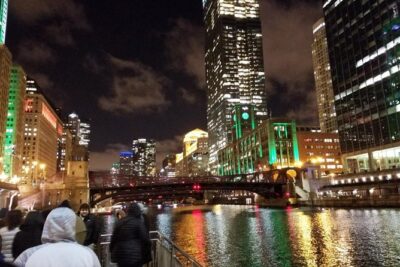

Chicago Favorites Ultimate Food and Walking Tour
Read our review →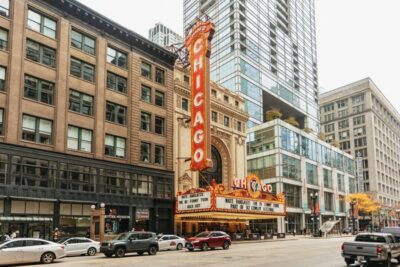
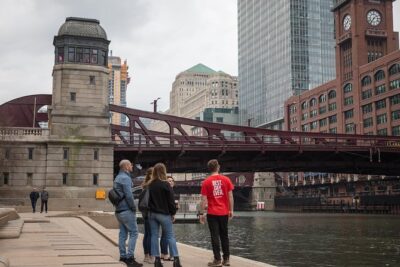
Chicago in a Day: Food, History & Architecture Walking Tour
Read our review →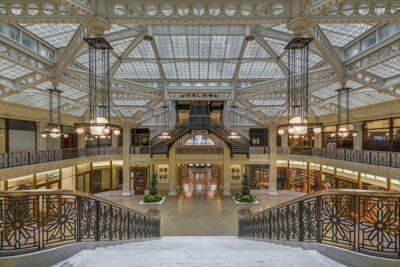
Chicago’s Secret Interiors Architectural Walking Tour
Read our review →
Browse the lists this tour appears in