
Reviewed · ARCHITECTURE TOURS
Walking Tour: Chicago’s Loop – Home of the Modern Skyscraper
Chicago’s Loop has a special kind of swagger.
This walking tour is built around the city’s early skyscrapers and the people behind their bold design choices, with a guide who brings the streets to life. I especially like the chance to slow down at landmark buildings like the Fine Arts Building and Chicago Cultural Center, then connect what you see to how downtown grew into a modern skyline. One consideration: you will be on foot with some stairs, and not every L stop has elevators, so plan for a moderate fitness level.
You get a personal feel, with a group capped at ten, plus transit tickets included so the schedule stays tight. Starting on Michigan Avenue and working through the Loop by walking and L train rides makes the route easy to follow without getting stuck in the wrong block. The guide I heard people rave about, Tom, is described as friendly and very hands-on with pacing, which matters on a day when you want details, not just photos.
You should think of this as an architecture walk with history threaded through it, not a long museum day. Many stops are quick and focused, so it is ideal if you want a strong orientation to Chicago’s “modern” story in about three and a half hours, then keep exploring after the tour ends.
In This Review
- Key highlights you can plan around
- The Loop, mapped for modern skyscraper lovers
- Meeting on Michigan Avenue, then moving like a local
- Stop 1: Fine Arts Building and the thrill of manually operated elevators
- Stop 2: Harold Washington Library Center, hidden exhibits and local flow
- Stop 3: Monadnock Building, close-up lessons from an early giant
- Stop 4: Marquette Building, a national landmark you can recognize once you see it
- Stop 5: Revival Food Hall snack break, practical energy for more looking
- Stop 6: The Rookery Building, architecture you notice the second you walk in
- Stop 7: Quincy and the L train shortcut to keep momentum
- Stop 8: Macy’s on State Street, where the tiled dome becomes a must-see
- Stop 9: Chicago Cultural Center and the Tiffany dome finale
- Price and value: what $65 buys you in real time
- Who should book this Loop skyscraper walk
- Should you book? My practical take
- FAQ
- How long is the Chicago Loop walking tour?
- What is the price per person?
- Where does the tour start and where does it end?
- What time does the tour start?
- How big is the group?
- What is included in the ticket price?
- Is food or drinks included?
Key highlights you can plan around
- Small group of 10 for a more conversational pace and better chances to ask questions
- Manually operated elevators at the Fine Arts Building, a rare-feeling behind-the-scenes moment
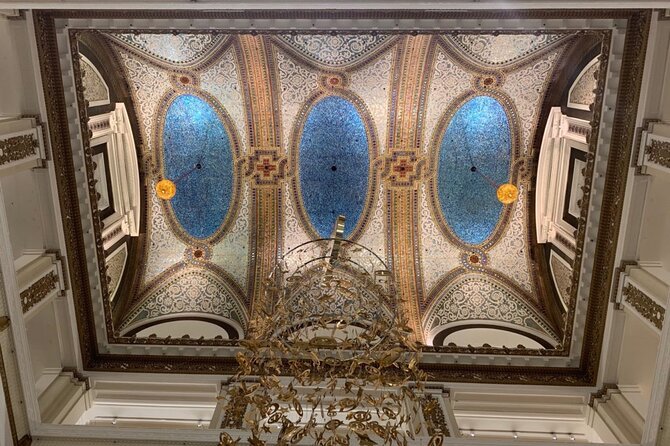
- World’s largest Tiffany dome at the Chicago Cultural Center, a top visual payoff
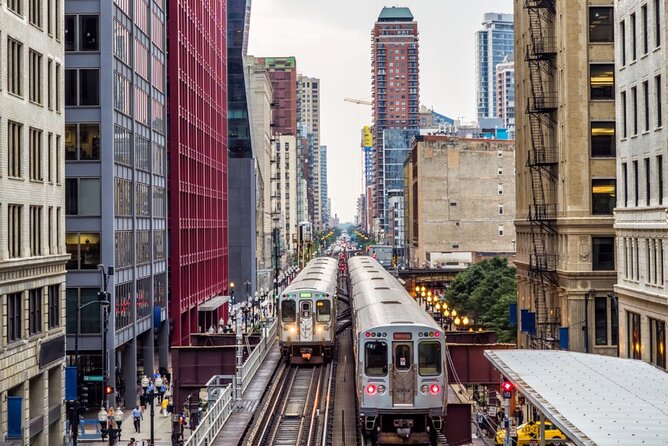
- Quick L train hop to link distant Loop sights efficiently, instead of walking every block
- Skyscraper “then and now” stops, from the Monadnock’s early scale to later landmarks like the Marquette Building
- A real snack break at Revival Food Hall, even though food is not included
Chicago's skyline, explained block by block
The Loop, mapped for modern skyscraper lovers
If Chicago ever feels like a city built in layers, that is because it is. This tour gives you a way to read those layers while you are still near street level. The Route focuses on the Loop, where the story of the skyscraper is written in stonework, lobby design, and the way downtown blocks were planned to handle huge crowds and heavy business traffic.
The best part is that the experience is not just sight-seeing. You get context as you move. You learn why certain buildings show up again and again in Chicago architecture conversations, and you also see some less obvious architectural moments along the way, not only the headline names.
Another practical win: the tour mixes walking with the L train. That matters in Chicago. You avoid turning a half-day into a grind of too many blocks, and you still get the satisfaction of being on foot for the street-level drama.
Meeting on Michigan Avenue, then moving like a local
The tour starts at 10:00 am at the Fine Arts Building at 410 S Michigan Ave, and it ends at the Chicago Cultural Center at 78 E Washington St. You will meet your guide in the lobby, then begin right away. Because the meeting point is downtown and near public transportation, it is simple to get there, even if you are staying off the main Loop grid.
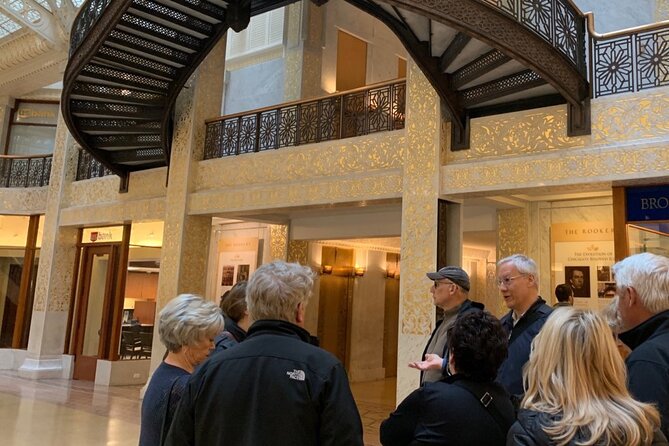
The group size is capped at ten. That is a big deal on architecture tours, where the best stuff is often in the small details. With a small group, you can actually pause, look up, and get answers instead of rushing to keep up.
You also get a mobile ticket. In plain terms, that means less paper to manage in a city where you will likely be using your phone for navigation. Keep your device charged enough for the day.
One note I would not ignore: the tour includes subway travel and involves stairs. The tour is described as suitable for moderate physical fitness, and it specifically says not all train stations have elevators. If stairs are tough for you, consider bringing a little extra buffer time and think through your route to the start and your energy level for the walk segments.
Stop 1: Fine Arts Building and the thrill of manually operated elevators
You start in a building where history is not behind glass. The Fine Arts Building is known for its long-standing elevator experience, including manually operated elevators. Even if you have ridden plenty of old lifts, there is something about the physical process that makes the past feel tangible. It is also the kind of thing that makes the tour different from a “look from the sidewalk” approach.
Time is about 30 minutes here, including a building tour. For me, the value is that this stop sets a tone. You learn what to look for as you enter lobbies, how design choices relate to the way a downtown building functions, and why Chicago became a laboratory for the skyscraper.
If you hate waiting around during tours, this is a good opening stop. It is structured and focused, and it gives you a reason to pay attention right from the start.
Stop 2: Harold Washington Library Center, hidden exhibits and local flow

Next up is the Harold Washington Library Center, with about 30 minutes. Libraries sound quiet on an architecture itinerary, but this is exactly why it works. A major public building like this shows how the Loop is not only for business, but also for civic life.
You are guided through hidden gems and exhibits. That language matters: you are not just moving through big rooms, you are looking for the details your average visit might skip. Even if you are not a lifelong library person, it is a nice change of pace from lobbies and office towers.
The practical advantage here is pacing. Your legs get a breather, but you still keep learning. It helps the tour feel like a narrative rather than a chain of separate photo stops.
Stop 3: Monadnock Building, close-up lessons from an early giant
You then zero in on the Monadnock Building for about 15 minutes. This is a short stop, but it is a meaningful one because it represents the era when scale was the point. The Monadnock is described as what was once the largest office building in the world, which makes it an easy anchor for understanding how Chicago’s skyscraper ambitions accelerated.
This is the kind of stop where I recommend slowing down on your own timeline too. Look up. Notice materials and how the building holds attention at street level. Even in ten minutes, you can start seeing patterns between early high-rises and later downtown giants.
Drawback to plan for: because the stop is brief, you should bring your curiosity with you. If you want deep time inside this building, this tour may feel a bit fast. The payoff is that you are not spending the entire day on one structure.
A few more ways to spend a day in Chicago
- Chicago: Gangsters and Ghosts Walking Tour★ 5.0 · 7,155 reviews
- Chicago Favorites Ultimate Food and Walking Tour★ 5.0 · 1,962 reviews
- Chicago: Gangsters and Ghosts Guided Walking Tour★ 4.7 · 1,697 reviews
- Chicago in a Day: Food, History & Architecture Walking Tour★ 5.0 · 1,153 reviews
- Chicago’s Secret Interiors Architectural Walking Tour★ 5.0 · 635 reviews
Stop 4: Marquette Building, a national landmark you can recognize once you see it
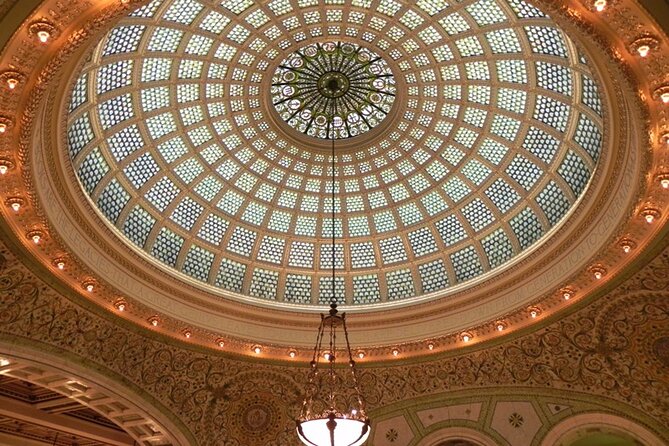
After that, you get the Marquette Building for about 15 minutes. It is listed as a national landmark, which signals its importance in the story of downtown Chicago architecture.
Because your time is limited, the goal here is recognition plus context. You learn what makes it significant and you connect it to the broader Loop idea: Chicago built high, then kept refining how buildings looked, worked, and presented themselves to the public.
This is also a nice “bridge” stop between the more early-skyscraper-focused moment at the Monadnock and the grand public-facing sights that come later.
Stop 5: Revival Food Hall snack break, practical energy for more looking
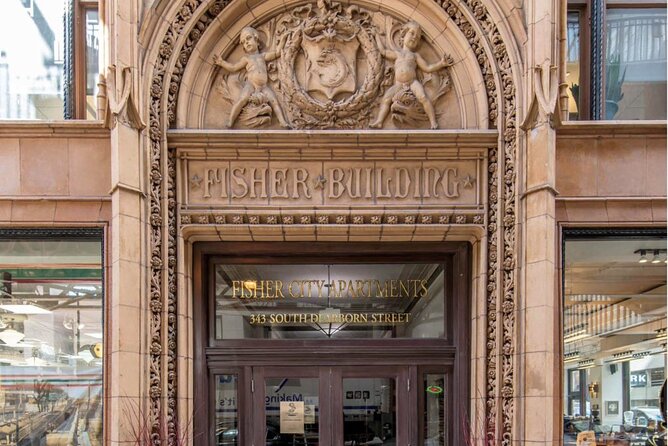
You will pause at Revival Food Hall for about 30 minutes. Refreshments are not included in the tour price, but the break is on purpose. This is one of those moments where the tour respects reality, you will be walking, and Chicago days can be deceptively tiring.
The value here is flexibility. You can grab a quick snack, hydrate, and reset without needing to figure out where to eat mid-tour. It is also fun because food halls are part of the modern Chicago story, even when you are learning about older buildings.
Tip: treat this as a recharge stop, not a long sit-down meal. You will have more big interiors ahead.
Stop 6: The Rookery Building, architecture you notice the second you walk in
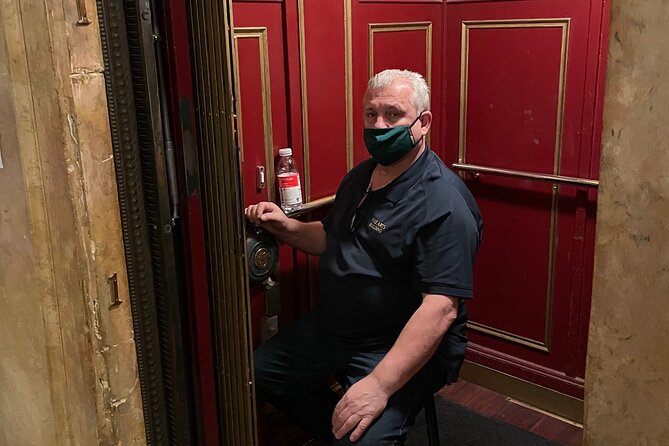
The Rookery Building is next for about 15 minutes. It is highlighted as one of the most architecturally significant buildings in Chicago, so expect a “blink and you miss it” style of visit if you are rushing.
The Rookery is the kind of stop where it pays to do one simple thing: look up and then look at the edges. Lobbies and transitional spaces often hide the most interesting design decisions. This tour gives you a quick look, so you get the sense of why the building is famous without turning it into a long detour.
If you are the type who likes to take detailed photos, you might want to plan a little extra time in your day for your own follow-up. This tour is about getting you oriented quickly, not about letting you linger indefinitely.
Stop 7: Quincy and the L train shortcut to keep momentum
After the Loop walk sequence, the tour boards the L train at Quincy for about 15 minutes to reach the final two destinations. The transit ticket is included.
I like this structure because it keeps the whole outing from turning into a slog. The Loop is compact, but the best buildings are not always all in a straight line. Using public transit also keeps you feeling like you are moving through the city the same way Chicago commuters do.
One consideration for planning: you are told to be able to climb stairs because not all stations have elevators. That means the L portion can be easy if your route is convenient, but it can feel more intense if you have mobility limitations.
Stop 8: Macy’s on State Street, where the tiled dome becomes a must-see
Next is Macy’s on State Street, about 30 minutes. This is an iconic Chicago department store stop, and the architecture payoff is a famous tiled dome detail. One practical piece of advice: it is easy to walk through a big store and miss the best view because you are naturally looking at merchandise at eye level.
This stop changes that. The point is to get you to look up. Once you notice the dome, you start understanding why downtown department stores are not just retail spaces. They are public buildings with serious design ambitions.
Even if shopping is not your thing, plan to treat this like an architectural interior rather than a shopping stop. You can browse for comfort, but your main assignment is to see the dome correctly.
Stop 9: Chicago Cultural Center and the Tiffany dome finale
You wrap up at the Chicago Cultural Center for about 30 minutes. This is a strong ending because it delivers a single, unforgettable visual reference: the world’s largest Tiffany dome.
Finishing with a landmark like this helps your brain file the whole day. You start the tour with classic office-building history and manually operated elevators, then move through a series of structures that shaped the Loop, and you end with a dome that makes Chicago feel like a place where art, craftsmanship, and public life matter.
If you still have energy after the tour ends, this is a great spot to keep exploring nearby. You will be in the right neighborhood to transition from guided learning to free wandering.
Price and value: what $65 buys you in real time
At $65 per person, the tour is not a budget-only option. But it also is not priced like a private charter. For the value you get, the cost makes sense for a first-time architecture visitor or anyone who wants a structured introduction without spending hours planning.
Here is why the math tends to work:
- Local expert guide included, and the pacing is designed for architecture learning
- Transit tickets included, so you spend less time figuring out how to get between distant stops
- Multiple building stops are listed as free with tickets, including major interiors and landmarks
- The group cap at ten keeps the experience personal enough for questions and slow looking
Also, you are not paying extra for food on top of it. You are free to pick a snack at Revival Food Hall, but the tour itself does not force you into a meal package.
If you are the kind of traveler who loves to read about architecture later but wants no structure now, you might find the tour price less appealing. Still, the Tiffany dome and the indoor lobby moments tend to make the fee feel justified.
Who should book this Loop skyscraper walk
This tour is a great match if you want:
- A Loop orientation that explains why Chicago’s skyline became what it is
- A walking plus L train plan that keeps you moving without exhausting you
- Architecture learning tied to buildings you can actually see and enter
It is especially smart for your first Chicago trip, because you leave with a mental map of the major early towers and a few unexpected stops like the library and Revival Food Hall.
It might be less ideal if:
- You dislike stairs or you know you will struggle with subway station access
- You want long, in-depth time inside each building, since several stops are intentionally short
Should you book? My practical take
I would book this tour if you want a fast, high-impact way to understand the Loop’s skyscraper story, without guessing where to go or what to notice. The combination of guided context, small-group size, and interior moments like the manually operated elevators and the Tiffany dome is a strong recipe for value.
If you are planning your day and you care about architecture details, put this on your morning or early afternoon schedule. Starting at 10:00 am gives you enough time afterward to chase anything you want to see again on your own. Just plan around stairs, bring comfy shoes, and take your time at the places where the guide is asking you to look up. That is where the Chicago magic tends to land.
FAQ
How long is the Chicago Loop walking tour?
It runs for about 3 hours 30 minutes.
What is the price per person?
The price is $65.00 per person.
Where does the tour start and where does it end?
You meet in the lobby of the Fine Arts Building at 410 S Michigan Ave, Chicago, IL 60605, and the tour ends at the Chicago Cultural Center at 78 E Washington St, Chicago, IL 60602.
What time does the tour start?
The start time is 10:00 am.
How big is the group?
The tour has a maximum of 10 travelers.
What is included in the ticket price?
Included are transit tickets and a local expert guide.
Is food or drinks included?
No. Refreshments and food are not included in the tour price. You can grab snacks at Revival Food Hall during the break, but you pay for them yourself.
Just Added



Architecture Tours, compared.

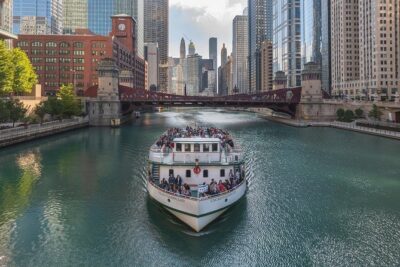
Chicago Architecture Center River Cruise aboard First Lady
Read our review →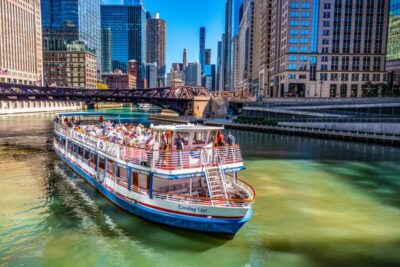
Architecture River Cruise Skip-the-Ticket Line
Read our review →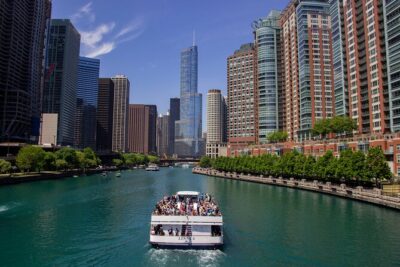
Chicago River 45-Minute Architecture Tour from Magnificent Mile
Read our review →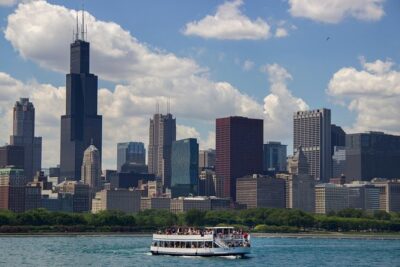

45-Minute Family-Friendly Architecture River Cruise
Read our review →Browse the lists this tour appears in