
Reviewed · ARCHITECTURE TOURS
Small Group History And Architecture Walking Tour of Chicago
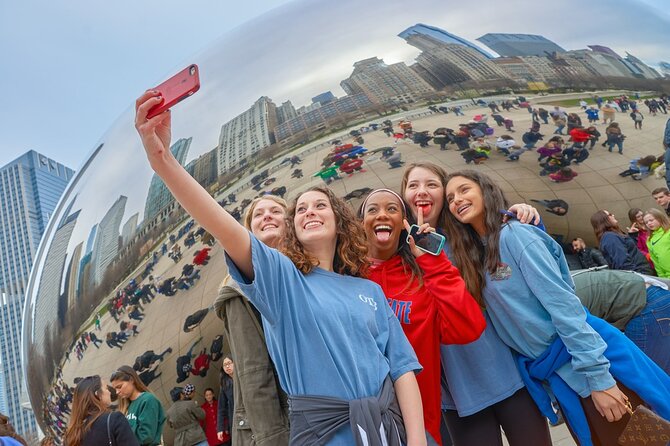
Chicago tells its story through steel and stone. This small-group, 2.5-hour walk starts at Cloud Gate in Millennium Park and moves through the Pedway, so you see both top sights and how Chicagoers get around.
I love the mix of major architecture stops with short, clear context, including the Chicago Fire story and why these buildings were built the way they were. I also like the format: a 10-person maximum group, with guides such as Andrew getting repeated praise for being kind, attentive, and great at explaining what you’re looking at.
One thing to consider is the steady walking, especially around the Magnificent Mile, so you’ll want moderate fitness. Also, there is one concerning report involving a guide contacting a participant before meeting, so trust your instincts and flag anything off right away if you feel uncomfortable.
In This Review
- Key things that make this tour worth your time
- What this 2.5-hour Chicago history and architecture walk covers
- Starting at Millennium Park, Cloud Gate, and getting oriented in minutes
- Chicago Pedway and the riverfront, how you see more with less hassle
- Chicago Architecture Center on the river: learning what to look for
- Tribune Tower, Wrigley Building, and the DuSable Bridge crossing on Michigan Avenue
- InterContinental Chicago Hotel, Medinah Athletic Club roots, and the Chicago Fire story
- Starbucks Reserve Roastery: the five-story coffee stop (and what costs extra)
- Navy Pier finish on Lake Michigan, plus your architecture cruise option
- Price and value, plus why the small-group size matters
- Practical tips so you enjoy the walk, not just endure it
- So, should you book this Chicago architecture walk?
- FAQ
- How long is the Small Group History and Architecture Walking Tour of Chicago?
- Where does the tour start and where does it end?
- What is the group size limit?
- Is admission included for the main stops?
- Do I need a mobile ticket?
- Is coffee or tea included in the tour price?
- What additional food option is mentioned during the tour?
- Can I take an architecture cruise after the tour ends?
Key things that make this tour worth your time
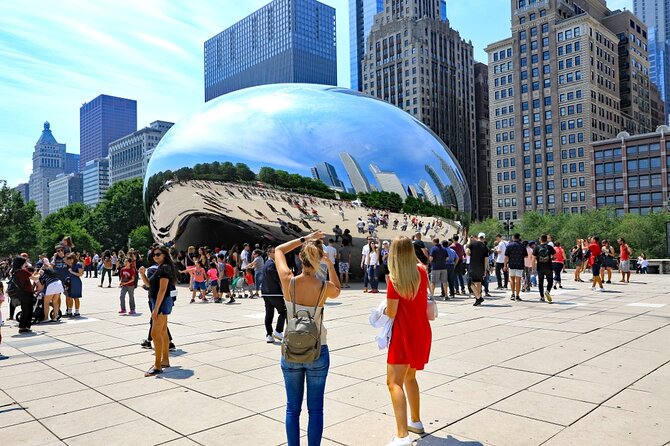
- Cloud Gate in Millennium Park plus nearby public art landmarks to get your bearings fast
- Chicago Pedway passages and sky bridges that help you cover downtown with less weather stress
- Chicago Riverwalk views along the water, built for architecture watching from street level
- Michigan Avenue architecture hits including the Tribune Tower, Wrigley Building, and the DuSable Bridge crossing
- Starbucks Reserve Roastery for a five-story look at roasting and exclusive Reserve coffees
- Navy Pier as a smart finish, with an architecture cruise option right there for extending the day
Chicago's skyline, explained block by block
What this 2.5-hour Chicago history and architecture walk covers

This tour is designed as a tight sampler of Chicago’s “how did we get here” story, told through the buildings and public spaces you pass every day. You start at Millennium Park, then connect through downtown using a mix of outdoor streets and indoor pedestrian routes.
Because it runs about 2 hours 30 minutes, it’s a good pick when you want big sights without committing to a half-day cruise or a full-day museum plan. The group stays small, with a maximum of 10, which makes it easier to ask questions as you walk.
Starting at Millennium Park, Cloud Gate, and getting oriented in minutes
You begin at McCormick Tribune Plaza on Michigan Avenue, then your first major stop is Cloud Gate in Millennium Park, the polished stainless-steel sculpture nicknamed The Bean. It’s famous for a reason: the curved surface turns the skyline and park into a distorted reflection game you can watch evolve as people move.
Millennium Park is more than one photo stop. You’ll also pass the Jay Pritzker Pavilion and the Crown Fountain as you work your way through the park atmosphere, which is built to feel like public art and city living at the same time. Expect this opening segment to be visually fun, but also practical because it helps you understand where you are in the grid of downtown.
Practical note: this stop is around 15 minutes, so arrive with comfortable walking shoes and a quick mindset. You’ll get a look, but you’re not here for a long photo marathon.
Chicago Pedway and the riverfront, how you see more with less hassle
Right after the park, you head into the Chicago Pedway, the underground and sky-bridge network that stretches across downtown. It’s extensive, covering over 40 blocks, and its whole purpose is simple: move pedestrians between major buildings with less exposure to weather and traffic.
What I like about including the Pedway is that it shows Chicago as a working city, not only a sightseeing city. You get to experience the “real route” logic that locals use, and that makes the later street-level landmarks easier to understand. This part also tends to feel efficient, since you’re not spending all your time fighting crosswalk timing.
From there, the tour’s focus shifts toward the Chicago Waterfront and Riverwalk. This stretch along the Chicago River is known for promenades, outdoor seating, and plenty of dining options, but the real payoff is the vantage point for architecture. Even if you’re not an architecture nerd, standing by the river helps you see how buildings relate to the water line and to each other.
Possible drawback: if you’re sensitive to enclosed areas, plan your comfort. The Pedway is built for shelter, but it does mean you’ll spend some time away from open-air streets.
Chicago Architecture Center on the river: learning what to look for
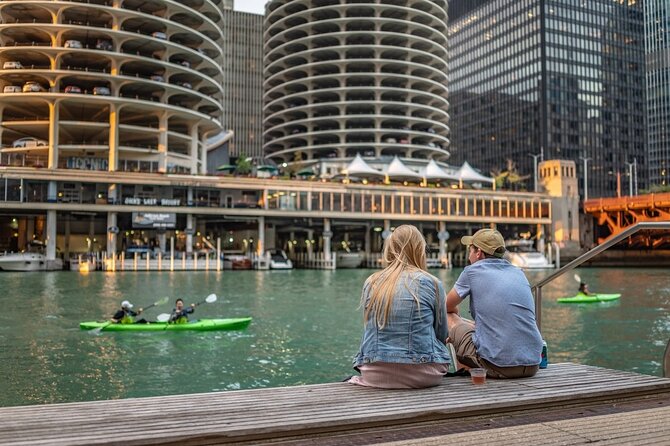
Next up is a stop at the Chicago Architecture Center (CAC), located along the river. This is where the tour’s architecture storytelling gets more structured, and it’s useful even if you’re not planning to become a lifelong building historian.
The CAC is built for getting you from random views to specific observations. You’ll have around 30 minutes, and the time is long enough to browse what’s on offer and reset your brain after the walking segments. Admission is listed as free on the tour, which is a nice value add because you’re not paying extra to get the context.
Also, this is a great point in the day to look around and notice shapes, materials, and patterns. Chicago’s skyline has multiple “languages” of design, and once you start seeing them, the rest of your walk reads like a visual map.
Tribune Tower, Wrigley Building, and the DuSable Bridge crossing on Michigan Avenue
Once you’re back into open-air downtown, the tour turns toward Michigan Avenue, and this is where the architectural bragging rights pile up.
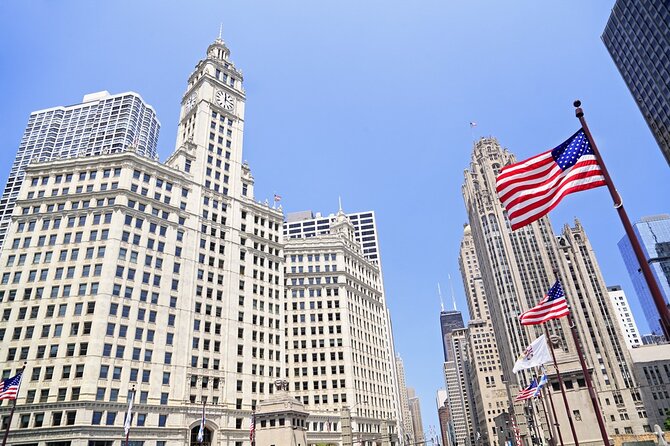
You’ll stop at the Tribune Tower, completed in 1925. It’s neo-Gothic in style and famous for its ornate details and use of stones from notable landmarks around the world on its facade. Even from a short stop, you’ll get a strong sense of how Chicago used architecture to signal prestige, culture, and civic identity.
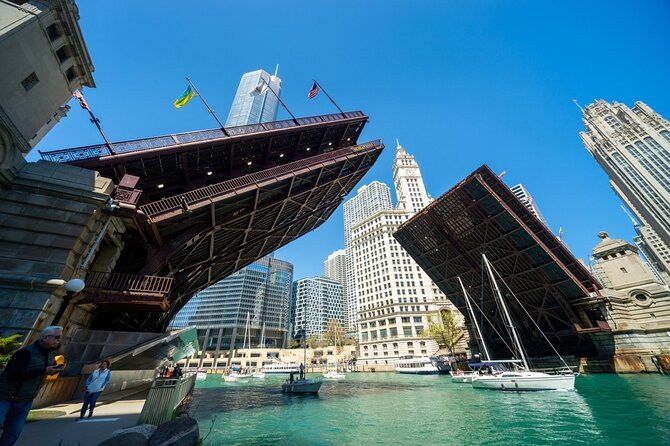
You’ll also cross the DuSable Bridge, the historic bridge carrying Michigan Avenue across the main stem of the Chicago River. The tour frames this crossing as historically important to Chicago’s early story, which helps you understand that the city’s building growth and infrastructure grew together, not separately.
And don’t miss the Wrigley Building. It’s a recognizable two-tower structure with a white terra cotta facade and Spanish Colonial Revival style elements. It was originally tied to the Wrigley Company, and it remains one of the clearest examples of how Chicago commercial power has always wanted visible, memorable architecture.
There’s a lot packed into this segment, so here’s my advice: focus on one thing per stop. Pick the facade details at Tribune Tower, then the bridge views, then the vertical profile at Wrigley. You’ll remember more than if you try to take everything in at once.
A few more ways to spend a day in Chicago
- Chicago in a Day: Food, History & Architecture Walking Tour★ 5.0 · 1,153 reviews
- Chicago: Field Museum of Natural History Ticket or VIP Tour★ 4.7 · 717 reviews
- Field Museum of Natural History Admission Tickets★ 4.5 · 489 reviews
- Chicago Walking Tour: Historic Treasures of Chicago★ 5.0 · 362 reviews
- Historical and Architectural Chicago Fireboat River & Lake Cruise★ 5.0 · 246 reviews
InterContinental Chicago Hotel, Medinah Athletic Club roots, and the Chicago Fire story
The tour includes time near the InterContinental Chicago Hotel, a building with deep local roots. It was originally built in 1929 as the Medinah Athletic Club, and it has standout features like its Grand Ballroom and a junior Olympic size pool.
Even if you don’t go inside (this tour gives you an outside viewing window), it’s a useful stop because it reminds you Chicago isn’t only skyscrapers. The city also has long-term architectural ambition in hotels, clubs, and spaces designed for civic life.
This portion of the walk also ties in the Chicago Fire story. You’ll hear it as part of the route’s explanation, because that event is a turning point in how Chicago rebuilds and how architectural and urban planning choices follow disaster and recovery.
A small caution: if you’re not fond of institutional building exteriors, you might want to mentally switch gears here. The best way to enjoy this stop is to look for signs of style and intent, not to wait for a museum-like experience.
Starbucks Reserve Roastery: the five-story coffee stop (and what costs extra)
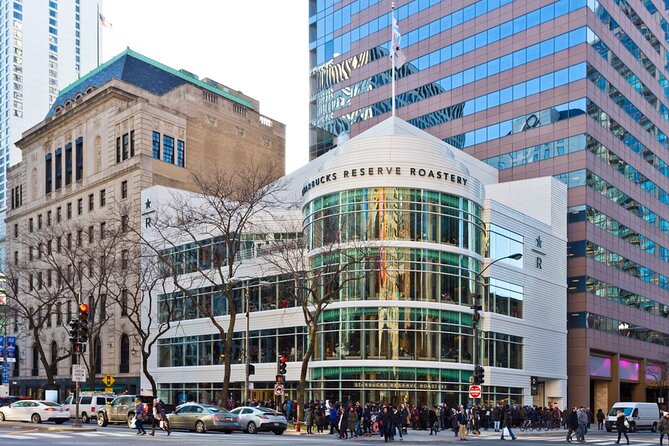
One of the most fun, modern parts of the tour is the stop at the Starbucks Reserve Roastery, the largest Starbucks in the world. It spans five stories on the Magnificent Mile and opened in 2019.
This stop works because it’s not just about coffee. It’s an interactive, on-site roasting experience where you can see how the process connects to what you drink. The tour includes admission, but it’s worth planning your budget since coffee and snacks are not included in the tour price.
If you’re a coffee person, you’ll likely want to spend a bit of time sampling or grabbing something to eat. If you’re not, you can still enjoy the building atmosphere and watch the roasting activity, then simply take a break before continuing to the final stretch.
Navy Pier finish on Lake Michigan, plus your architecture cruise option

The tour wraps at Navy Pier after about 30 minutes there. The pier is a classic Chicago choice, stretching along Lake Michigan and offering entertainment, dining, and cultural options.
Navy Pier also gives you a natural landing spot after an architecture-heavy walk. Lake views change the feel of the day, and the Ferris wheel and open-air energy make it easy to keep the momentum going without planning anything complicated.
The tour ends at Navy Pier, and you’ll have the option to take an architecture cruise or keep exploring on your own. If you want to extend your city story into an entirely different perspective, this is a smart place to do it, because you’re already set up for river and lake views.
Price and value, plus why the small-group size matters
The price is $64.99 per person, with all fees and taxes included. For a tour that spans Millennium Park, the riverfront area, multiple Michigan Avenue landmarks, and a major stop at Starbucks Reserve Roastery, that’s a solid value if you like guided context.
Here’s where the value comes from:
- You get a guided route that strings together landmarks without you needing to plan each segment yourself.
- Many stops are listed as free admission on the tour, including Cloud Gate, the Pedway, the Chicago Architecture Center, and key points on Michigan Avenue.
- The group size stays small (maximum 10), which usually means faster questions, better explanations, and less time waiting for people to catch up.
Pacing note: since this is still a walking tour, you don’t get to linger at every spot. The tradeoff is that you see more in a shorter time, which is usually what people want on a first Chicago visit.
Practical tips so you enjoy the walk, not just endure it
A few choices can make the day feel smooth:
- Wear comfortable walking shoes. Downtown surfaces can be a mix of sidewalks, ramps, and indoor pedestrian routes.
- Bring a phone charger or battery pack. The tour uses a mobile ticket, and you’ll likely want maps and photos as you go.
- Budget for food and coffee. The tour mentions that coffee and/or tea, plus coffee and snacks on tour, are not included. There’s also an opportunity to enjoy a classic Chicago savory treat for an additional cost.
- If you want the best photos, plan for timing. Millennium Park and Michigan Avenue landmarks can be busy, and your stop times are limited.
Safety and personal comfort matter. There is at least one troubling report about a guide contacting a participant before meeting and mentioning personal information. If anything feels off, stay with the group, move to a public area, and ask the tour operator for help immediately. Trust your instincts.
So, should you book this Chicago architecture walk?
I’d book this tour if you want an organized way to understand Chicago through its most recognizable architecture, plus a few working-city routes like the Pedway. It’s especially appealing if you like doing one or two modern stops without turning the day into pure museum time, and the ending at Navy Pier makes it easy to extend your day with a cruise.
I would skip it or at least think hard if you need frequent long rests, because the format is built for steady movement over about 2.5 hours. And if you’re uncomfortable with enclosed passages, be ready for some indoor walking through tunnels and sky bridges.
If you can handle moderate walking and you like seeing how history shows up in everyday streets, this is a strong use of time in Chicago.
FAQ
How long is the Small Group History and Architecture Walking Tour of Chicago?
It runs about 2 hours 30 minutes.
Where does the tour start and where does it end?
It starts at McCormick Tribune Plaza, 1 N Michigan Ave, Chicago, IL 60602, and ends at Navy Pier, 600 E Grand Ave, Chicago, IL 60611.
What is the group size limit?
The tour has a maximum of 10 travelers.
Is admission included for the main stops?
All fees and taxes are included, and the itinerary lists free admission tickets for stops like Cloud Gate, the Pedway, and the Chicago Architecture Center.
Do I need a mobile ticket?
Yes, the tour provides a mobile ticket.
Is coffee or tea included in the tour price?
No. Coffee and/or tea are not included, and coffee and snacks on tour are not included in the price.
What additional food option is mentioned during the tour?
You may have the opportunity to enjoy a classic Chicago savory treat, but it is an additional cost.
Can I take an architecture cruise after the tour ends?
Yes. The tour ends at Navy Pier, where you will have the option to take the architecture cruise or continue exploring.
More Walking Tours in Chicago
- Chicago: Gangsters and Ghosts Walking Tour
★ 5.0 · 7,155 reviews - Chicago Favorites Ultimate Food and Walking Tour
★ 5.0 · 1,962 reviews - Chicago: Gangsters and Ghosts Guided Walking Tour
★ 4.7 · 1,697 reviews - Chicago’s Secret Interiors Architectural Walking Tour
★ 5.0 · 635 reviews
Just Added




Architecture Tours, compared.

Chicago Architecture Center River Cruise aboard First Lady
Read our review →
Architecture River Cruise Skip-the-Ticket Line
Read our review →
Chicago River 45-Minute Architecture Tour from Magnificent Mile
Read our review →

45-Minute Family-Friendly Architecture River Cruise
Read our review →Browse the lists this tour appears in