
Reviewed · ARCHITECTURE TOURS
Private Chicago Architecture Walking Tour
Chicago skyscrapers walk well. This private Loop route mixes big-name buildings with real access, so you do not just look up, you look closely. I like that admission tickets are included for multiple stops, and I also like the pace of a private tour that can feel more tailored than a crowded group.
The experience shines because it is planned as a sequence, not a random stroll. You get a guided story thread from speculative office towers to showpiece civic space, then finish with two of downtown’s most recognizable icons. One thing to keep in mind: building access can be limited depending on hours and day, and there has been some confusion around lunch inclusion.
If your goal is a high-impact Chicago architecture overview in about three hours, this is a strong fit. It is also a good choice if you like your history with specifics, like what a building was designed to sell, and how technology and retail shaped the skyline.
In This Review
- Key highlights
- Pricing and value for a $211 private architecture walk
- The route in the Loop, from Fine Arts Building to Wrigley
- Marquette Building: how real estate speculation shaped the skyline
- The Rookery Building and the LaSalle corridor office era
- Palmer House Hilton lobby: elevators, light, and telephones
- Sullivan Center: the Carson Pirie Scott storefront power story
- Chicago Athletic Association hotel: Venetian Gothic plus modern comfort
- Chicago Cultural Center: the Tiffany dome and a free program machine
- Tribune Tower: Gothic spires and a quote-filled lobby
- Wrigley Building clock tower finale: French Renaissance details and 425 feet of emphasis
- Lunch, water, and the small stuff that affects your day
- What I would pay attention to at each stop
- Who this private tour is best for
- Should you book this Chicago Architecture Walking Tour?
- FAQ
- How long is the Private Chicago Architecture Walking Tour?
- Is this tour private?
- What is included in the price?
- What is the meeting point and end point?
- Is the tour offered in English?
- Are service animals allowed?
Key highlights
- Private and English-speaking guide, just your group, with bottled water included
- Admission included at multiple major stops, including the Marquette Building and Rookery Building
- One-block cultural stop at the Chicago Cultural Center, with access to the Tiffany stained glass dome
- Loop classics in a smart order, from the Palmer House lobby to the Tribune Tower and Wrigley Building
- Lunch is listed as included, but I recommend you confirm it at booking since there has been at least one reported mismatch
- Mobile ticket for easier check-in
Chicago's skyline, explained block by block
Pricing and value for a $211 private architecture walk
At $211 per person for a 3-hour private walking tour, this is not a budget city stroll. You are paying for two things that matter in Chicago: focused access and guided interpretation.
First, multiple stops include admission. That lowers the friction for you because you are not constantly figuring out ticket lines and timing. Second, you are not just getting directions. You are getting an architecture story that connects what you see at each stop to what the city was trying to do at the time, from speculative real estate to retail power and civic pride.
When I look at value, I also think about time. Three hours in the Loop is long enough to cover a meaningful chunk of downtown, but short enough that most people can still enjoy the rest of their day. This route ends at the Wrigley Building area, which is a helpful landing spot if you want to keep walking, catch transit, or pivot toward the Lakefront.
The route in the Loop, from Fine Arts Building to Wrigley
The tour starts at the Fine Arts Building (410 S Michigan Ave) and ends at the Wrigley Building (400 to 410 Michigan Ave). That means you are operating in central downtown, where weather and transit are manageable and where you can stack other sights nearby.
You visit eight architecture-focused stops, most of them around the Loop and its financial corridor. The schedule keeps each stop tight, with dedicated time to see key details and absorb the guide’s point. If you like structure, this is the kind of tour where the walking segments feel like connectors, not gaps.
You also get a mobile ticket, which can simplify the first check-in moment. And since bottled water is included, you can spend less time hunting for a bottle when you are in walking mode.
Marquette Building: how real estate speculation shaped the skyline
Your first real architectural lesson starts at the Marquette Building. This was a profitable skyscraper from the 19th-century building boom, and it is described as a speculative commercial office project. In plain terms, it is about investors betting on an up-and-coming urban center, then profiting by selling first-class workspace.
I like this stop because it reframes the skyline. A skyscraper is not just style. It is also a business model. Standing there, you can connect the building’s purpose to why Chicago grew so fast, especially when office demand, finance, and modern construction started feeding on each other.
You also get about 20 minutes and an admission ticket included. That matters because it lets you focus instead of rushing, and it gives you a chance to see interior or guided details rather than treating the building as a photo backdrop.
The Rookery Building and the LaSalle corridor office era
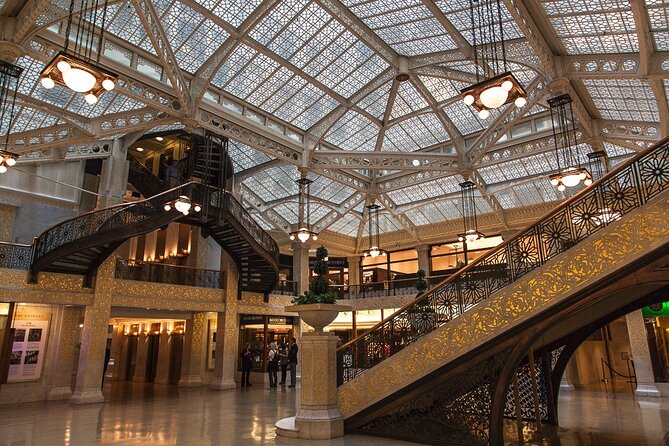
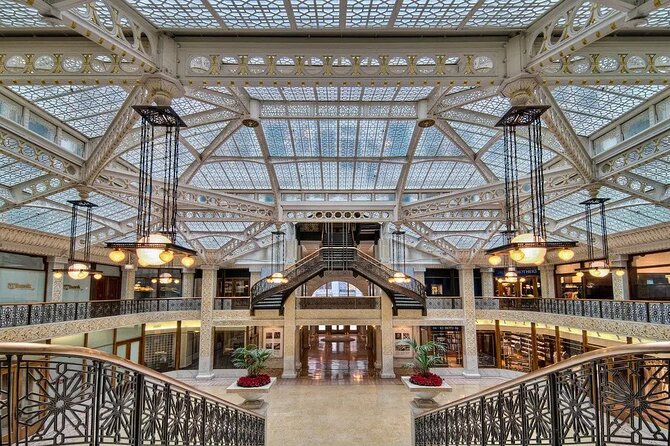
Next up is the Rookery Building at the corner of LaSalle and Adams. It was once expected to be the largest and finest office building in the United States. Even if you never cared about office buildings, this is one of those places that makes you care, because the building sits at the heart of Chicago’s corporate momentum.
This is the kind of stop where the guide’s job is to translate what you are seeing into why it mattered. The Rookery is part of the LaSalle Street financial corridor story, where downtown became the engine for business and the skyline became the marketing.
You get another 20 minutes here with admission included. If you enjoy architecture for the way it functions, this stop is worth leaning into. You are not just admiring the exterior. You are seeing how an office building could be designed to impress.
Palmer House Hilton lobby: elevators, light, and telephones
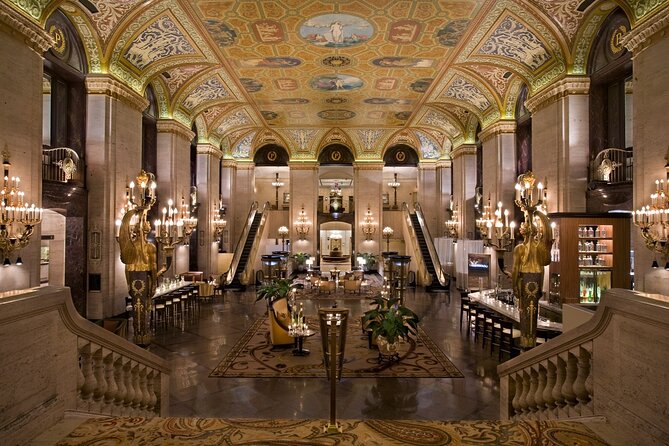
The Palmer House Hilton Historic Lobby is a change of pace, but a smart one. This hotel is noted as the longest continuously operating hotel in North America, and it is also tied to major early-technology milestones for guest experience.
The highlights include being the city’s first hotel with elevators, and also among the first hotels to have electric light bulbs and telephones in guest rooms. That sounds like trivia until you realize what it means for daily life. Those features were not small upgrades. They were big steps toward modern comfort and modern travel.
You spend about 10 minutes at this stop, and admission there is free. So it is a quick but meaningful payoff, especially if you like architecture that links to everyday life, not just engineering or design.
A few more ways to spend a day in Chicago
- Chicago: Gangsters and Ghosts Walking Tour★ 5.0 · 7,155 reviews
- Chicago Favorites Ultimate Food and Walking Tour★ 5.0 · 1,962 reviews
- Chicago: Gangsters and Ghosts Guided Walking Tour★ 4.7 · 1,697 reviews
- Chicago in a Day: Food, History & Architecture Walking Tour★ 5.0 · 1,153 reviews
- Chicago’s Secret Interiors Architectural Walking Tour★ 5.0 · 635 reviews
Sullivan Center: the Carson Pirie Scott storefront power story
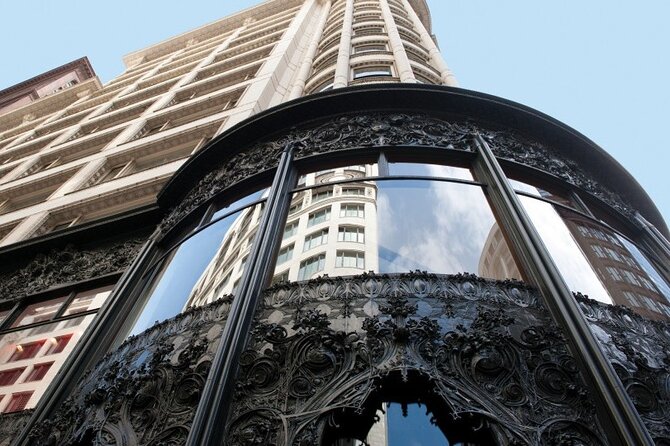
Then you head to the Sullivan Center, which connects Chicago School design with retail history. It is identified as the former home of the Carson Pirie Scott store. The building was built between 1899 and 1903 and later declared a milestone of Chicago in 1975.
Retail is often overlooked in architecture tours, but it is one of the reasons downtown felt alive. Big stores needed buildings that could draw people in, display products, and signal status. The Sullivan Center is a strong example of how Chicago’s tall-building era served commerce, not just offices.
You get about 20 minutes and admission included. That helps because it keeps the stop from becoming a quick curbside glance. If your trip includes shopping on your schedule, this stop gives you a more interesting reason to remember the store era, not only the streets.
Chicago Athletic Association hotel: Venetian Gothic plus modern comfort
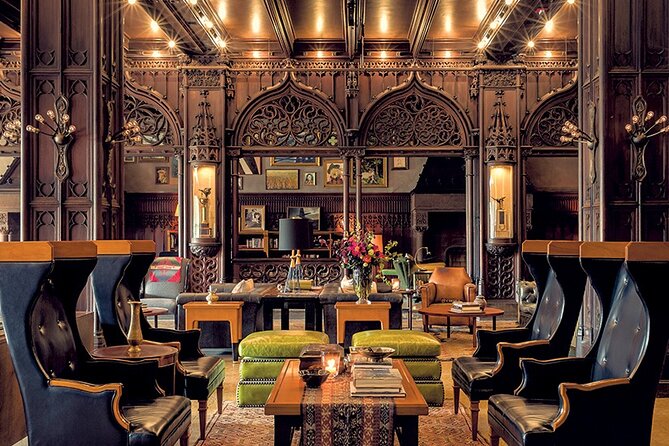
One of my favorite contrasts on this route is what happens at the Chicago Athletic Association stop. You are in a Venetian Gothic building, designed by architect Henry Ives Cobb, completed in 1893. From its construction until 2007 it functioned as a private club for wealthy Chicagoans, and much of that atmosphere was preserved during later refurbishment.
The description you are working from emphasizes ornate paneling, elaborate molding, and beautiful trims. You can expect lots of detail, because this building was built for status and social life. What I like is that the renovation is said to have preserved many of those decorative elements while also adding modern amenities, so the interiors can feel historic without feeling frozen in time.
This stop gets about 30 minutes, and admission is listed as free. You also have a useful orientation point: the building is across the street from Millennium Park. That does not mean you will have time to do Millennium Park during the tour, but it makes the stop convenient if you want to tack on an extra stop before or after.
Chicago Cultural Center: the Tiffany dome and a free program machine
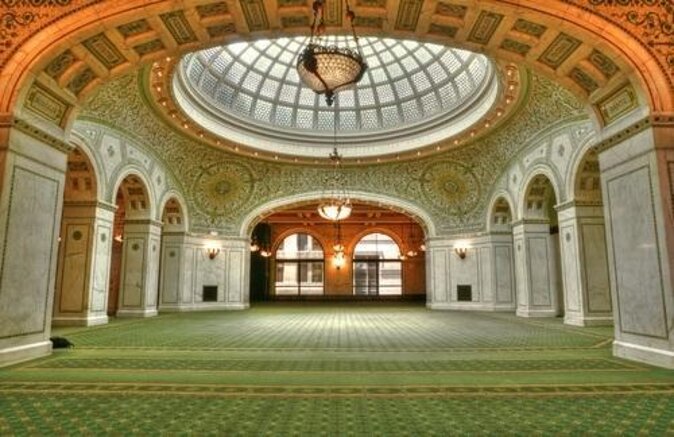
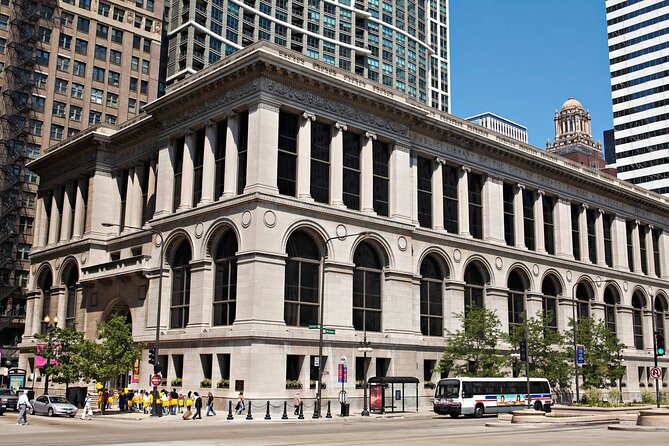
The tour then turns to the Chicago Cultural Center, which takes up an entire city block and functions as a cultural hub in the Loop. This is where the architecture walk shifts from commercial and residential to civic design.
The star detail is the world’s largest Tiffany stained glass dome. If you like color, light, and dramatic ceilings, this is your moment. The center is also described as presenting more than 700 humanities programs per year, and many of them are free and open to the public.
You spend about 30 minutes here, with admission included. This time length matters, because the best part of a space like this is lingering. Even if you just pop in for a quick look, you can feel the building’s role as a public gathering place.
Tribune Tower: Gothic spires and a quote-filled lobby
The Tribune Tower stop is about iconic Chicago identity in a compact format. It may only rise 36 stories, but it is still one of the city’s most recognizable buildings. The style is described as Gothic, with soaring spires that help define Chicago’s skyline character.
Inside, the lobby is described as shrine-like, with inspirational quotes that you can spot as part of the building’s emotional message. That is a big deal for a tower that is not the tallest. It shows how Chicago builds meaning into architecture, not only height into architecture.
This stop gets about 15 minutes, with admission included. That is enough time to absorb the core features without feeling like you are speed-walking through the point.
Wrigley Building clock tower finale: French Renaissance details and 425 feet of emphasis
You finish at the Wrigley Building, another skyline-defining classic from the 1920s. It is described as ornamented with French Renaissance elements, but the most prominent feature is the clock tower. That tower reaches 130 meters, or 425 feet, which effectively makes the building a skyscraper even if your eye focuses most on the clock.
I like the way this ending works. After several stops with interiors, civic spaces, and hotel retail connections, you end with a clear, exterior-first landmark. It gives you a dramatic wrap-up photo moment, and it positions you near downtown streets where it is easy to continue on your own.
You get about 15 minutes, with admission included. Then you are done, right by the building, where it feels natural to keep exploring without needing a car or complicated navigation.
Lunch, water, and the small stuff that affects your day
Included items make a difference on a walking tour. Bottled water is part of the deal, and that simple detail is more important than it sounds in a city where you walk longer than you planned.
Lunch is listed as included too. Still, since there has been at least one reported mismatch about lunch being included or not, I would treat lunch as something to confirm during booking or with the provider before your day. You do not want to build your day around a meal plan that might change.
Tips for guides are not included. That means if you like the narration and your guide keeps the pace right for your group, budget for tips. If you prefer fixed spending, you can decide your tip amount before you leave.
Finally, wear practical shoes. This is a walking architecture tour with multiple downtown stops. Even with planned breaks, you want comfort so you can spend your attention on buildings, not your feet.
What I would pay attention to at each stop
A good architecture guide does more than point at features. It teaches you what to notice. Here is what this route encourages you to look for:
- Purpose first: Marquette Building is about speculative office space and investor logic.
- How work spaces sell themselves: Rookery Building reflects corporate ambition during the office-building era.
- Technology as comfort: Palmer House ties architecture to elevators, electric lights, and telephones.
- Retail power: Sullivan Center connects tall-building design to Carson Pirie Scott’s store era.
- Design after restoration: Chicago Athletic Association shows how historic interiors can be preserved while still feeling usable.
- Civic wow-factor: Chicago Cultural Center brings the Tiffany stained glass dome into a public cultural setting.
- Identity details: Tribune Tower uses Gothic form and quote-filled messaging.
- Timing and symbolism: Wrigley Building ends with the clock tower as a literal time landmark.
If you keep those themes in mind, the walk feels like a storyline. You start to see Chicago architecture as communication, not just construction.
Who this private tour is best for
This tour fits best if you want a structured, downtown-focused overview without renting a car or piecing together multiple tickets.
It is a particularly good match for:
- First-time visitors who want a strong architecture sampler in about three hours
- People who prefer private groups over crowded tours
- Travelers who like seeing interiors when admission is included, not only exteriors
- Anyone interested in how Chicago’s growth mixed business, technology, retail, and public culture
It is also listed as suitable for most travelers and is noted as near public transportation. Service animals are allowed, which is a real practical detail for planning.
If you are extremely sensitive to limited access, plan to stay flexible. Some buildings may not be fully accessible depending on day and operating hours, so I would not assume you will go inside every single stop to the same extent.
Should you book this Chicago Architecture Walking Tour?
I think this is a smart booking if you want a private, guided Loop architecture walk with multiple admission stops and a finish at a major landmark. The price is not cheap, but the value comes from the mix of guided context and built-in entry to key sites, plus the included water and lunch option.
Choose it if you:
- want a guided storyline through office towers, hotel tech, retail buildings, and civic architecture
- like seeing interiors when admission is included
- prefer a private group pace
Consider a different option if:
- you need guaranteed, same-level interior access at every stop every day
- lunch inclusion must be certain for your schedule, since there has been at least one reported confusion
If you can plan with a bit of flexibility, this is the kind of architecture tour that leaves you with clear Chicago mental images, from the Tiffany dome down to the Wrigley clock tower.
FAQ
How long is the Private Chicago Architecture Walking Tour?
The tour is about 3 hours long.
Is this tour private?
Yes. It is a private tour/activity, so only your group participates.
What is included in the price?
The price includes English speaking guide, bottled water, lunch, all fees and taxes, and admission tickets for several stops as listed in the itinerary.
What is the meeting point and end point?
It starts at the Fine Arts Building, 410 S Michigan Ave, Chicago, IL 60605, and ends at the Wrigley Building, 400 to 410 Michigan Ave, Chicago, IL 60611.
Is the tour offered in English?
Yes, the tour is offered in English.
Are service animals allowed?
Yes, service animals are allowed.
Just Added



Architecture Tours, compared.
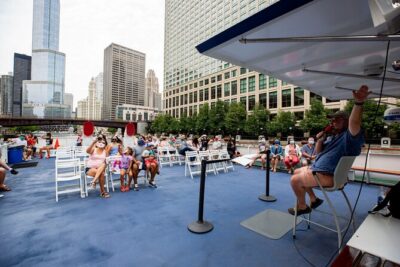

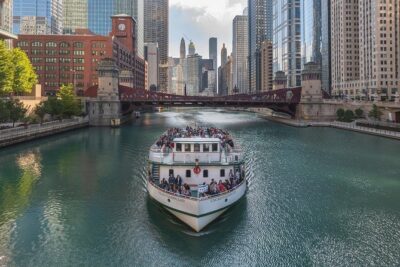
Chicago Architecture Center River Cruise aboard First Lady
Read our review →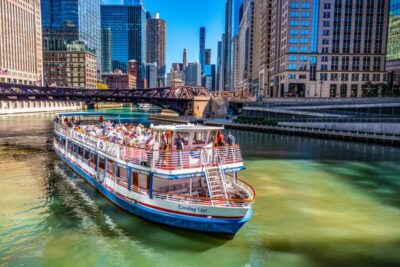
Architecture River Cruise Skip-the-Ticket Line
Read our review →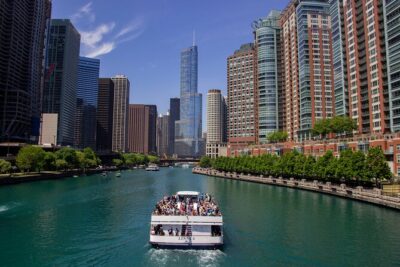
Chicago River 45-Minute Architecture Tour from Magnificent Mile
Read our review →
45-Minute Family-Friendly Architecture River Cruise
Read our review →Browse the lists this tour appears in