
Reviewed · CYCLING TOURS
Chicago Walking Tour of Highlights with Free Bike or Kayak Rental
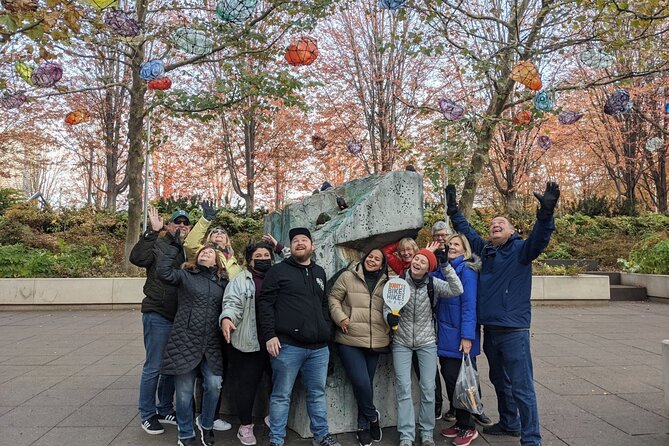
Two hours, a dozen Chicago icons. This walking tour strings together big-name sights with guide-led stories that make each stop click, and the payoff includes a free 2-hour bike or kayak rental. I also like that you move with purpose, not dawdling. The one catch is the pacing: it is built for seeing a lot, so you should expect quick looks and photos, not deep time inside every site.
You meet at the Palmer House and finish at the Chicago Water Tower, which is a smart route if you want a mini tour-and-walk plan for the same afternoon. With a maximum group size of 18 and mobile tickets in English, it is easy to slot into a busy itinerary. I’d just plan on comfortable shoes, because even the “short” stops add up.
Now, here’s how the route actually feels on the ground, stop by stop, and what is worth paying attention to.
In This Review
- Key points worth knowing before you go
- A 2-hour highlights loop that feels like a smart afternoon plan
- Millennium Park: Cloud Gate, Crown Fountain, and the sound-tech behind Gehry
- Cloud Gate and the photo spot discipline
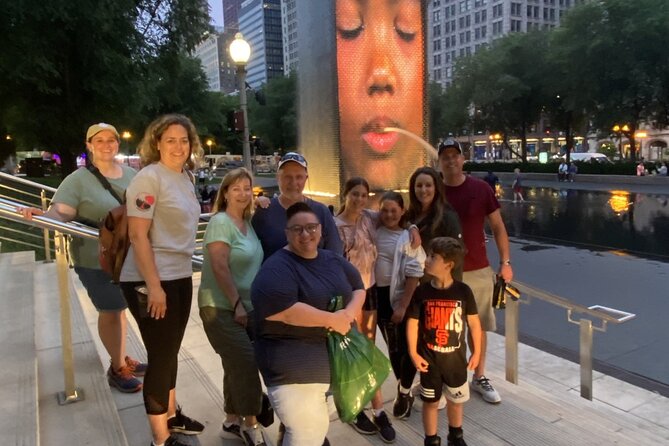
- Crown Fountain: public art with a playful, engineered twist
- Jay Pritzker Pavilion: outdoor acoustics that actually have a plan
- Michigan Avenue time: Magnificent Mile, Wrigley Building, and Tribune Tower details
- The Chicago Riverwalk: reverse-flow history and modern public space design
- Crown Fountain’s neighborhood vibe, then the Chicago Theatre’s glow
- Art Institute of Chicago in a “story-first” way, plus a Gothic reset at Holy Name Cathedral
- Historic Water Tower, Daley Bicentennial Plaza, and Palmer House’s Tiffany ceiling
- Historic Water Tower: the survival story that shaped identity
- Daley Bicentennial Plaza: a quiet layer under the city
- Palmer House Hilton lobby: Tiffany light and World’s Fair trivia
- Free bike or kayak rental: how to turn this into a second adventure
- Bikes: lakefront miles and an easy add-on stop
- Kayaks: Lake Michigan from June to September
- Who this tour is best for, and who should pick something else
- Should you book Chicago Walking Tour of Highlights with Free Bike or Kayak Rental?
- FAQ
- What is the duration and start time of the tour?
- Where do I meet and where does the tour end?
- What languages are offered and what format is the ticket?
- Is there a free bike or kayak rental, and when can I use it?
- Are there restrictions on the bike or kayak rentals?
- How big are the tour groups?
- Can I cancel for a full refund?
Key points worth knowing before you go
- Free 2-hour bike or kayak rental is tied to your booking date, so plan your extra ride soon after
- A tight downtown route pairs design-heavy icons with calmer stops like Holy Name Cathedral
- Millennium Park is more than The Bean, you also get the Jay Pritzker Pavilion and Crown Fountain stories
- Engineering and architecture details are part of the fun, from Cloud Gate reflections to the Riverwalk’s transformation
- Small group size (max 18) helps you hear the guide and grab the best photo angles
A few more ways to spend a day in Chicago
A 2-hour highlights loop that feels like a smart afternoon plan
This tour runs about 2 hours and starts at 3:30 pm, beginning at the Palmer House (17 E Monroe St). It ends at the Chicago Water Tower (806 Michigan Ave). That end point matters. You finish near one of Chicago’s most photogenic landmarks, with an easy jump-off for more wandering in the Michigan Avenue area.
The price is $44.99 per person, which is not “cheap,” but it also is not just a checklist walk. You are paying for a local guide who adds context as you move, plus a free 2-hour bike or kayak rental as an on-booking bonus. In Chicago, that combination can be a good deal because it saves you from figuring out what to look at, and it extends your day with a second activity.
The tour operates in all weather, so dress for wind, sun, and rain. Also note the tour is capped at 18 people. That size is big enough for energy, small enough that you are not fighting for audio every time the group stops.
Millennium Park: Cloud Gate, Crown Fountain, and the sound-tech behind Gehry
Most Chicago highlights tours start here for a reason, and this one leans in. Millennium Park is where the city’s modern identity shows up in public space, with art, performance, and architecture built to be experienced up close.
Cloud Gate and the photo spot discipline
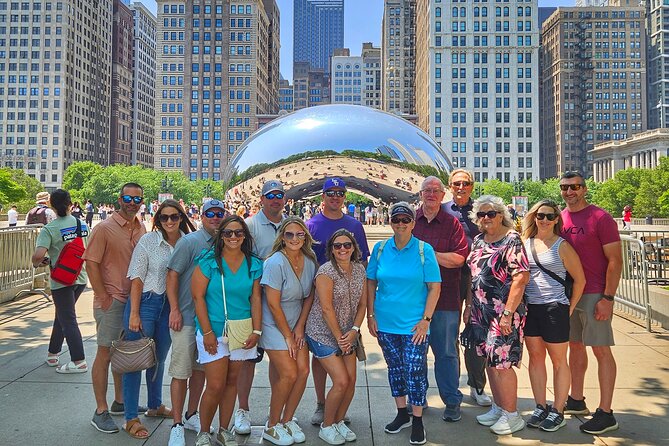
Cloud Gate, aka The Bean, is the obvious magnet. What makes this stop worth your attention is the guide’s focus on what you are seeing when you walk around it. You will learn how the sculpture’s seamless mirror finish was engineered from stainless steel plates, and why the reflection looks so smooth. The guide also points out the best skyline photo angles. This matters because Cloud Gate reflections can look random unless you know where to stand.
A practical tip: after the group photo moment, do one slow circuit around the sculpture. The reflections change with your angle and the skyline light.
Crown Fountain: public art with a playful, engineered twist
Crown Fountain is a short stop, but it is designed for quick engagement. The big story is Jaume Plensa’s work blending technology, architecture, and community. You get the idea behind the digital faces displayed on the tall towers, plus how the “spitting” water effect is engineered. It is the kind of thing that feels simple until you learn it has real mechanical and maintenance challenges.
If you are traveling with kids, this is usually the moment they do not just watch, they participate mentally, because the expressions keep shifting and the water effect is fun to time.
Jay Pritzker Pavilion: outdoor acoustics that actually have a plan
Next up is the Jay Pritzker Pavilion, Frank Gehry’s steel-ribbon structure. The headline is the sweeping trellis, but the deeper value is why it exists: it helps deliver concert-quality sound across the Great Lawn. If you’ve ever wondered how outdoor venues can work without microphones everywhere, this stop gives you a concrete answer.
The pace here is fast because the tour is compact, so you will not sit and listen for a full performance. Still, it’s a great “wait, I get it now” stop. You look at the structure differently after the explanation.
Pedal the lakefront trail
- Bikes, Bites & Views: Chicago’s Signature Dishes Bike Tour-Adults★ 5.0 · 732 reviews
- Bike Tour of Chicago’s Lakefront Neighborhoods★ 5.0 · 241 reviews
- Chicago’s Ultimate City Bike Tour★ 5.0 · 233 reviews
- Chicago: Bikes, Bites, and Views Biking Tour – Adults★ 4.9 · 141 reviews
- Chicago: Lakefront Neighborhoods Bike Tour★ 4.9 · 123 reviews
Michigan Avenue time: Magnificent Mile, Wrigley Building, and Tribune Tower details
The Magnificent Mile section is short, but it gives you high signal. You walk part of Michigan Avenue and get the story of how this corridor evolved into a major shopping and architecture stretch.
This is where the guide’s architecture notes pay off. You’ll hear which skyscraper first helped create the idea behind the Mile’s name, why luxury brands clustered here, and how historic building details reveal Chicago’s changes across the last century. The stop also ties into recognizable landmarks like the Tribune Tower and the Wrigley Building, with “embedded world artifacts” called out at the Tribune Tower and the Wrigley Building’s origins discussed.
One consideration: if you want a deep dive into shopping or a long linger at each building, this portion will feel brisk. That is not a flaw. It just means this tour is best for people who want context while walking, not people who want to window-shop for hours.
The Chicago Riverwalk: reverse-flow history and modern public space design
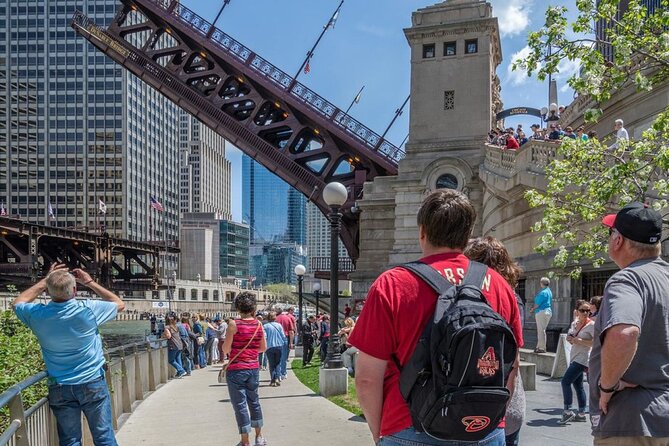
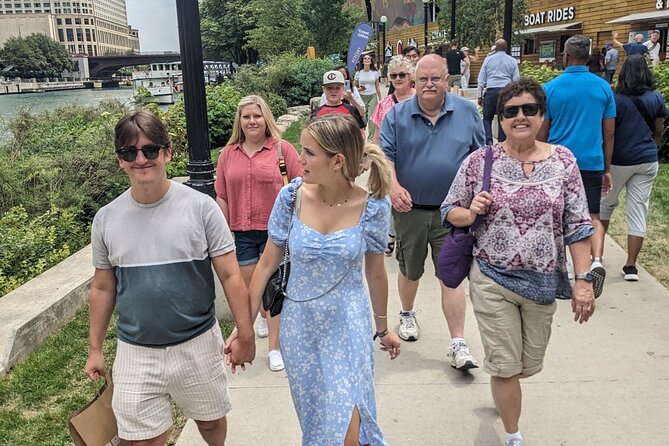
The Riverwalk stop is your scenic palate cleanser. You are walking along the waterfront while hearing how a once-industrial channel was reshaped into a celebrated public promenade. The story of how the river was reversed is a standout engineering lesson. You also get the idea that the Riverwalk was built in stages, with different architectural and cultural themes showing up over time.
What I like about this segment is that the guide points out design details and photo angles that you would normally miss if you were just passing through. The Riverwalk also includes ecological efforts supporting fish and bird life, so you get a small reminder that this is not only about views.
Photo tip: if you like reflections and water lines, slow down near the quieter edges. The group movement can be quick, and the best compositions often happen right after a turn.
Crown Fountain’s neighborhood vibe, then the Chicago Theatre’s glow
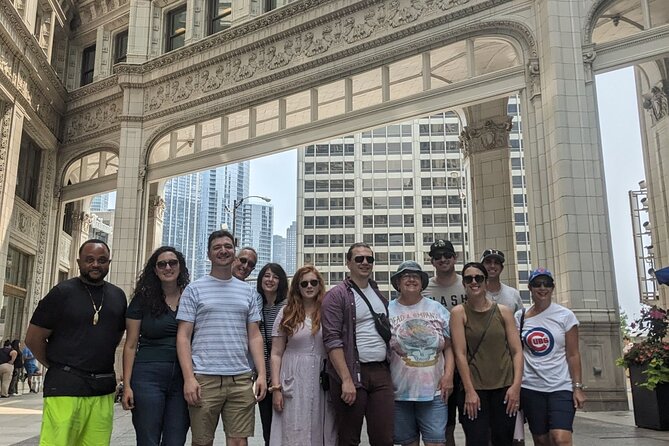
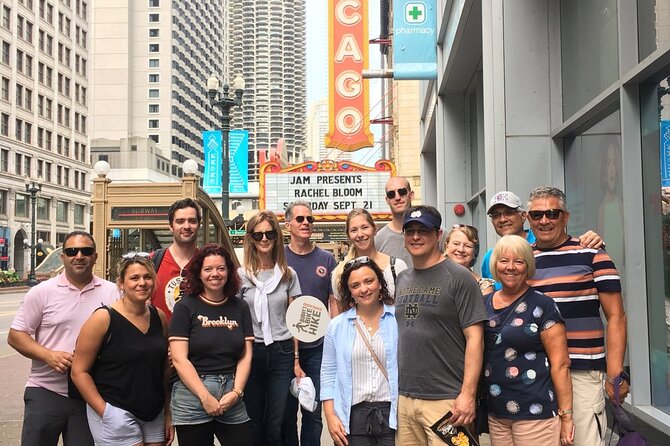
The route keeps a steady rhythm, and the Chicago Theatre stop is one of the most visually dramatic moments. You stand under the glowing marquee and get the backstory of the 1921 French Baroque building.
What makes this stop memorable is the scale and the “why it matters” explanation. You’ll hear why the grand lobby was modeled after the Palace of Versailles, and why the seven-story marquee became one of the most photographed signs in the world. It also includes surprising names linked to the entertainment history, plus clues about symbolism in the auditorium architecture and details around a major renovation.
If you enjoy street-level theater culture, this stop adds a different flavor than museums and parks. You end up seeing Chicago as a city that builds for performance as well as commerce.
Art Institute of Chicago in a “story-first” way, plus a Gothic reset at Holy Name Cathedral
You get a tour-style approach to the Art Institute of Chicago without trying to replace a full museum visit. The focus is on what it means that the museum grew from a small academy into a major global institution. You’ll also hear about famous collection anchors like American Gothic and Nighthawks, plus the Impressionist collection that Chicago is especially known for.
The guide also connects the museum to broader Chicago identity, including how the institution grew out of the 1893 World’s Fair. If you’ve ever walked into a museum and felt overwhelmed by the size, this kind of orientation is a smart first step. It gives you a map of themes, even if your time inside is limited by the walking schedule.
Then you switch gears at Holy Name Cathedral, a Gothic Revival stop that is more quiet and reflective than the art museum. You’ll go from public galleries to a church interior where the ceiling is shaped like an upturned ship’s hull, with a symbolism of shelter and strength. You’ll also hear about the bronze doors, the Resurrection Crucifix that appears to float above the altar, and restoration after a 2009 fire.
This contrast is one of the best reasons to take the tour as a single package. You get Chicago’s creative side and the city’s spiritual architecture side in one continuous route.
Historic Water Tower, Daley Bicentennial Plaza, and Palmer House’s Tiffany ceiling
As the tour moves downtown-to-Midwest-core, you hit landmarks that explain Chicago’s resilience and its love of design.
Historic Water Tower: the survival story that shaped identity
The Historic Water Tower is one of the few structures to survive the Great Chicago Fire of 1871. The guide frames it as a symbol of resilience and rebirth, and it also explains the tower’s early pumping system role in modernizing the city. You’ll hear about the castle-like design that sparked debate early on, and how its survival helped shape how Chicago tells its own story.
The useful angle here is perspective. When you stand by the Water Tower, surrounded by the modern skyline, you understand why it is such a strong visual anchor.
Daley Bicentennial Plaza: a quiet layer under the city
Daley Bicentennial Plaza is a calmer stop, and it’s easy to overlook unless someone points out what you are standing on. The guide explains how the area once served as a gateway to old police headquarters and a skating rink, then was reshaped through reconstruction linked to Millennium Park. You’ll also hear why the elevation hides a massive parking structure below your feet.
This stop also ties into Chicago’s plan to create more green space above active rail lines. Even if you only have a few minutes, the idea helps you connect park design to city infrastructure.
Palmer House Hilton lobby: Tiffany light and World’s Fair trivia
The tour also includes the Palmer House Hilton Historic Lobby. You’ll notice the Tiffany-designed ceiling, described as one of the largest of its kind, and you’ll learn the lobby’s presidential and performer connections as part of Chicago’s hospitality history.
The big “wait, what?” detail here is the story of how the world-famous brownie was invented in this lobby for the 1893 World’s Fair. You also hear about French-inspired murals and restoration stories that help explain why certain decor survived.
This stop is more than pretty lighting. It’s a reminder that “history” in Chicago is often baked into everyday places you can actually enter.
Free bike or kayak rental: how to turn this into a second adventure
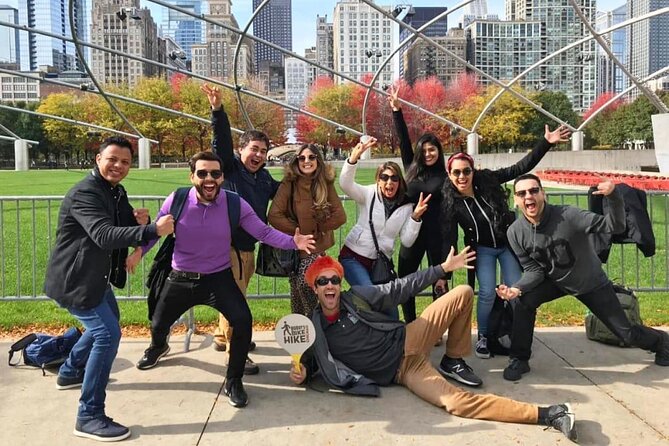
Here’s the perk that can make this tour feel like a two-for-one. If you book this tour, you get a free 2-hour bike or kayak rental to use within plus or minus 3 days of your tour booking date.
Bikes: lakefront miles and an easy add-on stop
Bike rentals take place at Bobby’s Bike Hike World Headquarters, 540 N Lake Shore Drive. The shop is open year-round, excluding Thanksgiving and Christmas. The suggested payoff is time on the 20-mile Lakefront Bike Trail, which is a classic way to keep exploring after your downtown walk.
One review mentioned pairing the bonus bike with a short visit to the Lincoln Park Zoo. That’s the kind of flexible add-on that works well if you want a less crowded, more scenic follow-up day.
Kayaks: Lake Michigan from June to September
Kayak rentals happen at Ohio Street Beach, Bobby’s Kayak, 550 E Grand Avenue. Kayak shop hours run mid-May to mid-October, weather dependent. Kayaking is only available June to September, on Lake Michigan.
There are also blackout style exclusions: Saturday bike or kayak rentals between Memorial Day weekend (end of May) and Labor Day weekend (early September) are excluded. And if you do not use the activity, there are no discounts. Weather restrictions can also affect kayaking availability, and the bonus is not adjusted for that.
So my advice is simple: if you want the kayak option, lock in your plan early in the week rather than relying on a Saturday.
Who this tour is best for, and who should pick something else
This walking tour is a great match for you if you want:
- A fast but guided introduction to Chicago’s most recognizable downtown stops
- A route that mixes art, architecture, public space, and performance history
- A bonus activity that extends your day beyond the two hours
It may be less ideal if you:
- Want to spend long periods inside museums, churches, or attractions
- Hate moving in a group schedule
- Need lots of accessibility time at each stop beyond quick photo and orientation moments
The pacing works when your goal is to get oriented and then branch out on your own.
Should you book Chicago Walking Tour of Highlights with Free Bike or Kayak Rental?
I’d book it if you like the idea of combining a guided “greatest hits” walk with a free, time-limited rental. At $44.99 for about two hours, plus the bike or kayak bonus, it is good value if you will actually use the rental within the +/- 3 day window. The itinerary also makes sense because it clusters Chicago’s signature sights, starting around Millennium Park and working through the Riverwalk, Theater district, and historic downtown icons.
I would hesitate if you are only interested in one or two places, because the tour is built to show many landmarks quickly. Also, if your travel dates fall in the kayak season edge cases, or you are hoping for Saturday rentals in the excluded window, biking is the safer bet.
If you want a practical overview that sets you up for the rest of your Chicago days, this is a solid choice.
FAQ
What is the duration and start time of the tour?
The tour runs for about 2 hours and starts at 3:30 pm.
Where do I meet and where does the tour end?
You meet at the Palmer House (17 E Monroe St, Chicago, IL 60603). The tour ends at the Chicago Water Tower (806 Michigan Ave, Chicago, IL 60611).
What languages are offered and what format is the ticket?
The tour is offered in English, and you receive a mobile ticket.
Is there a free bike or kayak rental, and when can I use it?
Yes. You get a free 2-hour bike or kayak rental to use within plus or minus 3 days of your tour booking. Bike rentals are at Bobby’s Bike Hike World Headquarters (540 N Lake Shore Drive), and kayak rentals are at Bobby’s Kayak (550 E Grand Avenue).
Are there restrictions on the bike or kayak rentals?
Bike rentals are year-round excluding Thanksgiving and Christmas. Kayak rentals run mid-May to mid-October, weather dependent, and kayaking is only available June to September on Lake Michigan. There is an exclusion for Saturday bike or kayak rentals between Memorial Day weekend (end of May) and Labor Day weekend (early September). There are no discounts if you do not use the activity or if weather restricts kayaking.
How big are the tour groups?
The tour has a maximum of 18 travelers.
Can I cancel for a full refund?
Yes. You can cancel up to 24 hours in advance for a full refund. If you cancel less than 24 hours before the start time, the amount paid is not refunded.
More Walking Tours in Chicago
- Chicago: Gangsters and Ghosts Walking Tour
★ 5.0 · 7,155 reviews - Chicago Favorites Ultimate Food and Walking Tour
★ 5.0 · 1,962 reviews - Chicago: Gangsters and Ghosts Guided Walking Tour
★ 4.7 · 1,697 reviews - Chicago in a Day: Food, History & Architecture Walking Tour
★ 5.0 · 1,153 reviews
Just Added


Cycling Tours, compared.
Bikes, Bites & Views: Chicago’s Signature Dishes Bike Tour-Adults
Read our review →

Classic Food & Walking Tour with Free Bike or Kayak
Read our review →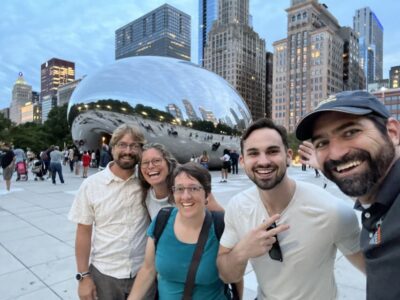


Chicago Family Food and Bike Tour with Top Attractions
Read our review →Browse the lists this tour appears in