
Reviewed · CYCLING TOURS
Chicago’s Ultimate City Bike Tour
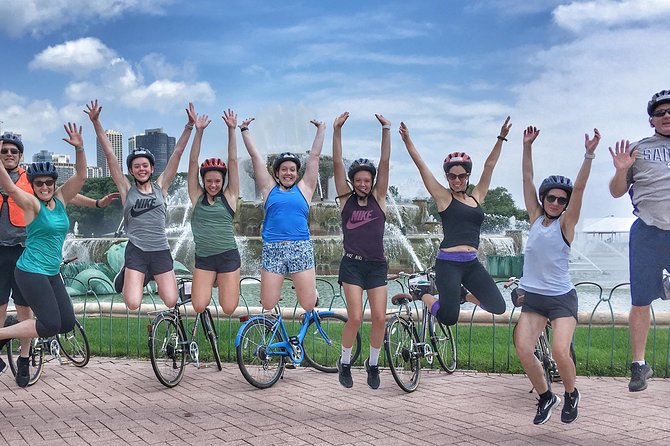
Chicago from a bike seat feels faster and calmer than sightseeing on foot. This 3-hour city tour strings together big-name sights and smart stories along mostly bike friendly routes, from the Lakefront Trail to Millennium Park.
What I like most is the mix of classic landmarks and practical route planning. You get an easy overview of Chicago’s shape and history, with plenty of stops where you can pause, look, and take photos without racing anyone.
The second thing I like is how guides keep it approachable for first timers. Riders have praised guides like York, Dan, AJ, Nic, Meredith, Gabe, and Joe for clear explanations and good group control, including safety briefings and keeping pace steady. One consideration, though, is that it is still a city, so you may ride through busier road moments where it can feel a bit exposed when cars deal with a bike group.
In This Review
- Key things to know before you pedal
- Getting set up at Bobby’s Bike Hike on the Chicago lakefront
- The $59 price makes sense when you compare time and stops
- The route feel: relaxed pace, flat riding, and real city moments
- Lakefront Trail views that make you stop pedaling for photos
- Museum Campus: Field Museum, then Shedd and Adler context
- Northerly Island, Soldier Field, and a quick hit of beach life
- Grant Park, Buckingham Fountain, and Millennium Park in one flowing story
- The Loop icons: Chicago Theater marquee and Picasso at Daley Plaza
- Real biking distance and what the reviews suggest
- Who should book this Chicago City Bike Tour
- Should you book it, or choose another way to see Chicago?
- FAQ
- How long is the Chicago Ultimate City Bike Tour?
- What does the $59 price include?
- Are Shedd Aquarium and Adler Planetarium tickets included?
- Is the tour okay for beginners and families?
- Does the tour run in bad weather?
- What is the cancellation policy for a full refund?
Key things to know before you pedal
- Lakefront Trail time on a paved corridor that has worked for cyclists since 1963, with views of Lake Michigan
- Museum Campus stops near Field Museum, plus Shedd Aquarium and Adler Planetarium exterior time and context
- Grant Park to Millennium Park in one smooth loop, with major public art and big fountain energy
- Small group size with a max of 15 travelers, so your guide can manage spacing
- Family friendly, with a real requirement for kids to be strong and able to bike 9 miles
- Rain or shine operation, with weather covered by smart on the spot gear like ponchos
Pedal the lakefront trail
Getting set up at Bobby’s Bike Hike on the Chicago lakefront
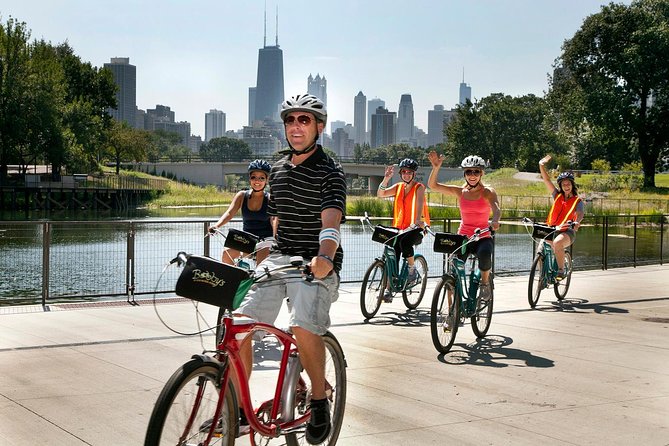
The tour starts at Bobby’s Bike Hike at 540 N Lake Shore Dr, a convenient spot if you are also doing other downtown activities. Check in is straightforward: you sign in, get your bike sorted, and wear a helmet before heading out.
That setup matters more than it sounds. A properly fitted bike makes the rest of the ride feel effortless, especially since this route is designed to be relaxed and mostly flat. One rider noted bikes were in good condition and helmets were clean, which is exactly what you want when you are paying for comfort, not just a headline route.
The ride is led in English, and you’ll have a mobile ticket. Expect a safety briefing that covers how the group moves, what to do at stops, and how to stay together on bike lanes and paths.
The $59 price makes sense when you compare time and stops
At $59 per person for about 3 hours, you are paying for three things: a bike, a guide, and an efficient way to see a lot without managing details yourself. Yes, it is not a museum ticket bundle. Shedd Aquarium and Adler Planetarium admissions are specifically not included, so this is more about orientation plus site context than paid entry hopping.
But the value is in the choreography. In a few hours you can cover major chunks of Chicago that would take you half a day by foot, then still know what you are looking at. If you enjoy history and architecture explanations while moving through the city, that’s where the money gets justified fast.
There is also the suggested $10 per person guide gratuity paid via cash, Venmo, or PayPal. Keep that in mind, since it is part of the real cost if you want to follow local tour etiquette.
The route feel: relaxed pace, flat riding, and real city moments
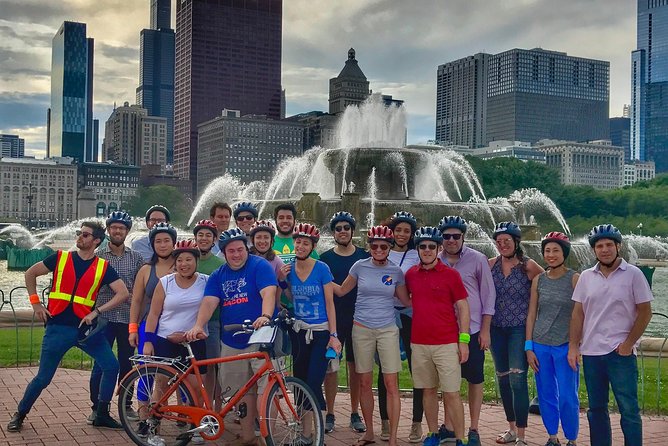
This tour is built around a calm rhythm. It is marketed as a relaxed route and is appropriate for most ages and fitness levels, and riders repeatedly call out the ease of the pace and the fact that it is flat for most of the ride.
That said, do not assume you are riding in a traffic free bubble. One review specifically notes you ride on roads, bike lanes, and dedicated path segments, and that drivers can sometimes get frustrated. Another rider mentioned the tour often goes in single file and can feel a little vulnerable in places when cars and the group interact.
If you are the type who gets tense with other vehicles nearby, arrive with the right mindset. You are still safer than you would be solo, because your guide manages the group and the instructions. But you should be comfortable riding in a busy city environment.
Lakefront Trail views that make you stop pedaling for photos
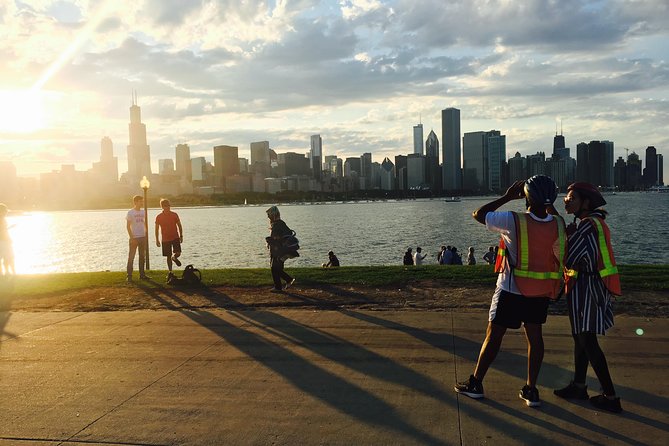
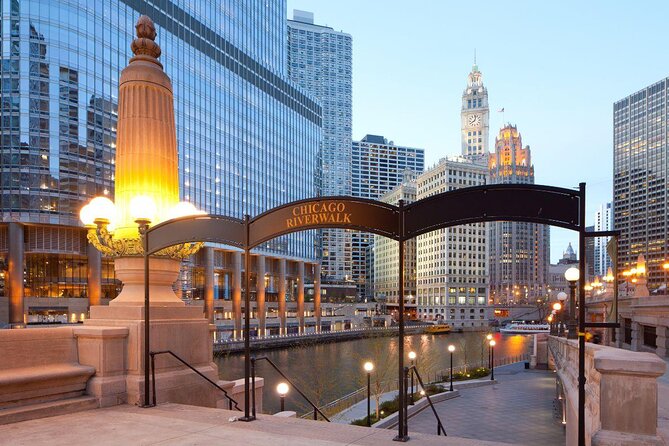
The ride starts by leaning hard into the lake. The 18-mile Lakefront Trail is a major part of Chicago’s cycling success story, dating back to 1963, and it’s paved for walkers, runners, and bicyclists.
This is where the tour pays off immediately. Even if you only spend a short time looking around, the lakefront changes your whole experience of the city. You get a wide horizon, breezes off Lake Michigan, and a sense of space that you do not get in the thick downtown streets.
Expect mostly easy riding and frequent photo moments. You’ll also reencounter the lakefront later as the route flows back toward the Museum Campus area.
Museum Campus: Field Museum, then Shedd and Adler context
The tour works Museum Campus like a guided storyboard. You’ll pass or stop around Field Museum of Natural History, which is famous for major specimens and artifacts, including T-Rex Sue, highlighted here as the biggest tyrannosaurus rex ever fully recovered.
From there, you head to Shedd Aquarium. Shedd opened in 1930 and is described as home to about 32,000 aquatic animals. It is also noted as the first inland museum to house a collection of saltwater fish. The key detail for your planning is that admission is not included, and your stop time is listed as about 15 minutes.
Next is Adler Planetarium, the oldest planetarium in the Western Hemisphere. It has three full sized theatres, and there are rotating space science exhibitions plus an extensive collection of space science instruments and materials. Like Shedd, admission is not included, and the stop time is also about 15 minutes.
So how should you think about these stops? Treat them as a fast, guided orientation. You’ll understand what makes each place special and why people travel for it, but you are not paying for entry within this price. If you do want to go inside later, this tour helps you decide which museum is worth your time.
Riders also highlighted standout moments near the aquarium area for skyline views, which tells me the route choice is doing more than just logistics. It is building in sightlines.
A few more ways to spend a day in Chicago
- Delicious Donuts & City Sights: Chicago’s Original Donut Tour★ 5.0 · 1,389 reviews
- Chicago City Tour with Architecture River Cruise Option★ 5.0 · 705 reviews
- City Cruises Chicago: Seadog Lakefront Speedboat Ride★ 4.4 · 642 reviews
- Chicago City Minibus Tour★ 5.0 · 516 reviews
- City Cruises Chicago: Signature Lunch Cruise on Lake Michigan★ 4.0 · 348 reviews
Northerly Island, Soldier Field, and a quick hit of beach life
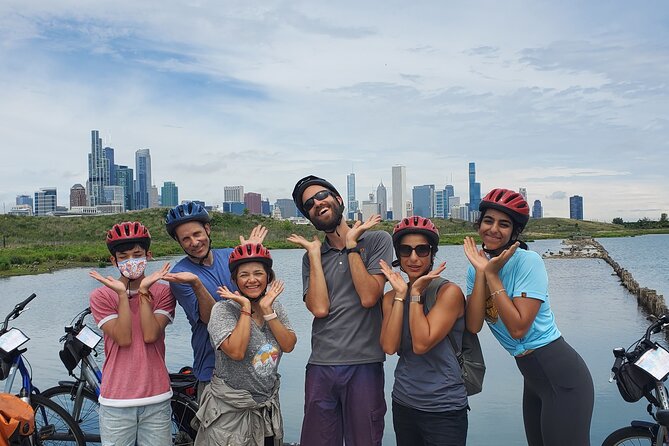
After the museums, the tour spreads out into a different flavor of Chicago. Northerly Island is described as a nature preserve south of the museum campus, in early phases of natural development, with future plans mentioned for canoeing, bird watching, fishing, and camping.
This is a good stop if you like contrast. In the span of minutes you move from museum buildings to an area that feels more like a park edge, right in the city. One practical note is timing: it’s listed as about 15 minutes, so you are not going hiking. You are looking, learning what the space is, and then moving.
Then you head toward Soldier Field, built in 1924 and described as the oldest NFL stadium in the United States. It becomes home to the Chicago Bears during the football season, and the park portion also hosts big concerts in spring and summer.
After that, there’s a stop connected to the beach side: 12th Street Beach, described as a quieter South Loop spot with white sand and clear blue freshwater, close to Northerly Island. The way this is presented makes it feel like a payoff stop, not a checklist stop.
If you are sensitive to wind, bring a light layer. Lake air can be cool even in mild months.
Grant Park, Buckingham Fountain, and Millennium Park in one flowing story
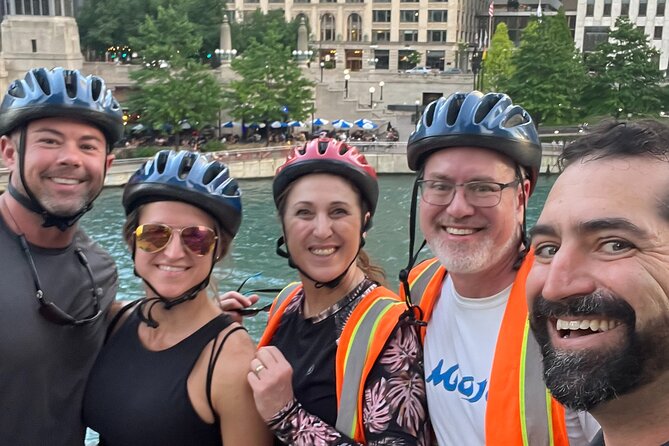
This is the section most people come for, and the tour handles it well because it keeps you moving but not rushed.
First is Grant Park, often called Chicago’s front yard. The stop here is listed as about 20 minutes, and you’ll hear how it hosts big festivals like Lollapalooza and Taste of Chicago. Even if you only get a short look, this stop helps you understand why Grant Park is the city’s social living room.
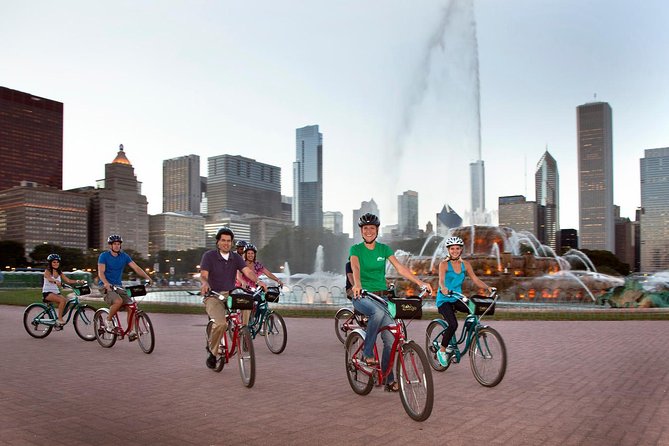
Then comes Clarence F. Buckingham Fountain, built in 1927 and once the largest fountain in the world. It’s now the centerpiece of Grant Park and draws crowds for its light and water shows. The listed stop time is about 15 minutes. This is perfect for photos, and it also gives you context so the fountain does not feel random when you come back later.
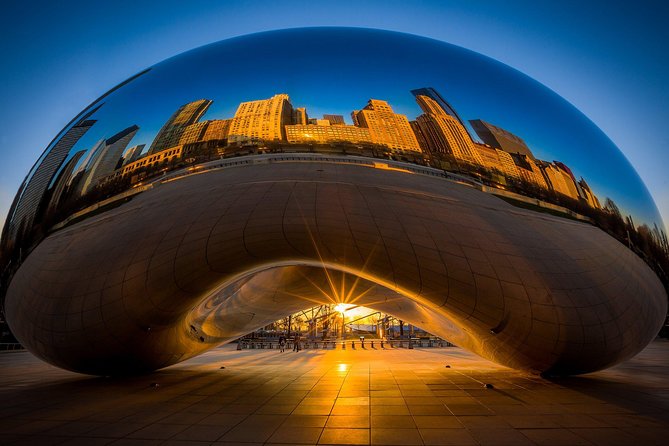
Next is Millennium Park, with about 20 minutes here. Millennium Park is where public art becomes the headline. You’ll see Cloud Gate and the Crown Fountain, plus the Pritzker Pavilion. These are exactly the kind of places where a guided explanation helps, because people tend to walk past details without realizing what they are looking at.
If you love quick wins, this is the portion that delivers them.
The Loop icons: Chicago Theater marquee and Picasso at Daley Plaza
After the major parks, the tour continues into the Loop’s visual identity.
You’ll have a photo moment for the Iconic Chicago Theater marquee sign, then move to Daley Bicentennial Plaza with about 10 minutes. Expect to see the famous Picasso sculpture and the taller skyline feel of the surrounding buildings.
This part works as a reset. You go from water, sculpture, and museum energy back to classic downtown drama, and then you are ready to ride the final stretches.
Real biking distance and what the reviews suggest
The ride length is listed as about 3 hours, and riders often describe the actual pedaling as fairly manageable.
One review notes it felt like only 7 to 8 miles of actual biking, which is a helpful reality check if you worry about stamina. Another review mentions doing about 10 miles total. Either way, the tour is structured around frequent stops, so you are not stuck grinding for hours.
For kids, there is an explicit requirement: children must be strong capable riders and able to bike for 9 miles. If you are traveling with younger cyclists, use that as your deciding rule, not the vibe of the tour name.
Who should book this Chicago City Bike Tour
This tour is a strong choice if you want a guide to point out what matters while you cover distance efficiently. I think it’s especially good for:
- First time Chicago visitors who want an overview of the core areas without planning
- Families who want an active day that still includes frequent viewing breaks
- People who like city stories, architecture, and how public spaces connect
- Anyone who prefers bike lanes and paths but still wants some city street context
It is also a good fit if you are doing other museum plans. This gives you orientation so your follow up visits feel smarter.
Also, the max group size of 15 is meaningful. You are more likely to feel seen, and your guide can keep everyone together without turning it into a chaotic pack.
Should you book it, or choose another way to see Chicago?
Book this tour if your goal is to learn while moving and you want a practical route through the lakefront, Museum Campus, and the biggest downtown parks. The $59 price feels reasonable when you add up the guide time, bikes and helmets, and how much you see in a short window.
Do not book it if you dislike any city road riding, even short segments, or if you are planning to spend long indoor hours at Shedd or Adler. Admissions for those stops are not included, and the stop times are short, so you would want separate museum tickets if you want a deep visit.
If you like a plan that is steady, safe, and photo friendly, this is one of the easier ways to get your bearings fast on two wheels.
FAQ
How long is the Chicago Ultimate City Bike Tour?
It runs for about 3 hours.
What does the $59 price include?
Your price includes a bike, helmet, and a tour guide.
Are Shedd Aquarium and Adler Planetarium tickets included?
No. Shedd Aquarium and Adler Planetarium admission tickets are listed as not included.
Is the tour okay for beginners and families?
It’s described as appropriate for most ages and fitness levels. Children must be strong capable riders and able to bike for 9 miles.
Does the tour run in bad weather?
Yes, it operates rain or shine. If extreme weather forces a cancellation, you’ll have options to change tours or receive a refund.
What is the cancellation policy for a full refund?
You can cancel for a full refund up to 24 hours before the experience starts.
Just Added


Cycling Tours, compared.

Bikes, Bites & Views: Chicago’s Signature Dishes Bike Tour-Adults
Read our review →

Classic Food & Walking Tour with Free Bike or Kayak
Read our review →


Chicago Family Food and Bike Tour with Top Attractions
Read our review →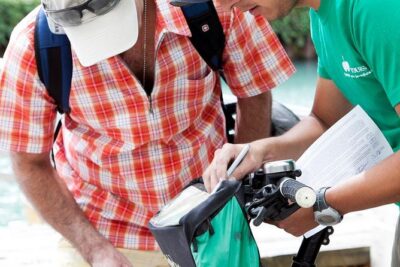
Browse the lists this tour appears in