

Reviewed · ARCHITECTURE TOURS
Chicago History and Architecture Walking Tour
City stories, in steps, in Chicago’s core. This small-group walk with guide Andrew threads together big sights like Cloud Gate and the city’s defining rebuild moments, all over about 2.5 hours. You get photo time at Millennium Park, smart city routing through the Pedway, and skyline views along the Riverwalk, then you finish with some of Chicago’s most recognizable facades.
Two things I really like here. First, the guide, Andrew, brings a deep, personal style of storytelling that goes beyond dates and names. Second, the stop at Cloud Gate and Millennium Park feels timed right for photos, not a rushed drive-by.
One possible drawback to plan for: the tour can lean more toward history storytelling than pure architecture critique. If you want heavy technical building details, you might feel the emphasis is more on people and events than on design trivia. Also, while it sounds rare, there’s at least one recorded instance of a guide not showing up for a specific booking, so I’d recommend arriving a few minutes early and keeping the day’s contact info handy.
In This Review
- Key points to notice before you go
- Why a 2.5-hour walking tour is a smart first Chicago move
- Starting at McCormick Tribune Plaza, with restrooms and an easy landmark
- Millennium Park and Cloud Gate, the photo stop that never feels optional
- The Chicago Pedway: quick shelter and a story shortcut
- Chicago Riverwalk: skyscraper views with a real waterfront feel
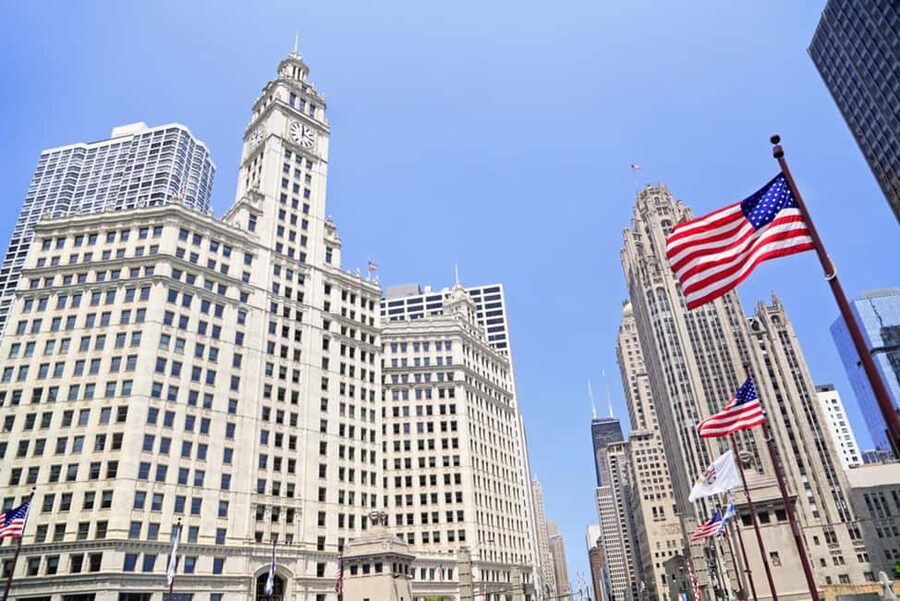
- Magnificent Mile highlights: Wrigley Building, Tribune Tower, John Hancock
- Crossing DuSable Bridge and hearing the Chicago Fire thread
- The Starbucks Reserve Roastery taste stop, plus what you should expect
- Price and value: $49 for a guided route, not a ticket bundle
- What kind of guide energy to expect from Andrew
- Who should book this tour, and who might skip it
- Simple practical advice to make it smoother
- Should you book this Chicago History and Architecture Walking Tour?
- FAQ
- How long is the Chicago History and Architecture Walking Tour?
- How big is the group for this tour?
- Where do we meet the guide?
- Is food included in the tour price?
- What are the main stops on the route?
- Is there a stop at Starbucks Reserve Roastery?
- Is the tour in English?
- Does the tour help with ticket lines?
- Is there free cancellation and reserve-and-pay-later?
Key points to notice before you go
- Small-group size (max 10) keeps the walk conversational, not like a moving classroom.
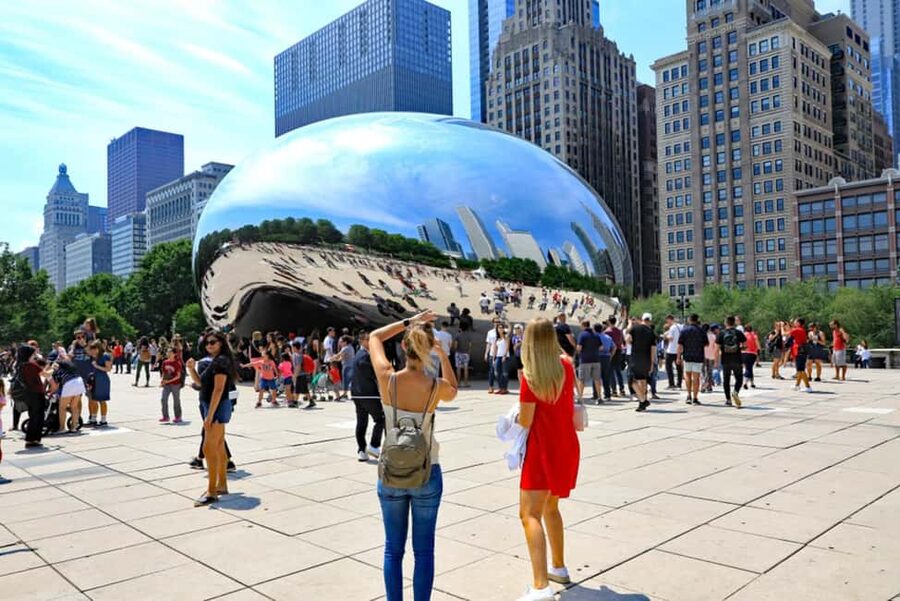
- Cloud Gate at Millennium Park gets dedicated time for photos and explanations of why it matters.
- Chicago Riverwalk viewpoints help you connect the skyline to the city’s waterfront history.
- Magnificent Mile landmarks include the Wrigley Building, Tribune Tower, and John Hancock.
- Chicago Fire and rebuilding stories are woven into the route as you cross key spots.
- Starbucks Reserve Roastery stop offers a taste option, but food and drinks are not included.
Chicago's skyline, explained block by block
Why a 2.5-hour walking tour is a smart first Chicago move
Chicago is wide. Even if you’re staying in the center, the city’s landmarks are scattered enough that you can spend half your trip just figuring out where to go next. This tour gives you a clean route with a clear arc, from Millennium Park toward the Riverwalk and then up to the Magnificent Mile.
The timing matters. At 2.5 hours, you can absorb a lot without burning the entire morning or afternoon. You’ll be walking, yes, but the pace is built around landmark stops that help you actually look, take photos, and listen.
This is also good value for the price point, especially because you’re not just buying entry to sites. You’re paying for a guide who can connect what you’re seeing, like the skyline’s lineup, to why the city is shaped the way it is.
Starting at McCormick Tribune Plaza, with restrooms and an easy landmark
You meet at the McCormick Tribune Plaza right in front of the Park Grill. It’s a good start point because it’s obvious, central, and it gets you close to Millennium Park without a long pre-walk.
Plan to use the restrooms there before you start. That small move helps a lot once the walking kicks in, because the tour runs through busy parts of the Loop where stop-and-go bathroom time can get annoying.
Since the group is limited to 10 people, you should be able to get settled quickly. If you like to ask questions, this setup makes it easier than larger tours where you spend your time waiting for the whole group to catch up.
Millennium Park and Cloud Gate, the photo stop that never feels optional
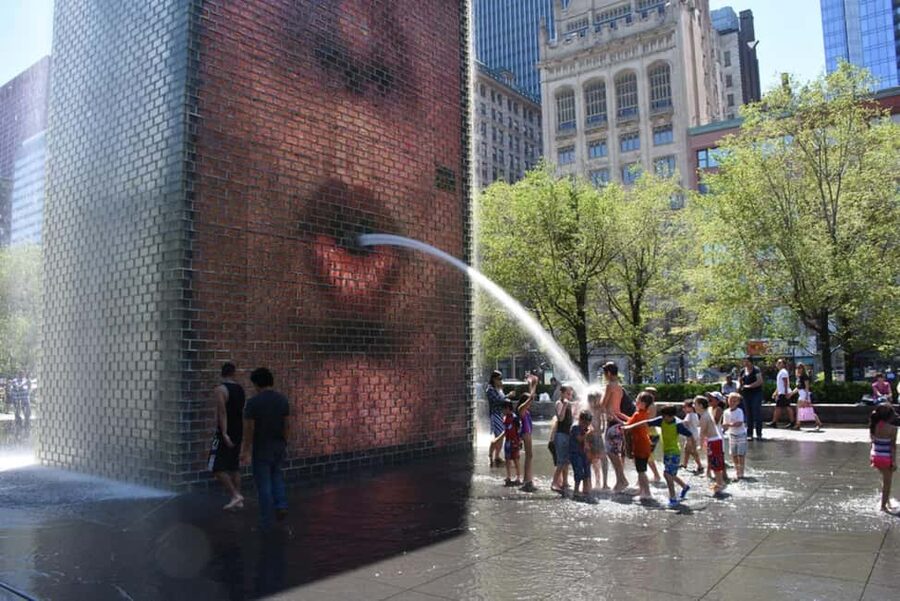
Millennium Park is where Chicago turns into a must-see postcard. The tour brings you there first, so you’re fresh and you get your head around the space before heading out to the denser streets.
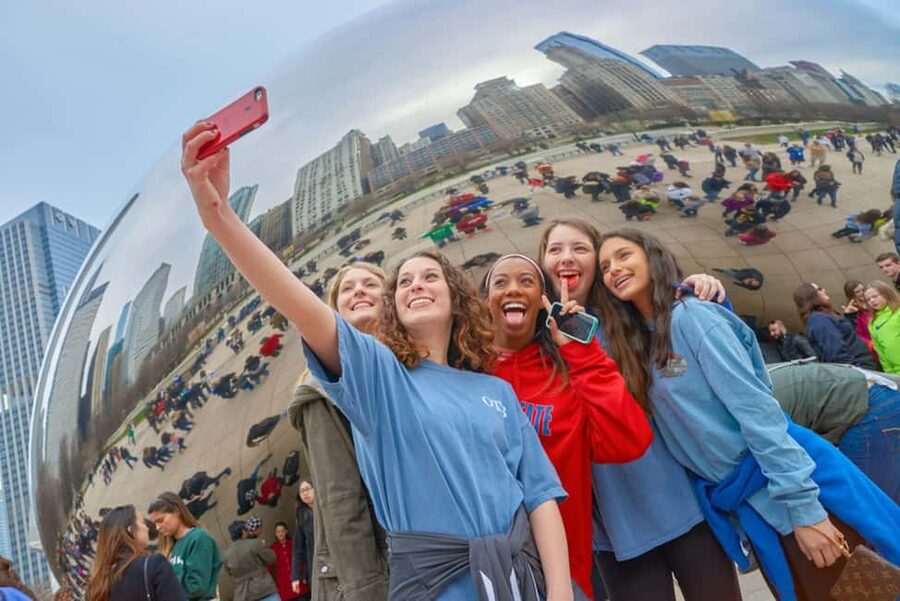
The headline is Cloud Gate, nicknamed The Bean. This stop is about more than snapping a mirror-like reflection. Your guide explains what you’re looking at and why this public art became a modern signature for the city. You’ll also get time to position yourself for photos without constantly waiting your turn.
What I like about this setup is that it’s structured around your eyes. You’re not just walking past a famous sculpture. You’re learning how to see it, then taking a moment to look at the wider scene in Millennium Park, including the park’s public art and gardens.
The Chicago Pedway: quick shelter and a story shortcut
Between major stops, the tour routes through the Chicago Pedway, the connected walkway system that links buildings and protects pedestrians. Even if you’re not a big fan of indoor corridors, it’s worth noticing because it shows how Chicago thinks about moving people.
This part works well because it’s not just “walk this hallway.” You get hidden gems in the way the city connects buildings, and it gives you a break from open-air crowds.
Pedway time also helps you understand why Chicago’s downtown feels so functional. The skyline might look like it belongs to an advertisement, but the walking paths tell the practical story of how people actually live their day in the Loop.
Chicago Riverwalk: skyscraper views with a real waterfront feel
Once you reach the Chicago Riverwalk, the city opens up visually. This is where you get those classic Chicago skyline angles, framed by the river and the built environment along the water.
This segment is valuable because it changes your perspective. Up close, you can see how the skyscrapers line up across the river. The guide’s narration helps you connect the architecture to the city’s identity, not just the scenery.
If you enjoy cities where the public realm matters, this stop scratches that itch. You get a sense that Chicago built an outdoor stage, and the buildings are the backdrop. It’s easy to feel like you’re at the center of something larger than yourself, in a good way.
A few more ways to spend a day in Chicago
- Chicago in a Day: Food, History & Architecture Walking Tour★ 5.0 · 1,153 reviews
- Chicago: Field Museum of Natural History Ticket or VIP Tour★ 4.7 · 717 reviews
- Field Museum of Natural History Admission Tickets★ 4.5 · 489 reviews
- Chicago Walking Tour: Historic Treasures of Chicago★ 5.0 · 362 reviews
- Historical and Architectural Chicago Fireboat River & Lake Cruise★ 5.0 · 246 reviews
Magnificent Mile highlights: Wrigley Building, Tribune Tower, John Hancock

After the waterfront, the tour turns toward the Magnificent Mile, Chicago’s big-name shopping and landmark corridor. This isn’t a “window shopping only” detour. It’s a guided walkthrough that points out recognizable architectural faces and the stories attached to them.
You’ll see:
- Wrigley Building
- Tribune Tower
- John Hancock
This is one of the most efficient ways to get oriented if it’s your first time in Chicago. In a short window, you get multiple signature buildings without needing to plan a separate day of transit and tickets.
Here’s why it’s a smart choice: each building represents a different era of Chicago identity. Your guide helps you connect the look of these landmarks to what the city was trying to express at the time, which is more useful than just memorizing names.
Crossing DuSable Bridge and hearing the Chicago Fire thread
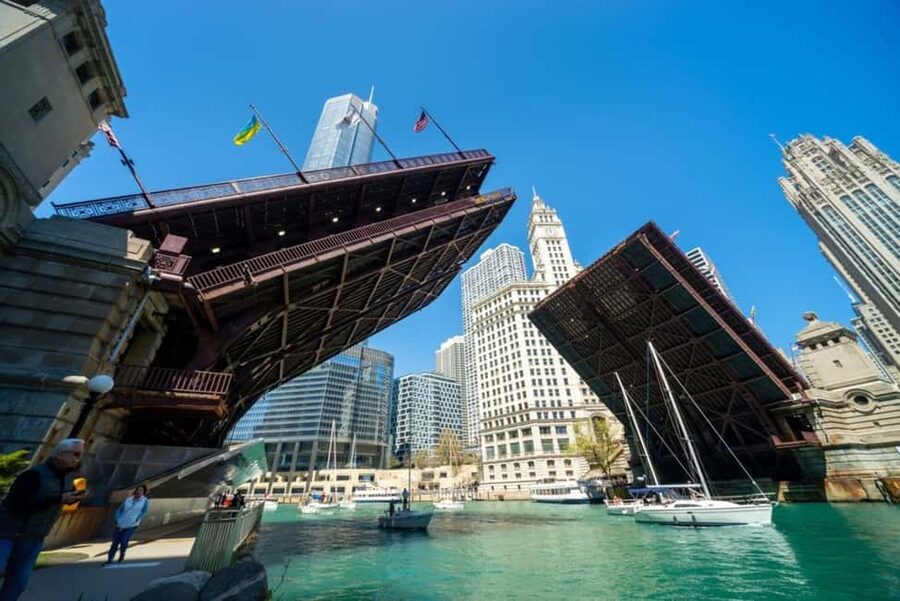
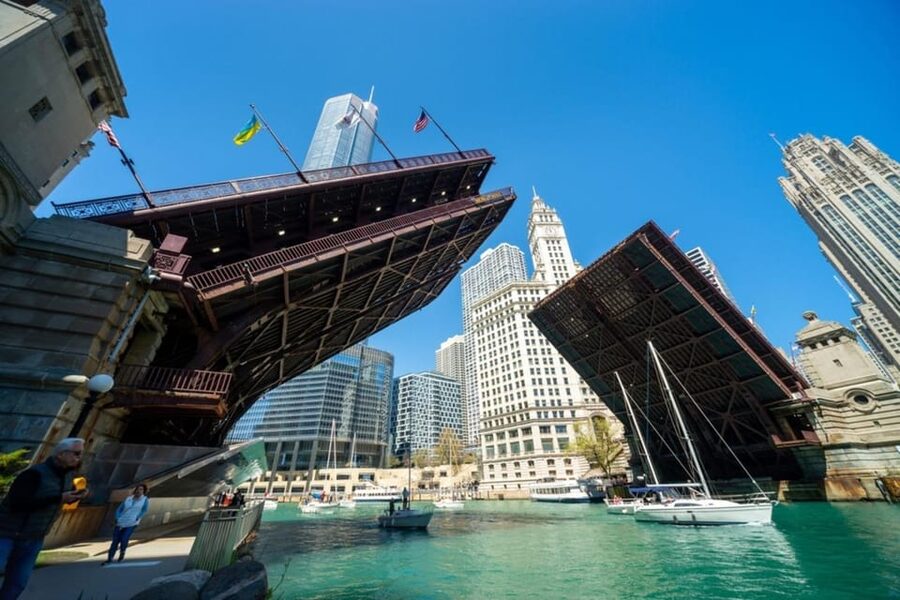
At some point, you cross the DuSable Bridge, and the guide brings in the story of the Chicago Fire and how rebuilding shaped what came after. That historical connection is one of the tour’s strongest tools, because it explains why certain streets, growth patterns, and rebuilding decisions ended up mattering.
The best architecture narratives always have a reason behind them. Here, the reason is resilience. As you move through the city, you’re not just seeing buildings, you’re hearing why the city reset itself and how people reimagined the future after disaster.
If you’re the type who enjoys learning how a single event can ripple through a whole city, this part will click. One thing to note, though: the tour can go quite far into history, even back centuries in some stories, so the vibe may be more history-heavy than strictly design-heavy.
The Starbucks Reserve Roastery taste stop, plus what you should expect
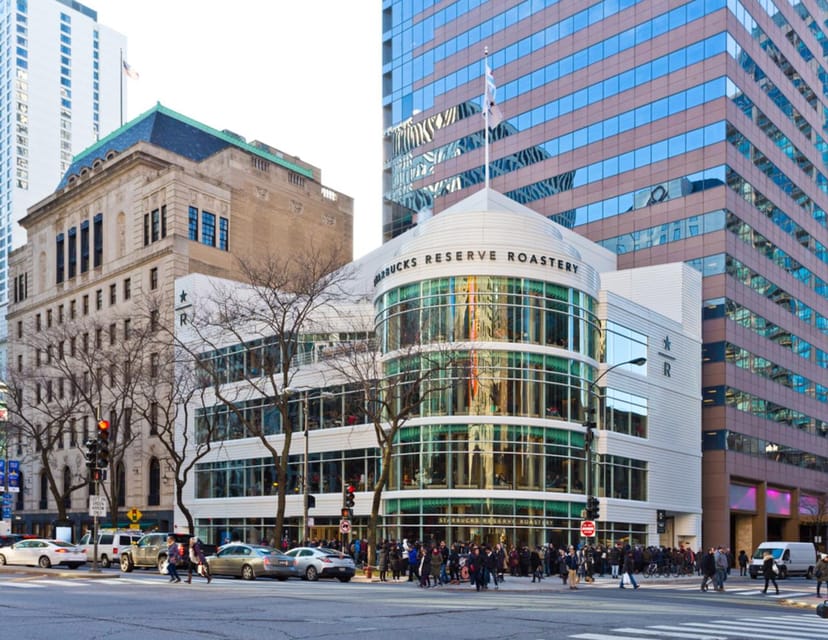
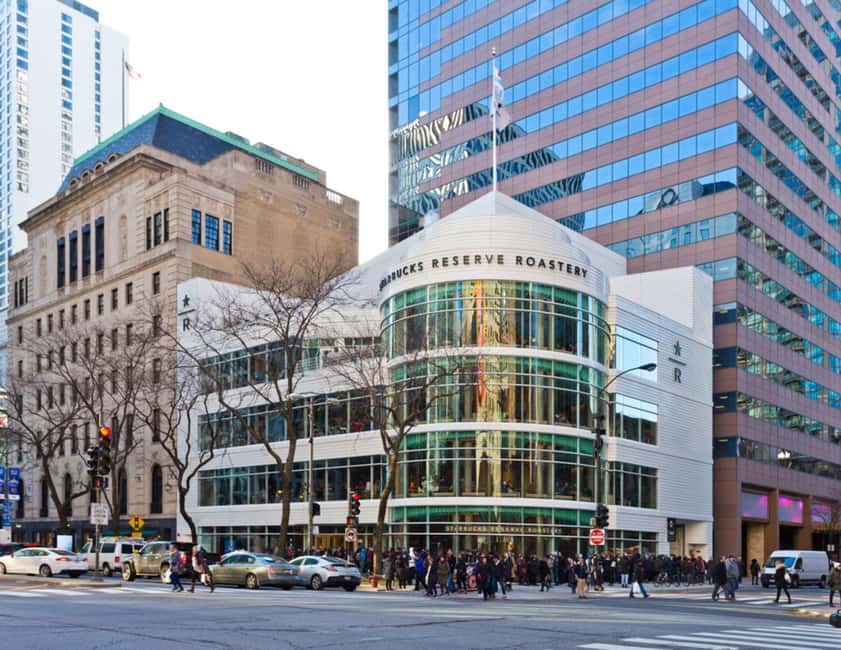
The tour includes a stop at Starbucks Reserve Roastery for a taste of local flavor. It’s a classic Chicago-style stop because it’s familiar, and it’s also a “see it while you’re here” moment.
But do not plan this as a meal. The tour makes it clear that food and drinks are not included in the price. Think of this as an optional add-on, not part of your guaranteed value package.
I like having at least one food-adjacent moment because it breaks up the walking. Still, go in with your own budget so you don’t feel surprised when you decide what, if anything, to buy.
Price and value: $49 for a guided route, not a ticket bundle
At $49 per person for about 2.5 hours, you’re paying for the guide, the small-group experience, and the structured route through key downtown landmarks. You’re not being sold a stack of paid admissions. Most of what you’ll see is public space, so the real “product” is interpretation and logistics that keep you moving efficiently.
Small-group matters here. When you’re limited to 10 participants, it’s easier to ask questions and get answers that fit your interests. You also move as a unit at a pace that works for photo stops at places like Cloud Gate.
Is it cheap? In the big world of paid tours, it’s pretty reasonable. Is it premium? Not really. It’s a focused guided walk, aimed at helping you understand Chicago fast, without a huge time commitment.
What kind of guide energy to expect from Andrew
The guide, Andrew, shows up again and again in the feedback, and that’s a good sign because it means you’re likely to get a consistent experience. People describe him as passionate, and his approach can include both Chicago’s bigger story and family-level personal context.
That personal touch matters. When the guide adds names and connections, the city stops being a list of buildings and becomes a place where people lived through the same streets you’re standing on now.
There is one tradeoff: because the narration can be history-forward, if you expected a pure architecture lecture, you might find more story than design talk. That doesn’t make it bad. It just means you should book with the right expectation: this is a history and landmarks walk, with architecture as part of the explanation.
Who should book this tour, and who might skip it
This is a great pick if:
- you want Millennium Park, Cloud Gate, the Riverwalk, and the Magnificent Mile covered in one go
- you like guided storytelling more than reading plaques on your own
- you’re visiting for a short stay and want quick context for what you’ll see later
You might consider a different option if:
- you want a strictly architecture-technical tour with lots of building-design analysis
- you’re someone who hates history narration and would rather roam independently
If you’re traveling with friends who are split between architecture lovers and history fans, this tour can satisfy both. The route includes both visual landmarks and a narrative thread, which is hard to get in a single walk.
Simple practical advice to make it smoother
Wear comfortable shoes. Downtown Chicago means lots of walking over varied surfaces, and the tour is only 2.5 hours, so you want your feet ready for the pace.
Bring a camera or phone and plan for Cloud Gate time, but don’t treat every stop as a full photoshoot. The tour flows, and the best learning happens when you step back from the lens and listen.
Finally, arrive a few minutes early at McCormick Tribune Plaza. It keeps your start calm and helps you stay with the group without stress.
Should you book this Chicago History and Architecture Walking Tour?
I’d book it if you want an efficient, good-value way to connect Chicago landmarks with the stories behind them. For $49, in a small group of up to 10, you get structured sightseeing, guided explanations, and the kind of skyline framing you usually only get when you plan carefully on your own.
I’d hesitate only if your main goal is technical architecture critique. This tour leans into history storytelling, and while the buildings are front and center, the narrative focus may be more on events and people than on architectural scholarship.
FAQ
How long is the Chicago History and Architecture Walking Tour?
The tour lasts 2.5 hours.
How big is the group for this tour?
It’s a small group, limited to 10 participants.
Where do we meet the guide?
Meet at McCormick Tribune Plaza in front of the Park Grill. Restrooms are available there prior to starting.
Is food included in the tour price?
No. Food and drinks are not included in the tour or price.
What are the main stops on the route?
You’ll visit Millennium Park and Cloud Gate, explore the Chicago Riverwalk, walk the Magnificent Mile, and see Wrigley Building, Tribune Tower, and John Hancock. The tour also includes a story thread about the Chicago Fire and crosses DuSable Bridge.
Is there a stop at Starbucks Reserve Roastery?
Yes, the route includes a stop at Starbucks Reserve Roastery for a taste of local flavor, but food and drinks are not included.
Is the tour in English?
Yes, the tour guide provides the tour in English.
Does the tour help with ticket lines?
Yes, it includes skip the ticket line.
Is there free cancellation and reserve-and-pay-later?
Yes. You can cancel up to 24 hours in advance for a full refund. You can also reserve now and pay later, meaning you pay nothing today.
More Walking Tours in Chicago
- Chicago: Gangsters and Ghosts Walking Tour
★ 5.0 · 7,155 reviews - Chicago Favorites Ultimate Food and Walking Tour
★ 5.0 · 1,962 reviews - Chicago: Gangsters and Ghosts Guided Walking Tour
★ 4.7 · 1,697 reviews - Chicago’s Secret Interiors Architectural Walking Tour
★ 5.0 · 635 reviews
Just Added





Architecture Tours, compared.

Chicago Architecture Center River Cruise aboard First Lady
Read our review →
Architecture River Cruise Skip-the-Ticket Line
Read our review →
Chicago River 45-Minute Architecture Tour from Magnificent Mile
Read our review →

45-Minute Family-Friendly Architecture River Cruise
Read our review →Browse the lists this tour appears in