
Reviewed · ARCHITECTURE TOURS
Chicago: Architecture and Engineering Marvels Walking Tour
Chicago makes architecture feel like engineering, not just style. This tour puts the focus where it belongs: on how buildings stand up, how they flex in wind, and how Chicago solved the problem of building on tough ground. You also get a dose of humor from a guide who is trained as an engineer, plus access to select interiors so you can see the details up close.
Two things I really like. First, the explanations are built for non-engineers, and guide Henry uses a folder of illustrations to make the concepts click fast. Second, you do not just look at the famous facades, you learn the how from an engineer’s perspective, including what happens when foundations settle unevenly and why a building can earn a haunted reputation for the wrong reason.
One possible drawback: it is a walking tour with enough ground to notice you are on your feet for 2 hours, and it is not designed for lower fitness or mobility challenges. If your legs run short or the weather is harsh, you may feel it.
In This Review
- Quick take: why this engineering walk is worth your time
- Meeting at Roosevelt University, and what to notice right away
- How an engineer comedian changes the architecture conversation
- The forces behind the skyline, gravity and wind made practical
- Walking from icon to interior, and why that access matters
- Foundation “settlement” and the idea of a haunted reputation
- A “father of the skyscraper” lesson you can see on the ground
- The story of a major U.S. engineering feat that still shapes Chicago
- Time, pace, and what to bring for a 2-hour win
- Price and value for a $30 architecture engineering walk
- Who this tour is best for, and who should skip it
- Should you book this Chicago engineering architecture tour?
- FAQ
- Where is the meeting point for this walking tour?
- How long is the tour?
- What is included in the $30 per person price?
- Does the tour include elevator access?
- Is the tour offered in English?
- What should I bring?
- What is not allowed during the tour?
- What is the cancellation policy?
- Is the tour suitable for everyone?
Quick take: why this engineering walk is worth your time
- Engineer-led storytelling that connects Chicago architecture to gravity, wind, and real building forces.
- Interior access to select buildings, not just photos from the sidewalk.
- Skip-the-line express elevators, so you spend more time inside and less time waiting.
- Henry’s visual help with illustration folders to explain concepts without math homework.
- Foundation and settlement stories, including the idea of uneven “floating” support.
- A special Chicago engineering feat that still affects the city today, explained in plain terms.
Chicago's skyline, explained block by block
Meeting at Roosevelt University, and what to notice right away
You start at Roosevelt University, also known as the Auditorium Building, at 430 South Michigan Avenue. One practical tip: make sure you find it on South Michigan. Chicago can trip you up with street directions, and this address is the one that matters for your meetup.
From the first minutes, the tour’s tone is clear. You are not just getting a list of landmarks. You are learning how Chicago’s builders thought, from the era when foundations and materials were huge gambles to the skyscraper era when wind became a constant enemy.
Even if you have been to Chicago before, I like how this tour turns your attention to specifics you may have missed. You begin to spot structural logic in the building forms, and you learn to ask what is carrying the load and what is managing the movement.
How an engineer comedian changes the architecture conversation
Most architecture tours are either all aesthetics or all dates. This one keeps the middle ground, because your guide is both an engineer and an improv comedian. That pairing matters. When the guide makes a point and then jokes about it, you remember the concept, not just the vocabulary.
Henry is a name worth noting. In the small ways he teaches, the big pattern is that he uses clear visuals, including a folder packed with illustrations, to translate building behavior into something you can picture. If you have ever felt lost in architecture explanations, this is the kind of support that helps you stay with it.
You also get a guided approach to understanding why Chicago became a leader in iconic building styles. The tour ties the architecture you see today to the engineering decisions that made the whole thing possible under difficult conditions.
The forces behind the skyline, gravity and wind made practical
Chicago is famous for tall buildings, but tall buildings are only possible because teams learned to handle force. On this tour, you hear the story behind that learning, in a way you can actually use.
You will get the basics of how Chicago buildings handle gravity loads and wind forces. That may sound technical, but the goal here is simple: when you understand what a building is fighting, the shape and materials start to make sense. A facade is not only a look, it is part of the system, working with the structure underneath.
This is also where the engineering perspective feels extra valuable for first-timers. Seeing a building from ground level can be all impact and no explanation. Here, you are learning the logic behind why certain buildings feel like they are designed to resist motion, and why Chicago’s early builders were so focused on how weight and pressure travel.
Walking from icon to interior, and why that access matters
You get a key advantage: the tour includes exclusive access to select building interiors. That is a big deal in Chicago because the best clues are often inside. Floor plans, lobby details, and vertical circulation tell you how the building works day to day.
You also get help with time management. The tour includes express elevators that let you skip the line. On a tight schedule, that turns the interior portion from a maybe into a real experience. Instead of spending the best part of the day waiting, you get more minutes inside where the guide can point out engineering choices.
Think of it this way. From the street, you can admire the design. Inside, you learn the engineering story that design is hiding. This tour is designed around that shift.
Foundation “settlement” and the idea of a haunted reputation
One of the most memorable themes is settlement. Chicago has marshy soil, and that means buildings did not always sit perfectly. The guide explains how a building might develop a reputation for being haunted simply because it settled unevenly on its foundation.
Even if you do not care about ghost stories, I like this part because it teaches a real concept: unequal settlement can change how a building behaves, visually and structurally. The supernatural framing is just a hook, the engineering explanation is the point.
You will also hear about floating foundation concepts, and how engineers approached support in tricky ground conditions. That kind of context makes the city feel less random. It becomes a place where builders learned through challenges, adjusted methods, and ultimately improved outcomes.
A few more ways to spend a day in Chicago
- Chicago: Gangsters and Ghosts Walking Tour★ 5.0 · 7,155 reviews
- Chicago Favorites Ultimate Food and Walking Tour★ 5.0 · 1,962 reviews
- Chicago: Gangsters and Ghosts Guided Walking Tour★ 4.7 · 1,697 reviews
- Chicago in a Day: Food, History & Architecture Walking Tour★ 5.0 · 1,153 reviews
- Chicago’s Secret Interiors Architectural Walking Tour★ 5.0 · 635 reviews
A “father of the skyscraper” lesson you can see on the ground
The tour includes a stop focused on the building connected to the father of the skyscraper, described as an engineer and a classmate of Gustav Eiffel. This is exactly the kind of cross-connection that makes Chicago more than a single-city story.
What you get here is context for the era when skyscrapers were still new and risky. When you hear that this person was an engineer, not just a name attached to a style, it reinforces the tour’s core message: the skyline happened because technical minds took bold steps.
You can expect the guide to tie that story back to what you are seeing as you walk. The building becomes an example, not a trivia question.
The story of a major U.S. engineering feat that still shapes Chicago
Chicago did not only innovate upward. The city also had to solve problems that involved water and movement at a massive scale. On this tour, you hear about one of the greatest engineering feats in the United States, and specifically how that achievement still affects Chicago to this day.
Even without drowning you in details, the guide links engineering choices to real-life consequences. That is why the tour feels bigger than a typical architecture walk. You are learning that Chicago’s engineering identity is not limited to its towers.
If you want to understand why the city has the geography and infrastructure it has, this theme is one of the reasons the tour works. It connects the skyline to the city itself.
Time, pace, and what to bring for a 2-hour win
The tour lasts about 2 hours. It is usually available in the afternoon, which can be nice because you can pair it with other sightseeing later.
The pace is a walking pace. You should plan for steady movement and some interior time. You will want comfortable shoes, and you should dress for weather. The tour notes you should check the forecast, bring a water bottle to stay hydrated, and have your camera ready for photos.
If you are the kind of person who likes to look carefully, this time window works well. You will have enough duration to learn building concepts and still have the energy to keep exploring afterward.
Price and value for a $30 architecture engineering walk
The price is $30 per person for 2 hours. That is not “cheap” in the way of a short bus stop, but it also is not priced like an all-day guided ticket.
The value comes from two places. First, you get an engineer-trained guide, not a general-interest guide who offers basic context. Second, the tour includes interior access and helps with timing via express elevators.
If you compare it to paying separately for observation deck time, you are not just collecting views. You are collecting understanding. The tour is designed to translate forces and foundation realities into explanations you can carry with you when you look at Chicago buildings on your own.
Who this tour is best for, and who should skip it
This is a strong match if you love architecture, puzzles, and practical explanations. You will also enjoy it if you like a bit of humor, since the guide blends engineering insights with improv-style comedy to keep the tour moving and memorable.
It is also a good choice for people who are short on time. Two hours is long enough to hit real learning moments, yet short enough to fit into a busy day.
Skip it if you have mobility impairments or lower fitness. The tour is explicitly not suitable for that, and since it is focused on walking, comfort matters.
Should you book this Chicago engineering architecture tour?
If you want Chicago architecture that is about how buildings work, not just what they look like, this is an easy yes. The engineer guide approach, Henry’s illustration support, and the combination of interior access plus express elevators make the tour feel efficient and high impact for your time.
If you are mainly after a quick photo loop with no interest in structural ideas, you might find the engineering focus less satisfying. But if you do want your next Chicago view to come with an explanation, this tour is one of the better uses of a 2-hour window.
FAQ
Where is the meeting point for this walking tour?
You meet in front of the main building of Roosevelt University, also known as the Auditorium Building, at 430 South Michigan Avenue (it is South Michigan, not North Michigan).
How long is the tour?
The tour lasts about 2 hours.
What is included in the $30 per person price?
The tour includes an expert guide trained as an engineer, engaging and accessible engineering insights, and exclusive access to select building interiors.
Does the tour include elevator access?
Yes. It includes skip-the-line access through express elevators.
Is the tour offered in English?
Yes, the live tour guide provides the tour in English.
What should I bring?
Wear comfortable shoes, bring a water bottle, and bring your camera for photo opportunities.
What is not allowed during the tour?
Smoking is not allowed.
What is the cancellation policy?
Free cancellation is available up to 24 hours in advance for a full refund.
Is the tour suitable for everyone?
No. It is not suitable for people with mobility impairments or people with low level of fitness.
Just Added






Architecture Tours, compared.

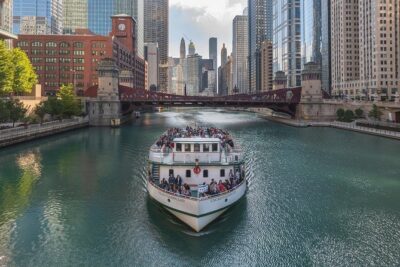
Chicago Architecture Center River Cruise aboard First Lady
Read our review →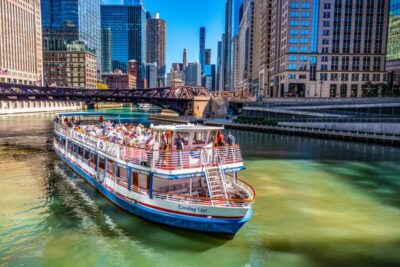
Architecture River Cruise Skip-the-Ticket Line
Read our review →
Chicago River 45-Minute Architecture Tour from Magnificent Mile
Read our review →

45-Minute Family-Friendly Architecture River Cruise
Read our review →Browse the lists this tour appears in