
Reviewed · GANGSTER & MOB TOURS
Explore Chicago’s Hidden Past: Prohibition Culture & Architecture
A secretive era left visible scars in Chicago. This 2.5 hour walk connects Prohibition culture to some of the city’s best architecture. You’ll also get big skyline moments as you pass through the Loop, plus a proper photo stop at the Bean.
I really like that the tour mixes iconic landmarks with lesser-noticed city details, so you do not just tick boxes. I also like the focus on storytelling led by guides like Rich and Dave, whose clear explanations and upbeat pacing make the stops stick.
The main thing to consider is the format: it is a walking tour with about 3 miles total, and a few stops are weather dependent, like the Pedway and the Riverwalk. If it is sloppy out, expect to dress for it and keep your shoes comfy.
In This Review
- Key highlights I’d prioritize
- A Prohibition-Era Walk With Architecture You Can See
- Where You Start and How the Route Feels on Foot
- Chicago Theatre to Pedway: Starting Strong, Then Switching Levels
- Daley Plaza Picasso and Civic Art That Changes the Mood
- The Chicago River Walk: Skyline Views and Your Local-Feeling Moment
- Wrigley Building, Tribune Tower, and the Magnificent Mile Pass-By
- Chicago Cultural Center: When the Tour Steps Inside
- Millennium Park and Cloud Gate: Your Finish Line Photo Moment
- The Guide Experience: Why Small Groups Feel Better Here
- Food Along the Way: Popcorn Included, Surprises Included Too
- Price and Value: Is $49.96 Worth It?
- Who This Tour Suits Best (And Who Might Want Another Option)
- Should You Book Prohibition Culture & Architecture in Chicago?
- FAQ
- How long is the tour?
- How much does it cost?
- Where do I meet, and where does it end?
- Is the tour mostly outdoors?
- What food is included?
- How much walking is involved?
- Is it family-friendly?
- How many people are in the group?
Key highlights I’d prioritize
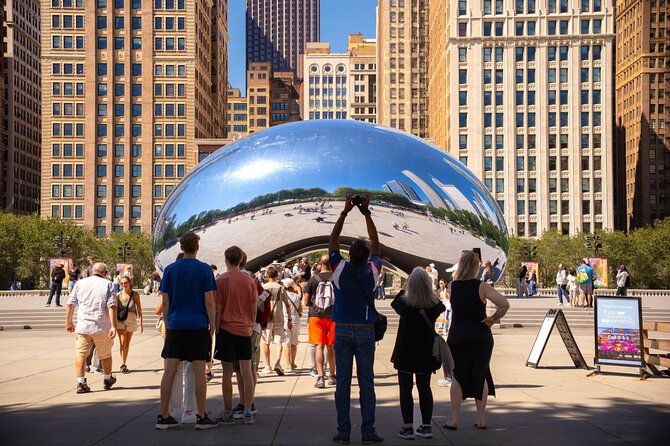
- Bean at Millennium Park: your big photo moment ends right where you want it to, near Cloud Gate
- Pedway access, weather permitting: an underground commuter network that changes how you experience downtown
- Architecture stops packed into the Loop: Chicago Theatre, Daley Plaza’s Picasso, Wrigley Building, Tribune Tower, and more
- Small-group attention: capped at 15 travelers, which means more back-and-forth questions
- Chicago-style popcorn: a simple local snack included, with additional surprise treats along the route
Still curious about Capone's Chicago?
A Prohibition-Era Walk With Architecture You Can See
Chicago does not do subtle. Even if you only know the city from postcards and movies, the Loop shows its history on the street level. This tour uses the Prohibition Era as the thread, pointing you to how that time shaped the city’s culture and the spaces people moved through.
You start in the heart of the theater district at the Chicago Theatre, then work your way through major civic and commercial areas. Along the way, you get practical context, not just dates. The guide helps you notice why certain buildings look the way they do and how downtown space functions, from government blocks to commuter corridors.
And yes, you get skyline payoffs. Expect views that make the city feel like a living architecture exhibit, especially as you approach the river and the parks around Millennium Park.
Where You Start and How the Route Feels on Foot
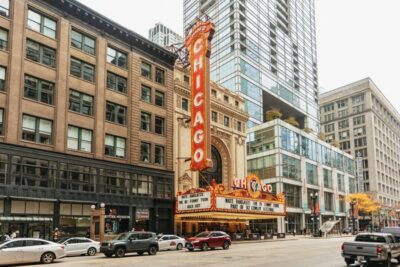
You meet at the Chicago Theatre, 175 N State St. This location is easy to get to if you are using public transportation, and it sets the tone right away with a classic Loop landmark.
The walking distance is about 4.8 km (3 miles) in total. That is a manageable length for most people, but it is still real walking. Plan on comfortable shoes, and keep water handy if you run warm easily. The tour is also kid-friendly, with children under 6 joining free, and ages 6 to 11 joining at the adult rate.
The schedule is built for pacing. You spend a short amount of time at most stops, then move on before the group gets bogged down. In a small group, that works well because you keep momentum, and the guide can still explain what you are seeing as you see it.
Chicago Theatre to Pedway: Starting Strong, Then Switching Levels
The tour kicks off at the Chicago Theatre marquee. You get a quick orientation and a sense of how downtown’s grand public-facing buildings helped shape the city’s identity.
From there, the route shifts toward the Chicago Pedway, weather permitting. This is one of the most fun contrasts you can experience in downtown Chicago: instead of street-level crowds, you step into an underground network used by locals and commuters. Even if you have never used it before, it gives you that I did not know Chicago worked like this feeling fast.
Weather permitting also applies later near the Riverwalk, so you want to keep a flexible mindset. If it is wet or cold, the guide still keeps things moving, but the outside view time may vary.
Between these stops, you also pass the City Hall-County Building area. You get a quick look at how government space sits in the middle of a commercial district. That contrast matters for this tour theme, because Prohibition-era culture was not separate from everyday city life, it lived in the same downtown environment.
Daley Plaza Picasso and Civic Art That Changes the Mood
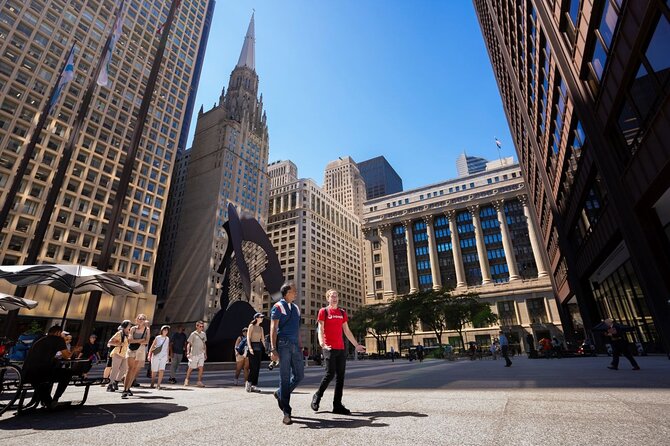
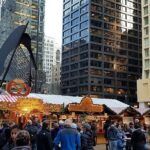
Next comes Daley Plaza, where you stop by the Chicago Picasso, a 1967 public art installation. Public art can be a background detail when you rush through downtown, but the guide uses this stop to show how art and urban planning can shape a public square.
This is a good place to slow down for a moment. The sculpture and plaza setting give you a reset between the dense blocks of commerce and the open-feeling sections near the river.
You also get quick framing on what you are looking for and why it matters. Even when stops are brief, this tour tends to explain what you might miss on your own, like how an installation can change pedestrian flow and how plazas fit into the city’s overall design.
The Chicago River Walk: Skyline Views and Your Local-Feeling Moment
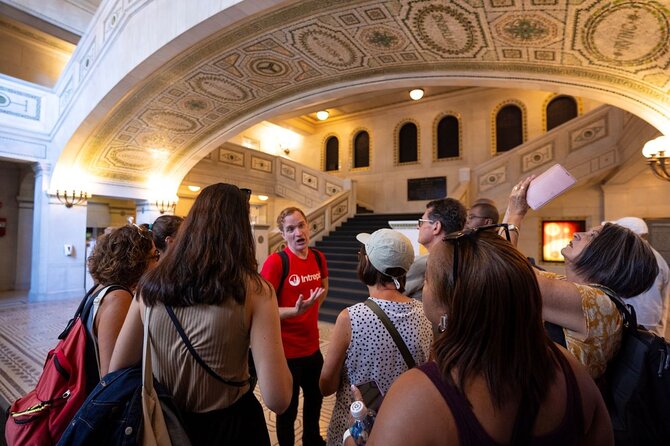
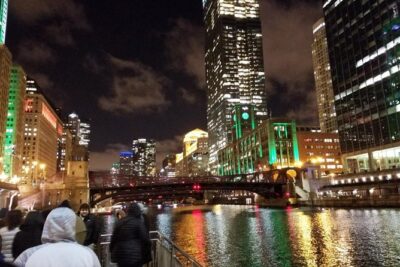
Then you move into the river area, along Chicago’s main artery. The guide leads you through the daily-commute vibe, with repeated chances to look up at iconic buildings and out toward the water.
This section is where the tour theme starts to feel real in your senses, not just in your head. The river corridor is a dividing line, a connector, and a view deck all at once. As you walk, you keep seeing how the city’s architecture clusters around practical movement and visibility.
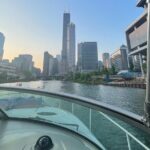
After the river, if weather cooperates, you get to stroll the award-winning Chicago Riverwalk for views of buildings like the Marina Towers, the Wrigley Building, and the Tribune Tower. This is one of those parts where you will likely pause without being told, because the angles of the skyline are so good.
If it is not great outside, you still get the structure and stories. But plan for less time lingering and more time moving, which is why dressing for rain, shine, or snow matters.
Chicago's skyline, explained block by block
- Chicago Architecture River Cruise★ 5.0 · 15,756 reviews
- Chicago River 90-Minute Architecture Tour★ 4.5 · 9,629 reviews
- Chicago River: 1.5-Hour Guided Architecture Cruise★ 4.8 · 8,046 reviews
- Chicago Architecture Center River Cruise aboard First Lady★ 5.0 · 5,536 reviews
- Chicago: Architecture River Cruise Skip-the-Ticket Line★ 4.8 · 4,325 reviews
Wrigley Building, Tribune Tower, and the Magnificent Mile Pass-By
You then get the big-ticket architecture landmarks in motion. You will pass the Wrigley Building at 400 N Michigan Ave. Even if you think you know it, being on foot lets you see how the building sits in the street grid and how it feels at human scale.
You also pass by Tribune Tower at 435 N Michigan Avenue. The guide’s focus here is on how the architecture reflects a particular style and why the building became part of Chicago’s visual identity. This stop is short, but it is designed to give you a mental hook for what you see later when you walk around on your own.
Next you pass the Magnificent Mile on North Michigan Avenue. It is tied to the 1909 Burnham Plan, and the guide frames it as a district built for shopping, dining, and attractions. Even if you are not planning to shop, passing through it gives you a sense of how Chicago shaped its downtown as a destination.
One practical note: this section is more about looking while walking than lingering. If you want time to take tons of photos at every corner, you might need to step slightly ahead of the group for a few quick extra shots.
Chicago Cultural Center: When the Tour Steps Inside
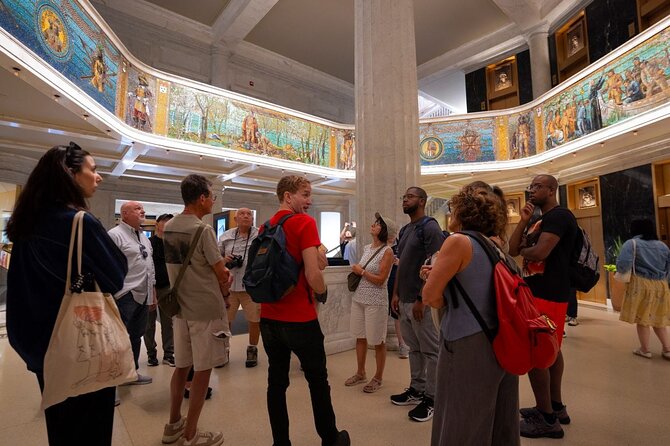
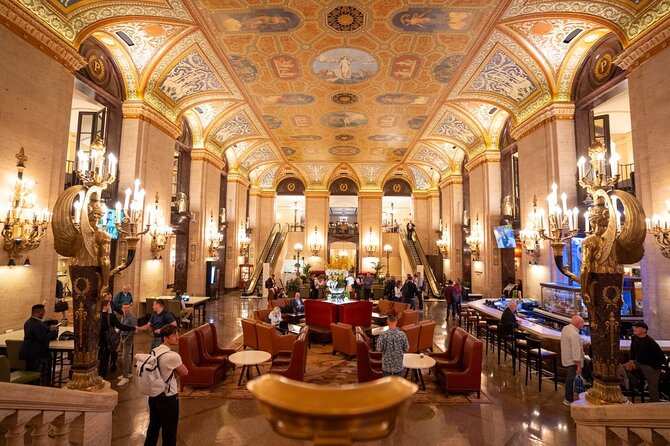
After more street-level seeing, you step into the Chicago Cultural Center, a Chicago Landmark. This is one of the strongest “pause and look up” stops on the whole tour because it changes the soundscape. Inside, you slow down naturally.
The Cultural Center is also described as a place where the Mayor welcomed presidents, royalty, and dignitaries. That kind of detail matters because it tells you this is not just a pretty building. It is part of how Chicago presents itself to visitors, and how civic pride plays out in public spaces.
If you like architecture that you can experience up close, this is the stop that will make the tour feel more than just a curbside sightseeing loop.
Millennium Park and Cloud Gate: Your Finish Line Photo Moment
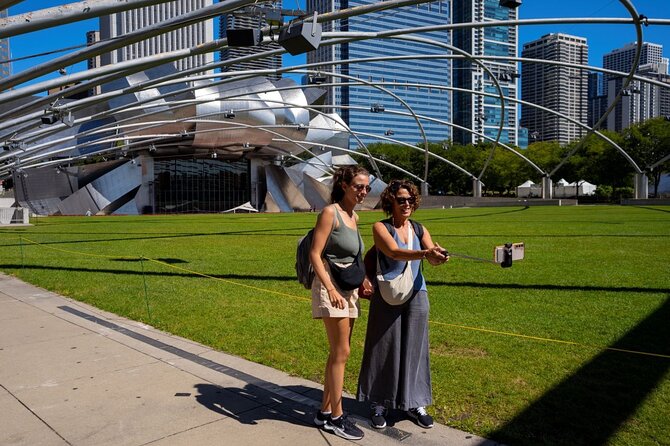
The tour ends at Millennium Park, with Cloud Gate as the centerpiece, also known as The Bean. The timing is deliberate. Instead of ending in an office district or a shopping block, you finish in the kind of public space where you naturally want to keep hanging out.
You get about 20 minutes around Millennium Park, and then a short final stop at Cloud Gate itself. This is enough time to get that iconic photo and to enjoy the park setting without feeling rushed.
More importantly, the guide ends by offering tips for nearby sights, plus lunch or drinks suggestions. That makes this a smart “first or second day in Chicago” kind of tour, because you get local direction while you still have fresh energy.
The Guide Experience: Why Small Groups Feel Better Here
One of the biggest reasons this tour earns such high marks is the human factor. Guides named in reviews include Rich, Dave, Dash, and Kevin, and the common thread is clarity and enthusiasm. You feel like you are walking with someone who actually cares, and who can explain what you are seeing in plain language.
The small group size matters too. With a maximum of 15 people, it is easier to ask questions and actually get answers, instead of hearing the guide talk at you the whole time. If you like personal attention, this format helps.
A subtle benefit is the guide’s ability to keep the group together. Downtown can be chaotic, and the pacing stays manageable. Even on busy days, you typically do not feel like you are constantly searching for the next meeting point.
Food Along the Way: Popcorn Included, Surprises Included Too
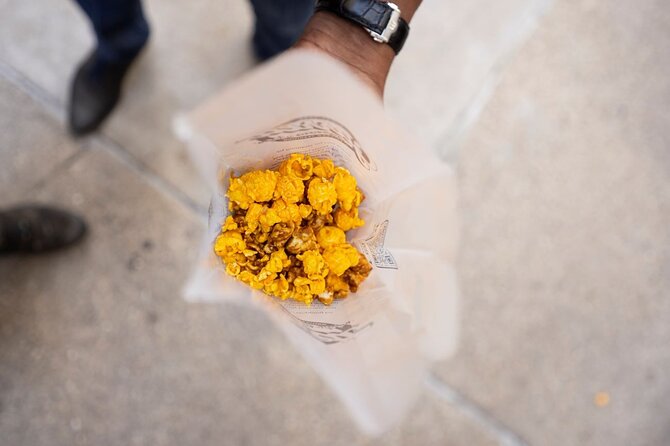
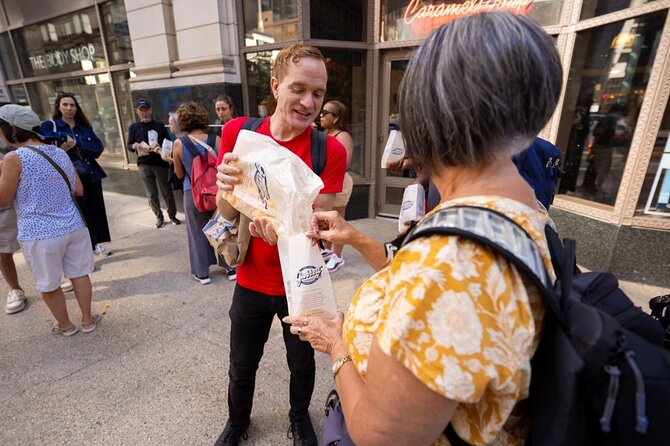
This tour includes Chicago-style popcorn. It is not a full meal, but it gives you a fun, low-key local bite during a sightseeing stretch.
The tour also mentions surprise local treats along the way. Still, additional food and drink are not included, so you’ll want to plan for your own lunch or snacks after the tour. If you finish at Millennium Park, you are in a prime spot to grab something nearby, but you should still bring cashless payment habits, just in case.
Think of the food as a bonus, not the main event. The architecture and the stories are the point, and the snack just helps keep the walk feeling light.
Price and Value: Is $49.96 Worth It?
At $49.96 per person, this is not a bargain-price throwaway tour, but it also is not priced like a premium ride-along experience. For the value, you should look at what you get for that time.
You get:
- A structured 2 hours 30 minutes in downtown Loop areas
- Multiple iconic landmarks passed or viewed, including Chicago Theatre, Wrigley Building, and Tribune Tower
- A river-focused segment with skyline views, plus the Riverwalk if conditions allow
- A stop inside the Chicago Cultural Center
- Included popcorn and additional surprise treats
- A local English-speaking guide, with small-group dynamics up to 15 people
What pushes value even further is timing. You can book about 20 days in advance on average, which suggests it is popular, but not so booked out that you always miss it. If you are only in Chicago a short time, this format helps you compress a lot of “sights plus context” into one outing.
If you already know Chicago architecture well and only want deep technical building history, you might find the pacing a bit general. But for most people who want a smart overview plus stories they can build on later, it is good value.
Who This Tour Suits Best (And Who Might Want Another Option)
I think this tour is ideal if you:
- Want a first pass at the Loop that connects culture to buildings
- Like walking tours that include both major landmarks and smaller observations
- Prefer a small group, not a bus-and-podcast vibe
- Enjoy ending with a classic photo at Cloud Gate and getting local tips right after
It may not be the best fit if you:
- Want long, detailed architecture deep dives at every stop
- Need lots of sit-down time, since most locations are short viewing moments
- Get thrown off by weather dependent stops, like the Pedway and Riverwalk segments
And based on guide comments you might have seen, if your priorities are very specific architecture sites beyond what the route emphasizes, you may want to compare with other Chicago architecture walks.
Should You Book Prohibition Culture & Architecture in Chicago?
Yes, I would book it if your goal is to see the Loop through a themed lens, Prohibition Era culture, while also getting skyline views and a clean finish at Millennium Park. The small group size is a real quality upgrade, and the guide-led format tends to make even familiar buildings feel fresh.
I would especially choose it early in your trip. You finish near the Bean, then you can use the guide’s suggestions to plan the rest of your day. If weather is bad, you just need the right shoes and patience, because some outdoor segments may flex.
Bottom line: for value, story-driven sightseeing, and an end-of-tour photo that actually delivers, this is a strong pick for a half-to-two-day Chicago visit.
FAQ
How long is the tour?
It runs about 2 hours 30 minutes.
How much does it cost?
The price is $49.96 per person.
Where do I meet, and where does it end?
You start at the Chicago Theatre, 175 N State St, Chicago, IL 60601. You end at Millennium Park (near Millennium Park and Michigan Ave).
Is the tour mostly outdoors?
It is a walking tour with outdoor sections, and some stops are weather permitting, including the Pedway and the Riverwalk.
What food is included?
Chicago-style popcorn is included, and you’ll also taste surprise local treats along the way.
How much walking is involved?
The tour covers about 4.8 km (3 miles) of walking.
Is it family-friendly?
Yes. Children under 6 join for free. Children ages 6-11 can join at the adult rate, and you should inform the provider when booking.
How many people are in the group?
The maximum group size is 15 travelers.
If you want, tell me your travel dates and what you care about most, architecture, nightlife history, or great photos, and I’ll suggest the best day to schedule this walk.
Just Added



Gangster & Mob Tours, compared.
Prohibition Speakeasies Bus Tour or Walking Tour
Read our review →Browse the lists this tour appears in