
Reviewed · GANGSTER & MOB TOURS
Chicago: Mob and Crime Bus Tour
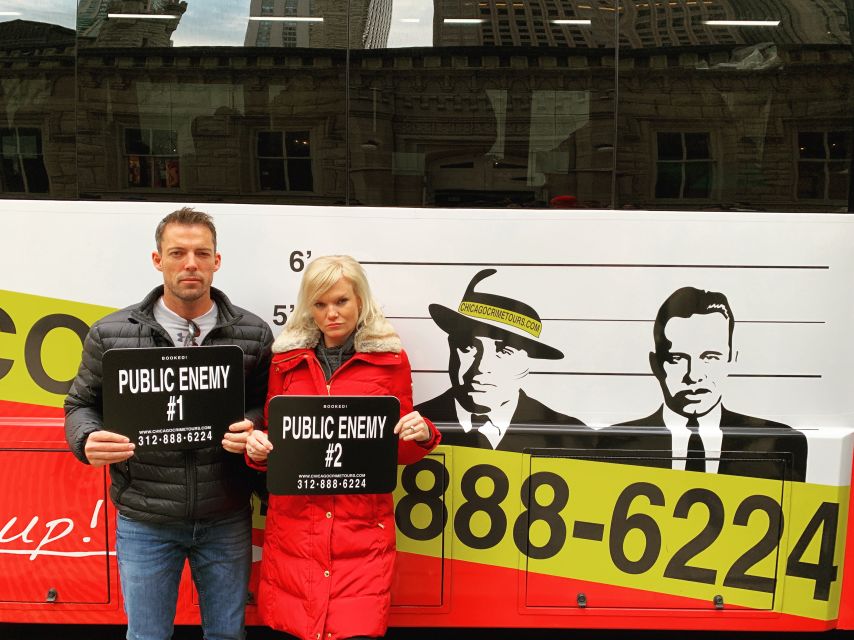
Chicago’s gangsters ride right past you. This 90-minute luxury, climate-controlled bus turns famous true-crime moments into a walkable, camera-ready loop, including the St. Valentine’s Day Massacre site and the final steps tied to John Dillinger.
I love that you get more than drive-bys. You also step out to follow the path Dillinger and Hymie Weiss took just before their deaths, and you get hands-on style stops like a mini mob museum featuring gangster Frank Nitti’s safe and address book. The one drawback to plan for: the bus can be a bit loud or squeaky, and the live guide needs to compete with that noise, which can make it harder to catch every word if English is not your strongest language.
I also like the balance of Chicago flavor plus crime trivia. You see big-name landmarks, like the lakefront and major architecture, while the guide connects why the city became a stage for prohibition-era power plays and bank robber legends. If you want a quiet sit-down museum experience, this is not it, but if you want a fast, action-packed way to get your bearings, you will likely enjoy this format.
In This Review
- Key highlights at a glance
- Meeting at 163 E Pearson Street, and why timing matters
- Luxury coach, live commentary, and how to hear the stories
- From Water Tower area to the Magnificent Mile skyline
- Biograph Theatre stop: where the city looks cinematic and criminal
- Harry Caray’s Italian Steakhouse area and Holy Name Cathedral
- Chicago River and architecture: why the city layout matters
- The historic criminal courthouse by drive-by, plus case connections
- St. Valentine’s Day Massacre site: the moment that shaped the legend
- Dillinger and Hymie Weiss walk: the final steps moment
- Frank Nitti’s mini mob museum and the safe-and-address book reveal
- Crime quiz, pamphlet, and prohibition-era personality profile
- A glimpse of gangster-era tunnels: what it adds
- Who this tour fits best, and who may want a different style
- Should you book the Chicago Mob and Crime Bus Tour?
- FAQ
- How long is the Chicago Mob and Crime Bus Tour?
- What is the price?
- Where do I meet the bus?
- Is the tour in English?
- Are there audio guides or headphones?
- Is the tour wheelchair accessible?
- Can I record video during the tour?
- Are food and drinks allowed on the bus?
- Does the tour include walking?
- Is gratuity included?
- Can I cancel for a refund?
Key highlights at a glance
- St. Valentine’s Day Massacre site, plus the stories around how Chicago became infamous
- Walk portion tied to John Dillinger and Hymie Weiss, with a focused photo and look-around moment
- Frank Nitti mini mob museum, including Nitti’s safe and address book
- Photo stops at real landmarks like the Biograph Theatre and Harry Caray’s Italian Steakhouse
- A live crime quiz and a Prohibition Era personality profile to keep the material from fading fast
Still curious about Capone's Chicago?
Meeting at 163 E Pearson Street, and why timing matters
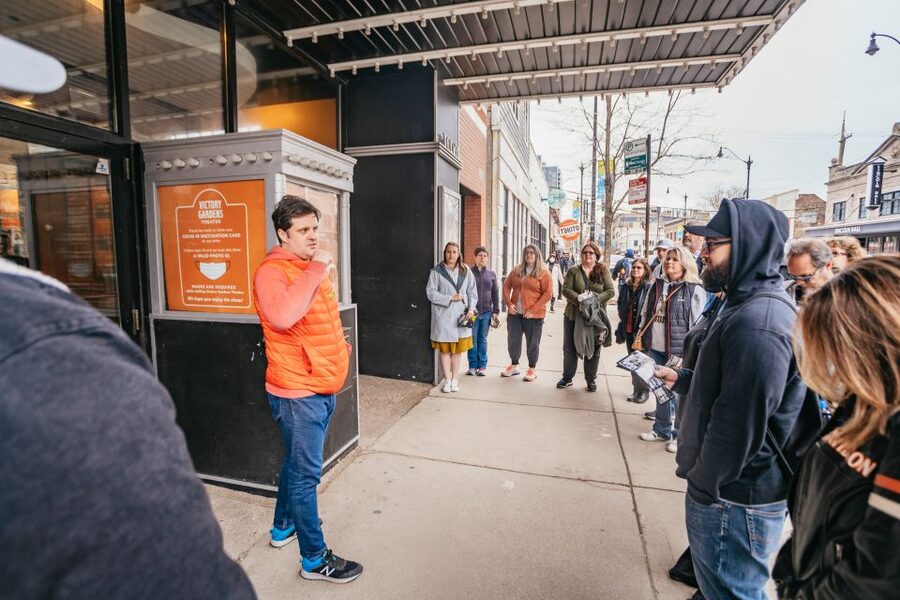
The tour starts at 163 E Pearson St, Chicago, with pickup outside on the southeast side of Pearson and Michigan Avenue, across from the Water Tower Mall. It is a simple meeting point, but it is also one where the bus does not wait forever. The bus departs on time, and no one can join after it leaves, so give yourself a buffer and check in at least 10 minutes early.
Seating is first-come, first-served and joint seating is not guaranteed. If you are traveling with someone you know well, arrive together so you can pick a seat close to each other.
Also note that there are five steps on the bus, and some stops off the bus include stairs. If you have mobility limits or use a folding wheelchair or stroller, plan ahead since the tour has limited storage for those items and is not equipped with an electronic lift.
Luxury coach, live commentary, and how to hear the stories
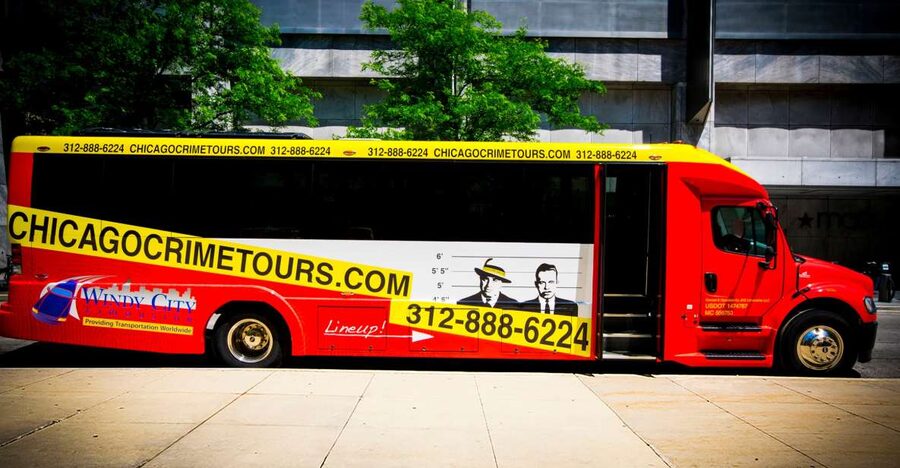
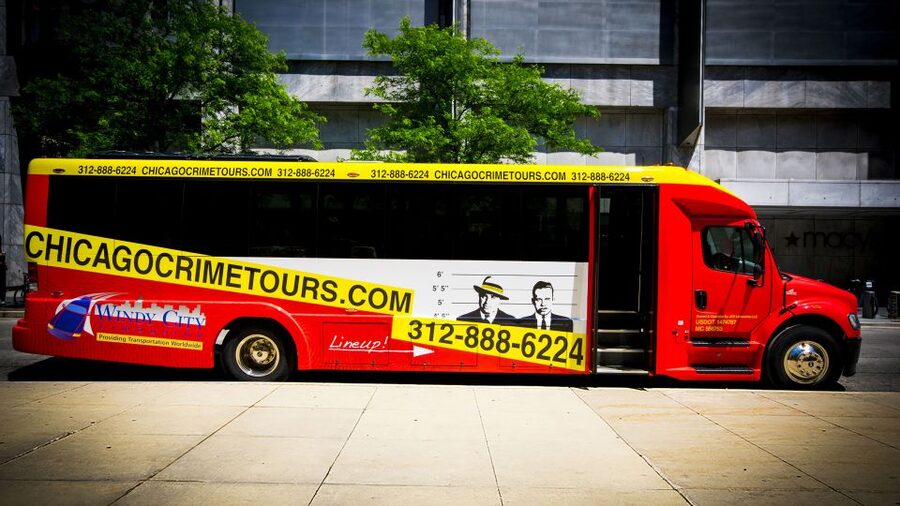
This is a closed, temperature-controlled coach bus, which is a big deal in Chicago when the weather turns. You still get to see neighborhoods and landmarks from the windows, but without dealing with wind or cold for most of the ride.
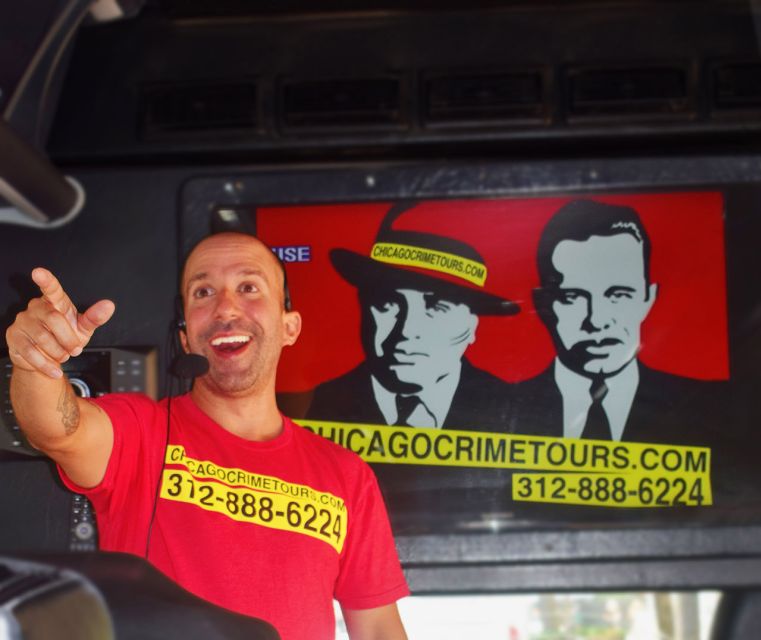
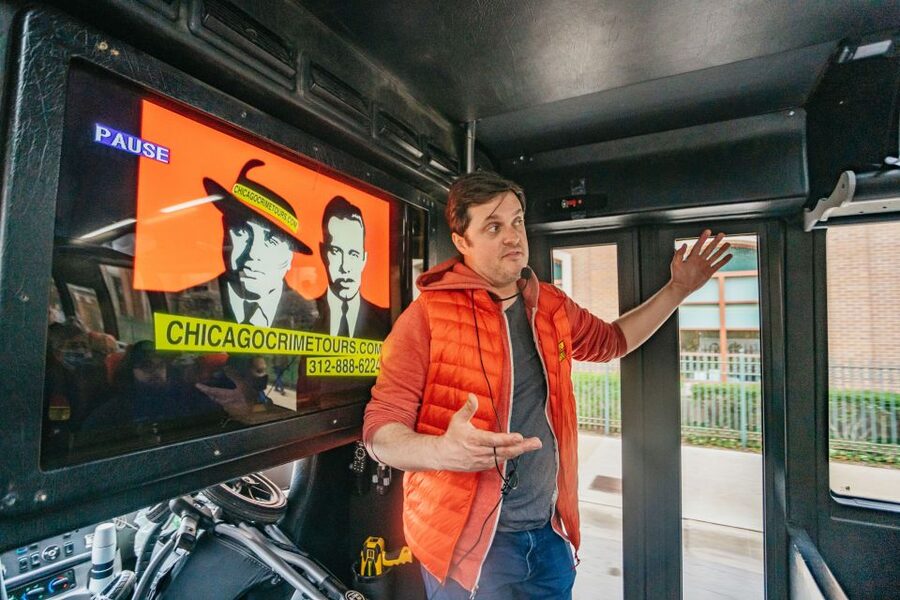
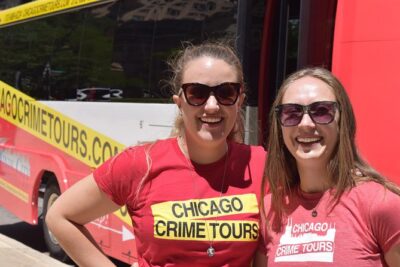
The engine of the experience is the live, interactive English guide. The format is not a prerecorded audio tour. You will also see historic video footage during the ride, plus you get a pamphlet with photos and special offers.
One practical tip from the reality of the ride: the bus can be loud, and some passengers have found that the guide’s voice can be harder to follow if you cannot hear clearly. Bring patience, sit where you can hear best, and do not treat this as a perfectly quiet lecture. If you want to hear every detail, it helps to arrive ready to concentrate.
From Water Tower area to the Magnificent Mile skyline
The route begins near the Water Tower area and quickly puts you in the heart of classic Chicago scenes. You pass Water Tower Place and get views of the Magnificent Mile, plus the skyline landmarks that make Chicago look like a model city from above street level.
As the bus moves toward Lincoln Park and the John Hancock Center area, you get wide views that connect the city’s building boom to the neighborhoods you will later associate with organized crime stories. This part of the tour is not just scenic, it sets the stage. Chicago’s crime legends happened in a city that grew fast, built high, and attracted people with money and opportunity.
If you are chasing photography, this section can help you set your expectations for angles and timing. You will be doing both pass-bys and stops later, so it helps to know what the city looks like from street level before you hop out.
Biograph Theatre stop: where the city looks cinematic and criminal
One of the first true photo moments comes at the Biograph Theatre. The tour frames this as a key spot tied to the era you associate with gangsters and media attention. Even if you have only a passing familiarity with names from pop culture, this stop makes the time feel more real because it is tied to an actual place.
What I like about this stop is the way it gives you a break in the flow. The bus ride can move quickly, and then you get out for photos and quick context. It is enough time to get your camera working and understand why the guide is pointing you there.
A consideration: your time for photos depends on the pace of the group and the stop flow. So if you want specific shots, aim to be ready right when the bus stops rather than waiting until the guide finishes the full explanation.
Harry Caray’s Italian Steakhouse area and Holy Name Cathedral
Later, you get another photo stop at Harry Caray’s Italian Steakhouse, then you pass by Holy Name Cathedral. These are not “crime sites” in the spooky sense, but that is the point. The tour shows how crime history is layered onto a functioning, living city.
I like this because it keeps the tour from turning into only grim facts. Chicago is still Chicago here, with landmarks tourists actually want to see. You end up with a route that works for both true-crime fans and people who just want a smart, entertaining way to see the city in a short window.
If you sit on the correct side of the bus for your photos, you may get better angles on the lakefront and river scenes. One helpful, practical hint from experience like this is to pick the side that makes sense for the views you care about most, and if you are unsure, ask your guide or the group how they usually point the windows for photos.
Beyond the skyline, the neighborhoods have their own tours and their own stories.
- Chicago Architecture River Cruise★ 5.0 · 15,756 reviews
- Chicago River 90-Minute Architecture Tour★ 4.5 · 9,629 reviews
- Chicago River: 1.5-Hour Guided Architecture Cruise★ 4.8 · 8,046 reviews
- Chicago Architecture Center River Cruise aboard First Lady★ 5.0 · 5,536 reviews
- Chicago: Willis Tower Skydeck and The Ledge Ticket★ 4.6 · 4,350 reviews
Chicago River and architecture: why the city layout matters
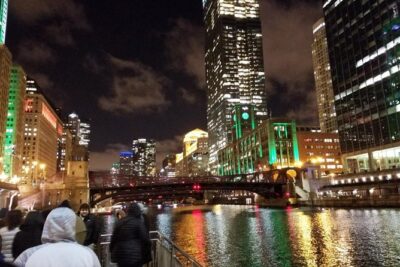
The bus passes the Chicago River and spends time moving through neighborhoods like River North, Streeterville, Gold Coast, Old Town, the Loop, and the Magnificent Mile. When you connect that geography to crime stories, the city layout stops feeling random.
Organized crime in Chicago was not only about villains and headlines. It also relied on movement, access to business districts, and the practical advantages of being near key corridors and landmarks. Watching the guide connect those points while you see the riverfront and major streets helps you understand why certain neighborhoods became connected to certain types of crime.
You also get a sense of how architecture turns into evidence. Historic buildings can serve as backdrops for court cases, money movement, and public power. That leads directly into one of the most striking moments on the tour.
The historic criminal courthouse by drive-by, plus case connections
The tour includes a drive-by moment for the historic criminal courthouse, described as an architectural landmark tied to notorious Chicago cases. Even from the bus, the exterior gives you a visual anchor, especially if the guide is linking it to people and events you recognize.
This is also a smart stop style for limited time. You get the location without the long lines and time drains that often come with independent sightseeing. In a 90-minute tour, that matters.
One more camera note: the tour encourages you to bring your camera for these photo moments. Just keep in mind that video recording is not permitted on the tour, and you may want to keep your phone ready for still shots rather than video clips.
St. Valentine’s Day Massacre site: the moment that shaped the legend
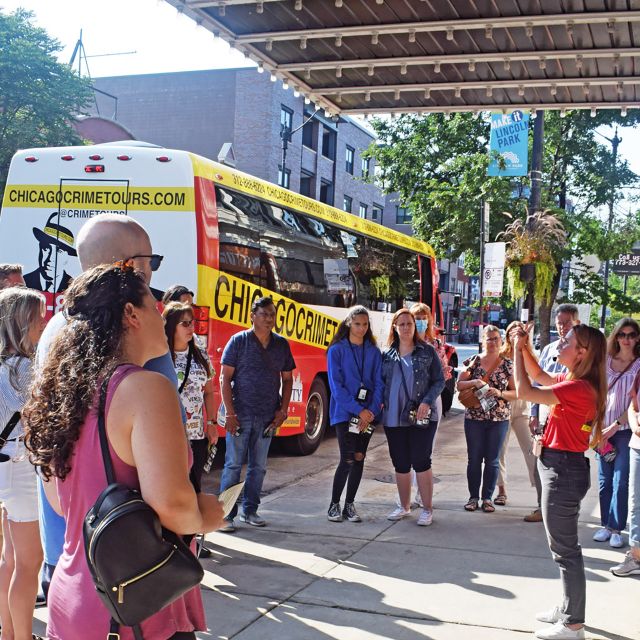
The St. Valentine’s Day Massacre site is a centerpiece. The guide ties this to the bigger story of Chicago’s underground wars, and you get the sense that this is not just trivia. It is a public turning point, the kind of event that forced Chicago’s crime reputation to spread far beyond city limits.
I like that the tour does not isolate this moment like a one-off horror story. Instead, the guide places it in the broader context of the city’s prohibition-era power struggles and the growing spotlight on gangster figures.
If you are a true-crime fan, you will likely find this the “name recognition” stop that makes the rest of the route click. If you are more of a casual sightseeing person, it is still worth paying attention because it gives you a concrete historical anchor for a city you already want to photograph.
Dillinger and Hymie Weiss walk: the final steps moment
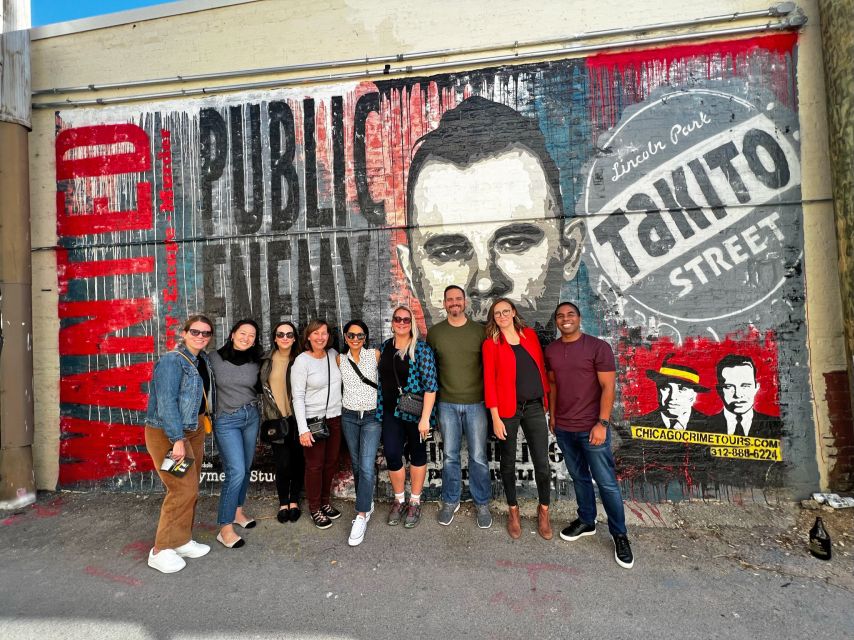
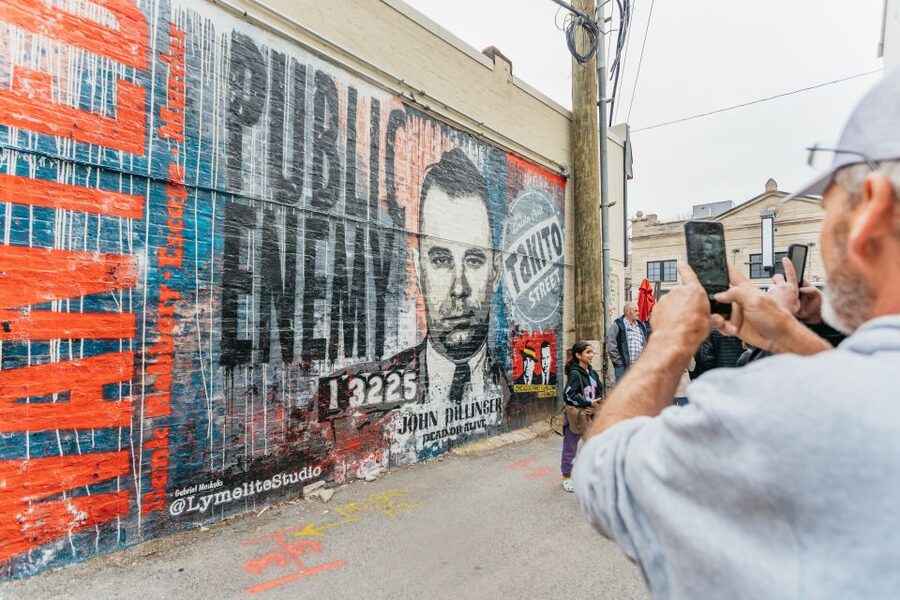
A major payoff here is that you get to get off the bus and walk the path tied to John Dillinger and Hymie Weiss just before their deaths. This is the tour doing what bus tours rarely do well, it adds a small human-scale walk to make the story physical.
It is also where the tour earns the time investment. A name like Dillinger is one thing. Standing on the route where events unfolded, even briefly, makes the story easier to remember later. You will also likely see how the guide manages pacing. The walk is not long, but it feels more meaningful than another photo stop.
Practical note: because some stops involve stairs and the bus itself has steps, the walk and getting on and off the bus can be harder if you have mobility limits. If you want to do this part, wear comfortable shoes and plan for short-but-real foot movement.
Frank Nitti’s mini mob museum and the safe-and-address book reveal
The mini mob museum is one of the best reasons to choose this tour. You get to see Frank Nitti’s safe and address book, and that alone gives the stories a tangible, object-level hook. Names in true crime are abstract until you see how money and connections were managed.
I especially like that this museum piece breaks the pattern of only hearing stories. It gives you something to look at, and it helps you anchor the prohibition-era and bank-robber narratives in real artifacts.
If you like your tours to have a “wow” moment that is not just a view, this is it. And it also supports the rest of the tour. When the guide later mentions strategy, networks, and the way bosses operated, you have a mental image to connect it to.
Crime quiz, pamphlet, and prohibition-era personality profile
You also get interactive elements that turn the tour into more of a challenge than a passive watch. There is an exclusive crime quiz, plus you receive an informative pamphlet with photos and special offers.
I like this part because it forces you to pay attention during the drive-by sections. When a guide uses quiz energy, it becomes easier to remember key names and events without feeling like you are cramming facts.
You may also get a Prohibition Era personality profile tied to the theme of the tour. If you enjoy connecting history to character, this is a useful way to take notes without stopping the guide every five minutes.
A glimpse of gangster-era tunnels: what it adds
One included element mentions a spy of secret Gangster Era tunnels. The key here is not expecting a full underground expedition. Instead, treat it as a themed look, a way to point the bigger story toward the practical infrastructure that made organized crime more effective.
Even a short themed stop can change how you interpret the rest of what you see. After you hear about how criminals hid power and moved through the city, things like court buildings, business corridors, and landmark access start to feel more connected.
Who this tour fits best, and who may want a different style
This tour is a strong fit if you want a quick, structured way to cover major crime-legend sites plus big Chicago landmarks in about 90 minutes. You do not have to plan your own route across multiple neighborhoods. You also get a guide who keeps the pace moving.
It is also a good pick for solo travelers or short-stay visitors. The bus format helps you get a wide sweep without committing to hours of walking in a tight itinerary.
You might want to choose a different experience if you need very quiet conditions for listening, or if you are sensitive to sound and find it hard to follow speech in a bus environment. The tour is English-only, and there are no translations, no audio guides, and no headphones, so you need to be comfortable with the live commentary style.
Should you book the Chicago Mob and Crime Bus Tour?
Book it if you want a short-format Chicago experience that mixes photo-ready landmarks, a St. Valentine’s Day Massacre cornerstone, and a hands-on artifact moment with Frank Nitti’s safe and address book. The mix of on-bus storytelling plus short off-bus moments is a good value for the time, especially at $49 for a guided 90-minute outing that includes a pamphlet, historic video footage, and the crime quiz.
Skip it or consider another option if hearing the guide clearly is a top priority for you, since the bus environment can be loud. Also keep in mind the steps and the fact that some stops involve stairs.
If you show up ready to concentrate and you like crime stories anchored to real places, you are likely to leave with a much stronger sense of Chicago’s underworld era and how it sits in the city you will see outside the tour too.
FAQ
How long is the Chicago Mob and Crime Bus Tour?
The tour duration is 90 minutes.
What is the price?
The price is listed as $49 per person.
Where do I meet the bus?
Pickup is outside 163 E Pearson Street, across from the Water Tower Mall, on the southeast side of Pearson and Michigan Avenue.
Is the tour in English?
Yes. The tour is guided in English and there are no translations.
Are there audio guides or headphones?
No. The tour does not include audio guides or headphones.
Is the tour wheelchair accessible?
No. The bus has five steps, and some stops off the bus include stairs. It is not wheelchair accessible and there is only limited storage for a folding wheelchair or stroller.
Can I record video during the tour?
No. Video recording is not permitted, unless you have express written consent from the provider.
Are food and drinks allowed on the bus?
No. Food and drinks are not allowed in the vehicle.
Does the tour include walking?
Yes. You get off the bus and walk the path tied to John Dillinger and Hymie Weiss just before their deaths.
Is gratuity included?
No. Gratuity is not included. The recommendation is $5 per person, paid cash or via Venmo.
Can I cancel for a refund?
Yes. You can cancel up to 24 hours in advance for a full refund.
Just Added



Gangster & Mob Tours, compared.
Prohibition Speakeasies Bus Tour or Walking Tour
Read our review →
Browse the lists this tour appears in