
Reviewed · SCAVENGER HUNTS
Chicago Mystery Scavenger Hunt: Solve the Loop’s 1920s Whodunit
A whodunit through downtown Chicago. This self-paced mystery scavenger hunt turns landmark-hopping into a puzzle, with a 1920s-style crime story mapped across the Loop.
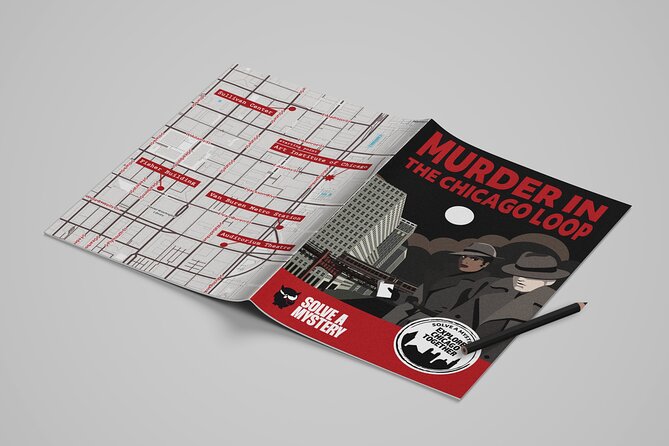
You start near the American Writers Museum, then work through clue stops at big-name sights like the Art Institute and Auditorium Theatre, ending at Sullivan Center.
I love the flexible start time and the fact that you move through the story at your own pace. I also like that you get an envelope with everything you need to solve it in English, so you are not waiting on a live guide.
One possible drawback: there is no live tour guide, so if you want real-time explanation and instant help, this is more you-and-the-clues than talk-and-learn.
In This Review
- Key points to know before you go
- Your one-hour 1920s Mystery route in Chicago’s Loop
- Where you start at American Writers Museum, and how the timing works
- Stop 1: The Art Institute of Chicago, where the story begins
- Stop 2: Auditorium Theatre exteriors as your clue board
- Stop 3: Sullivan Center finish, and finding the culprit
- Price and value: what $23.78 buys you (and what it does not)
- How self-paced works when you are solving, not listening
- Getting the most out of the hunt: practical tips that help
- Best for date days, birthdays, and family afternoons
- Should you book this Chicago mystery scavenger hunt?
Key points to know before you go
- Self-paced format means you can go as fast or slow as your group wants
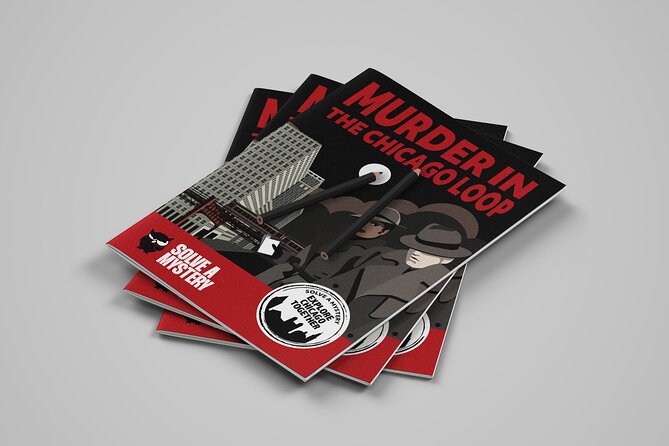
- Envelope-based mystery gives you the story and the tasks in English
- Downtown Loop route links major landmarks with clue prompts
- Outdoor and exterior focus helps at the Auditorium Theatre stop
- No museum tickets needed to complete the hunt, even though you pass major institutions
Chicago's streets, turned into a puzzle
Your one-hour 1920s Mystery route in Chicago’s Loop
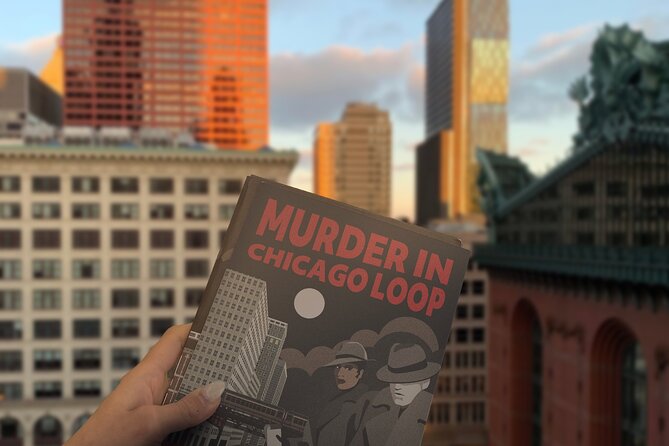
This is built for a quick afternoon of walking and thinking. The hunt runs about one hour and is designed around a simple rhythm: read the latest clue, solve the task, then head to the next stop when you are ready.
The route stays central, which is a big part of the value. You are moving through the Chicago Loop core, so you can stack this with other plans later in the day without feeling like you got stuck on a long, far-flung tour.
Also, it is a private activity, meaning only your group participates. That matters if you are doing a birthday, a date day, or a small family outing and you want the experience to feel like it is just yours.
Where you start at American Writers Museum, and how the timing works
Your hunt begins at American Writers Museum, 180 N Michigan Ave, Chicago, IL 60601. The best part here is that you do not have to line up at a fixed time with a guide. Instead, you get a mobile ticket and a flexible, self-paced start.
That flexibility is especially helpful in Chicago, where weather can swing fast. If it is sunny when you arrive, you can start immediately. If you need a coffee first, you still can.
You are also close to public transportation, which helps if you do not want to spend the whole day wrestling with parking. Service animals are allowed, which makes this feel more welcoming for a wider range of travelers.
Stop 1: The Art Institute of Chicago, where the story begins

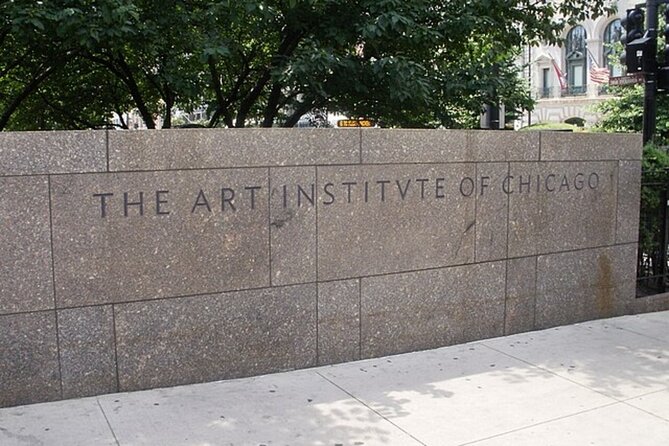
The first clue stop is The Art Institute of Chicago. Plan on about 20 minutes here, but not in the traditional museum sense. You are not doing ticketed exhibits for this activity, since the hunt does not require museum admission.
Instead, your job is to start the narrative by reading what the mystery says. From there, you move on to the next location when you are ready. That is a clever design choice. It means you can experience the feeling of being inside a big cultural place without having to commit to a full visit.
What to expect in practice: you will likely spend the time scanning your materials, solving the first task, and figuring out what detail the story wants you to notice next. If you like scavenger hunts, this stop usually feels like a warm-up, with enough structure to get you rolling quickly.
A practical tip: give yourself a little extra buffer at the start if your group needs a minute to get organized. You are holding the envelope of instructions and clues, so having everyone ready to read and reference the materials makes the hunt smoother.
Stop 2: Auditorium Theatre exteriors as your clue board
Next you head to Auditorium Theatre for another 20-minute segment. This stop is all about the exterior, and that is a nice change of pace if you do not feel like doing museum-style indoor walking.
The prompt here is about using what you see outside as part of the puzzle. In other words, you are not just passing by. You are looking with purpose, letting the architecture and setting feed the clues.
This is a good spot for pairs and small groups, because it is natural to compare what you think the clue is pointing to. One person might notice a detail faster, while another connects it to a line from the mystery envelope. If your group enjoys light problem solving, this stop often becomes the most fun checkpoint for conversation.
A consideration: because the stop is exterior, it can be affected by weather and how crowded the sidewalk area feels at the time you go. Wear comfortable shoes, and keep an eye on your group’s pace so you do not get separated while solving.
Stop 3: Sullivan Center finish, and finding the culprit
Your final stop is Sullivan Center, 9 E Madison St, Chicago, IL 60602, and it is also where you finish. Like the other segments, expect about 20 minutes. This is where the story ties together and the hunt pushes you to identify the culprit.
Ending at Sullivan Center makes sense from a logistics angle. You are finishing back in the downtown core, so it is easy to wrap up, get your bearings, and transition into the rest of your day. It also means you are not trapped in a far-away neighborhood after a one-hour activity.
What you might find satisfying here is the final stretch feeling. Earlier stops build clues, and by the end you are solving the last part of the mystery rather than starting fresh. If you like closure, this style usually delivers it.
One more practical note: when you get close to the end, it is worth slowing down and re-checking your earlier answers. Scavenger hunts can be tricky in a good way, but it is the kind of trickiness you can fix by double-checking the clue trail instead of guessing.
Beyond the skyline, the neighborhoods have their own tours and their own stories.
- Chicago Architecture River Cruise★ 5.0 · 15,756 reviews
- Chicago River 90-Minute Architecture Tour★ 4.5 · 9,629 reviews
- Chicago River: 1.5-Hour Guided Architecture Cruise★ 4.8 · 8,046 reviews
- Chicago: Gangsters and Ghosts Walking Tour★ 5.0 · 7,155 reviews
- Chicago Architecture Center River Cruise aboard First Lady★ 5.0 · 5,536 reviews
Price and value: what $23.78 buys you (and what it does not)
At $23.78 per person, this is priced like a low-cost, high-fun downtown activity. The value comes from what you get packaged together: the envelope, the clue route, and a self-paced structure that does not require a live guide.
What is not included is also part of the deal. There is no admission to museums or other activities needed for the hunt. You are doing the story through clue stops, not paying extra for ticketed entries as part of the experience.
So if you already planned a museum visit on your own later, you can choose to add it. If you were not planning to buy tickets at all, this hunt still works. That flexibility is a real money-saver in Chicago, where some museums can add up.
The only thing you should plan for that is not included is food, drinks, and transportation to and from the start point. But for a one-hour activity, that is normal. I would treat this as a puzzle-focused outing that you slot into your day, not a full-day sightseeing replacement.
How self-paced works when you are solving, not listening
Because there is no live tour guide, the experience relies on your materials and your group’s momentum. That can be a great fit if you like doing things on your own rhythm. It also makes the experience feel more like a street-level game than a traditional guided tour.
The hunt is flexible in start time, and it is offered in English. That means you can read and solve without worrying about language barriers, and you can start when it fits your schedule.
A useful mindset: treat each stop like a checkpoint in a game. Your goal is not just to get to the next place, it is to solve the clue well enough that you can confidently move forward. If you feel stuck, you can re-read the clue instructions in the envelope rather than waiting for someone to explain.
Also, the tour is designed as a route with clues and stories set in downtown Chicago. That is a big reason it works. You are not wandering aimlessly through the Loop, you are following a story path with built-in reasons to pay attention.
Getting the most out of the hunt: practical tips that help
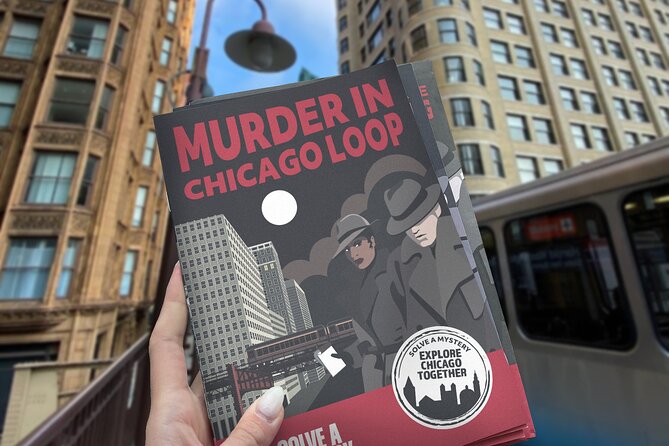
This is a walking-and-reading style activity. Even though the stops are close, small delays add up in an hour.
I recommend you bring:
- A phone with a decent battery level for your mobile ticket
- Comfortable shoes for short but active walking
- A way to keep the envelope materials organized in wind or light rain, if weather is questionable
Group strategy helps too. If you are with more than two people, assign roles. One person reads the clue instructions while others look at what the stop is prompting you to notice. You will finish faster and have fewer moments where everyone is looking at the same line and nothing clicks.
And yes, the puzzle can be tricky. One of the best parts, based on the type of feedback this activity gets, is that it lands in the sweet spot: challenging enough to feel rewarding, but not so complicated that it turns into work.
Best for date days, birthdays, and family afternoons
The vibe here fits a lot of occasions. In particular, it is a strong choice for a date day or a birthday gift because it gives you something shared to focus on beyond just walking and chatting.
It also works for a family-friendly outing as long as your group is okay with light problem solving and moving through a downtown route. The big landmarks make it feel like you are doing something special, but the mechanics are simple enough to keep things fun.
Who might not love it: if you hate puzzles, or if you strongly prefer a live narrator who explains everything, the lack of a guide can feel limiting. In that case, you might prefer a standard walking tour with commentary.
Should you book this Chicago mystery scavenger hunt?
I would book it if you want a one-hour activity that feels like a game, gets you outside in the Loop, and uses big Chicago landmarks without requiring museum ticket costs. The self-paced setup, the envelope puzzle format, and the clear clue trail make it easy to plan, even if your day is busy.
I would think twice if your main goal is guided history. This hunt does not position itself that way. It is built for solving, not listening, and you will be happiest if you enjoy figuring things out as you go.
If you are looking for a fun, slightly tricky, not-too-serious way to see Chicago’s downtown in a morning or afternoon, this is a solid bet.
Just Added






Scavenger Hunts, compared.
Eastside Chicago The Heist Exploration Game and Tour
Read our review →



Chicago Scavenger Hunt and Highlights Self Guided Audio Tour
Read our review →
Adventurous Scavenger Hunt in Chicago by Zombie Scavengers
Read our review →
Magnificent Mile Scavenger Hunt: Chicago Walking Tour and Game
Read our review →Browse the lists this tour appears in