
Reviewed · GANGSTER & MOB TOURS
Chicago Mobsters Gangsters Ghosts and Prohibition Tour
Prohibition left Chicago with a shadowy trail. This Mobsters, Gangsters, Ghosts and Prohibition Tour strings together street crime and ghost lore across the South Loop, the Chicago Riverwalk, and two famous hotel interiors, all with a historian guide.
I especially like that you get real context for the Al Capone era while still getting spooky stories that match specific locations, not vague rumors. You will finish with a quick, clear picture of how crime, politics, and superstition tangled together in the city.
One thing I’d bet on is the guide experience. In a recent 5 out of 5 review, Chris stood out for answering questions and interacting well with the group, which makes the tour feel personal even with a small crowd. You also get entry-style moments at the Congress Plaza Hotel and the Palmer House, so it is not just standing outside and looking tough.
The main thing to consider is time. At about 1 hour 30 minutes, it is a fast-moving night walk with multiple stops, so if you want a slow pace or long time inside every landmark, this may feel a bit tight.
In This Review
- Key highlights you should care about
- Why this Mobsters, Ghosts, and Prohibition Tour works for Chicago at night
- Price and logistics, what you get for $28
- Meeting point at 71 E Wacker Dr, then straight into the South Loop mood
- Speakeasy era street stories and the crime scene stops
- Palmer House inside access, luxury meets eerie hotel lore
- Congress Plaza Hotel, the 12th floor reputation, and why that matters
- Death Alley behind the Nederlander Theatre, and the Iroquois Theatre fire link
- Chicago Riverwalk Prohibition routes, smuggling, and mob deals
- How the ghost stories fit with the true crime side
- Who should book this, and who might skip it
- What to expect on timing, pacing, and group energy
- Should you book the Chicago Mobsters, Gangsters, Ghosts and Prohibition Tour?
- FAQ
- How long is the Mobsters, Gangsters, Ghosts and Prohibition Tour?
- Where does the tour start?
- What is the maximum group size?
- Is the tour mobile ticket based?
- What’s included in the tour price?
- Are there indoor stops at hotels?
- Is it near public transportation?
- What is the cancellation policy?
- Who is the tour provider?
Key highlights you should care about
- South Loop focus on speakeasies, mob activity, and Prohibition power plays
- Ghost stories tied to specific landmarks, not generic scares
- Entry inside Congress Plaza Hotel plus a look at its 12th-floor haunting reputation
- Palmer House visit combining luxury vibes with eerie lore
- Death Alley near the Nederlander Theatre, linked to sightings after the Iroquois Theatre fire
- Chicago Riverwalk mob routes, where smuggling and deals were part of the story
Still curious about Capone's Chicago?
Why this Mobsters, Ghosts, and Prohibition Tour works for Chicago at night
Chicago at night can be two things: big skyline views or big noise. This tour chooses a different lane, it keeps the pace human, and it builds a story that feels rooted in street-level Chicago.
What makes the format work is the blend. You get gangster and Prohibition-era details, but you also get ghost legends connected to places you can actually see. That matters, because the city can swallow facts fast. With this kind of guided route, you do not just hear names like Al Capone, you connect them to the physical city where power, fear, and backroom deals played out.
Also, it is priced low enough that you can do it without guilt. At $28 per person for about 1 hour 30 minutes, you are paying for a guided nighttime walk plus hotel interior time, not a long, expensive show. For a first night in town, it is a strong way to set the mood.
Price and logistics, what you get for $28
This is a $28 per person tour that runs about 1 hour 30 minutes. The small group cap is 35 travelers, which helps the guide keep the energy up and makes Q and A easier than on huge bus tours.
You also get a mobile ticket. That is a practical win, especially at night when you do not want to hunt for paper or deal with dead phone batteries. Still, I would keep a backup option on hand, like a screenshot.
The tour meets at 71 E Wacker Dr, Chicago, IL 60601, and it ends back at the same meeting point. That keeps your planning simple. You know where you will be dropped off, and you can pair it with dinner nearby if you like.
One more practical note: it is listed as near public transportation. If you are mixing the tour with other Chicago stops, that helps a lot. The city is easier when your night plan does not depend on perfect rideshare timing.
Meeting point at 71 E Wacker Dr, then straight into the South Loop mood
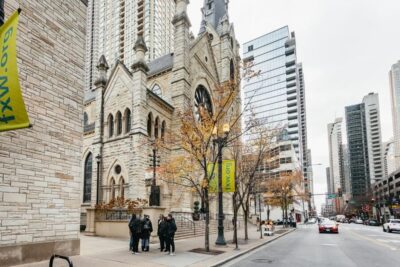
Your starting area at 71 E Wacker Dr puts you in the thick of downtown Chicago. From there, the tour leans into the South Loop, the part of the city tied to speakeasies and mob hangouts during Prohibition.
I like this approach for two reasons. First, it gives you a narrative spine. When you hear crime and corruption stories in the same neighborhoods where people actually lived and worked, the details stick better. Second, it is a night-friendly setting. South Loop streets can feel like a character in the story, and the landmarks you pass help you follow the guide’s thread.
You should also expect the tour to feel like a guided walk where the stops matter. The itinerary is paced for storytelling, not for long museum-style time. So if you like fast, clear chapters with a guide talking through them, this is your style.
Speakeasy era street stories and the crime scene stops
One of the best parts of this kind of tour is how it mixes big names with specific scenes. You will hear about gangsters and corruption, then you will get pointed to where violence and power struggles played out.
In the South Loop portion, you are guided through the kinds of places where speakeasies and mob activity clustered. The focus stays on what Prohibition changed, not just that it existed. Your guide ties the illegal alcohol economy to the growth of mob power, including how Al Capone built his empire during Prohibition.
You also visit the site of historic shootouts and you explore Death Alley later, but even before that, you get a sense that the route is shaped by events. This is where the historian-guided format earns its keep. Instead of spooky atmosphere as a substitute for facts, you get a grounded link between the city and what happened there.
Potential drawback here is pacing. If you want a slower walk with more photo time at each corner, you may feel rushed. The upside is that the stories do not drag. At about 1 hour 30 minutes total, you get a tight arc.
Palmer House inside access, luxury meets eerie hotel lore
This tour includes a visit inside the Palmer House, described as luxurious and tied to haunting legends. Even if you are not a paranormal person, hotel stories can be oddly human. People worked there, guests came and went, and a building like that collects rumors the way Chicago collects weather.
Why this stop works: you get to connect ghost lore with a place that feels real. The guide can frame why certain tales persist, and how the social world of late-night Chicago turned ordinary spaces into stages for scandal.
Also, having a hotel interior visit means the tour gives you a little variety. You are not only outside in the street glow and building shadows. You get a different setting, which helps the overall experience feel like more than a collection of sidewalk stops.
If you do not like spooky storytelling, you might still find this stop interesting for the history and celebrity lore angle mentioned for the hotel-themed parts of the experience.
What haunts Chicago after sundown?
- Medieval Torture Museum Ticket with Audio Guide and Ghost Hunting★ 5.0 · 962 reviews
- Chicago Mobs and Haunts Walking Tour★ 4.5 · 383 reviews
- Haunted Chicago Booze and Boos Ghost Walking Tour★ 5.0 · 266 reviews
- Chicago Hauntings Original Ghost Bus Tour★ 4.0 · 147 reviews
- Embers of the Windy City: Chilling Chicago Ghost Tours★ 4.5 · 121 reviews
Congress Plaza Hotel, the 12th floor reputation, and why that matters
The tour also includes visits inside the Congress Plaza Hotel, often called the most haunted hotel in Chicago. You will hear creepy tales tied to its 12th floor reputation, and you will also hear about why this hotel became a magnet for ghost stories.
What I like about this stop is the layering. You are not only hearing paranormal claims. You are also seeing how a prominent Chicago hotel became part of the public story of crime, fear, and the after-effects of tragedy.
In a city where architecture gets attention, haunted hotels can feel like a shortcut to drama. Here, the ghost element is paired with broader Mob and Prohibition-era context so it does not float away from the real setting. The result is that the supernatural stories feel placed, like they belong to the building and the time period, not just to your imagination.
And based on the 5 out of 5 feedback from a recent participant, the guide matters. Chris, in that review, was praised for answering questions and interacting well with the group. That is exactly what you want during a hotel stop, because people tend to ask, so it helps when the guide can handle that flow naturally.
Death Alley behind the Nederlander Theatre, and the Iroquois Theatre fire link
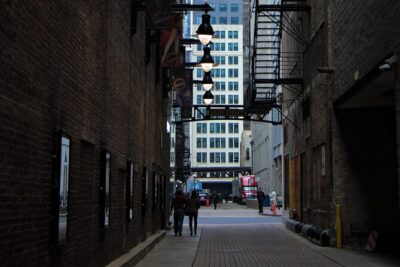
Death Alley is one of those names that sounds like it was invented for a tour brochure. But the tour grounds it in a real event. You will visit Death Alley behind the Nederlander Theatre, and the stories are tied to ghost sightings after the Iroquois Theatre fire.
I like this stop because it makes the eerie portion more specific. You get a clear reason people associate the area with haunting stories. Even if you do not buy every ghost claim, it is still compelling because tragedies leave marks on neighborhoods and their legends.
This is also a good moment for the tour to shift tone. The South Loop and hotel stories can feel like big-city glamour and crime shadows. Death Alley brings it closer to the streets and the aftermath of a disaster.
If you are sensitive to scary themes, this is the stop where you may want to mentally opt for the history side. The name Death Alley signals what kind of mood you are walking into.
Chicago Riverwalk Prohibition routes, smuggling, and mob deals
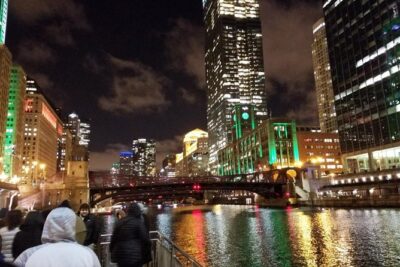
The final stretch brings you to the Chicago Riverwalk. This is the scenic part, but the stories keep it grounded in crime. The Riverwalk is tied to smuggling and mob deals linked to Prohibition.
For value, this stop is important because it gives you a different kind of evidence. Instead of focusing only on buildings and hotels, you are seeing a route people could use. Water access and river traffic made certain kinds of illegal movement easier to hide, so the smuggling angle feels logical in context.
Also, the Riverwalk gives you a visual payoff. Even if you are not thinking about history while you take photos, you can still see how this area might have supported secret deliveries and quick handoffs. That is the benefit of a guided story. You learn what to look for.
How the ghost stories fit with the true crime side
This is not a pure ghost tour, and it is not a pure true crime walking tour either. It is a blend, and the trick is balance.
When it works, the ghost stories become more interesting because you understand the human events behind them. When it does not work, paranormal talk can feel like it is competing with the crime facts. The reason this tour can work well is that the haunted elements are attached to named places: Palmer House, Congress Plaza Hotel, Death Alley, and specific story locations connected to real events and eras.
In other words, you are not switching genres every five minutes. The tour keeps the atmosphere dark, and it keeps the names and locations connected to the same central theme: Prohibition-era Chicago and what it left behind.
If your goal is to experience something different on a Chicago night, that genre hybrid is the selling point. You get an easy-to-follow storyline, and you get the chills without losing the plot.
Who should book this, and who might skip it
This tour is a great fit if you like any of the following:
- Mob or Prohibition storytelling
- Ghost legends tied to specific buildings or street locations
- A guided walking experience with a strong guide presence
It also fits well as a first or second night activity. It gives you a mood and a map in your head. After this, you will recognize names and neighborhoods more easily when you wander on your own.
It might be less ideal if you need quiet, slow sightseeing. The tour format is built for stories and movement. It also is not a show with long sit-down entertainment segments. You will be walking and listening for the full time.
What to expect on timing, pacing, and group energy
At roughly 1 hour 30 minutes, you should plan this as a compact night outing. It is long enough to cover multiple stops, but not so long that you lose the thread.
The group size cap at 35 travelers helps the tone. On smaller tours, the guide can keep the conversation rolling and the pacing tighter. In the 5 out of 5 review I saw, Chris was praised for interacting well and answering questions. That suggests the guide style can handle group energy, not just a one-way lecture.
My advice: show up with curiosity. If you ask questions, this kind of tour can turn into a lively back-and-forth. If you do not ask questions, you will still get a clear route through the South Loop and the haunted hotel circuit.
Should you book the Chicago Mobsters, Gangsters, Ghosts and Prohibition Tour?
Book it if you want a focused Chicago night with a strong story thread. For $28, you are getting a historian guide, two hotel interior visits, and specific stops tied to Prohibition crime and well-known haunted locations like Death Alley and the Congress Plaza Hotel.
I would skip it if you only want one angle, either purely gangster history or purely paranormal. This tour blends both, so you should be comfortable with that mix.
If you are on the fence, here is an easy decision rule: if you like hearing why a place became famous for something darker, and you enjoy guided explanations tied to real locations, this is a solid choice. It is also a good bet because the guide experience, especially Chris’s interaction and Q and A, has been a clear highlight.
FAQ
How long is the Mobsters, Gangsters, Ghosts and Prohibition Tour?
The tour lasts about 1 hour 30 minutes.
Where does the tour start?
It starts at 71 E Wacker Dr, Chicago, IL 60601, USA.
What is the maximum group size?
The tour has a maximum of 35 travelers.
Is the tour mobile ticket based?
Yes, it uses a mobile ticket.
What’s included in the tour price?
It includes a historian guide, visits inside the Congress Plaza Hotel, and a visit inside the Palmer House.
Are there indoor stops at hotels?
Yes. The tour includes visits inside the Congress Plaza Hotel and the Palmer House.
Is it near public transportation?
Yes, it is listed as near public transportation.
What is the cancellation policy?
Free cancellation is available. You can cancel up to 24 hours in advance for a full refund. If you cancel less than 24 hours before the start time, you will not receive a refund.
Who is the tour provider?
The provider is Attractions4us LLC.
Just Added



Gangster & Mob Tours, compared.
Prohibition Speakeasies Bus Tour or Walking Tour
Read our review →Browse the lists this tour appears in