
Reviewed · ARCHITECTURE TOURS
Architecture & History Guided Tour along the Chicago Riverwalk
Chicago’s river tells stories in steel and water. This 2-hour guided architecture and history walk along the Chicago Riverwalk strings together old trade routes, civic icons, and modern towers, with a mobile ticket and a small group that caps at 18. I like how the guide’s explanations turn quick scenery into clear takeaways, even if you only have a couple hours in the city.
I also love the stop-by-stop focus on real places and real design choices, including the way guide Kathryn brings each site into context. The one possible drawback is pacing, with short visits like 5 minutes at several major landmarks, so plan to come back later if you want to linger.
In This Review
- Key highlights you can actually use
- A 2-Hour Riverwalk With Major Architectural Hits
- 10:00 AM Start at Wacker, With a Finish Near Centennial Fountain
- Chicago Riverwalk: Where Trade Became a Celebration Stroll
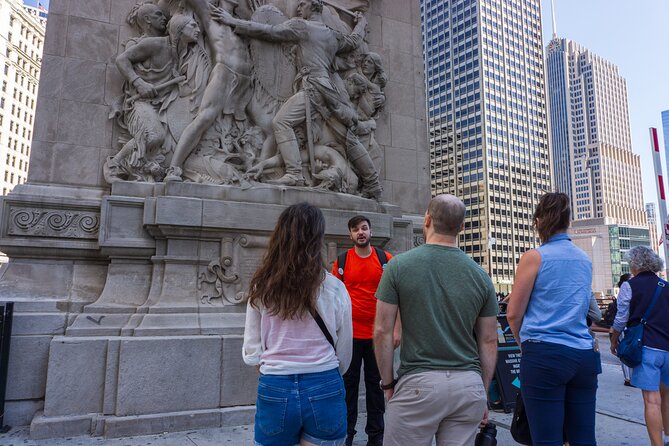
- Fort Dearborn Grounds: Chicago’s Military Chapter on Riverfront Time
- Marina City and the Corn Cobs: Famous Cylinders With a Story
- Tribune Tower: Neo-Gothic Forms and a Newspaper’s Home
- Centennial Fountain and Water Arc: Milestones Put Into Motion
- St. Regis Chicago and 455 Cityfront Plaza Dr: New Luxury Meets Art Deco Feel
- The Chicago River Itself: Why This Waterway Built the City
- Marina City Again, Then the Jewelers Building and AMA Plaza
- Who This Architecture and History Walk Is Best For
- Should You Book This Chicago Riverwalk Architecture and History Tour?
- FAQ
- How long is the Chicago Riverwalk architecture and history guided tour?
- What language is the tour offered in?
- Where does the tour start, and where does it end?
- What time does the tour begin?
- Is there a group size limit?
- Are admissions included or free at the stops?
Key highlights you can actually use
- Small group size (max 18) keeps the walk feeling personal and question-friendly.
- Architecture first, then history: you learn how buildings and civic spaces reflect how Chicago grew.
- Real river views from the Riverwalk, plus teaching moments about why this waterway mattered.
- Fast-hit itinerary packs many iconic stops in about 2 hours, great for a tight schedule.
- Guide Kathryn gets top marks, with visitors praising her history and architecture knowledge.
- Admissions at listed stops are free, so you are paying mainly for the guided walk and explanations.
Chicago's skyline, explained block by block
A 2-Hour Riverwalk With Major Architectural Hits
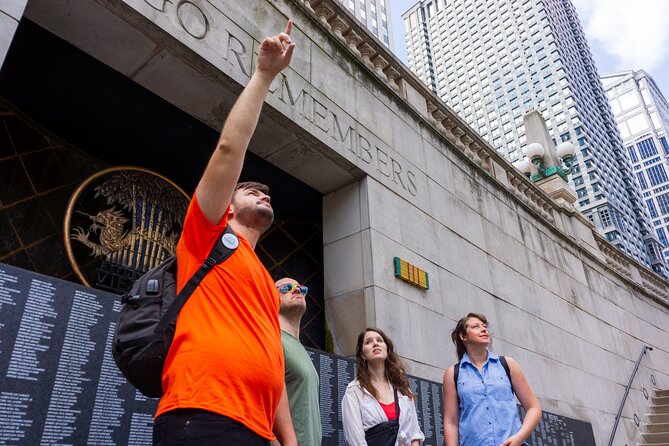
This is built for people who want Chicago without the all-day commitment. The tour runs about 2 hours, with a guided walk along the Chicago Riverwalk and nearby riverfront buildings. You’ll be moving at a steady pace, hitting a lot of recognizable sights in a way that makes the city feel connected instead of random.
Because the group is limited to 18, it’s not the type of tour where you get lost in a crowd. The guide can point out small architectural features, explain what to look for, and help you connect the dots between early Chicago and the skyline you see today. It also helps that the tour is in English and includes a mobile ticket, so you’re not scrambling for paper or signage.
Value is strong here. The tour includes a professional local guide, and each listed stop notes admission ticket free, which matters if you have tried other sightseeing tours where you pay again and again at every corner. Instead, you’re focusing on what the guide is telling you and what you can see right there on the river.
10:00 AM Start at Wacker, With a Finish Near Centennial Fountain
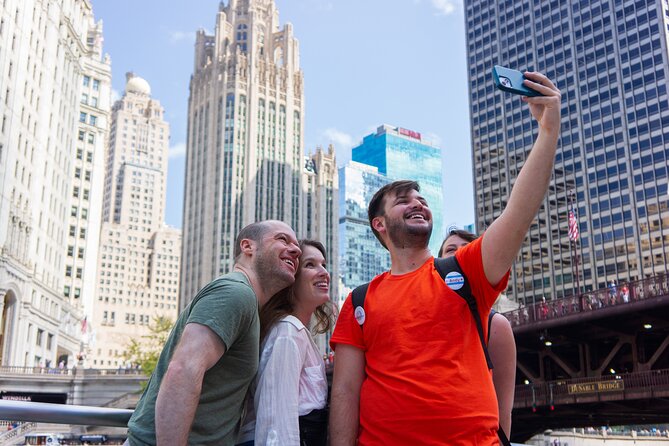
The experience starts at 1 W Wacker Dr, Chicago, IL 60601 at 10:00 am. You end at Nicholas J. Melas Centennial Fountain, 400 N McClurg Ct, Chicago, IL 60611, which is a useful anchor point if you are heading to other downtown stops after the walk.
It’s also described as near public transportation, so you should have options to get there without a car. If you use a mobility aid or have specific walking needs, keep expectations realistic: the schedule includes several quick stops, and you’ll spend time outdoors. Service animals are allowed, which is good to know if you travel with one.
One practical tip: because you finish near Centennial Fountain, you can turn the last part of your day into a smooth follow-up. After the tour, you are already in a good spot to keep exploring the north end of downtown and the riverfront scene.
Chicago Riverwalk: Where Trade Became a Celebration Stroll
The tour begins at the Chicago Riverwalk, with a focus on how the river has stayed important for centuries. The story here matters: Chicago’s river was a hub of trade and commerce as far back as the late 1700s, and now it functions as a destination for enjoying the city.
What I like about starting here is that the guide can set you up fast. Before you even reach the big-name buildings, you learn what the river is doing in the city’s DNA, not just as a photo backdrop. You’ll have time to take in the Riverwalk setting for about 20 minutes, which is enough to get oriented and notice the way the waterfront supports both work and leisure.
In terms of what to look for, focus on sight lines. From the Riverwalk, you tend to see how buildings face the water, how pathways guide pedestrians, and how the river makes the city’s architecture feel more organized than it would from a distant viewpoint. If you are the kind of person who likes to understand a city’s layout before you start exploring on your own, this early orientation is a win.
Fort Dearborn Grounds: Chicago’s Military Chapter on Riverfront Time
Next is the Battle of Fort Dearborn stop, a short 20-minute segment that shifts the tone from commerce to military history. The attraction here is the sense of stepping back in time, because the guide is walking you through grounds tied to Chicago’s early military past.
This is a good counterweight to all the modern skyline views. It reminds you that today’s elegant riverfront was shaped by the same place that once mattered for survival and control. Even with limited time, a guided explanation helps you connect what you see now with why the area matters in earlier centuries.
A consideration: this is not a long museum-style visit. You’re getting a historical narrative tied to place, in a walk-and-look format. If you want deep, long-form military history, you may need additional reading or a separate stop elsewhere in the city. But as a “why this location, why now” primer, it works well.
Marina City and the Corn Cobs: Famous Cylinders With a Story
You’ll spend time at Marina City for about 20 minutes early on, and then you circle back for a shorter look later. That double approach is smart because it gives you a chance to spot these towers, understand what makes them distinctive, and then reframe what you see once you’ve learned more about the river area.
These are the cylindrical residential buildings people often call the corn cobs. The point of bringing you here is not just the nickname, it’s the design idea behind them and how the towers relate to the river setting. In a short visit, I suggest you focus on three things: the shape, the rhythm of openings, and how the towers sit in relation to nearby landmarks.
Why the second look is useful: you’ll have more context by then, because the tour has already moved through civic and media landmarks. When you return, you can compare older “public-facing” architecture with more modern residential forms, and you start to see how the river corridor evolved from trade to a full lifestyle district.
A few more ways to spend a day in Chicago
- Chicago in a Day: Food, History & Architecture Walking Tour★ 5.0 · 1,153 reviews
- Chicago: Field Museum of Natural History Ticket or VIP Tour★ 4.7 · 717 reviews
- Field Museum of Natural History Admission Tickets★ 4.5 · 489 reviews
- Chicago Walking Tour: Historic Treasures of Chicago★ 5.0 · 362 reviews
- Historical and Architectural Chicago Fireboat River & Lake Cruise★ 5.0 · 246 reviews
Tribune Tower: Neo-Gothic Forms and a Newspaper’s Home
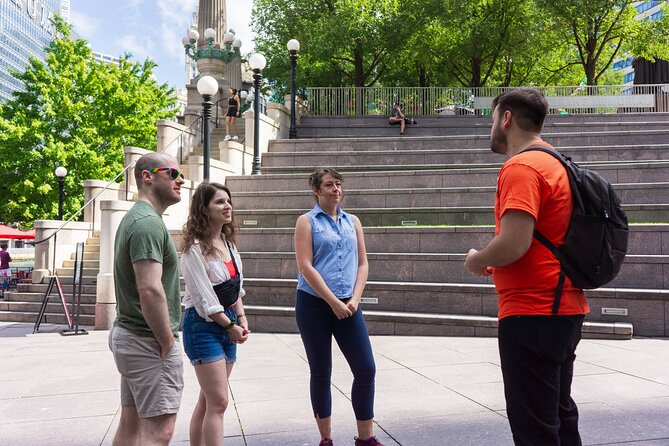
The Tribune Tower stop is brief, about 5 minutes, but it’s one of those stops where the building speaks quickly. This is a neo-Gothic masterpiece and it served as a home for the Chicago Tribune newspaper.
Even if you can’t take your time, this stop gives you a strong visual anchor. Neo-Gothic architecture in a modern city reads like a statement of identity, and the guide helps you understand why this matters. Look at the overall massing and the style cues, then connect it to the idea of a newspaper building as a civic institution, not just an office.
A drawback to plan for: five minutes can feel too short if you want to photograph details. If you care most about images, arrive ready. Put your phone camera on standby early, then let the guide explain, and you can capture after you understand what you are seeing.
Centennial Fountain and Water Arc: Milestones Put Into Motion
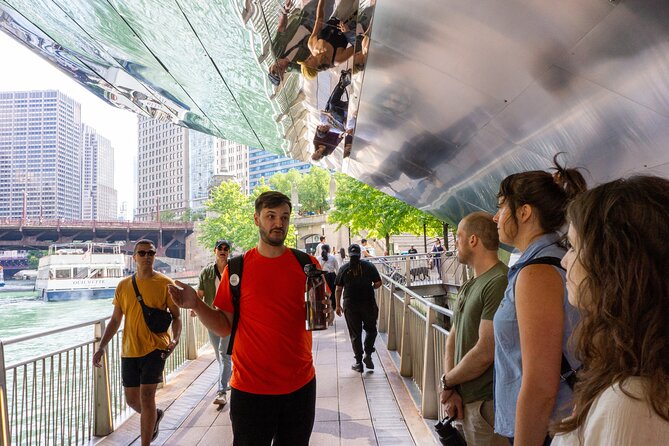
You’ll also have about 5 minutes at Centennial Fountain and the Water Arc. The tour frames it as a cascading-water feature built to commemorate significant milestones in Chicago’s history.
This is a classic “pause and absorb” kind of stop. Even when you only have a few minutes, the sound and motion of water help you reset your attention after the denser architecture stops. If you like Instagram-worthy scenes, this is where you’ll naturally gravitate, because the water provides movement and the fountain area offers a strong backdrop.
The useful part of this stop is the why. The guide’s emphasis on commemoration helps you see the fountain as more than decor. It’s another way Chicago uses design to tell stories in public space, and you’ll feel that theme repeating as the tour moves forward.
St. Regis Chicago and 455 Cityfront Plaza Dr: New Luxury Meets Art Deco Feel
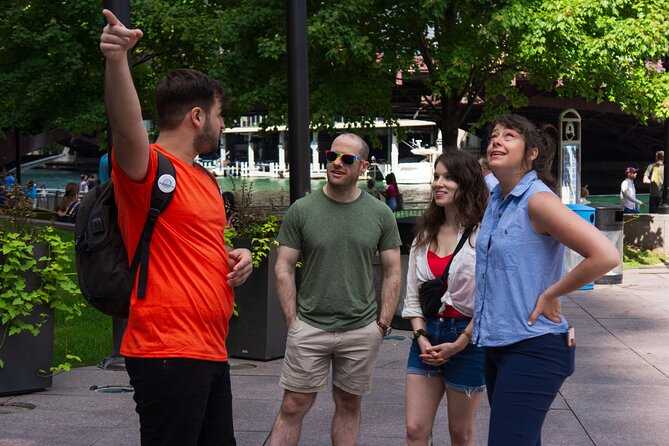
Two quick architecture hits follow: the St. Regis Chicago and 455 Cityfront Plaza Dr. The St. Regis is described as one of Chicago’s newest luxury additions to the architectural landscape, while 455 Cityfront Plaza Dr is noted for its Art Deco-inspired design and connection to a modern media center.
I like that this sequence covers two different time pressures at once. You’re not just learning about the past, you’re seeing how the riverfront keeps getting reimagined with contemporary branding and design language. In five minutes, you won’t study every detail, but you can still notice how style choices communicate status, function, and identity.
If you’re picky about design, use this stop to practice “fast looking.” Decide in advance what you want to spot, like geometric shapes for the Art Deco feel, then switch to the broader presence of the tower for the luxury example. With short segments, preparation beats wandering.
The Chicago River Itself: Why This Waterway Built the City
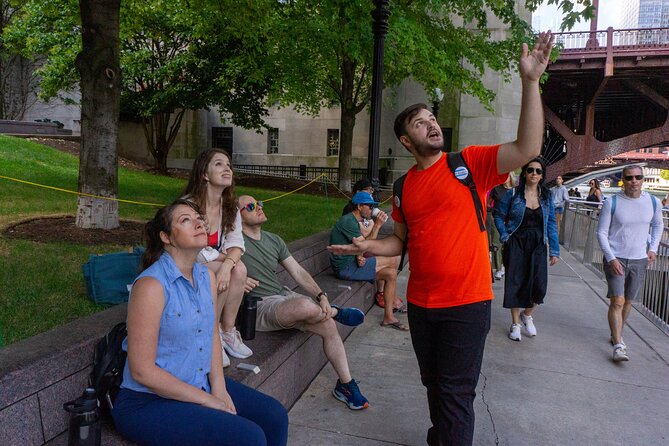
The tour includes a 10-minute moment focused on the Chicago River. This is where the guide ties the scenery back to development, explaining the river’s important role in how Chicago grew.
This part is more than a scenery break. When you understand the river’s function, you start seeing why the city developed where it did and why certain neighborhoods and building types line up the way they do. It also helps you connect the earlier trade and commerce story with the later mix of institutions, residences, and commercial design.
A consideration here: you’ll be moving and likely listening while you walk. If you prefer quiet time to absorb views, you may want to stop for extra photos after the tour when you’re not balancing group pacing.
Marina City Again, Then the Jewelers Building and AMA Plaza
Near the later portion, you get another short look at Marina City. This second glance is less about learning something brand-new and more about confirmation. By then, you know the river context and can better interpret how these towers fit into the city’s evolution.
Then comes the Jewelers Building, a brief 5-minute stop connected to Chicago’s diamond district. You’ll also hear about the AMA Plaza, described as minimalist and designed by a pioneering master of modern architecture.
This pairing works because it jumps between eras and design philosophies. The Jewelers Building points you toward a commercial world tied to a specific trade, while AMA Plaza represents modern minimalism, where form and simplicity do the talking. Even in short time windows, you can compare how different periods use architecture to express identity: one through specialized commercial history, one through design restraint.
If you love modern design, the AMA Plaza stop is likely your speed. If you are more into older, expressive buildings, focus on what changes about ornament and massing from one stop to the next. That contrast is where the guided pacing becomes useful.
Who This Architecture and History Walk Is Best For
This tour fits best if you have limited time but want a meaningful sweep of Chicago’s architecture and the stories behind it. With a 2-hour runtime, it’s a great first or second outing to help you orient yourself, especially if you plan to do more walking afterward.
It also makes sense for people who learn well from a guide who connects buildings to place. The emphasis on details is part of the appeal, and the experience is led by a professional local guide. The feedback also highlights that the guide can handle both architectural explanation and historical context, which is not always true on city walks.
If you want long stays, deep entry-level museum time, or lots of quiet photo time at one single landmark, this may feel too fast. Several stops are only about 5 minutes, so treat it like a curated highlights pass, not a slow study session.
Should You Book This Chicago Riverwalk Architecture and History Tour?
I’d book it if you want a compact, guided way to understand why the Chicago River area looks the way it does. The combination of architecture-focused stops, quick context at each site, and a small group size makes it practical. Add the fact that the listed admissions are free, and the value feels more solid than tours that hit you with fees at every stop.
I would skip or at least adjust expectations if you dislike short stops. This walk is efficient, and that efficiency is the whole tradeoff. If you see one stop you really care about, plan your own follow-up time afterward so you can slow down.
If you are choosing between doing random sightseeing versus getting a guided structure, this is the option that gives you a map in your head. By the end, the riverfront won’t feel like a series of landmarks. It will feel like a connected story you can keep exploring on your own.
FAQ
How long is the Chicago Riverwalk architecture and history guided tour?
It lasts about 2 hours.
What language is the tour offered in?
The tour is offered in English.
Where does the tour start, and where does it end?
It starts at 1 W Wacker Dr, Chicago, IL 60601 and ends at Nicholas J. Melas Centennial Fountain, 400 N McClurg Ct, Chicago, IL 60611.
What time does the tour begin?
The start time is 10:00 am.
Is there a group size limit?
Yes. The maximum group size is 18 travelers.
Are admissions included or free at the stops?
The tour info lists admission ticket free for the stops included on the route.
Just Added





Architecture Tours, compared.

Chicago Architecture Center River Cruise aboard First Lady
Read our review →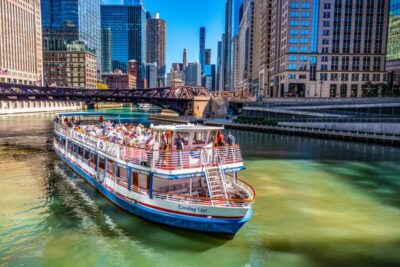
Architecture River Cruise Skip-the-Ticket Line
Read our review →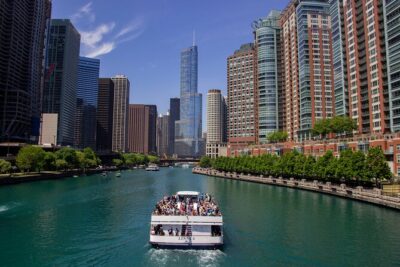
Chicago River 45-Minute Architecture Tour from Magnificent Mile
Read our review →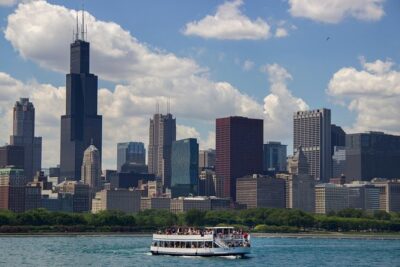

45-Minute Family-Friendly Architecture River Cruise
Read our review →Browse the lists this tour appears in