
Reviewed · LAKE MICHIGAN CRUISES
Small Group Lake Michigan Tour
Forty five minutes on Lake Michigan changes your view. This small group RHIB tour gives you water-level angles on the skyline, plus a Coast Guard licensed captain who narrates key architecture and history as you ride up and down the lakefront. I especially love the photo-friendly skyline views and the way the captain calls out what to look for. One thing to plan for is the weather, evening tours can get chilly fast.
I also like the tight group size, 6 or fewer passengers, which makes it easier to hear the narration and get clear sightlines. You get life jackets, plus a mobile ticket, and the whole ride loops back to the same spot at 2601 N Cannon Dr Parking. At $60 for about 45 minutes, it feels like a solid value if you want Chicago from the water more than another long museum stop.
In This Review
- Key things to know before you go
- A 45-Minute RHIB Tour That Puts Chicago at Eye Level
- Start at 2601 N Cannon Dr and Set Expectations for the Ride
- Stop 1: McCormick Place, and Why That Lakeside Story Matters
- Stop 2: Soldier Field From the Water, Not Just a Sports Landmark
- Stop 3: Adler Planetarium, Astronomy You Can See in Plain English
- Stop 4: Navy Pier’s Wartime Role, and the Human Scale of the Waterfront
- Stop 5: John Hancock Center, Skyline Views With Real Numbers
- What It Feels Like on Board, and How to Get Better Photos
- Price and Value: Is $60 for 45 Minutes Actually Worth It?
- Who This Tour Suits Best, and Who Might Skip It
- Should You Book This Chicago Lakefront Boat Tour?
- FAQ
- How long is the Lake Michigan boat tour?
- How many people are on this tour?
- What is included in the price?
- What is not included?
- Do I need to bring my own water?
- Where do I meet the tour?
- Who operates the tour?
- Is the tour dependent on weather?
- What is the cancellation policy?
- Is the tour accessible and are service animals allowed?
Key things to know before you go
- Coast Guard licensed captain narration during the ride, so you get context, not just movement
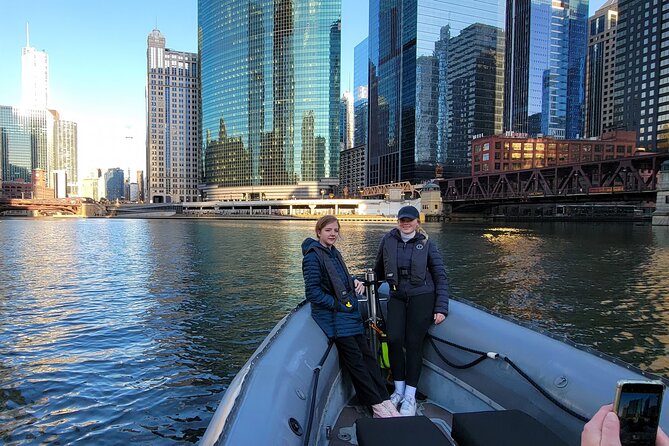
- Water-level skyline angles from an inflatable RHIB, great for photos and quick looks
- Five major lakefront stops by sight: McCormick Place, Soldier Field, Adler Planetarium, Navy Pier, John Hancock Center
- Small group of 6 or fewer passengers, easier hearing and better viewing
- Life jackets included, with you bringing your own comfort items like a layer and water
More reasons to get out on the lake
A 45-Minute RHIB Tour That Puts Chicago at Eye Level
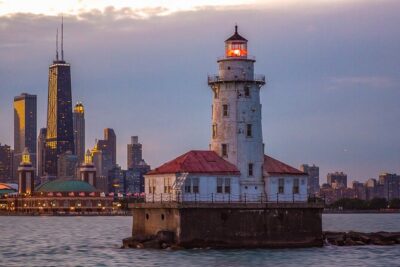
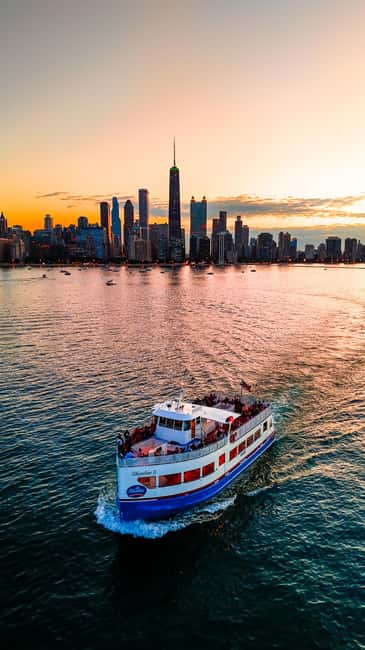
If you have only a short window in Chicago, this is one of those experiences that gives a big visual payoff. You start from the lakefront and ride out on an inflatable RHIB designed for seaworthy performance, then you move up and down the shoreline for about 45 minutes. It is not a slow, sightseeing cruise. The “throttle up and down” feel is part of the fun, with open views that you simply cannot get from the sidewalk.
I love that you do not need to be a boat person to enjoy it. You get close to the skyline and you get motion at the same time, which makes the city feel more real. The captain keeps the trip organized, pointing out landmarks and explaining what they mean, so the skyline is not just pretty. It is also legible.
This is also a smart way to photograph Chicago without competing for space on a busy pier. From the water, you can frame the buildings from angles that look totally different than street photos. Evening tours can require more planning, though. Bring a light jacket even if the day felt mild.
Start at 2601 N Cannon Dr and Set Expectations for the Ride
You meet at 2601 N Cannon Dr Parking (Chicago, IL 60614). The tour ends back at the same meeting point, so you can plan the rest of your day without extra logistics.
The ride is built for a small crowd. With a max of 6 travelers, you are not stuck behind a line of heads. You also tend to get a better listening experience because the captain is speaking directly to a compact group, not yelling over a crowd.
Also, this tour includes life jackets. That is reassuring, and it keeps the experience simple. What you should handle yourself is comfort. The operator does not offer bottled water, but water and non-alcoholic beverages are acceptable. I’d treat this like an outside activity, bring a layer for wind, and plan to sip water before you board.
Most travelers can participate, and service animals are allowed, which makes it easier to bring companions who need them. If you get nervous in choppy conditions, focus on the fact that the tour depends on good weather, and it is run by a Coast Guard licensed operator.
Stop 1: McCormick Place, and Why That Lakeside Story Matters
Your first featured sight is McCormick Place. Even if you have never been inside a convention center in your life, this stop is worth paying attention to because it ties Chicago’s lakefront to the city’s public ambitions.
You hear how Robert R. McCormick pushed for a purpose-built lakeside convention center back in the late 1920s, and how the big facility took shape in the late 1950s and opened in 1960. What makes this stop feel more than just trivia is the dramatic chapter in the building’s story, the 1967 fire that destroyed the exposition hall. The narrative goes beyond “there was a fire” and gives you why it mattered: the building was thought protected because of its steel and concrete construction, but it still held highly combustible exhibits.
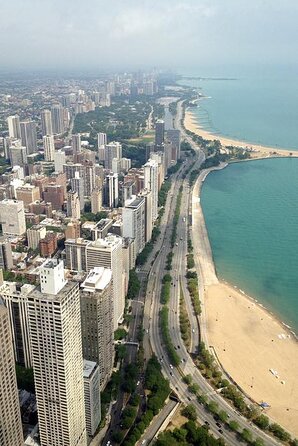
From the water, McCormick Place also helps you understand Chicago’s lakefront layout. You start to see the shoreline as a working corridor, not only a postcard view. That context is useful for the rest of the tour, because you start to connect each landmark with the city’s growth and purpose.
Stop 2: Soldier Field From the Water, Not Just a Sports Landmark
Next up is Soldier Field. It opened in 1924, then underwent major reconstruction in 2003. You also get the practical detail of what it has been for decades, home of the Chicago Bears since 1971, and also the home venue for Chicago Fire FC of Major League Soccer.
What I find interesting here is the way the stadium’s renovation story is part of its identity. The interior was rebuilt in 2002 and modernized the facility, but seating capacity dropped, and as a result the stadium was delisted as a National Historic Landmark in 2006. Even if you are not a football fan, that kind of “change and consequence” story helps you understand how cities manage aging icons.
From the boat, Soldier Field feels more like a sculpted object on the shore. You get a clean read of its form without walking the crowds. It is a quick stop, but it gives you a sports landmark that feels integrated into the city’s architecture, not isolated from it.
Stop 3: Adler Planetarium, Astronomy You Can See in Plain English
Adler Planetarium is next. This is where the narration shifts from civic buildings to science and public learning. Adler began in 1930, founded by local businessman Max Adler. You can also expect to hear what makes the museum stand out, it has three theaters and science exhibitions built around astronomy and astrophysics.
There is a specific highlight to listen for: the Gemini 12 space capsule. If you like space history, this is the kind of named detail that makes the city feel connected to bigger stories.
The tour’s description also points out that Adler is not only a museum experience. It hosts the Doane Observatory, which is described as research-active. That matters because it helps you see the place as living science, not only static exhibits.
From the water, this stop works because it turns your skyline view into a richer map. You notice how Chicago’s lakefront mixes museums, stadiums, and skyline icons side by side. You start to understand why this is one of the best “orientation” experiences in the city.
Beyond the skyline, the neighborhoods have their own tours and their own stories.
- Chicago Architecture River Cruise★ 5.0 · 15,756 reviews
- Chicago River 90-Minute Architecture Tour★ 4.5 · 9,629 reviews
- Chicago River: 1.5-Hour Guided Architecture Cruise★ 4.8 · 8,046 reviews
- Chicago: Gangsters and Ghosts Walking Tour★ 5.0 · 7,155 reviews
- Chicago Architecture Center River Cruise aboard First Lady★ 5.0 · 5,536 reviews
Stop 4: Navy Pier’s Wartime Role, and the Human Scale of the Waterfront
Then the tour moves to Navy Pier. This is one of the most famous lakefront destinations, and the narration gives it a twist you might not expect.
During World War II, the pier became a training center for the United States Navy. Around 10,000 people worked, trained, and lived there. That single detail changes how you see Navy Pier today. It is not only a leisure spot. It also has a chapter rooted in people, schedules, and wartime work.
You also get a sense of the everyday infrastructure that existed there: a 2,500-seat theater, gym, small shops like barber and tailor services, and even a vast kitchen and hospital. Those specifics are easy to picture, and from the water, the pier’s shape and position make the scale feel real.
This stop is valuable even if you plan to visit Navy Pier later. It helps you understand the waterfront not as one-dimensional tourism, but as Chicago land that has served multiple roles.
Stop 5: John Hancock Center, Skyline Views With Real Numbers
The final major sight is the John Hancock Center, one of Chicago’s most recognizable vertical landmarks. You will hear the building’s name is now changed to 875 North Michigan Avenue in 2018, even though it is still widely called the John Hancock Center. That name tug-of-war is common in big cities, and it is part of the fun to notice which names people still use in conversation.
This portion of the narration is packed with the kind of measurement details that make the skyline feel tangible. The building is 100 stories and 1,128 feet. When it topped out on May 6, 1968, it was the second-tallest building in the world after the Empire State Building, and the tallest in Chicago. Today, it is still among the city’s tallest, described as the fifth-tallest in Chicago and the thirteenth-tallest in the United States.
If you like architecture, you should listen for the construction and design names. It was constructed under supervision of Skidmore, Owings and Merrill, with Peruvian-US chief designer Bruce Graham and structural engineer Fazlur Rahman Khan. Those names make the building feel less like an “instant icon” and more like a real project with real people behind it.
From the water, this is the point where your photos start looking like postcards, because you have the right height and distance. You also may catch views of other major skyscrapers along the way, including reference to Aon Center being nearby.
What It Feels Like on Board, and How to Get Better Photos
This tour is a mobile, narrated ride. You are on an RHIB, so you get open-air exposure. That is part of why the views work. It also affects how you dress and how you shoot photos.
For photos, I recommend thinking in angles, not only buildings straight ahead. As you ride, you get multiple passes, which means you can frame the skyline with changing foregrounds. If you bring your phone, use a stable grip and aim for a horizon-level shot when possible. If you have a camera, watch for reflections on water and for quick moments when the boat’s motion lines up with the skyline.
The ride itself is described as adventurous, with going up and down the lakefront. That means you will feel movement, so plan for it. Keep your hands secure on the rail and avoid leaning too far when the boat shifts.
Also, evening conditions can matter. One recent experience noted that night made it colder and a light jacket helped. I’d follow that logic even if you are not sure it will be chilly, because Lake Michigan wind can turn “fine” into “why didn’t I bring a layer” quickly.
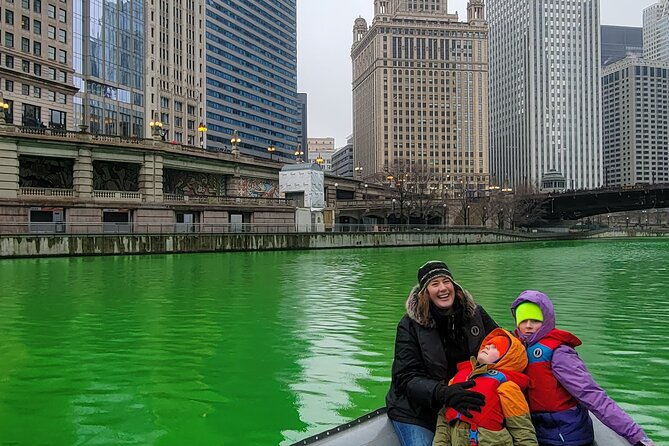
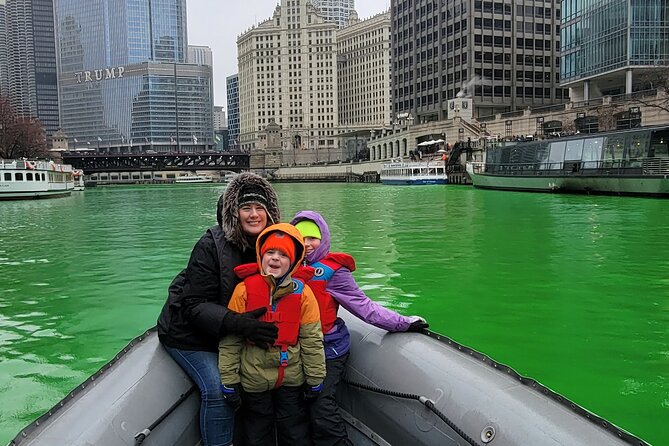
A fun seasonal detail: on St. Patrick’s Day, the water can be dyed green. Even if you cannot plan your dates around that, it tells you something useful, the lakefront atmosphere can be festive and visually surprising.
Price and Value: Is $60 for 45 Minutes Actually Worth It?
At $60 per person, you are paying for a short, high-impact experience. It is not cheap like a free walking tour, but it also is not a full half-day activity. For me, the value comes from two things you do not get easily elsewhere: water-level skyline viewing and live narration that keeps the trip from feeling like a quick photo session.
Because the group stays small, you are not paying to stand in a crowd. You are paying for a closer experience, where the captain’s stories can land and where you can actually see what you paid to see.
You also get life jackets included, which simplifies what you need to bring. And even though bottled water is not offered, the tour allows water and non-alcoholic beverages, so you can still stay comfortable without paying for overpriced extras.
If your goal is “I want Chicago views, fast, with context,” this price makes sense. If you want a long timeline of stops with museum entries, you may feel the 45 minutes is too short.
Who This Tour Suits Best, and Who Might Skip It
This small group Lake Michigan boat tour suits you if you:
- want skyline photos that feel different from the usual street viewpoints
- like your Chicago sightseeing to include clear narration and named places
- enjoy outside experiences and can handle some wind
- prefer a group capped at 6 instead of a large crowd
It might not be the best fit if you:
- need long, seated downtime, because this is a moving ride
- expect bottled water to be provided, since it is not
- are hoping for museum access at any of the sights, because you are viewing them from the boat, not entering
In plain terms, this tour is a “see it from the water” experience, not a “do everything on land” plan.
Should You Book This Chicago Lakefront Boat Tour?
I think you should book it if you want a compact, memorable way to understand Chicago’s lakefront. The combination of a Coast Guard licensed captain, a small group, and water-level skyline time is hard to beat when you only have so many hours.
If you are sensitive to temperature, check the forecast and dress for wind. Bring a light layer and plan to drink water yourself. Also, take the tour seriously as a photography session. Once you are on the water, you will understand why the skyline looks different, and you will likely want those angles.
Bottom line: for $60 and about 45 minutes, this is one of the more efficient ways to get the feel of Chicago from the lake, with enough narration to make the landmarks stick in your head.
FAQ
How long is the Lake Michigan boat tour?
It runs for about 45 minutes.
How many people are on this tour?
The tour has a maximum of 6 travelers.
What is included in the price?
Life jackets are included. The tour uses a mobile ticket.
What is not included?
Bottled water is not included, and admission tickets for the sights are not included.
Do I need to bring my own water?
Bottled water is not offered, but water and non-alcoholic beverages are acceptable, so it is a good idea to plan accordingly.
Where do I meet the tour?
You meet at 2601 N Cannon Dr Parking, Chicago, IL 60614, and the tour ends back at the same meeting point.
Who operates the tour?
The narration is provided by the captain, and the operator is Coast Guard licensed.
Is the tour dependent on weather?
Yes. The experience requires good weather. If it is canceled due to poor weather, you will be offered a different date or a full refund.
What is the cancellation policy?
You can cancel for free up to 24 hours in advance for a full refund. If you cancel less than 24 hours before the start time, the amount you paid will not be refunded.
Is the tour accessible and are service animals allowed?
Most travelers can participate, service animals are allowed, and the meeting area is near public transportation.
Just Added



Lake Michigan Cruises, compared.
Browse the lists this tour appears in