
Reviewed · ARCHITECTURE TOURS
Marvels & Feats: An Engineer’s Tour of Chicago Architecture
Chicago makes buildings that look like magic.
This 2-hour walk turns that magic into engineering stories, from early skyscraper breakthroughs to how tall buildings deal with gravity and wind. I love that it’s taught by a real engineer mind, making the technical stuff feel clear and graspable instead of lecture-y. I also like the mix of street-level spotting and popping into interiors so you can see how design choices show up in real space. One thing to consider: it is a moderate walking tour in all weather, so plan for time outdoors and bring what you need.
You start in the Loop, then you shift to the Chicago River for newer feats and big-city views. The tour stays focused, with a small group limit and a mobile ticket you can keep on your phone. If you want only generic sightseeing photos, this might feel a bit more nerdy than you expect, but that is exactly the point.
In This Review
- Key highlights you should care about
- Chicago buildings you can read like a blueprint
- The Loop walk: structural design lessons you can spot fast
- The haunted building story, explained the engineer way
- Riverwalk engineering: wind, gravity, and the view that seals it
- Interior visits: why going inside changes what you notice
- Price, group size, and why $35 feels fair
- What to bring for a 2-hour engineering walk
- Should you book this engineering architecture tour?
- FAQ
- How long is the tour?
- What does it cost?
- Where do I meet for the tour?
- When does the tour start?
- Where does the tour end?
- Is the ticket mobile?
- Does the tour include building interiors?
- Does it run in bad weather?
- What is the group size?
- Is hotel pickup included?
- Can I cancel for a refund?
Key highlights you should care about
- An engineering-themed route in one tight 2-hour window, covering more than 150 years of Chicago building ideas
- Real engineer teaching style, aimed at making structural concepts understandable without oversimplifying
- Street spotting plus interior stops, so you learn from details you can’t see from the sidewalk
- The Loop to Riverwalk flow, mixing early downtown construction with newer feats along the water
- Small group size (max 20), which makes it easier to ask questions and keep the pace comfortable
- Mobile ticket and a start-to-finish route that ends with a sweeping River view
Chicago's skyline, explained block by block
Chicago buildings you can read like a blueprint
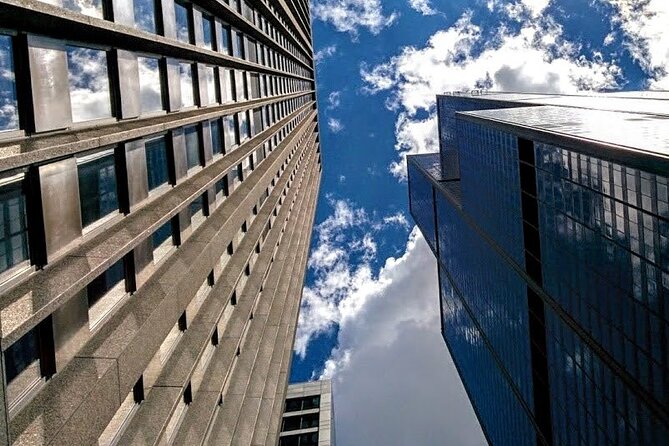
Chicago earns its skyscraper reputation because engineers had to solve hard problems, fast. Not just for looks. For weight. For movement. For soil. For wind. This tour helps you see those challenges in the buildings you thought you already knew.
The big win here is how the tour connects cause and effect. You don’t just hear that a building is tall. You learn why it can stand there confidently, and what design decisions helped it handle forces that would wreck weaker ideas. The route also keeps changing what you’re looking for. Downtown is all about the early structural breakthroughs. Then the Riverwalk shifts you toward later engineering solutions and the city’s relationship with wind and open space.
And yes, it is fun. Not in a loud, gimmicky way. More like, you leave feeling smarter about the city’s skyline than you did when you arrived.
The Loop walk: structural design lessons you can spot fast
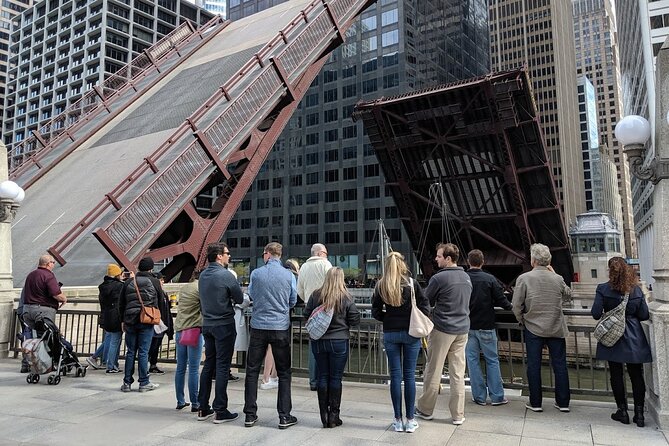
Most of your time is in Chicago’s downtown district, The Loop. You’ll walk among the buildings that shaped the skyline, and the guide points out how construction actually works, not just what it looks like. This part runs about 1 hour 15 minutes and includes entry into a couple buildings, so the learning sticks.
Here’s what I’d watch for as you go. The guide’s engineering approach trains your eye. Instead of only noticing height, you start noticing structure. Where loads go. How different materials and systems work together. How the building’s shape relates to forces acting on it.
One of the most memorable storylines is tied to the father of the skyscraper, described as an engineer and a classmate of Gustav Eiffel. That matters because Chicago’s early skyscrapers were not random experiments. They were part of a broader engineering world, with people exchanging ideas and methods across borders. When you see that building, it’s easier to understand why Chicago became a proving ground for tall construction.
The tour also includes a building with a reputation for being haunted, and the explanation is wonderfully grounded. The story points to uneven settling on its floating foundation. You don’t have to believe in ghosts to appreciate why a building could earn that label. When you understand settlement and movement, you see how unusual behavior in a structure can feed urban legends.
Inside note: The guide keeps the technical language accessible. You learn concepts like a set of practical rules, not a pile of formulas. That’s a rare talent, especially when you’re standing outdoors and trying to connect what you see to what you feel in a building interior.
The haunted building story, explained the engineer way
A haunted building in Chicago could go in two directions: dramatic folklore, or hard engineering. This tour chooses the second one, and it works.
The key idea you learn is uneven settling. The guide explains how a foundation meant to behave like it is floating can still end up with uneven support, depending on how the building interacts with the ground over time. Once you grasp that, you understand why older structures can develop odd quirks that people interpret as spooky.
Even if you are not there for ghost stories, this stop is useful. It teaches you how to think about building stability as a long-term process. Structures don’t just stand still after construction. They respond to conditions, and the ground is part of the system. Chicago, with its engineering challenges and soft soil issues, makes that lesson feel real.
This is the kind of explanation that changes how you look at older architecture. You stop thinking of it as fixed scenery and start thinking of it as a living system that had to negotiate with the city’s conditions for decades.
Riverwalk engineering: wind, gravity, and the view that seals it
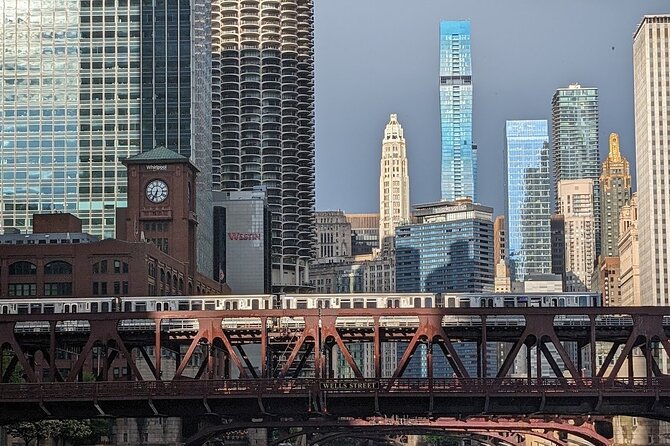
After the Loop, you head toward the Chicago Riverwalk. This portion is about 45 minutes, and it is where the tour balances street-level stories with wide views. Walking along the water gives you a different angle on downtown. It also puts you in the real environment engineers have to design for: open space, moving air, and tall buildings that interact with wind.
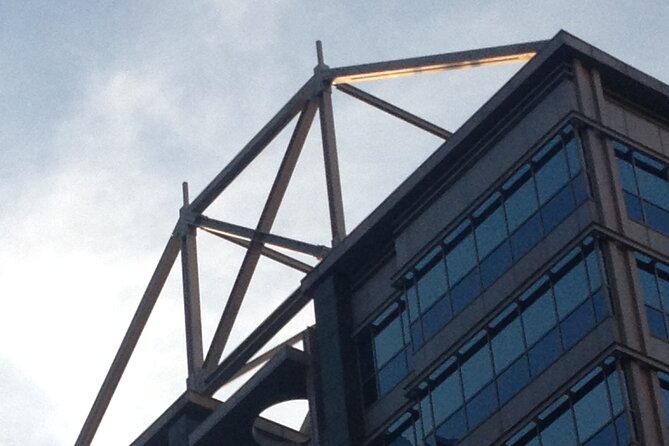
This is where you connect the lessons. Earlier, you learned about structure and foundations. Here, you learn how tall buildings deal with gravity and wind. The guide’s explanation helps you understand why engineering decisions affect not just strength, but also how buildings respond when forces shift.
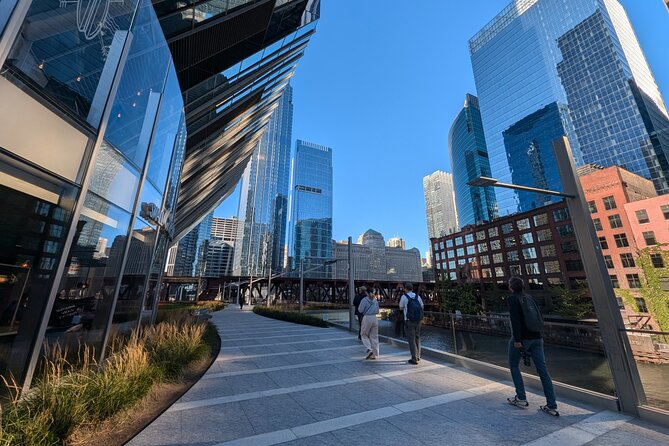
And then you get the payoff. The tour ends at Riverpoint Park at 150 N Riverside Plaza, with a sweeping view of the Chicago River. It’s a good end point because it lets you mentally review what you just learned while looking at the skyline from a practical perspective. You can point at buildings and think, not just what they are, but what their engineering solutions are doing behind the scenes.
Interior visits: why going inside changes what you notice
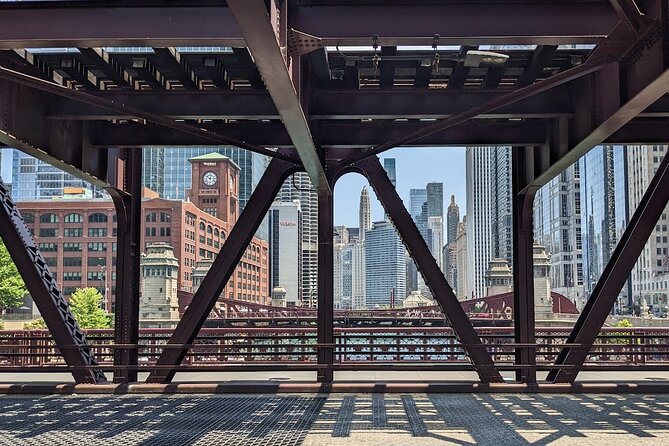
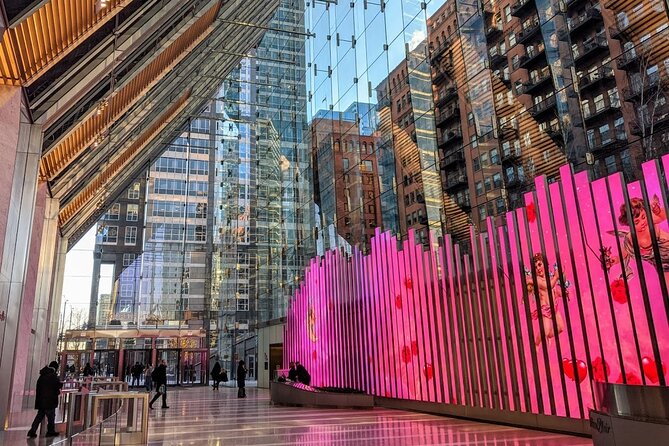
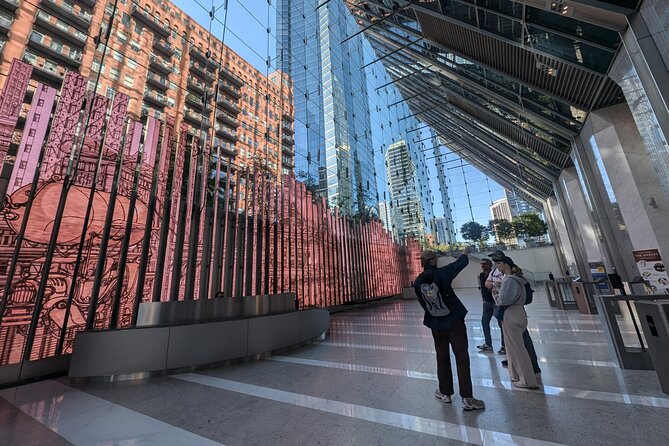
One of the best values of this tour is that you do not stay outside the whole time. The tour includes entry into a few buildings during the downtown portion. Seeing exteriors is great for orientation. Interiors are what reveal structure in a way photos never capture.
Inside, you can pay attention to how the building organizes space around its structural system. You also get a more honest sense of scale. Even when you know a building is tall, it is different when you stand inside it and look up or trace what feels like the building’s logic. That is especially true with older designs, where you can sense the engineering mindset in the way areas are shaped and how circulation and support structures relate.
You also get a break from street-level noise. That helps you process what the guide explains. I like tours that teach and then give your brain a place to reset, not just keep walking and repeating facts.
Beyond the skyline, the neighborhoods have their own tours and their own stories.
- Chicago: Gangsters and Ghosts Walking Tour★ 5.0 · 7,155 reviews
- Chicago Architecture Center River Cruise aboard First Lady★ 5.0 · 5,536 reviews
- Chicago: Willis Tower Skydeck and The Ledge Ticket★ 4.6 · 4,350 reviews
- Chicago: Architecture River Cruise Skip-the-Ticket Line★ 4.8 · 4,325 reviews
- Chicago Crime and Mob Bus Tour★ 4.5 · 3,186 reviews
Price, group size, and why $35 feels fair
The price is $35 per person for about 2 hours, with a mobile ticket. That sounds simple, but the value comes from the teaching and the access. Many architecture walks are mostly exterior photo stops. This one mixes engineering explanations with interior visits and a guide who teaches in a way that keeps the topic understandable.
You also have a small group cap, max 20. Smaller groups matter here because engineering concepts usually lead to questions. Fewer people means you are more likely to get answers without feeling rushed.
One more detail that affects value: the average booking window is about 45 days in advance. That tells me this is not a last-minute filler tour. If you want a spot, plan ahead, especially if you are going on popular dates.
What to bring for a 2-hour engineering walk
This tour runs in all weather, so you should dress for wind, sun, and rain. The route includes outdoor walking in the Loop and along the Riverwalk, so I recommend you bring layers and shoes you trust on city sidewalks.
You also want a basic day-bag setup:
- water (you will be outside)
- a phone with enough battery (for the mobile ticket)
- a light rain layer if the forecast looks sketchy
Fitness-wise, it asks for moderate physical readiness. That means you should be comfortable with steady walking for about 2 hours, not sprinting and not expecting long sit-down breaks.
The route is near public transportation, so you are not forced into a car plan just to get started. And service animals are allowed, which is helpful for many visitors.
Should you book this engineering architecture tour?
Book it if you like architecture but want more than style. You’ll enjoy this most if you like learning how buildings work, even when the concepts start sounding technical. The guide approach, taught by an engineer mind, is the star here. The tour also earns points for doing more than surface views, with interior stops and a clear downtown-to-river structure.
Skip it if your ideal city walk is purely about landmarks and quick photo moments. This tour is very much about the how and the why behind the skyline.
If you want Chicago to make sense in your head, after you leave your phone full of pictures, this is a smart way to do it. And if your guide happens to be Hillary, you can count on a teaching style that has a way of opening up early Chicago architecture and pointing out the kinds of details most people miss.
FAQ
How long is the tour?
The tour is approximately 2 hours.
What does it cost?
It costs $35.00 per person.
Where do I meet for the tour?
Meet at 430 S Michigan Ave, Chicago, IL 60605.
When does the tour start?
The start time is 2:30 pm.
Where does the tour end?
The tour ends at Riverpoint Park, 150 N Riverside Plaza, Chicago, IL 60606.
Is the ticket mobile?
Yes, you get a mobile ticket.
Does the tour include building interiors?
Yes, you visit the interiors of a few buildings during the tour.
Does it run in bad weather?
It operates in all weather conditions, so dress appropriately.
What is the group size?
The tour has a maximum of 20 travelers.
Is hotel pickup included?
No, hotel pickup and drop-off are not included.
Can I cancel for a refund?
Yes. You can cancel up to 24 hours in advance for a full refund.
Just Added






Architecture Tours, compared.
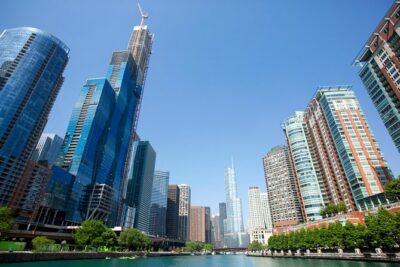
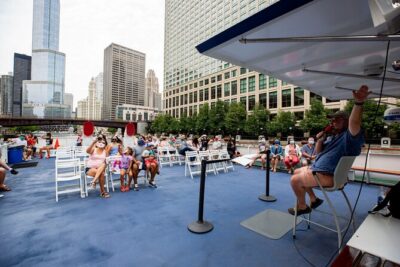

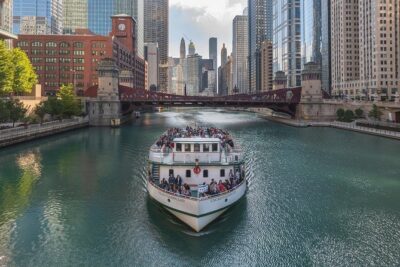
Chicago Architecture Center River Cruise aboard First Lady
Read our review →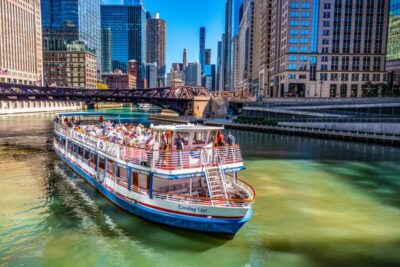
Architecture River Cruise Skip-the-Ticket Line
Read our review →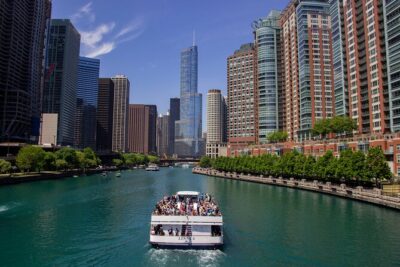
Chicago River 45-Minute Architecture Tour from Magnificent Mile
Read our review →

45-Minute Family-Friendly Architecture River Cruise
Read our review →Browse the lists this tour appears in