Reviewed · TOURS
Inside Tour of Chicago’s Fine Arts Building
A quiet building on Michigan Ave tells big stories. The Chicago Fine Arts Building is a 125-year-old interior time capsule, tied to architect Solon Spencer Beman and the world of artists who worked behind its walls. You’ll move through rooms and hallways that have stayed remarkably consistent since 1898, with plenty of human details along the way.
I love how the tour keeps things personal, especially with a guide who knows the building down to the small stuff. Ronnie Frey is repeatedly praised for his energy and story flow, and that matters because you are not just looking at architecture, you are following the people who made it run.
One thing to consider: this is a walking tour with moderate physical fitness needs. Expect stairs, and you’ll want to show up on time so the group stays together.
In This Review
- Key things to know before you go
- Entering the Fine Arts Building on Michigan Avenue
- The Solon Spencer Beman connection you will actually remember
- 10 floors of studios, plus the feeling of walking through time
- What you’ll see on the artist and craft stops inside
- Special viewing moments, including the manual elevator
- Your guide tool kit: photos on your phone
- Price and value: is $45 worth your time?
- Logistics that matter, like arrival time and keeping up
- Comfort and physical notes you should not ignore
- Who this tour suits best (and who might not)
- Should you book the Fine Arts Building tour?
- FAQ
- Where is the tour meeting point?
- What time does the tour start?
- How long is the tour?
- How much does it cost?
- Do I get a mobile ticket?
- How big is the group?
- Is the tour operated by Doorways Of Chicago?
- Is tipping included?
- What about weather?
- Does the tour require any physical effort?
Key things to know before you go
- A small group (max 10), so you get more attention than on big bus tours
- Ronnie Frey’s storytelling style, with lots of character and context
- 10 floors of workspaces, including artist studios and specialized craft spaces
- Hallways unchanged since 1898, which makes the building feel time-locked in a good way
- A manual operated elevator, plus special viewing stops inside
- Phone photos link from your guide, useful for matching what you see to past exterior images
Chicago is a big city with a short list of essentials — here are a few worth building a day around.
Entering the Fine Arts Building on Michigan Avenue
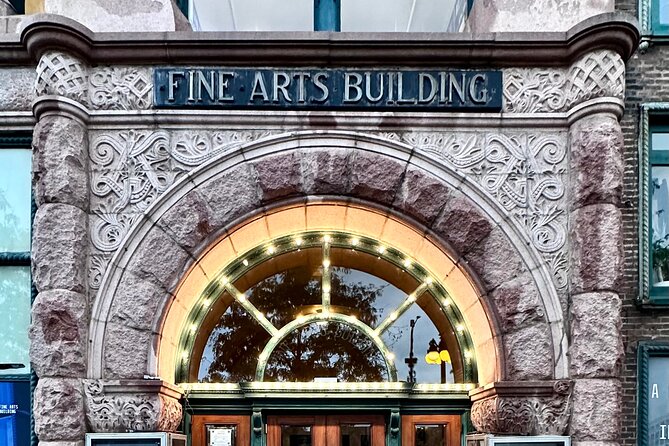
This tour starts at 410 Michigan Ave, right where Chicago’s big landmarks are easy to spot, then quickly drops you into a quieter, more human side of the city. The payoff is that you are not just reading about old Chicago. You are walking through it.
The building is known as a former hub for working artists and makers. You can think of it as a vertical neighborhood where different trades shared space over time. Even if you are not an architecture nerd, the place is easier to understand once you see how many kinds of professionals had studios here.
The tour runs about 1 hour to 1 hour 30 minutes. That length is ideal for a focused interior visit, because you can keep the pace without feeling rushed out the door.
The Solon Spencer Beman connection you will actually remember
The Fine Arts Building traces back to Solon Spencer Beman, the architect tied to the town of Pullman and the Pullman Palace Car Company. That connection matters because it tells you the building was part of a larger Chicago story about design, industry, and how cities imagined the future.
You will hear how Beman’s work shaped what you see in the building today. The hallway layout and the way spaces connect are the kinds of design decisions that repeat across his projects, and it gives you a new lens for reading Chicago architecture.
I like that this is not just name-dropping. The tour context helps you understand why these spaces were built for working people, not just for show. When you connect the design to the purpose, you start noticing details instead of skimming.
10 floors of studios, plus the feeling of walking through time
The core of the experience is a guided walk through the Fine Arts Building, spread across 10 floors. You are following a set route, but the atmosphere is not like a museum. It feels closer to touring a working creative complex where history lives right alongside ongoing craftsmanship.
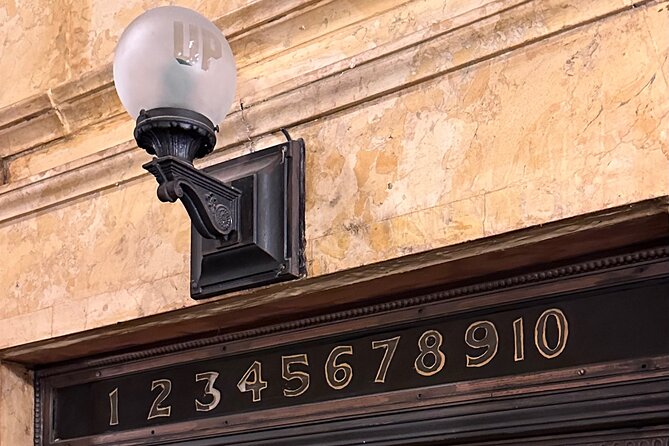
One of the standout points is the claim that many hallways have been unchanged since 1898. That detail changes how you experience the place. You slow down a little, because it is harder to treat the building like a backdrop. It feels like the building still holds its original rhythm.
As you move through the corridors, you’ll get a sense of the building’s mix of professions. The tour description highlights painters, photographers, music instructors, architects, lawyers, stringed instrument makers, and booksellers. And once you see what those studios likely look like, the list stops being abstract.
What you’ll see on the artist and craft stops inside
Even though it is one main stop, the tour has a lot of internal variety. This is where the experience goes from architecture tour to story tour.
Expect to hear about specific artists and former tenants tied to the building. Reviews point to big names such as Frank Lloyd Wright and Norman Rockwell as part of the building’s creative legacy. You do not have to know their full biographies ahead of time. What matters is that your guide connects the person to the space, so the names feel grounded rather than floating.
You will also spend time on the working side of the building. Reviews mention a string instrument factory visit, which sounds like the kind of stop you might skip if you were doing a quick exterior-only plan. Here, it becomes a memorable pivot because it shows how specialized craft fit into an urban office-style building.
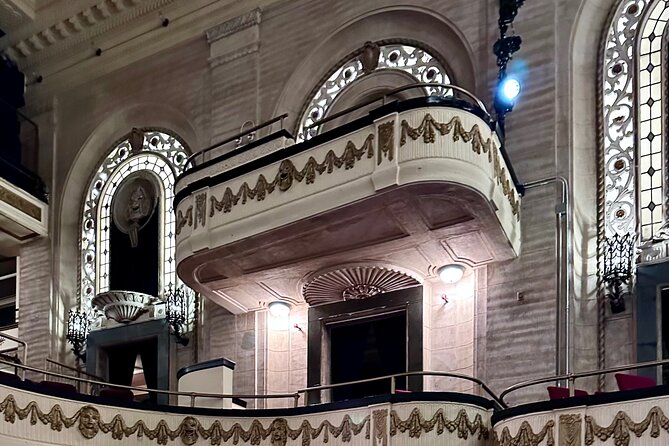
Another review mentions hand-done details and specific craftsmanship like plaster or marble wall work and floor tiles attributed to Ustinov. When you see examples of these finishes in place, you start understanding the building as a collaboration between designers and makers, not just one architect drawing a blueprint.
Special viewing moments, including the manual elevator
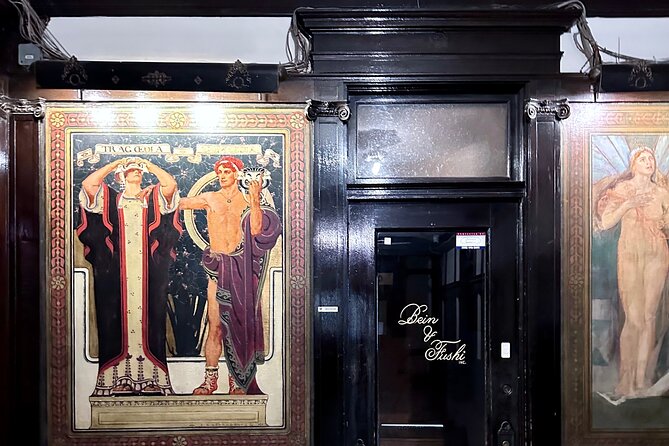
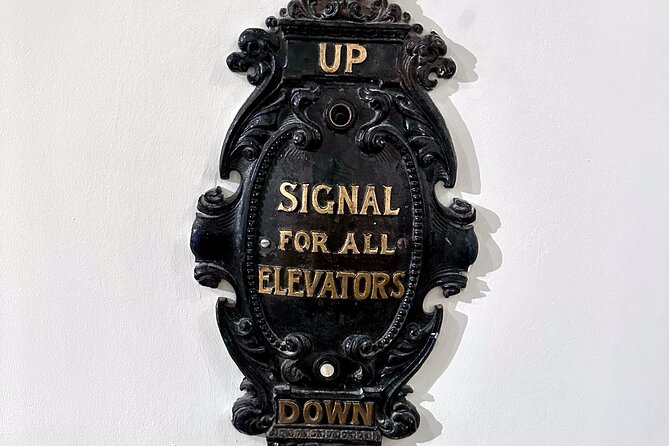
A highlight that shows up in the experience is access to a manual operated elevator. That is not a typical Chicago sightseeing perk, so it is one of the reasons this tour feels different from generic architecture walks.
The elevator moment also sets expectations for the building itself. It is not a polished, fully modernized showpiece. It has functional history. You are seeing how people moved and worked when the building was designed around studio life.
You may also get special viewing stops and photo moments from spaces with good sightlines. One review specifically notes views toward the Board of Trade and Willis Tower from a guide’s location inside. Even if you are visiting Chicago in daylight, those internal viewpoints give you a satisfying sense of place, because you get the skyline framed by an older interior.
Beyond the skyline, the neighborhoods have their own tours and their own stories.
- Chicago: Gangsters and Ghosts Walking Tour★ 5.0 · 7,155 reviews
- Chicago Architecture Center River Cruise aboard First Lady★ 5.0 · 5,536 reviews
- Chicago: Willis Tower Skydeck and The Ledge Ticket★ 4.6 · 4,350 reviews
- Chicago: Architecture River Cruise Skip-the-Ticket Line★ 4.8 · 4,325 reviews
- Chicago Crime and Mob Bus Tour★ 4.5 · 3,186 reviews
Your guide tool kit: photos on your phone
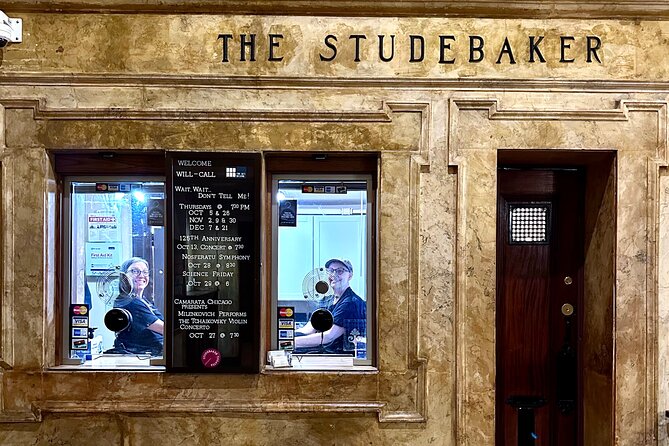
A clever feature: your guide provides a phone link so you can see photos related to what you are seeing. Reviews mention images of people and the old exterior, which helps you connect the present interior to what the building looked like from the outside and in different eras.
This is useful if you like to remember details later. Instead of guessing what you just heard, you can match story points to visuals right away. It also gives you something to do while you pause between stairs, which helps the pace feel less tiring.
The guides named in reviews include Ronnie Frey and Robbie, and both are described as passionate and engaging. The repeated theme is that the narration is detailed but still clear, so you are not stuck listening to a lecture in a hallway.
Price and value: is $45 worth your time?
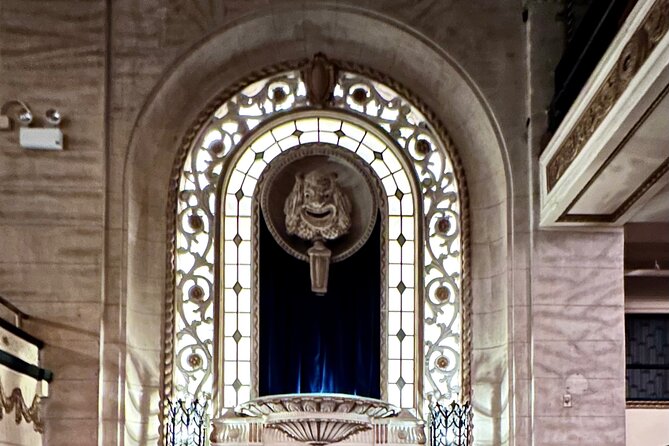
At $45 per person, this is not the cheapest thing on Michigan Ave. But it also is not trying to be. You are paying for access to a specific interior space that most people do not see on their own, plus a guide who can connect architecture to the working lives inside.
Consider what you get for the price:
- A 1 hour to 1 hour 30 minute guided visit in a small group
- A tour focused on Solon Spencer Beman and the building’s creative tenants
- Access to features like the manual elevator and craft-related stops
- Interpretation that helps you notice details you’d otherwise miss
If you already enjoy architecture, Chicago history, or old-school craft, this is strong value. If you only want big landmarks and broad skyline photos, you might decide you’d rather spend your time on an exterior-focused route. But if you love the idea of stepping into a working artist ecosystem from the 1890s onward, $45 feels reasonable for what you actually experience.
Also note: it is commonly booked about 5 days in advance. That is a hint that it sells out sometimes or at least fills up enough to plan ahead.
Logistics that matter, like arrival time and keeping up
This tour has a start time of 10:00 am and ends back at the meeting point. The timing matters because the group size is capped at 10. If people arrive late, the group flow can get messy, and one review points out that this can be frustrating when you are early.
So do yourself a favor. Show up a few minutes early, ready to go. Keep your phone charged in case you want to access the photo link. And wear shoes that handle indoor stairs comfortably.
Your tour confirmation happens at booking, and you get a mobile ticket. Near public transportation, so you can reduce stress by planning an easy transit route to Michigan Ave.
Comfort and physical notes you should not ignore
Moderate physical fitness is part of the deal. Reviews mention plenty of stairs, and that affects how you should prepare.
If you have limited mobility, this may not be the best fit. But if you can handle short climbs at a steady pace, you’ll likely be fine. The good news is the tour length is not long, about 1 to 1.5 hours, so you are not committing to a full half-day walking session.
Bring a light layer if you run cold easily. One review called out a bitter cold day making the indoor tour especially comforting. Even if it is not freezing, interiors can feel cooler than street level depending on airflow and building design.
Who this tour suits best (and who might not)
This tour is a strong match if you like:
- Architecture you can touch, not just structures you look at from a distance
- Chicago stories that involve working artists and real crafts
- Small-group guides who give you specific details and follow-up context
- Interior photo moments and hands-on-feeling spaces like the manual elevator
It is also great for rainy days or when you want a break from the wind off Lake Michigan.
If you do not like walking through multi-level buildings or you prefer open-air sights, you may find the stair focus a little heavy. The tour is about the inside, not the outside, so keep that in mind.
Should you book the Fine Arts Building tour?
I think you should book this if you want a Chicago experience that feels specific and human, not generic. The mix of Beman history, 1898 hallways, studio life, and craft stops like the string instrument side give the tour a clear theme: how design supports creation.
If you are the type who enjoys details like handmade finishes, instrument-making craftsmanship, and knowing how past tenants shaped a building’s personality, you’ll probably leave with a stronger Chicago memory than you’d get from another quick checklist stop.
On the other hand, if you hate stairs or you expect a modern museum-style route with minimal climbing, you might be happier choosing a more accessible option.
FAQ
Where is the tour meeting point?
The tour starts at 410 Michigan Ave, Chicago, IL 60611, USA.
What time does the tour start?
The start time listed is 10:00 am.
How long is the tour?
The duration is approximately 1 hour to 1 hour 30 minutes.
How much does it cost?
The price is $45.00 per person.
Do I get a mobile ticket?
Yes, it uses a mobile ticket.
How big is the group?
This tour/activity has a maximum of 10 travelers.
Is the tour operated by Doorways Of Chicago?
Yes, it is operated by Doorways Of Chicago.
Is tipping included?
No, tipping and gratuities are not included.
What about weather?
It requires good weather. If it is canceled due to poor weather, you will be offered a different date or a full refund.
Does the tour require any physical effort?
It says travelers should have a moderate physical fitness level.
Just Added






Tours, compared.



Chicago River 45-Minute Architecture Tour from Magnificent Mile
Read our review →

Big Bus Chicago: Hop-On Hop-Off Sightseeing Tour, 24/48/72hr Pass
Read our review →
Chicago Favorites Ultimate Food and Walking Tour
Read our review →