
Reviewed · ARCHITECTURE TOURS
Chicago’s Original Dazzling Architectural Interiors Tour
One tour, five floors of wow. This is a fast, focused way to see how Chicago styling changed from the Roaring 20s to later design eras, all while keeping you looking up and moving from room to room. I especially like the mix of Art Deco elegance and the finale under the world’s largest Tiffany stained-glass dome.
Two things I really like: first, the tour points out details you usually miss at street level, so you start noticing ornament, materials, and design choices instead of just admiring the big picture. Second, the guide brings Chicago context into the spaces, and if you get a guide like Spencer, Henry (trained as an architect), or Kaylee, you’ll get that extra layer of how and why the buildings look the way they do.
The only real consideration is pacing. It’s a 2-hour walking tour with lots of inside looking up, then back outside between stops, so you’ll want comfortable shoes and weather-ready clothing.
In This Review
- Key highlights you’ll actually feel
- Why Chicago’s interiors look best from street level to ceiling level
- Plan Your Walk From 425 S. Financial Place
- Roaring 20s Art Deco interiors: where the style becomes a feeling
- Back to the 1880s: structure, style, and why age matters
- Frank Lloyd Wright renovated interiors: spotting the design fingerprints
- Postmodern vaulted ceiling with Moorish details: a design detour worth it
- The Tiffany dome finale, Millennium Park, and The Bean
- Guide impact: how Henry, Spencer, and Kaylee change the experience
- Price and value: is $35 a fair deal for 2 hours?
- Who should book this tour, and who might skip it
- Should you book Chicago’s Original Dazzling Architectural Interiors Tour?
- FAQ
- How long is the tour?
- How much does the tour cost?
- What is included in the price?
- Where do I meet the guide?
- Do I need to tip separately?
- What should I bring?
- What languages are available?
- Is the tour wheelchair accessible?
Key highlights you’ll actually feel
- World’s largest Tiffany stained-glass dome as the closing wow moment
- Frank Lloyd Wright renovated interiors you can compare with the surrounding style shifts
- Roaring 20s Art Deco interiors with class-and-elegance energy
- Postmodern vaulted ceiling with Moorish details, a totally different mood in the middle of the walk
- Unmarked, overlooked interiors that even locals pass without noticing
- A route that ends near Millennium Park and Chicago’s landmark, The Bean
Chicago's skyline, explained block by block
Why Chicago’s interiors look best from street level to ceiling level
Chicago architecture can be a lot on your own. You see the facades, you snap photos, then you move on. This tour changes the order of operations, so you spend your time where the design work is doing the real talking: inside rooms, lobbies, and ceiling lines.
I like that it keeps you in “read mode.” You’re not just watching a slideshow. You’re learning what to look for, then applying it instantly to the next stop.
And you’re not stuck with one era. You jump from the Roaring 20s feel to older downtown fabric, then to later design flourishes, so the city reads like a timeline instead of a random pile of landmarks. It also helps that the tour is built around entrances and interior access, not just exterior photo points.
Plan Your Walk From 425 S. Financial Place
Meet at the plaza in front of 425 S. Financial Place, next to the metal horse sculpture. From there, you’re set up for a downtown route that stays close to the core sights, including the area around Millennium Park.
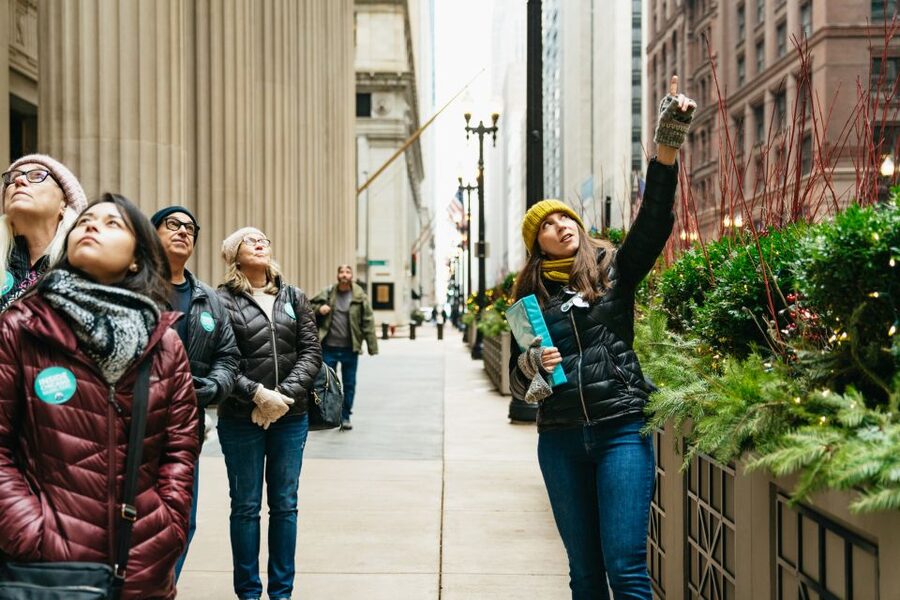
This is a 2-hour experience, so think “tight and efficient.” You’ll want to show up ready for quick transitions between indoor viewing spots and short outdoor stretches. Bring comfortable shoes because you’ll be standing, walking, and looking upward often.
Also bring a face mask or protective covering, just in case the building entry rules require it on the day you go. If you’re traveling in off-season or weather swings, pack accordingly, because you’ll still be outside between stops.
Roaring 20s Art Deco interiors: where the style becomes a feeling
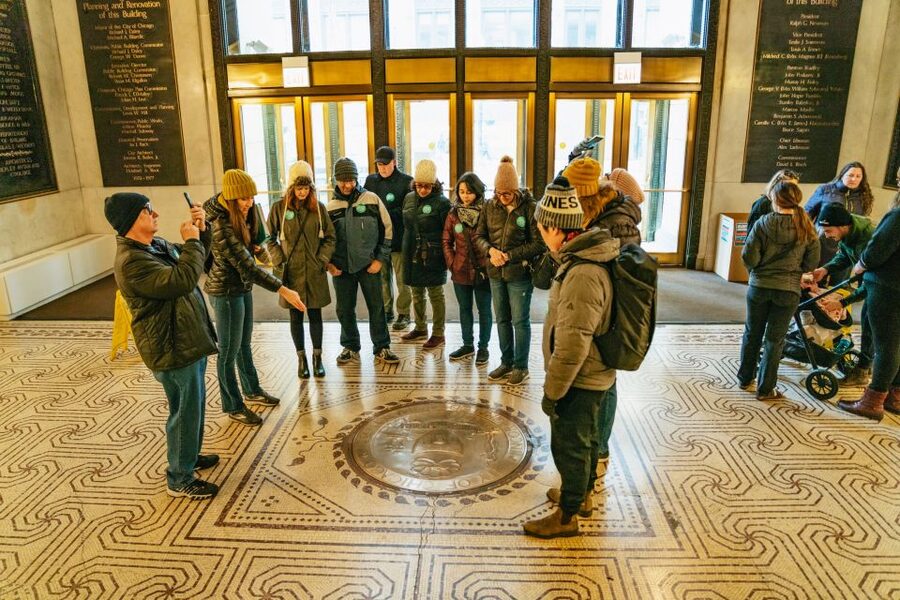
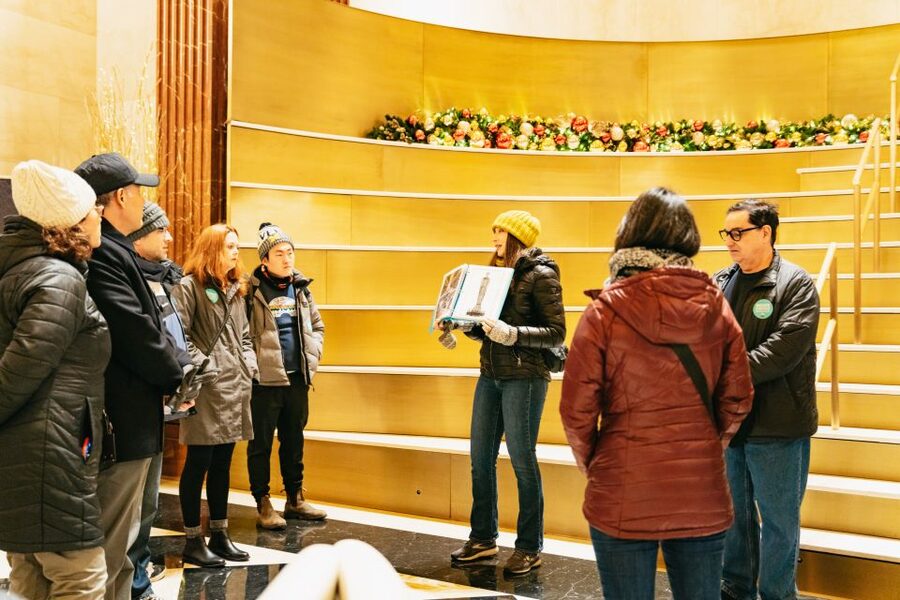
The tour starts by jumping you right into the Roaring 20s vibe, with the kind of class and elegance people usually associate with Art Deco. Expect an interior-first introduction, where you learn how the design language communicates optimism, power, and modernity in a way you can actually see up close.
This portion works well for first-time Chicago visitors because it gives you a “visual grammar” fast. Once you notice the shapes, the symmetry, and the way light bounces off finishes, the rest of the tour becomes easier to follow.
A small caution: some of the wow factor here is in the fine details and ceiling lines, which means you’ll spend some time looking upward. If you have neck stiffness, take your time and adjust your viewing angle slowly instead of trying to stare straight up for long stretches.
Back to the 1880s: structure, style, and why age matters
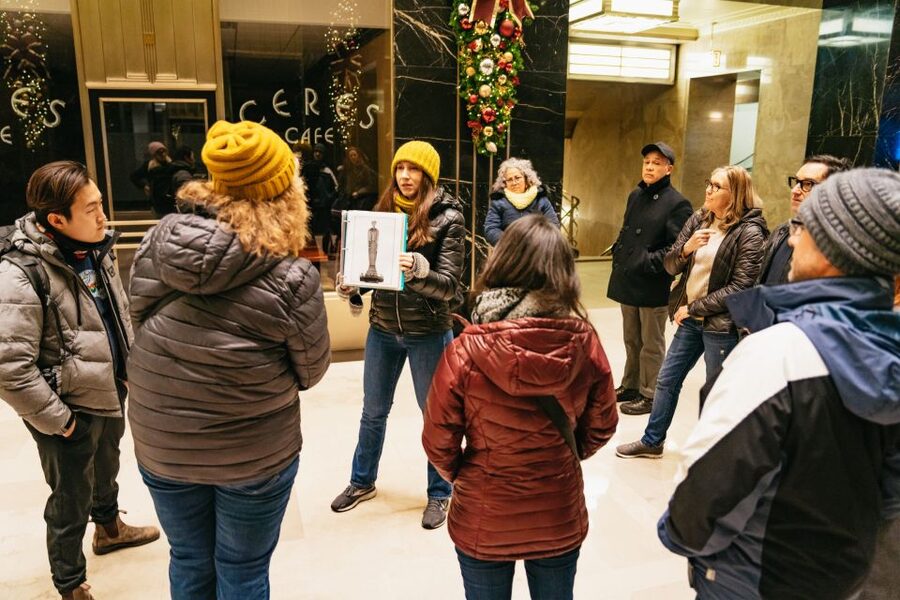
Next, the tour takes you back roughly 50 years to the late 1800s, into one of downtown Chicago’s older, famous structures. The value here is the contrast. You get to feel how the design mindset changes when you go from one era’s ideas of progress to another era’s building priorities.
What I love about this kind of stop is how it changes your perspective on what you’re seeing. The older spaces tend to emphasize structure and proportion, while later interiors lean more into ornamental surfaces and stylized forms. Put together, those differences help you understand why Chicago interiors can feel both grand and practical.
And because it’s an interiors-focused route, you’re not just walking past history, you’re inside it. That makes the timeline feel real instead of abstract.
Frank Lloyd Wright renovated interiors: spotting the design fingerprints
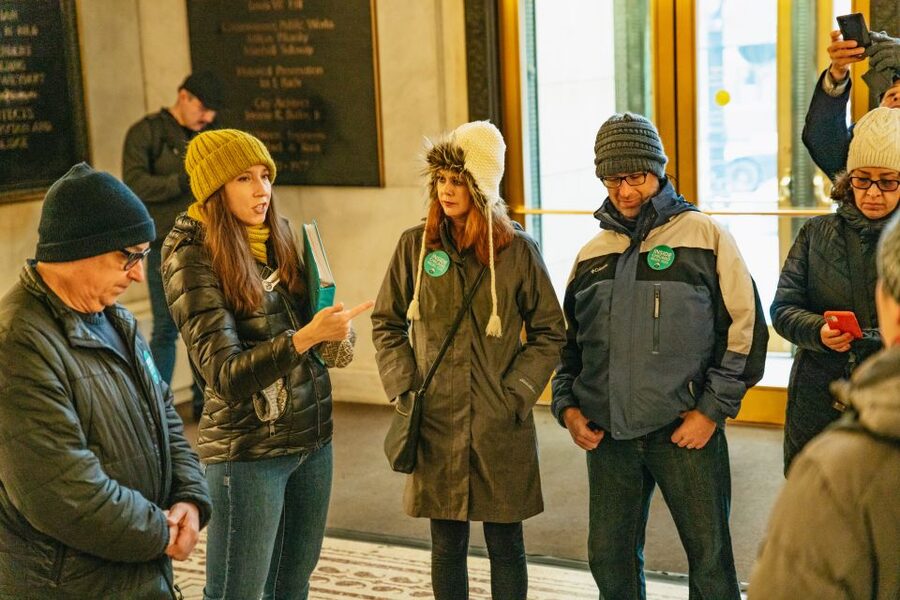
One of the big promises here is seeing turn-of-the-century interiors renovated by Frank Lloyd Wright. Even if you only know the name from books or photos, seeing an interior connection in person helps you grasp how Wright thought about space and detail.
In a tour like this, the key is not trying to memorize dates. It’s training your eye to spot design decisions that feel intentional, even when you’re walking through a space that has been updated more than once. Wright’s influence is often about craftsmanship, geometry, and how a room’s elements relate to each other.
Possible drawback: if you’re the type who wants deep technical architecture talk for hours, you may wish you had more time in one space. This is still a 2-hour tour, so Wright-related insights come in crisp, field-ready bites rather than an academic lecture.
Beyond the skyline, the neighborhoods have their own tours and their own stories.
- Chicago: Gangsters and Ghosts Walking Tour★ 5.0 · 7,155 reviews
- Chicago Architecture Center River Cruise aboard First Lady★ 5.0 · 5,536 reviews
- Chicago: Willis Tower Skydeck and The Ledge Ticket★ 4.6 · 4,350 reviews
- Chicago: Architecture River Cruise Skip-the-Ticket Line★ 4.8 · 4,325 reviews
- Chicago Crime and Mob Bus Tour★ 4.5 · 3,186 reviews
Postmodern vaulted ceiling with Moorish details: a design detour worth it
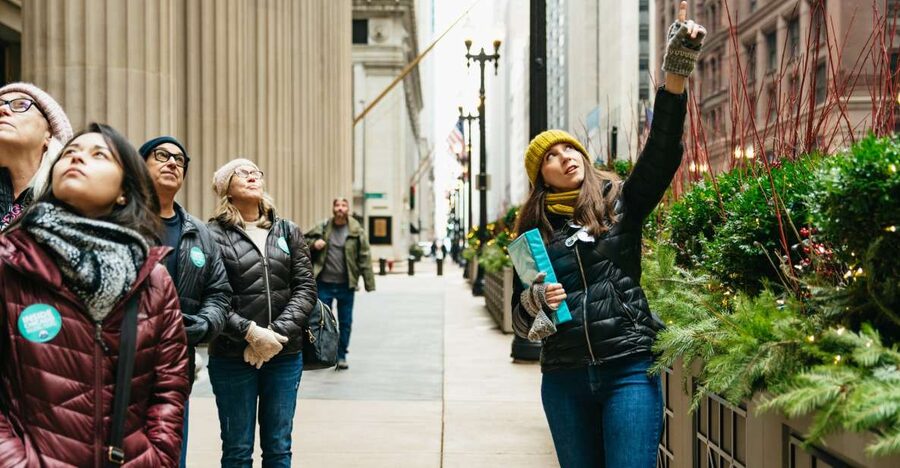
Then you get a mood shift with a vaulted ceiling from the Postmodern era, surrounded by Moorish details. This stop matters because it shows how Chicago interiors can be playful and expressive, not just historic or strictly traditional.
Moorish-inspired elements tend to bring patterns, arches, and ornamental rhythm into the space. In person, you can often feel how those details guide your eye along curves and upward lines. It’s a great break from the more familiar Art Deco look, and it keeps you from getting “interior fatigue.”
If you’re visiting with kids or friends who get bored with museum-style rooms, this is the moment that can reset attention. The design is visually loud in the best way, and it’s the kind of place where people naturally slow down and look closer.
The Tiffany dome finale, Millennium Park, and The Bean
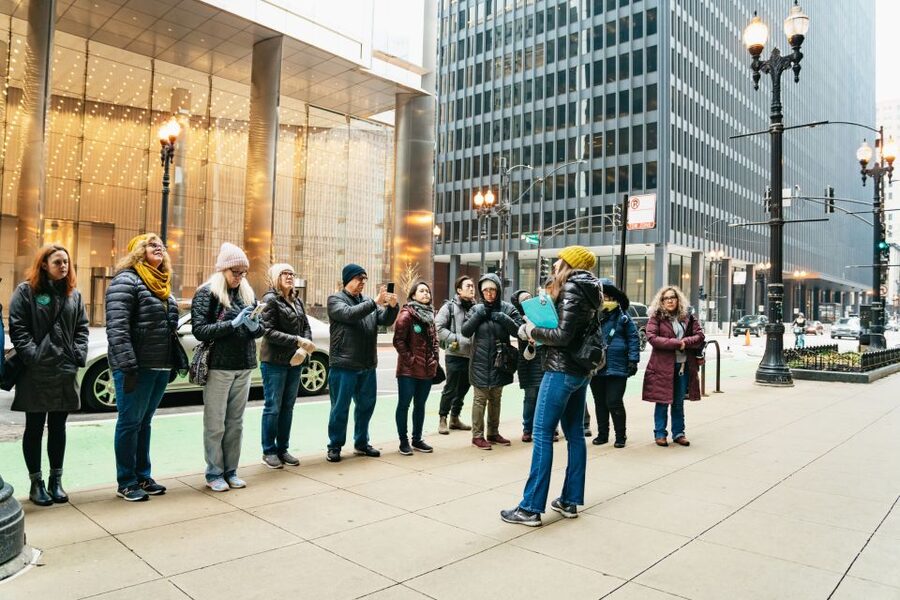
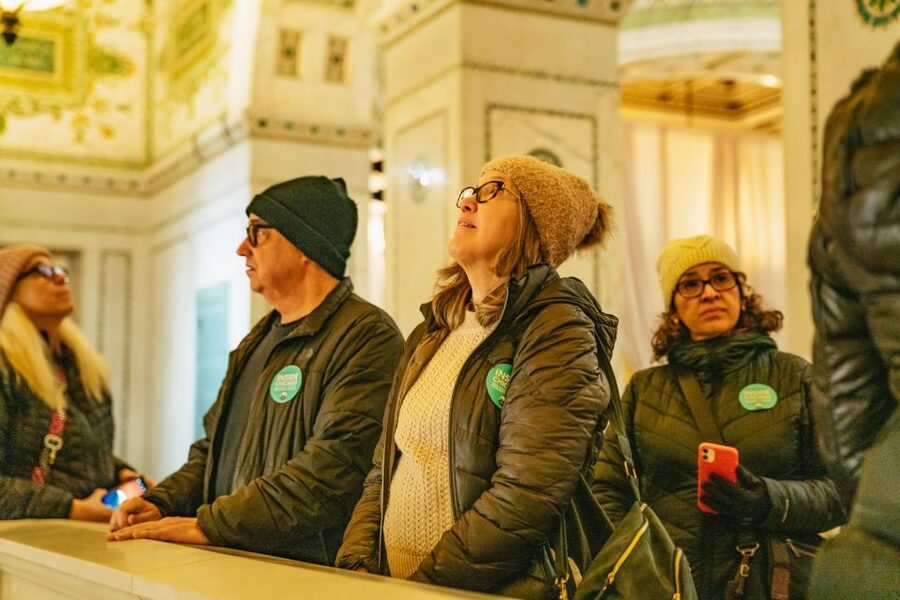
The ending is the headline: looking up at the world’s largest Tiffany stained-glass dome. This is exactly the type of stop that makes you stop walking and start actually studying. You’re there for light, color, and the way stained glass transforms an interior into something almost atmospheric.
The tour also ends near Millennium Park with one of Chicago’s most famous landmarks, The Bean. That pairing is smart because it gives you a natural flow for the rest of your day. You can finish with a dramatic indoor look, then step out and keep going with the city’s photo-famous outdoor sights.
One practical thought: stained-glass domes are usually best at certain angles. Give yourself a minute to position yourself without rushing. If you move right up to the same spot as everyone else, you might miss a better viewpoint a few steps to the side.
Guide impact: how Henry, Spencer, and Kaylee change the experience
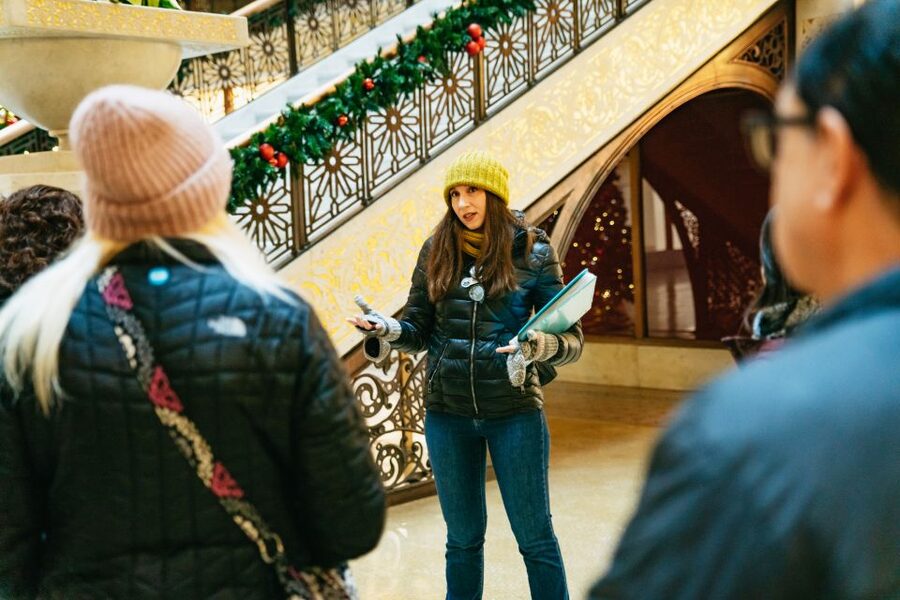
The guides are a standout part of the experience, based on how consistently people react to them. Spencer is praised as amazing, highly Chicago, and very knowledgeable, and the comments also emphasize how guides connect the architectural stops to Chicago’s bigger story.
Henry gets specific mention for having architect training and bringing passion to the tour. That matters because an architect-trained guide tends to explain details as choices, not just decorations. You don’t just learn what’s there, you learn what the design is trying to do.
Kaylee is also highlighted for being professional, friendly, and bringing the history into the spaces in a way that makes you comfortable asking questions. One review even mentions enjoying the tour despite on-and-off rain, which tells me the flow is built to keep going even when the weather tries to ruin your photos.
Price and value: is $35 a fair deal for 2 hours?
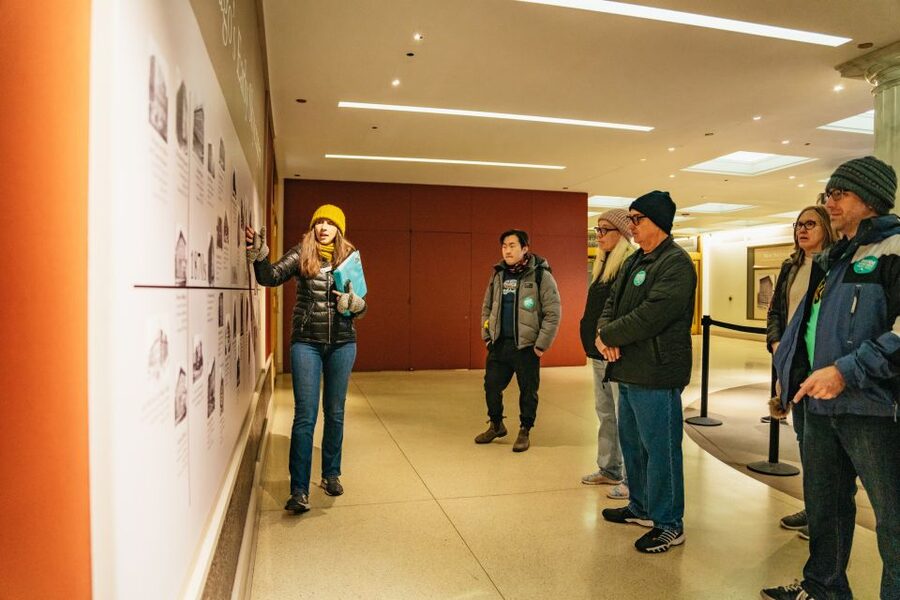
At $35 per person for a 2-hour guided walk, this is priced like a practical add-on rather than a big-ticket attraction. The value gets better because entrance fees are included, which removes one of the annoying costs you usually have to estimate yourself.
You’re also not paying for empty walking. The itinerary is built around interior access, multiple era transitions, and specific “look up here” moments like the Tiffany dome. When the tour gets it right, you leave with more than photos, you leave with a sense of how Chicago’s design language developed.
Gratuities aren’t included, so if you’re the kind of person who likes to tip, plan for that. And if your group loves architecture but hates long museum time, the 2-hour format is a good fit.
Who should book this tour, and who might skip it
This tour fits best if you want Chicago architecture without spending your whole trip reading placards. It’s great for first-timers who like being guided through eras, and for repeat visitors who want to learn how to notice details faster.
It also suits people who enjoy small-business energy and don’t want to be swallowed by a massive bus group. The tour positions itself as the longest-running, most popular interiors-focused option in downtown Chicago, and the high rating suggests that matters to people who care about how things are run.
Who might skip it? If you want a deep, unhurried, study-every-detail experience with long stops, 2 hours may feel tight. Likewise, if weather makes you miserable standing outside between locations, you may want to choose a day with steadier conditions.
Should you book Chicago’s Original Dazzling Architectural Interiors Tour?
I’d book it if you want a guided, interiors-first way to understand Chicago, and you care about seeing more than just facades. The combination of Art Deco elegance, older downtown structure, Wright-connected renovations, a Moorish postmodern ceiling, and the Tiffany dome finale makes this one of the easiest “architecture wins” you can stack into a day.
If your schedule is tight, it’s also a relief. You get a coherent route in 2 hours, entrance fees handled, and a natural finish near Millennium Park and The Bean so you can keep the momentum.
If you still have doubts, use this rule: if you like looking up, noticing patterns, and learning what your eyes should catch next, this tour will feel like money well spent.
FAQ
How long is the tour?
The tour lasts 2 hours.
How much does the tour cost?
The price is $35 per person.
What is included in the price?
Entrance fees are included.
Where do I meet the guide?
Meet at the plaza in front of 425 S. Financial Place, next to the metal horse sculpture.
Do I need to tip separately?
Gratuities are not included.
What should I bring?
Bring comfortable shoes, weather-appropriate clothing, and a face mask or protective covering.
What languages are available?
The tour is guided in English.
Is the tour wheelchair accessible?
Yes, the tour is wheelchair accessible.
Just Added





Architecture Tours, compared.
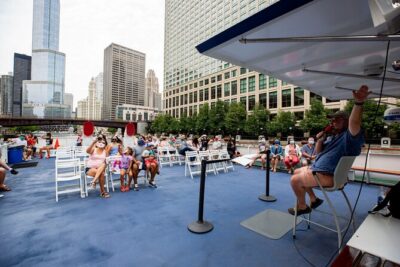

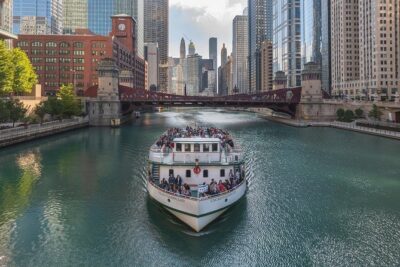
Chicago Architecture Center River Cruise aboard First Lady
Read our review →
Architecture River Cruise Skip-the-Ticket Line
Read our review →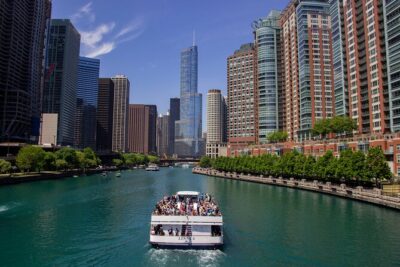
Chicago River 45-Minute Architecture Tour from Magnificent Mile
Read our review →

45-Minute Family-Friendly Architecture River Cruise
Read our review →Browse the lists this tour appears in