Reviewed · TOURS
Chicago Tour – South Side
The South Side changes fast in four hours. This half-day tour gives you a street-level view of how culture, politics, and industry shaped Chicago, from Bronzeville to Obama sites.
I love the way the guide turns big names into real places, not just facts on a plaque. You’ll also appreciate the practical bonus of an iPhone charging port, so your battery survives the photo stops.
One possible drawback: the route is fast and car-based, and the narration can be loud and energetic. If you want long quiet walks or frequent get-out-and-stroll time, you may want to plan for a more ride-and-look style tour.
In This Review
- Key things I’d circle before you go
- Entering a whole new Chicago, not just another “area”
- Meeting at Chicago Theatre, then rolling out at 10:00 AM
- The Ford Factory and steel-era Chicago, where the blue-collar story begins
- Bronzeville: early business power and community identity
- Hyde Park and the University of Chicago, including the atomic bomb program connection
- South Lake Drive and the lakefront rhythm on the South Side
- Seeing the Obama as senator connection in context
- Border dynamics with Indiana, and why it changes daily life
- Beverly Hills, Chinatown, and Little Village, all in one sweep
- Pilsen, plus the Cook County Jail pass, and why the tour warns you
- Little Italy Greektown and Bridgeport’s lime quarry stop
- How the guide’s style affects your comfort level
- Vehicle, iPhone charging, and what to bring so the day stays smooth
- Who this tour is best for, and who should think twice
- Price and value check for a 4-hour South Side sampler
- Should you book this Chicago South Side tour?
- FAQ
- How long is the Chicago South Side tour?
- Is the tour offered in English?
- Is it a private tour?
- Where does the tour start and end?
- What is the maximum group size?
- Does the tour include an iPhone charging option?
- Do I get a mobile ticket?
- What weather requirements should I expect?
- What is the cancellation window?
- What happens if the minimum number of travelers is not met?
Key things I’d circle before you go
- Ford Factory and steel-era Chicago give you the industrial backbone behind the neighborhoods
- Bronzeville and Hyde Park connect early business life, the Great Migration era, and today’s university power
- Obama as senator context helps you understand why certain streets matter
- Chinatown, Little Village, Pilsen, and Little Italy Greektown show how immigrant and working communities sit side by side
- Little Lake Drive moments help you see the South Side as more than politics and headlines
- Bridgeport’s lime quarry stop adds a surprising, visual Chicago detail
Chicago is a big city with a short list of essentials — here are a few worth building a day around.
Entering a whole new Chicago, not just another “area”
The best part of a South Side tour is that it feels like you’re driving through many Chicagos in one afternoon. You get the working neighborhoods first, then the education and research center energy, then the immigrant and language mix, all without the usual downtown bubble.
What I like most is that the tour does not treat neighborhoods like labels. It treats them like living communities that have pushed for opportunity, built businesses, and changed the city’s direction. You start to see Chicago as a set of forces, not a postcard.
And with a small group, it usually feels more like a focused conversation than a big-bus lecture. The tour runs about 4 hours and keeps you moving enough to cover a lot, while still giving you chances to ask questions.
Meeting at Chicago Theatre, then rolling out at 10:00 AM
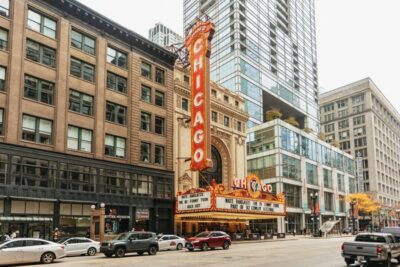
You meet at the Chicago Theatre, 175 N State St, and the tour starts at 10:00 AM. It ends back at the same meeting point, so you do not have to figure out a second destination at the end of a long morning.
Because it’s a small-group experience (maximum 11 travelers), the flow matters. You’ll want to arrive a few minutes early, especially if you’re coming in on public transportation. The meeting spot is near transit, which is a real help in a city where parking can turn into a mini side quest.
If you’re hoping for a relaxed pace, this tour is still a set program. Plan to be ready for a steady run of sights and stories, from windows-out city views to quick photo moments.
The Ford Factory and steel-era Chicago, where the blue-collar story begins
The tour’s opening energy is industrial. You start by seeing the Ford Factory area, tied to the world of steel mills and the working backbone of Chicago. Even if you only know Chicago through sports or skyline photos, this is where the city’s “why” starts to make sense.
From here, the tour frames the South Side as a place shaped by labor and by the people who built and sustained the city. If you like history that you can actually point at, this kind of start works well. It also gives you a mental baseline before the neighborhoods start to feel like different worlds.
One thing to keep in mind is that you’re mostly viewing from the vehicle. So wear something comfy for being seated for stretches, and bring sunglasses or a hat if the light is strong.
Bronzeville: early business power and community identity
Next is Bronzeville, one of the South Side’s best-known neighborhoods for a reason. The tour puts a clear focus on the area’s African American heritage and its role as an early business district, so you’re not just hearing names. You’re getting context for why these streets mattered.
You also get guided interpretation of migration-era change, and that shows up in the way the guide tells the story. Several people highlight that the storytelling is funny and engaging, not dry. If you learn best through narrative, not timelines, you’ll likely enjoy this part.
Bronzeville can feel like a quick stop from a big-city map point of view, but the tour’s framing helps you connect it to later stops. You start to notice patterns, like how communities shaped schools, housing choices, and local institutions.
Hyde Park and the University of Chicago, including the atomic bomb program connection
The route continues into Hyde Park, where the tone shifts from industry and working neighborhoods to education and big research energy. The tour calls out the University of Chicago, including a stop tied to the spot connected with the atomic bomb program.
Even if you already know the broader story, you’ll probably get more grounded in the location when someone points to the exact area and explains why it sits here. That’s the payoff of seeing it in person.
Hyde Park also sets you up for the lake-adjacent parts of the tour. The guide’s approach helps you understand how the South Side’s cultural and educational pull sits right next to the working-city reality.
If you prefer tours with hands-on stops, you might feel like Hyde Park is too “look from the road.” Still, this is a strong stop for your mental map, especially if you want to balance the South Side story.
Beyond the skyline, the neighborhoods have their own tours and their own stories.
- Chicago: Gangsters and Ghosts Walking Tour★ 5.0 · 7,155 reviews
- Chicago Architecture Center River Cruise aboard First Lady★ 5.0 · 5,536 reviews
- Chicago: Willis Tower Skydeck and The Ledge Ticket★ 4.6 · 4,350 reviews
- Chicago: Architecture River Cruise Skip-the-Ticket Line★ 4.8 · 4,325 reviews
- Chicago Crime and Mob Bus Tour★ 4.5 · 3,186 reviews
South Lake Drive and the lakefront rhythm on the South Side
After you connect Hyde Park to the university and major historic threads, you get time for views along South Lake Drive. This part matters because it changes how you think about the South Side.
A lot of visitors come in expecting the South Side to be only industry, housing, or politics. Lake-adjacent streets add a different texture, and they help you see that Chicago’s neighborhoods also include recreation space and everyday life, not only headline events.
From a photography standpoint, you’ll want your phone camera ready. The car-window view can be limiting, but if the guide times stops and turns for you, it can still produce great shots. Keep your charger handy too, because you’ll take more photos than you expect.
Seeing the Obama as senator connection in context
One of the headline promises is that you’ll see where Barack Obama lived as a senator. This is one of those moments that can feel personal even if you know the public figure already.
The tour doesn’t just point to a house and move on. It places it inside a larger explanation of political growth and neighborhood relevance. That’s why it tends to land well with people who want the city beyond the obvious downtown landmarks.
If you like biography tied to geography, this is a strong selling point. You’ll likely come away with a clearer sense of how power, policy, and place connect in Chicago.
Border dynamics with Indiana, and why it changes daily life
Chicago’s geography includes a border relationship with Indiana, and the tour explicitly calls out how that dynamic works. This is not just trivia. It’s about trade patterns, commuting rhythms, and how city identity shifts at the edges.
When you hear it explained while you’re riding through the city, the idea sticks better. You start to see Chicago as a hub that pulls in nearby regions, not a sealed-off island.
This kind of information is especially helpful if you’re only visiting for a short time. In a half-day, it gives you a practical lens for what you’re actually seeing.
Beverly Hills, Chinatown, and Little Village, all in one sweep
The tour then moves through multiple communities that each carry a different immigrant and working-class profile.
You’ll pass through Beverly Hills, then into Chinatown, where you’ll get a clear sense of scale. After that, the route highlights Little Village, described as a heavily populated Puerto Rican neighborhood. That variety within one afternoon is the point. It shows that the South Side is not one story.
Little Village also helps you understand how cultural life and community density can reshape a city block by block. Even from the road, you’ll be able to spot differences in storefront style, neighborhood feel, and street energy.
Chinatown, in particular, can be eye-opening if you mostly associate Chicago with architecture and sports. The sheer size and distinct vibe can reset your assumptions about what Chicago looks like outside downtown.
Pilsen, plus the Cook County Jail pass, and why the tour warns you
Next is Pilsen, a proud Mexican community. This is one of the neighborhoods where the tour’s tone matters, because it’s not presented as a quiet museum district. It’s a community that carries identity, pride, and everyday life.
The route also passes Cook County Jail. The tour description uses a blunt line about what happens if someone gives trouble. I’ll translate that into practical advice: you should treat this as a firm, no-fuss experience where the guide expects respect and cooperation, especially when the group needs to stay together while riding and stopping.
If you’re the type of visitor who likes to ask lots of questions, this is still a good moment. Just ask clearly and keep your expectations aligned with a moving, time-managed route.
Little Italy Greektown and Bridgeport’s lime quarry stop
The end of the tour starts to pull back toward the lake-and-city-core direction through Little Italy and Greektown. This part is useful because it shows the South Side not as isolated, but as connected to other working communities that helped build Chicago’s food and neighborhood identity.
Then the tour brings you to Bridgeport, including a visit tied to a lime quarry. This stop feels different from the rest of the day because it adds an industrial visual that you don’t get on standard city-bus tours.
Bridgeport’s lime quarry stop is a great example of what this tour does well. It finds the Chicago details that make the city feel real, not staged.
How the guide’s style affects your comfort level
The main name you’ll see tied to this tour is Steven Johnson, often called Steve by customers. The most praised aspect is his storytelling style: people describe him as funny, fast-moving in a good way, and willing to interact with the group.
He also gets credit for things that matter in a real city photo day. People mention he helps with photo opportunities and even takes extra stops for locations that weren’t strictly planned. If you like a guide who pays attention to what you care about, this is one of the tour’s strongest points.
That said, there are also caution notes. Some people found the narration extremely loud or too fast. Others felt the vehicle routine did not leave enough time for questions or photos, and a few mentioned being frustrated by seat or comfort concerns. A few also raised issues about driving behavior and traffic compliance.
I can’t tell you which version of the tour you’ll get. But you can plan for it. If you want a gentler pace, or you are sensitive to loud talking, say so right away. If you have knee issues, ask what the number of stops means in practice for getting out and walking.
Vehicle, iPhone charging, and what to bring so the day stays smooth
The tour includes access to an iPhone port, and that is not a small thing in Chicago. A four-hour neighborhood sprint includes pictures, maps, and a lot of screen time. Having charging ability helps you keep navigation and translation apps available too.
Because you’ll be riding in a vehicle for much of the time, pack for comfort. Bring a water bottle, especially if the day is warm. Sunglasses help if the sun hits the windows.
If you’re a photo person, bring a small microfiber cloth too. Chicago winds and car-window smudges can ruin shots, and you won’t want to waste time cleaning in the middle of the ride.
Also, wear shoes you can stand in quickly. Even if the tour is mostly “look and ride,” unexpected photo moments happen, and you do not want to be stuck in uncomfortable footwear.
Who this tour is best for, and who should think twice
This is ideal for you if you want a neighborhood-focused day without spending weeks reading Chicago history books. It’s also a great fit if you like your history told through people and places, not only through museum style facts.
You’ll likely enjoy it if you are okay with a structured route and a guide who talks a lot. The route covers a lot of different neighborhood types, and the guide uses that variety to connect themes like labor, community growth, education, and migration-era change.
Think twice if you need a lot of walking time, or if you want a quiet, low-volume tour. Also, if you’re worried about being in a fast-paced vehicle for long stretches, check in with the operator before booking so you understand what gets you out of the car and how often.
Price and value check for a 4-hour South Side sampler
You’re paying for two things: time and storytelling. A half-day tour that hits Ford-related industry context, major university area, multiple immigrant neighborhoods, and a few surprising industrial stops is hard to replicate on your own without careful routing.
The value gets even stronger if you want the guide’s interpretive layer. Seeing a neighborhood from a car is one thing. Getting context for why it developed, who built it, and how the city’s power shifted around it is what makes the ride worth it.
The only real value risk is pacing fit. If you dislike loud narration, strict group management, or frequent “ride then point out the next place” moments, then no amount of neighborhood variety will save the experience.
Should you book this Chicago South Side tour?
I think you should book it if your goal is simple: see the South Side as more than a slogan. This tour gives you a fast but guided sweep through Bronzeville, Hyde Park, Chinatown, Little Village, Pilsen, Little Italy Greektown, and Bridgeport, with standout moments like the Obama as senator connection and the University of Chicago area stop tied to the atomic bomb program.
Book it especially if you want a lively guide like Steven Johnson, the kind who interacts, jokes, and helps you get the shot. If you’re sensitive to loud talking or want lots of walking, ask questions first about comfort, stop frequency, and how much time you’ll have to get out and take photos.
If that sounds like your style, this is one of the more efficient ways to get your bearings on Chicago’s South Side in a single afternoon.
FAQ
How long is the Chicago South Side tour?
It runs about 4 hours.
Is the tour offered in English?
Yes, it is offered in English.
Is it a private tour?
The experience is described as a private half-day South Side tour.
Where does the tour start and end?
It starts at Chicago Theatre, 175 N State St, Chicago, IL 60601, and ends back at the same meeting point.
What is the maximum group size?
The activity has a maximum of 11 travelers.
Does the tour include an iPhone charging option?
Yes, tours include access to an iPhone port so you can keep your battery charged.
Do I get a mobile ticket?
Yes, the tour uses a mobile ticket.
What weather requirements should I expect?
This experience requires good weather. If it is canceled due to poor weather, you will be offered a different date or a full refund.
What is the cancellation window?
You can cancel for a full refund up to 24 hours before the experience starts.
What happens if the minimum number of travelers is not met?
If the tour is canceled because the minimum number of travelers is not met, you will be offered a different date or a full refund.
Just Added






Tours, compared.
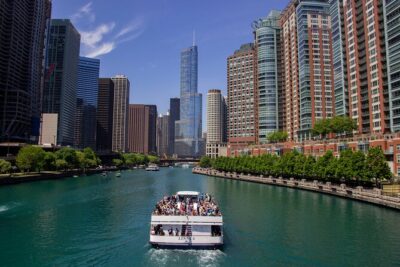
Chicago River 45-Minute Architecture Tour from Magnificent Mile
Read our review →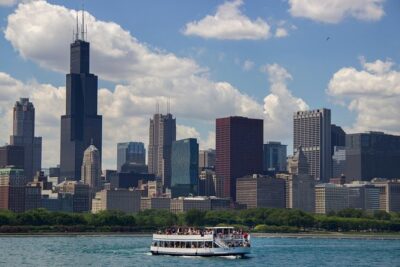
Big Bus Chicago: Hop-On Hop-Off Sightseeing Tour, 24/48/72hr Pass
Read our review →
Chicago Favorites Ultimate Food and Walking Tour
Read our review →