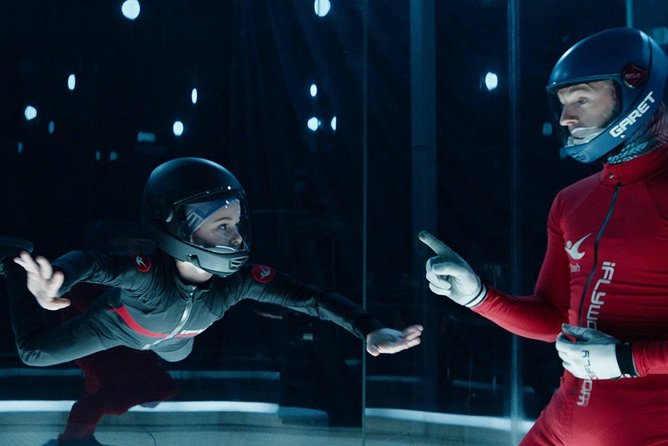
Reviewed · CHICAGO
Chicago-Rosemont Indoor Skydiving with Two Flights
Indoor skydiving without the plane sounds impossible. Yet at iFLY Chicago-Rosemont, you train first and then fly in a vertical wind tunnel that keeps you floating on a wall-to-wall cushion of air. I especially like how the setup makes skydiving feel accessible, with one-on-one coaching even if you have zero experience.
My second favorite part is the format: you get two 60-second solo sessions with the instructor right there, so you learn, reset, and then apply it immediately. One thing to consider is that there are health and weight limits (and some flyers get turned away at check-in), so read the restrictions closely before you show up.
In This Review
- Key details I think you should care about
- Why iFLY Chicago-Rosemont Feels Like Real Skydiving
- The iFLY Rosemont Plan, From Gear-Up to Your Two Flights
- Inside the Tunnel: What Two 60-Second Solo Runs Actually Feel Like
- Instructor Coaching That Makes Beginners Smile Fast
- Safety Rules You Should Treat as Non-Negotiable
- What to Wear, and What to Leave in Your Bag
- Timing, Group Size, and How to Build a Fun Day Around It
- Price and Value: Is $131.25 Worth It?
- Potential Snags: Scheduling Changes and a Hard Stop at Check-In
- Who Should Book This Indoor Skydiving Session in Chicago?
- Should You Book iFLY Chicago-Rosemont Indoor Skydiving?
Key details I think you should care about
- Two one-on-one flights, each 60 seconds: you fly solo in the chamber twice, not just once.
- Wall-to-wall airflow: the tunnel design helps you stay stable, so you are not trying to balance like a novice jumper.
- Training before you fly: you get hands-on instruction and pre-flight practice, not a quick lecture.
- Small groups (up to 12): you share the space with others, but you fly in sequence with your own instructor.
- Strict limits for safety: neck and back injuries, pregnancy, and weight cutoffs can affect eligibility.
Chicago is a big city with a short list of essentials — here are a few worth building a day around.
Why iFLY Chicago-Rosemont Feels Like Real Skydiving
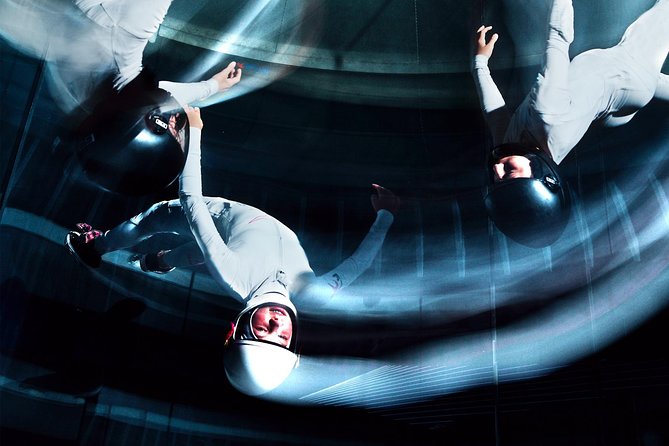
If you have ever wanted the thrill of freefall, indoor skydiving is the closest you will get without climbing into an airplane. At iFLY Rosemont, the fans drive air through an enclosed chamber to create a smooth column you can hover in, so you get that jump-like adrenaline with much less guesswork.
What makes it work for first-timers is the tunnel itself. You are not learning balance on a moving body in open air. You are learning how to steer your body inside a stable airflow column, with your instructor positioned to guide you the whole time.
I also like that the experience is built around repeat practice. Two short solo flights sounds brief, but you get a chance to improve between the first and second run, instead of getting one try and hoping for the best.
The iFLY Rosemont Plan, From Gear-Up to Your Two Flights
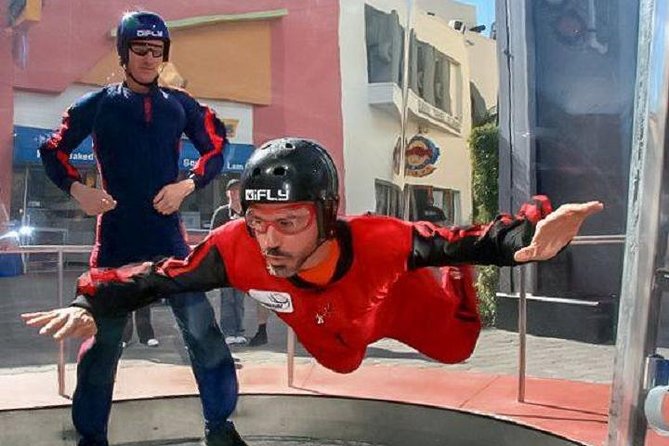
Your session starts at 5520 Park Pl, Rosemont, IL 60018. After you check in, you put on your gear and then take a specialized training session with an expert flight instructor. This is not the kind of activity where you are shoved into the wind immediately. You learn what to do, how to position yourself, and how to breathe normally.
Next comes the chamber time. During each flight, the tunnel operator gradually increases wind speed until you and your instructor are airborne. Then you float in the airflow cushion while you focus on body position and control.
You do this twice. Each session is about 60 seconds in the tunnel, and there is instructor support during both runs. After your second flight, you wrap up with your certificate of flight achievement, and the whole thing runs about 75 minutes from start to finish. Some first-time flyer descriptions also place it around about 1.5 hours total, so I would plan on a comfortable buffer.
Inside the Tunnel: What Two 60-Second Solo Runs Actually Feel Like
The marketing says you can hit serious speeds, and the tunnel does deliver. The wind speeds can reach roughly 130 to 175 mph (that is about 209 to 282 kph). The key is that the airflow is designed to be stable, wall-to-wall, so you stay centered in the column instead of dropping or drifting away.
Each of your solo sessions is one-on-one with your instructor. That matters because the instructor can focus on you only, while the rest of the group takes turns. You are also not fighting the environment. There is no airplane climb, no jump, and no freefall moment where your mind has to decide everything at once.
The experience also has a built-in rhythm that makes it easier to learn. Your first flight gives you the feel of airflow and your body position. Between the two flights, you get a chance to adjust what you try next time. Even though the actual tunnel time is short, it tends to feel longer because your brain is processing the sensations the whole way through.
Instructor Coaching That Makes Beginners Smile Fast
The reviews and the overall structure point to a consistent theme: instructors make or break this kind of experience. In the feedback I saw, instructors such as Adam and Maddie were singled out for being especially good with first-timers and for keeping things fun without sacrificing safety. Marina was also mentioned positively, which tells me the team culture is a real part of what you are paying for.
You also get more than verbal tips. Before your first flight, you go through training, plus some pre-flight practice of your flying position. That helps you avoid the common first-timer problem: freezing when you enter the chamber.
Finally, your instructor is physically there with you. During flight, the flight suit is designed for safety handling, so instructors are trained to grasp the handles if spotting is needed. That is a big deal because it means you do not have to be confident to start, you just have to listen and try.
Safety Rules You Should Treat as Non-Negotiable
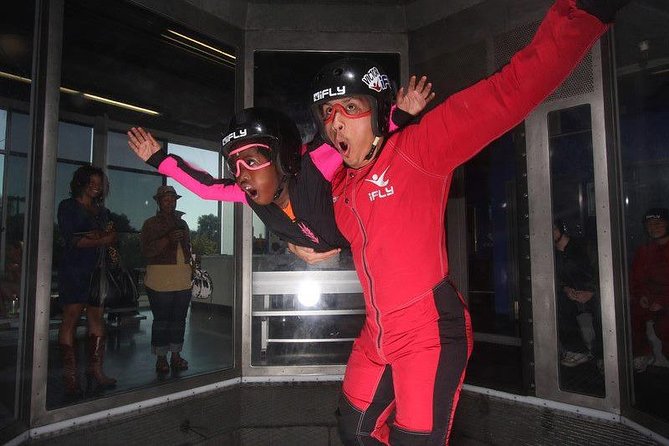
Indoor skydiving is safer than outdoor skydiving in many ways, but it is still flight in a wind tunnel. iFLY lists clear restrictions, and you should take them seriously.
You will not be able to fly if you have previous neck, back, heart injuries, shoulder dislocations, are pregnant, or if you are wearing a hard cast. The minimum age is 3 years, and children under 18 must have a parent or guardian sign their waiver.
Weight is another big one. You must weigh under 300 lbs. If you are between 260 and 300 lbs, local staff does an additional evaluation at check-in, and accommodation may not be possible. If you are above 300 lbs, you cannot fly.
Also, if you have any physical or cognitive challenges and want to experience the activity, the information says you can request help for a safe experience. If that applies to you, I would contact the location in advance so you can plan properly.
Beyond the skyline, the neighborhoods have their own tours and their own stories.
- Chicago: Gangsters and Ghosts Walking Tour★ 5.0 · 7,155 reviews
- Chicago Architecture Center River Cruise aboard First Lady★ 5.0 · 5,536 reviews
- Chicago: Willis Tower Skydeck and The Ledge Ticket★ 4.6 · 4,350 reviews
- Chicago: Architecture River Cruise Skip-the-Ticket Line★ 4.8 · 4,325 reviews
- Chicago Crime and Mob Bus Tour★ 4.5 · 3,186 reviews
What to Wear, and What to Leave in Your Bag
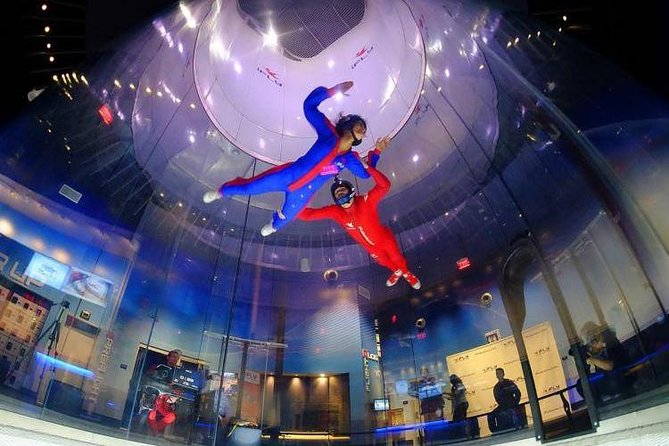
This is one of those activities where clothing choices affect comfort, not just style. iFLY recommends well-fitting, lace-up sneakers or running shoes plus comfortable clothes. You will wear a flight suit over your outfit, so your clothing should not be too restrictive.
They also suggest pants and a shirt without a collar. If you have long hair, plan to braid it and put it in a low bun. Expect to remove items that could flap or become loose: earrings, necklaces, bracelets, watches, rings, and hair accessories.
If you wear glasses, good news. There are larger goggles that can fit over eyeglasses. So you do not have to skip this because of prescription eyewear.
Little practical tip: empty your pockets before you suit up. It keeps things simple and reduces distractions when you are focusing on body position in the chamber.
Timing, Group Size, and How to Build a Fun Day Around It
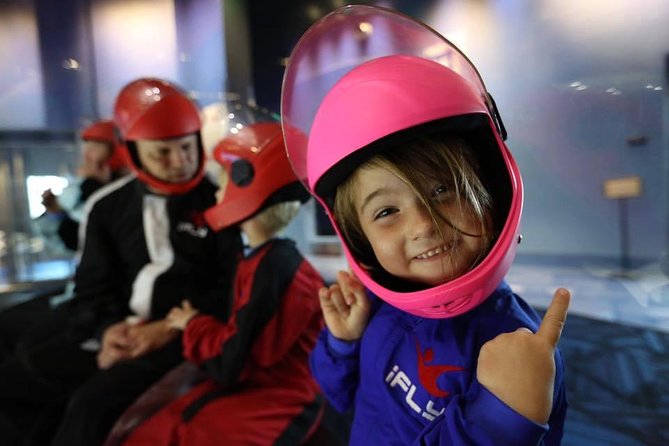
Your session is scheduled at a start time that you choose when booking. Arrival matters. You should plan to show up 10 to 15 minutes early so you have time to check in and get geared up, because your experience begins promptly.
The group size is small, up to 12 travelers per session. But even in a group, you fly one at a time. That keeps the chamber focused and lets your instructor spend time with you without chaos.
If you are coming with friends or family, you can watch from an observation area. That can be a surprisingly good part of the day. People react in real time as you enter the chamber, and you will likely want to capture the moment, even though the flight itself is only 60 seconds.
Food and drinks are not included. So I would eat before you go if you can, or plan an easy snack and drink stop nearby after your flights. This is not a sit-down meal experience, it is a hands-on activity.
Price and Value: Is $131.25 Worth It?
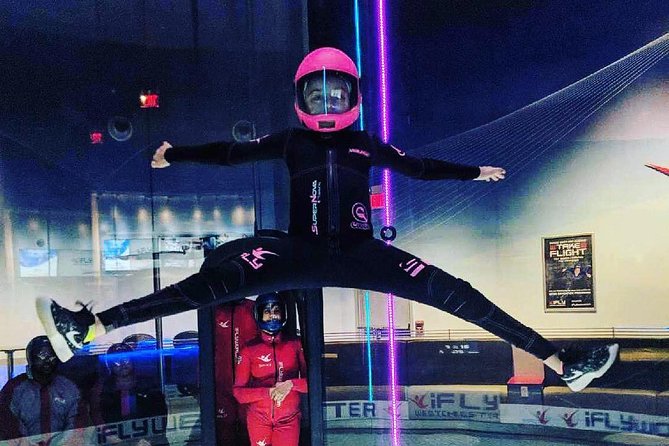
At $131.25 per person, this is not a bargain activity. But it is also not a generic add-on like a quick arcade game, either. You are paying for a real training process and two supervised solo flights inside a high-powered wind tunnel.
Here is the value logic I use. You get:
- Training plus gear use
- One-on-one certified instruction
- Two separate tunnel flights, each 60 seconds
- A certificate of flight achievement
- All taxes, fees, and handling charges included
You are also not paying for a plane ride, a jump ticket, or skydiving staff hours in the same way as outdoor jumping would require. The enclosed tunnel and instructor setup are what you are buying.
So for me, the question becomes: do you want a beginner-friendly rush you can repeat right away? If yes, the price starts to make sense. If you just want a quick thrill and do not care about learning control, you might question the spend.
Potential Snags: Scheduling Changes and a Hard Stop at Check-In
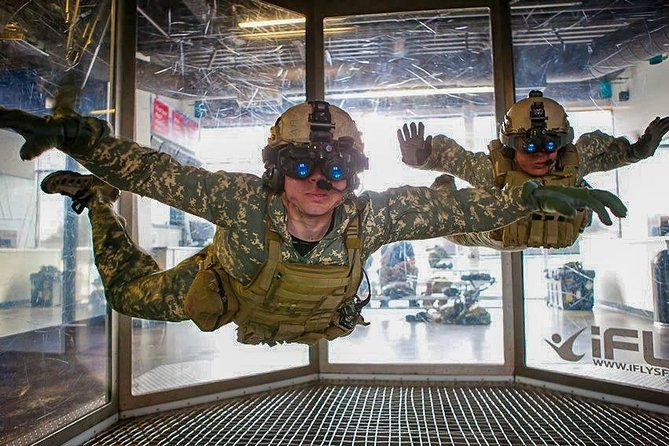
Most of the feedback I saw was glowing about instructors and the sheer fun factor. Still, there is a theme to watch for: punctuality and communication.
One negative experience described a situation where the staff called very close to the appointment time and pushed for an urgent arrival, and the result was that the person did not get to fly. Another issue described rescheduling trouble through a third party when a family member was sick.
The practical takeaway: if anything changes, call the iFLY location directly. Also, show up on time. This is a timed session experience, so being late can cut into your flight slot.
Who Should Book This Indoor Skydiving Session in Chicago?
This is a strong fit if you want:
- A first-time-friendly introduction to skydiving sensations
- Short, supervised flights rather than long training cycles
- A memorable activity for birthdays, couples time, and family outings
It is also ideal if you want to watch and support others. You can come as part of a small group and still get your own moment in the tunnel.
If you have health restrictions, pregnancy, or shoulder and spine issues, this may not be a safe option for you. Likewise, if you are in the 260 to 300 lbs range, plan for the chance that extra evaluation could change availability.
Should You Book iFLY Chicago-Rosemont Indoor Skydiving?
I would book it if you are chasing a safe, beginner-friendly thrill and you like the idea of learning with an instructor during two solo flights. The format is short, focused, and designed to get you up and flying without months of preparation.
I would pause and research first if you are close to the weight limits, have any of the listed medical contraindications, or you know your schedule might shift on the day. This experience rewards arriving prepared and on time.
If you want an authentic Chicago-area adrenaline story that you can do in the city without a plane ticket, iFLY Rosemont is one of the simplest ways to get there.