Reviewed · PRIVATE
Chicago Private Instagram Car Tour (Private & All-Inclusive)
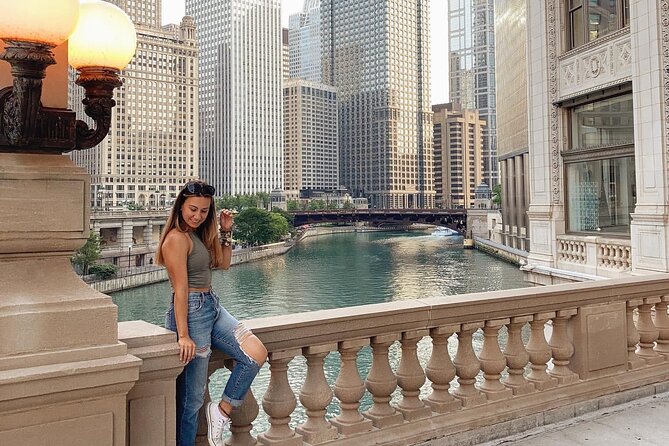
Chicago can overwhelm fast. This private car tour helps you hit the big sights in one smooth day, with photo-friendly stops built in. I like that the schedule is tight but not rushed, so you get real chances to see places like Millennium Park and Cloud Gate without hopping between transit lines.
I also like that it is truly private, meaning your group sets the pace while the guide handles the driving and route. A pickup is offered, and you’ll use a mobile ticket for the experience. One possible drawback to think about: some stops are brief, so if you want slow museum time or lots of inside-the-building wandering, you may wish you had a longer visit.
If you are visiting for the first time and you want Chicago’s highlights in a single day, this is a smart way to get your bearings and start building your own must-return list.
In This Review
- Key highlights at a glance
- Why a private car beats DIY for your first Chicago day
- Packing 6 hours with real Chicago variety
- Grant Park and the Buckingham Fountain photo moment
- The Michigan Avenue Bridge stop that ties the grid to the lake
- Chicago Cultural Center, an 1897 building with major welcome-room energy
- Cloud Gate and the Millennium Park core: your Instagram payoff
- Crown Fountain and the Chicago Theatre for contrast in one drive
- Garfield Park Conservatory and Wrigley Field in the same day
- 360 Chicago and the Art Institute: skyline and culture in the final stretch
- Price and value: what you are paying for
- Who this Chicago private car tour is best for
- Should you book this private Instagram car tour?
- FAQ
- Is this a private tour?
- How long is the Chicago private car tour?
- Do you get hotel pickup and use a mobile ticket?
- What stops are included on the tour?
- Is admission free for the sights listed?
- What is the cancellation policy?
- Does the tour run in any weather?
Key highlights at a glance
- Private and flexible: Your group only, so you are not squeezed into someone else’s schedule.
- Car-first sightseeing: You save time and cover more ground in less stress.
- Loop icons on the list: Cloud Gate, Millennium Park, and classic downtown stops.
- Movie-and-photo friendly spots: Sculptures, fountains, and famous facades made for phone cameras.
- Big neighborhood swing: From Grant Park and the Loop to the West Side and Wrigley area.
- Skyline payoff: A stop at the 360 Chicago Observation Deck for a high up perspective.
A few more ways to spend a day in Chicago
Why a private car beats DIY for your first Chicago day
Chicago is spread out, and the quickest way to see a lot is often also the easiest way to feel frazzled. With a private driving tour, you skip the mental load: no map wrestling every few blocks, no guessing which turn triggers the next parking headache. You just get picked up, ride along, and step out when it’s time for photos and quick looks.
What makes this especially useful is the mix of “I recognize that” stops and “I didn’t know that existed” stops. You get famous anchors like Buckingham Fountain and Cloud Gate, then you also get cultural architecture like the Chicago Cultural Center. That combination helps you understand the city, not just collect screenshots.
The times are also built for real life. Many stops are around 15 to 30 minutes, which means you can enjoy each place without spending your whole day in a line or stuck waiting for the next ticket window. If you like compact itineraries, this one fits.
Packing 6 hours with real Chicago variety
The experience runs about 6 hours, which is long enough to feel like a full day, but short enough to stay energized. You are not locked into hours of walking, because the car handles the transitions between major areas.
This matters because Chicago sightseeing has two modes. One is the “visual hits” mode, where you want to see the skyline, fountains, and famous sculptures. The other is the “deep look” mode, where you want to linger indoors, read placards, and drift. This tour focuses on the visual hits and context, then gives you the option to return later for the deep look you care about most.
You’ll also want your phone or camera ready. The planned stops are the kind where you naturally pause, frame shots, and walk a small loop around the best viewpoints. Bring a charged battery, wear comfortable shoes for short distances, and keep an eye on the weather since the experience requires good conditions.
Finally, because it is private, you can bring family members along without the awkward group pacing that can happen on larger tours. That family-friendly feel shows up in how people describe the experience, including trips that mix adults and younger kids while still covering recognizable movie and photo locations.
Grant Park and the Buckingham Fountain photo moment

The tour starts at Clarence F. Buckingham Fountain, right in the middle of Grant Park. It was dedicated in 1927 and is described as one of the largest fountains in the world. Even if you have seen fountains in other cities, this one hits differently because of its central placement and sheer scale.
Your stop is about 15 minutes. That is enough time to walk the immediate area, get a classic wide shot, and then switch to tighter angles once you see where the water and stone line up best with the park view. If the light is right, you’ll get photos that look like a postcard without needing a special camera setup.
A key practical detail: this stop is outdoors. Chicago’s weather can be moody, so if it is windy or rainy, you may have less time to linger for photos. Still, even with quick timing, it is a strong opener because it instantly signals you are in the heart of the city.
The Michigan Avenue Bridge stop that ties the grid to the lake
Next comes the Michigan Avenue Bridge. Michigan Avenue runs north-south through the Chicago grid, and the description includes a very specific detail: it runs at 100 east on the grid, and the northern end lines up with Lake Shore Drive near the Gold Coast Historic District.
That sounds nerdy, but it is actually useful on a first visit. When you understand Chicago’s grid logic, you stop feeling lost. You start to predict where things will be. This kind of quick “here is how the city is laid out” stop can make the rest of your trip feel easier.
Expect about 15 minutes here. Use that time for a skyline or street-level perspective, plus a quick sense of direction before you move into downtown cultural stops. This is the kind of location where a car tour shines, because you can arrive, get your bearings from one good viewpoint, then move on quickly.
Chicago Cultural Center, an 1897 building with major welcome-room energy
The Chicago Cultural Center opened in 1897 and is operated by the city’s Department of Cultural Affairs and Special Events. It is the city’s official reception venue, and the description even notes that mayors have welcomed presidents and royalty, along with diplomats and community leaders.
Your stop here is around 30 minutes, which is longer than the fountain and bridge. That longer window is a hint that this stop rewards slow looking. Even if you are not planning a full interior read of exhibits, you can enjoy the building’s scale, details, and the fact that it is a real civic space, not just a tourist photo backdrop.
What to watch for: the architecture and interior vibe. This is a place where your senses catch up with the city. Chicago can feel all steel and angles outside, but inside you get a calmer, grander feel.
If you enjoy history-by-feeling, this is one of the best balance points on the tour. You get a strong impression without needing to treat the stop like a museum day.
Beyond the skyline, the neighborhoods have their own tours and their own stories.
- Chicago Architecture River Cruise★ 5.0 · 15,756 reviews
- Chicago River 90-Minute Architecture Tour★ 4.5 · 9,629 reviews
- Chicago River: 1.5-Hour Guided Architecture Cruise★ 4.8 · 8,046 reviews
- Chicago: Gangsters and Ghosts Walking Tour★ 5.0 · 7,155 reviews
- Chicago Architecture Center River Cruise aboard First Lady★ 5.0 · 5,536 reviews
Cloud Gate and the Millennium Park core: your Instagram payoff
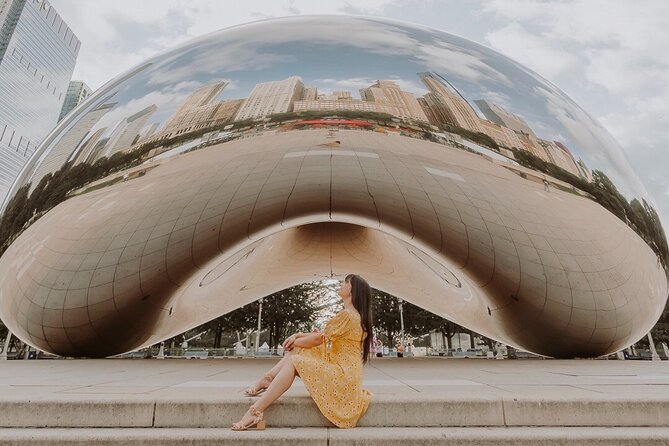
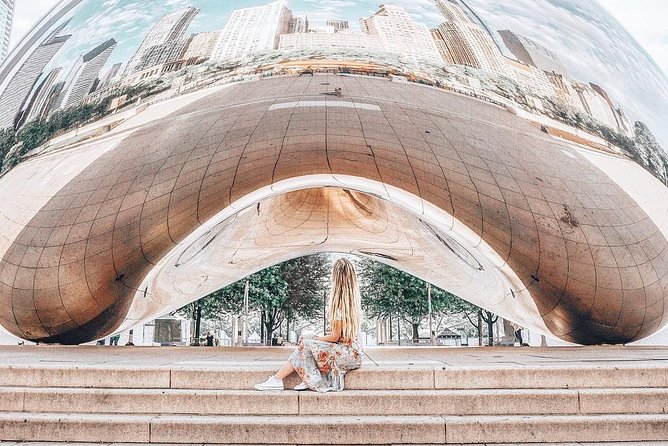
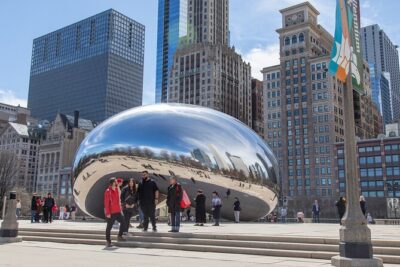
If Chicago had a single “yes, that’s it” sculpture, it would be Cloud Gate. It is the centerpiece of AT&T Plaza in Millennium Park. The work is by Indian-born British artist Sir Anish Kapoor, and it is one of those pieces that looks different the moment you change your position.
Your Cloud Gate stop is about 30 minutes, and then you get additional time at Millennium Park itself for around 30 minutes. That means you are not just doing a hit-and-run photo. You can walk around, see the reflective surface distort the skyline, then step back to get the full plaza view.
Milennium Park is in the Loop, and the schedule gives you enough time to explore the park layout, plus you’ll get the main sculpture experience without rushing through it.
A practical tip: plan your photo route in your head before you start walking. Cloud Gate has obvious spots that people gravitate toward, so you can save yourself time by knowing where you want your first shot, then walking toward the second angle for a more personal composition.
Also, don’t ignore the surrounding plaza. The park is part of the experience, not just the sculpture.
Crown Fountain and the Chicago Theatre for contrast in one drive
After Millennium Park, you’ll also stop at Crown Fountain, another interactive work of public art in the park. It uses video sculpture ideas and was designed by Jaume Plensa and executed by Krueck and Sexton Architects. It opened in July 2004.
Your time here is described as part of the overall Millennium Park block, so you will likely get a good chance to watch how people use the fountain space. Even when you are just standing back, it adds energy to the scene because it is built for interaction.
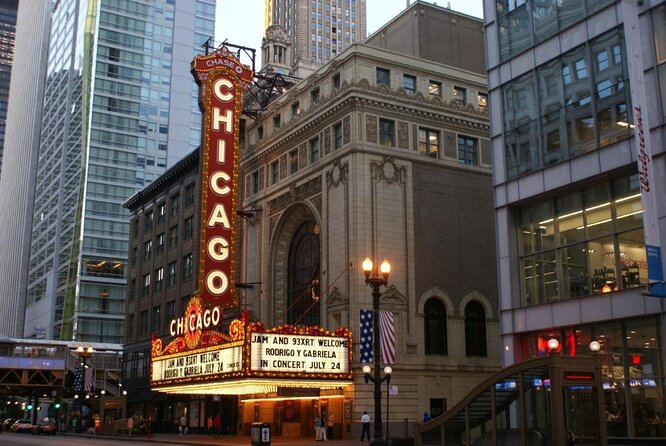
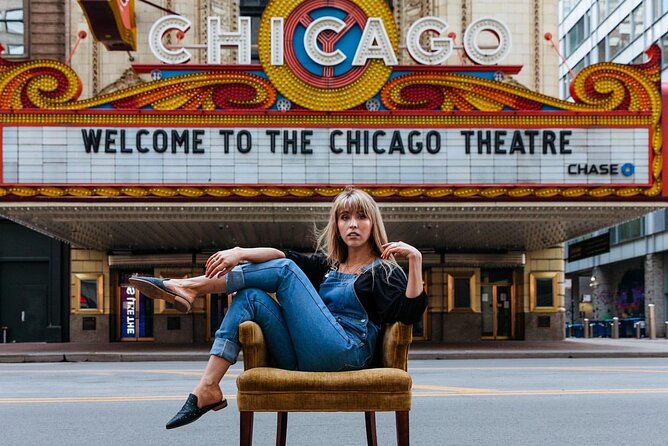
Then the tour shifts to The Chicago Theatre, a landmark theater on North State Street in the Loop. It was built in 1921 and was originally known as the Balaban and Katz Chicago Theatre. A. J. Balaban and other leaders were part of the theater group at the time.
This is a great contrast stop. Millennium Park is modern public art. The Chicago Theatre gives you old-school downtown glamour, and a quick look is often enough to understand why this building feels like a symbol of Chicago showmanship.
Your stop time is about 15 minutes. Treat it like a photo-and-facade moment. Look up, snap a wide shot, then step back to take in the streetscape around it.
Garfield Park Conservatory and Wrigley Field in the same day
One of the more interesting choices here is how far the route swings west and north. You go from central downtown energy to the East Garfield Park neighborhood.
Garfield Park Conservatory is part of an 184-acre urban park and is described as the oldest of the three large original Chicago West Side parks. It was designed as a pleasure ground by William LeBaron Jenney. Your stop is about 15 minutes, so this is more of a quick orientation stop than a long visit.
Still, it is worth it because it shows a different Chicago. If your trip is mostly Loop landmarks, you miss how the city feels in its neighborhoods. Even in a short stop, the park setting can give you a mental reset.
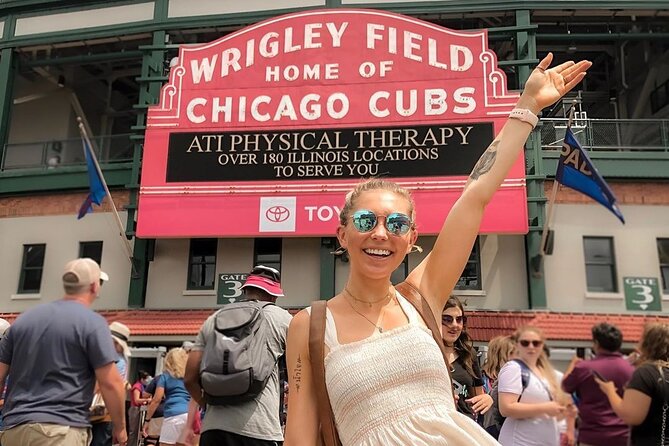
Then comes Wrigley Field, home of the Chicago Cubs. The tour notes it first opened in 1914 as Weeghman Park, and the team history includes the Chicago Whales in the Federal League era. Your stop is about 15 minutes.
This is another “recognize it instantly” stop. If baseball is part of your Chicago storyline, this one lands. Even if you are not catching a game, you can enjoy the energy of the ballpark area and get that classic Chicago North Side feel.
360 Chicago and the Art Institute: skyline and culture in the final stretch
Near the end, you’ll head to the 360 Chicago Observation Deck. It is on the 94th floor of the John Hancock Building, and the description calls out a tilting glass lookout 1,000 feet up.
Your observation deck stop is about 15 minutes. That might sound short, but it is enough time to take in a broad skyline view, find a few neighborhoods from above, and make sense of where you have been all day. Chicago is easier to navigate when you can map the city visually.
If you like the skyline, squeeze in a couple of minutes for a second angle. The best photos often come from turning slowly and letting the view change.
After that, the plan includes The Art Institute of Chicago. The description emphasizes that it is both museum and academic institution, founded by artists in 1879, and it houses about 300,000 works across multiple collections, with famous bronze lions outside the museum.
However, the provided timing for the Art Institute stop is not specified. So think of this portion as a cultural capstone and plan to use your time based on what you want most, a quick exterior orientation, or a brief look inside if time allows.
Even with limited time, the Art Institute name carries weight, and having it in your day helps you understand that Chicago is not only architecture and food, it is also serious art.
Price and value: what you are paying for
At $750 per person, this is not a budget activity. But private tours like this often make sense when you compare your time and stress against doing everything yourself.
Here is the value logic I see:
- You pay for a driver plus route planning. That’s time you can spend enjoying sights instead of navigating.
- It is private and all-inclusive in the sense that the schedule is built to run smoothly. Pickup is offered, and each stop is listed with free admission on the plan for the sights provided.
- It saves transit friction. Moving between the Loop, Grant Park, the West Side, and Wrigley area is exactly where DIY can turn slow.
This is also priced as a premium experience, so it tends to work best when you have a group size that makes private logistics worthwhile. If you are traveling solo and want deep museum time, you might find better value with a different style of tour. If you are traveling with family, or you want maximum sightseeing with minimum effort, the private format becomes more reasonable.
One more thing: the tour requires good weather. If Chicago is acting up during your dates, you may need to reschedule. That matters when you are thinking about value.
Who this Chicago private car tour is best for
This fits best if you want an organized first pass at Chicago’s most recognizable highlights without turning your trip into a checklist marathon.
It is especially good if:
- You are a first-time visitor who wants the biggest hits in one day.
- You want a private setup for your group, including families.
- You like short, photo-driven stops, not long museum marathons.
- You value comfort, since the car handles the longer distances.
It might not fit as well if you are the type who hates brief stops and wants hours in one place. The schedule is designed for coverage, not deep study at each stop.
If you are bringing kids or multiple generations, the pacing can work nicely because you can step out for key sights and then quickly hop back into the car. That balance of structure and flexibility is often what makes a day like this feel enjoyable rather than exhausting.
Should you book this private Instagram car tour?
If your goal is simple and clear, see top sights, get great photos, learn the city’s layout quickly, then I think this is a strong match. The route hits major landmarks, shifts across different neighborhoods, and ends with both skyline views and a major culture stop at the Art Institute.
The biggest reason to book is also the biggest reason it works: private car time plus scheduled photo stops. You spend less energy coordinating and more energy actually looking.
If you want to slow down for museums, plan a longer stay in Chicago or pair this with separate time blocks for the one place you care about most. For many first-timers, this tour becomes the foundation, then you return to the sights that grabbed you.
FAQ
Is this a private tour?
Yes. It is a private tour/activity, and only your group will participate.
How long is the Chicago private car tour?
The duration is approximately 6 hours.
Do you get hotel pickup and use a mobile ticket?
Pickup is offered, and the experience uses a mobile ticket.
What stops are included on the tour?
The plan includes stops at Buckingham Fountain, Michigan Avenue Bridge, Chicago Cultural Center, Cloud Gate, Millennium Park, Crown Fountain, The Chicago Theatre, Garfield Park Conservatory, Wrigley Field, 360 Chicago Observation Deck, and The Art Institute of Chicago.
Is admission free for the sights listed?
The details provided list free admission for the listed stops on the schedule.
What is the cancellation policy?
You can cancel for a full refund up to 24 hours before the experience’s start time.
Does the tour run in any weather?
The experience requires good weather. If it is canceled due to poor weather, you will be offered a different date or a full refund. It also requires a minimum number of travelers.
Just Added




Private, compared.

Private Art Institute of Chicago Skip-the-Line Guided Tour
Read our review →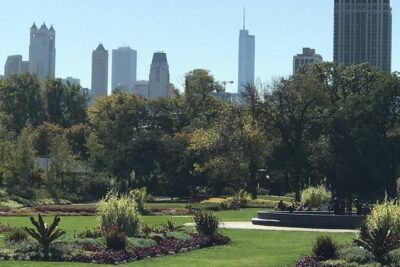
Chicago Private Custom City Tour with Hotel Pick Up
Read our review →
Private Arrival Transfer from Chicago Airports (ORD) (MDW)
Read our review →
Skip the Line Art Institute of Chicago Tour Semi-Private 8ppl Max
Read our review →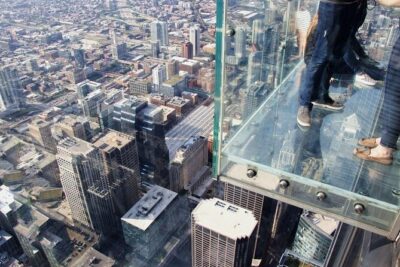
Best of Chicago: Architecture & Highlights City Private Tour
Read our review →
Private Departure Transfer to Chicago Airports (ORD)(MDW)
Read our review →