
Reviewed · EVENING EXPERIENCES
Chicago Crimes Night Tour
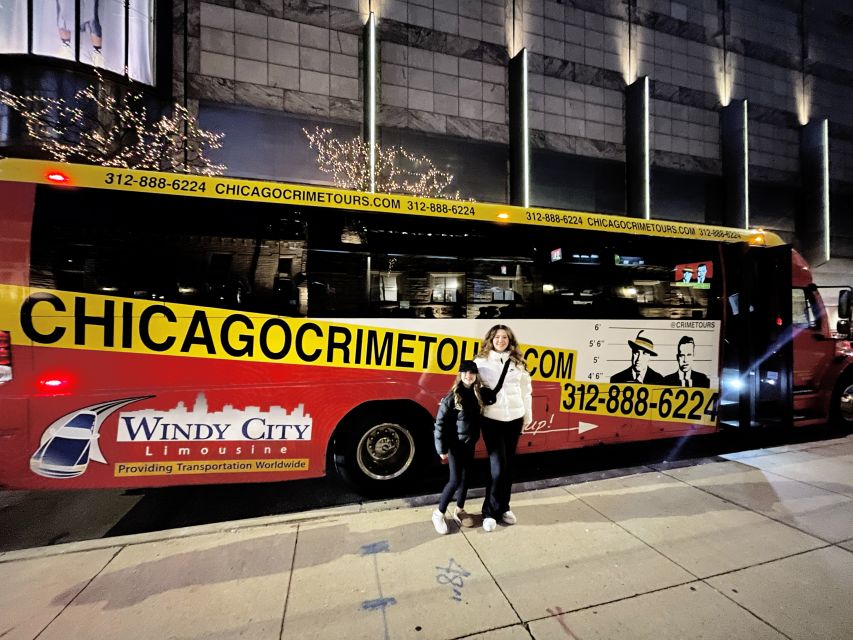
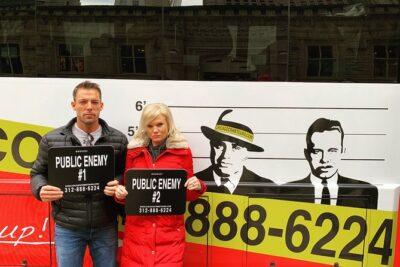
Chicago underworld stories get real after dark. This 2-hour, $55-per-person night tour mixes a climate-controlled luxury bus with major true crime moments, including Dillinger’s final steps. I also love how the guide-led commentary turns city streets into a timeline you can actually follow, but one catch is the tour is English only with no translation.
What makes it click for me is the pace: you’re rolling through Chicago’s best-known neighborhoods, then you stop for the exact places where big cases unfolded. You also get a hands-on stop at a mini mob museum tied to gangster Frank Nitti, plus a walk component that makes the stories feel physical, not just narrated. If you want a quiet history lecture, this probably won’t be your style, but if you want street-level crime drama told with real logistics, it works.
The guides tend to bring big energy. Names like Leah, John, and Javier show up in the guide lineup you might encounter, and the best ones keep it lively without skipping facts. Just remember, video recording is not allowed on the tour, so plan on photos only.
In This Review
- Key points to know before you go
- Why this Chicago Crimes Night Tour works at night
- Price, what’s included, and how to judge value for $55
- Getting started at Water Works, and what to bring for a smooth ride
- The Magnificent Mile to Lincoln Park: city views that set the mood
- Biograph Theatre photo stop, and why theaters show up in crime stories
- Drive-by the criminal courthouse: architecture as evidence
- Harry Caray’s Italian Steakhouse and Holy Name Cathedral
- The St. Valentine’s Day Massacre site: the tour’s emotional centerpiece
- Dillinger and Hymie Weiss: walking the final steps
- Beyond the big names: other scenes and what the guide connects
- River North, Streeterville, Gold Coast, Old Town, and the Loop
- Frank Nitti’s safe and address book: the mini mob museum moment
- Crime quiz, pamphlet, Prohibition-era personality profile, and historic video
- Tunnels, and why the “how” matters in true crime
- Comfort, pacing, and the camera reality
- Who should book this tour, and who might prefer something else
- Should you book the Chicago Crimes Night Tour?
Key points to know before you go
- Live interactive guide with commentary across the Al Capone era, the Untouchables, John Dillinger, and more
- St. Valentine’s Day Massacre site plus a walk for Dillinger and Hymie Weiss’s final path
- Architectural and Prohibition-era stops across well-known neighborhoods and lakefront views
- Mini mob museum featuring Frank Nitti’s safe and address book
- Crime quiz and historic video footage that turn the ride into an activity
- Photo stops at key locations like the Biograph Theatre and Harry Caray’s Italian Steakhouse
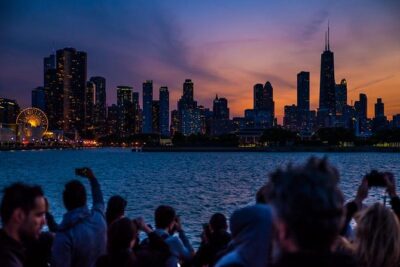
What Chicago looks like after dark
Why this Chicago Crimes Night Tour works at night
Chicago at night is already atmospheric, and this tour uses that mood on purpose. You’re not just looking at buildings from the sidewalk. You’re watching the city move past you from a fully enclosed, temperature-controlled bus, then snapping photos and stepping out briefly for key scenes.
The big win is that it’s a true crime walking-and-driving mix. You do get off the bus, but you’re not hiking for miles or stuck in long lines. The result is a compact way to cover a lot of ground in a short time, from 19th-century references to more modern cases.
I also like that it connects crime to the city itself. The guide points out how the streets, courts, theaters, and commercial buildings shaped what happened next. That’s what makes it more useful than a random list of famous names.
Price, what’s included, and how to judge value for $55
At $55 per person for about two hours, this is priced like an activity, not a casual neighborhood stroll. You’re paying for the guide, the luxury bus, and the structured stops: photo moments, a short walk, historic video, a pamphlet, and an on-tour quiz.
Here’s the value equation as I see it:
- You’re not only seeing locations, you’re also hearing how cases link together across time.
- You get a mini museum stop tied to a specific mob figure, not just generic “crime vibes.”
- The quiz and interactive segments help keep attention, which matters when you’re moving through a lot of material fast.
One small budgeting note: gratuity is recommended at $5 per person, payable by cash or Venmo. It’s not required in your ticket price, so plan for it.
Getting started at Water Works, and what to bring for a smooth ride
Your meeting point is outside 163 E. Pearson Street, at the southeast corner of Pearson and Michigan Ave. The bus departs on time, and you won’t be able to join after it leaves, so I’d rather you arrive early than try to sprint in at the last second.
Seating is first-come, first-served, and joint seating is not guaranteed. If you’re traveling with someone, arrive together and get your spot early, especially if you want to keep each other close.
Bring a camera for photo stops and drive-bys. One caution: video recording is not allowed, and the tour also bans audio and video recording without written consent. Plan for what you want to capture, and keep your phone settings in mind.
Food and drinks are not allowed in the vehicle, so eat before you go.
The Magnificent Mile to Lincoln Park: city views that set the mood
After you start at the Chicago Public Library area near Water Works, you head through some of Chicago’s most recognizable visual zones. You’ll pass the Magnificent Mile, then catch city landmarks like the John Hancock Center, along with neighborhoods such as Lincoln Park.
This section matters because it gives you context. When you later hear names like Capone or Dillinger, you’re not picturing “Chicago” in an empty way. You’re placing the stories against real skyline shapes, big commercial streets, and lakefront-adjacent views.
There are also photo-friendly moments built into the route. If you like architectural angles, you’ll appreciate that the guide uses the scenery as an anchor for stories, not as background noise.
A practical thought: some stops off the bus include stairs, and the bus itself has five steps. If you need step-free access, you should double-check what you can handle ahead of time, because the bus is not wheelchair accessible and there’s no electronic lift.
Biograph Theatre photo stop, and why theaters show up in crime stories
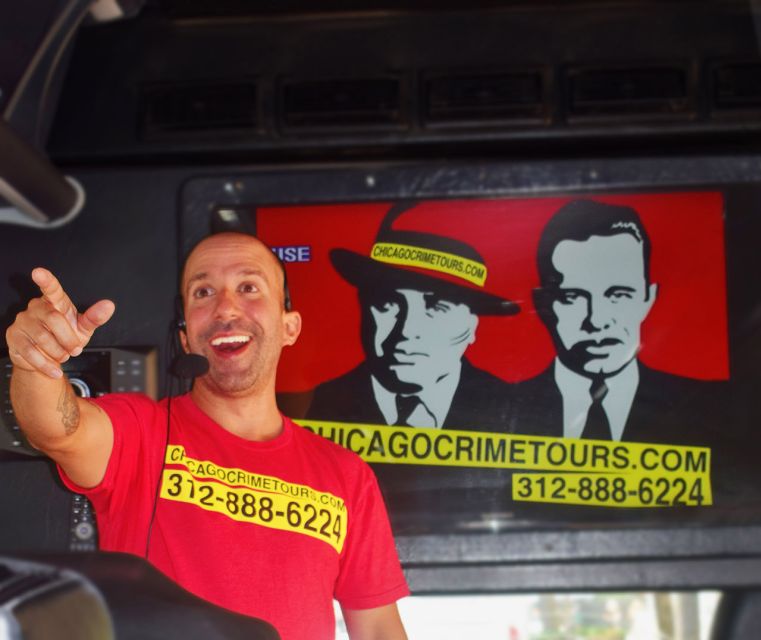
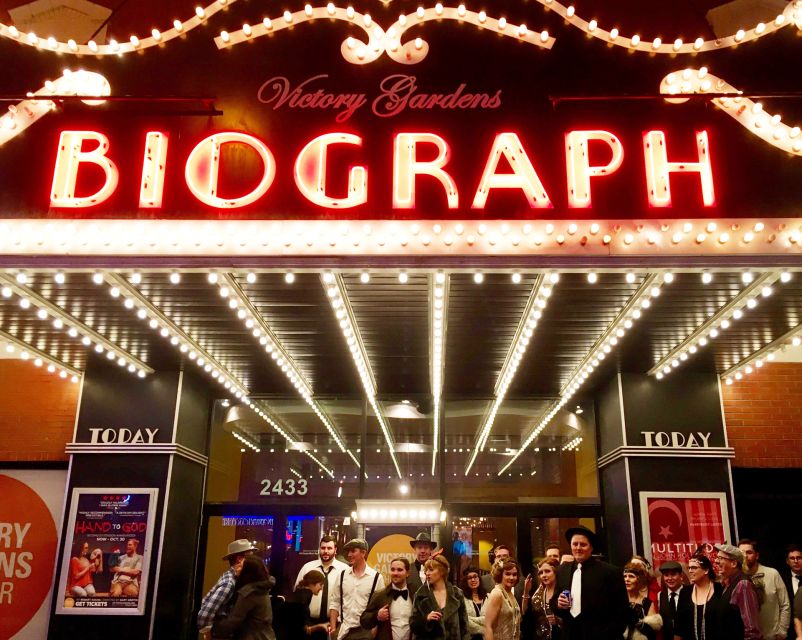
One of the first true “this is it” moments is the Biograph Theatre photo stop. The guide uses the location to connect entertainment spaces with organized crime activity, and it’s one of those stops where the building makes the story feel grounded.
The Biograph stop is also a good reminder that this tour isn’t only about famous criminals walking on screen. It’s about the environment around them: where people gathered, where news traveled, and how public spaces became part of the criminal ecosystem.
If you’re the type who likes to read streets like a puzzle, this stop is a highlight. It gives you a fixed point you can remember after the bus moves on.
Beyond the skyline, the neighborhoods have their own tours and their own stories.
- Chicago Architecture River Cruise★ 5.0 · 15,756 reviews
- Chicago River 90-Minute Architecture Tour★ 4.5 · 9,629 reviews
- Chicago River: 1.5-Hour Guided Architecture Cruise★ 4.8 · 8,046 reviews
- Chicago: Gangsters and Ghosts Walking Tour★ 5.0 · 7,155 reviews
- Chicago Architecture Center River Cruise aboard First Lady★ 5.0 · 5,536 reviews
Drive-by the criminal courthouse: architecture as evidence
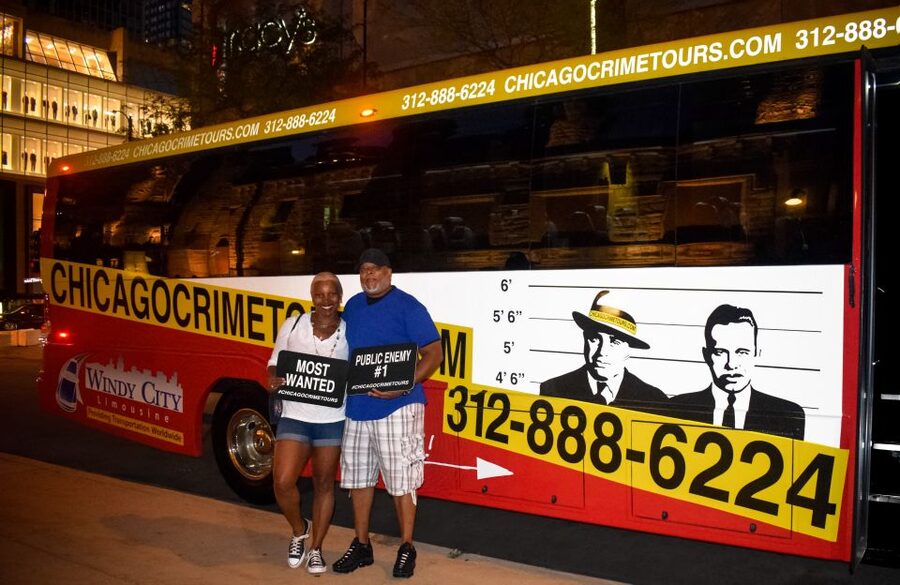
You also get a drive-by look at a historic criminal courthouse, described as a Chicago architectural landmark where notable cases were tried. From the bus, you’re not just collecting a photo. You’re seeing the kind of building that shaped outcomes, verdicts, and public fear.
This is where the tour’s structure earns its keep. The guide uses the courthouse as a bridge, moving from street-level gang activity to the legal pressure that followed. It’s one of the clearest ways to understand how crime became headline news and then became a political issue.
Drive-bys are quick, so don’t count on a long window to frame the perfect shot. If you’re serious about photos, be ready when the bus slows.
Harry Caray’s Italian Steakhouse and Holy Name Cathedral
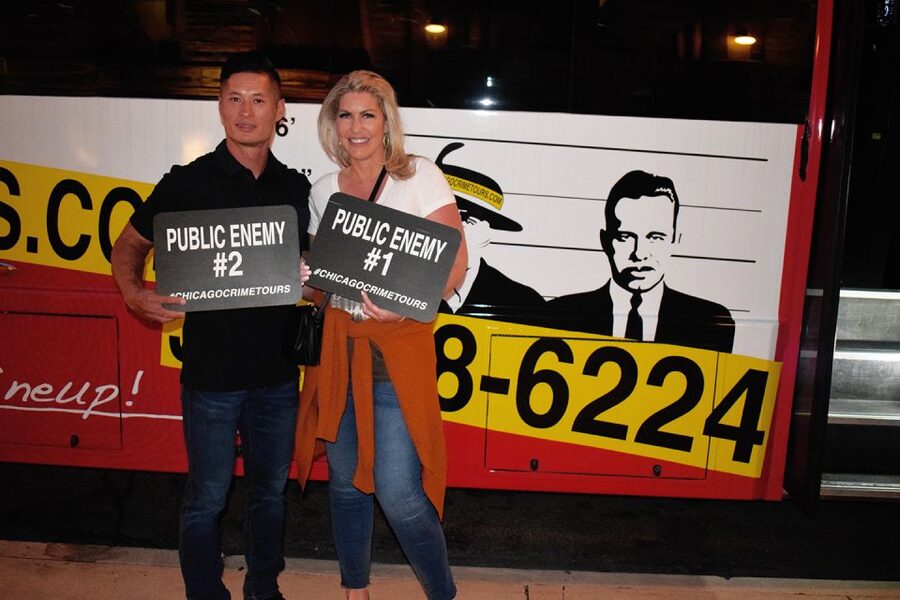
Two more camera-friendly stops sit right in the middle of the route. You get a photo stop at Harry Caray’s Italian Steakhouse, and you pass by Holy Name Cathedral.
Why these places matter in a crime-themed tour is the contrast. A landmark restaurant and a major cathedral are not “crime landmarks” in the way people expect. The guide frames them as part of the same Chicago map where gang life, public life, and high-profile events overlapped.
This part of the tour is also a nice visual break. Instead of staying locked in one grim theme, you see how the city’s daily identity stays busy while sensational crimes play out.
The St. Valentine’s Day Massacre site: the tour’s emotional centerpiece
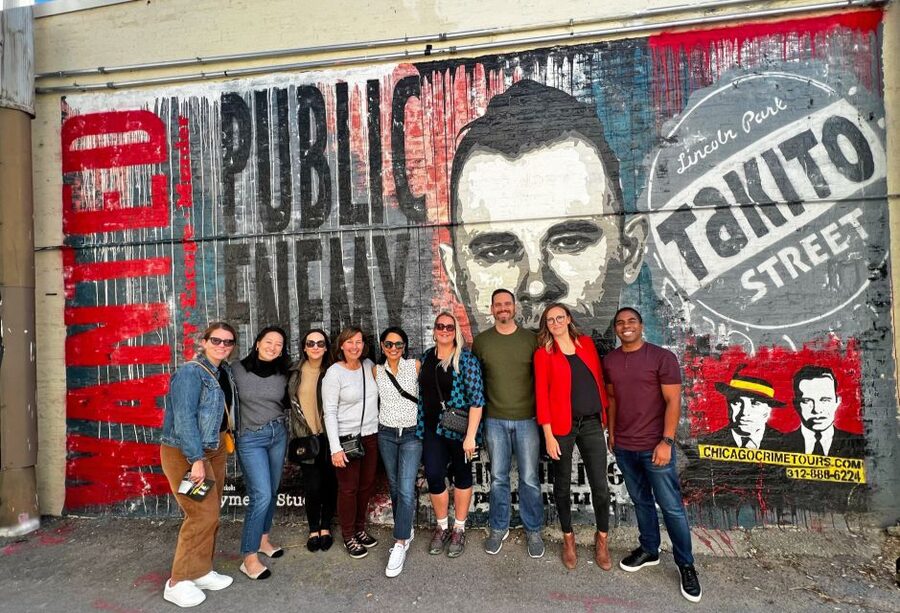
The tour makes a specific point to show you the site tied to the St. Valentine’s Day Massacre, one of Chicago’s most notorious crime scenes. This is the moment where the drive-by storytelling turns into something you can physically stand near.
It helps that you’re not rushing through it with only a blurry explanation. The guide sets up the context so when you see the location, you understand why it became an international headline and not just a local incident.
If you care about understanding motivations and consequences, this stop is worth paying attention to. It’s not only about what happened, it’s about how fear and notoriety spread.
Dillinger and Hymie Weiss: walking the final steps
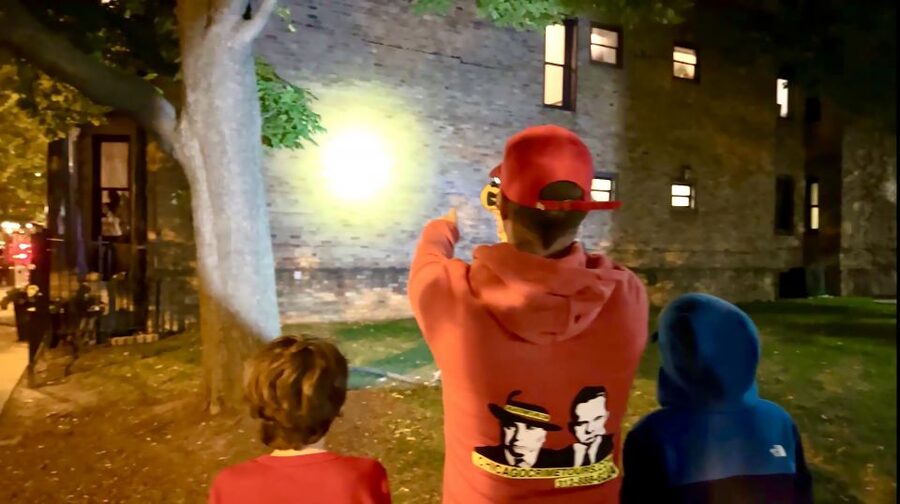
One of the most memorable parts of the tour is that you don’t just point and move on. You get off the bus and walk the path tied to John Dillinger and Hymie Weiss right before their deaths.
That walk is where the tour stops feeling like a narration slideshow. You’re stepping through a real sequence, so the timeline clicks in your head. Even if you’re not a hardcore true crime fan, there’s something satisfying about translating a headline name into a route you can picture.
This is also where I’d suggest slowing down your camera habits. Take a few photos, then look up and listen. The guide’s commentary is clearly meant to match what you’re seeing on foot.
Beyond the big names: other scenes and what the guide connects
The tour experience covers more than the headline stories. From the bus, you’ll “stake out” several key crime-related locations such as the Jeweler’s Building, Carbide and Carbon, and the Chicago River area, along with other major landmarks along the route.
The value here is the connective tissue. Names like H. H. Holmes and Leopold and Loeb come up as part of the broader story of how Chicago’s criminal reputation formed across different eras. The guide also references bank heists, plus figures tied to the Prohibition period, including Al Capone and people connected to the Untouchables era.
You’ll also hear about Terrible Tommy O’Connor and Cap George Streeter. Those aren’t just random mentions. The guide uses them to show how Chicago’s crime culture evolved with business, politics, and opportunity.
If you love structure, you’ll appreciate the tour’s timeline feeling. If you get overwhelmed by too many names, just grab the pamphlet photos and let the big moments stand out first.
River North, Streeterville, Gold Coast, Old Town, and the Loop
The ride threads through major neighborhoods, including River North, Streeterville, Gold Coast, Lincoln Park, Old Town, the Loop, and the Magnificent Mile. You also get lakefront and riverfront views during the drive.
This matters because it gives you a practical sense of where these stories lived geographically. When you later explore Chicago on your own, you can connect the skyline and street grid to the crimes you saw explained on the bus.
I also like that it’s not limited to one “tourist bubble” area. The tour’s route helps you orient yourself in the city faster than a first-night walk might.
Frank Nitti’s safe and address book: the mini mob museum moment
A standout included stop is a mini mob museum connected to gangster Frank Nitti. You see his safe and address book as part of the experience.
Even without turning this into a museum review, this is a smart ingredient. It gives the facts a physical anchor. Instead of only hearing about organizations and aliases, you get an object-based moment that turns the story from abstract to tangible.
It’s also a good reason to book even if you’ve already heard the big names. The Nitti artifacts bring a different angle to the “Chicago mob” topic, and it fits well in a short, two-hour schedule.
Crime quiz, pamphlet, Prohibition-era personality profile, and historic video
You don’t just sit and listen. The tour includes historic video footage, plus an exclusive crime quiz. There’s also a Prohibition-era personality profile.
For me, quizzes on tours are only fun when they reinforce what you heard. Here, the quiz works as a check-in. It helps you remember key details and forces you to stay present while the guide covers a lot of ground.
You also receive an informative pamphlet with photos and special offers. Use it like a map of what you liked most. If something specific caught your attention, you can use the pamphlet as your starting point for follow-up reading later.
One more note: you’re not told to watch screens the whole time. The mix of video, talking, and periodic stops keeps it from feeling like a lecture trapped on wheels.
Tunnels, and why the “how” matters in true crime
The experience also includes a segment described as a look at secret gangster-era tunnels. Even if you don’t leave with a detailed blueprint, this kind of detail helps explain how criminals planned and moved.
True crime gets more interesting when you understand the logistics, not only the names. How someone escaped, where messages traveled, and what routes were available can make the story feel less like theater and more like real planning under pressure.
If you like practical details, this tunnel component gives you that extra layer.
Comfort, pacing, and the camera reality
The bus ride is enclosed and climate-controlled, which I appreciate because Chicago weather can swing fast. The guide keeps the timing tight for the short photo stops and quick walk segment.
Still, this is a night tour, and not every moment is built for long lingering. You’ll want to treat it like a curated circuit, not a slow museum visit.
Photo stops are real but brief, and some off-bus stops include stairs. If you’re traveling with a stroller or folding wheelchair, the tour notes limited storage, but the bus is not wheelchair accessible.
Also keep your expectations aligned with the tech rules. Video recording is banned, and audio guide equipment is not part of the tour.
Who should book this tour, and who might prefer something else
This is a great fit if you:
- like true crime stories tied to real locations
- want a short, high-output night plan that still feels structured
- enjoy architecture, skyline views, and neighborhood orientation
- want something engaging for older kids and teens, especially if they like mystery themes
It might not be the best choice if you:
- need step-free access throughout
- require translated commentary
- want a long, silent sightseeing walk where you control every minute
Should you book the Chicago Crimes Night Tour?
I think this is a strong book if your Chicago trip has limited time and you want more than a standard city loop. For $55 for about two hours, you’re getting a luxury bus ride, multiple crime-scene moments, a walk tied to Dillinger and Hymie Weiss, and a mini mob museum stop with Frank Nitti’s safe and address book. Add the quiz, pamphlet, and historic video footage, and it’s built to keep you engaged from start to finish.
If you’re sensitive to stairs, or you can’t do English-only narration, plan a different option. But if those are not issues, this tour is one of the more practical ways to understand why Chicago became a true crime reference point, with enough real stops that you’ll remember it later when you’re walking the neighborhoods on your own.
Just Added



Evening Experiences, compared.
Big Bus Chicago: Sunset Tour by Open-Top Bus with Live Guide
Read our review →
Browse the lists this tour appears in