
Reviewed · ARCHITECTURE TOURS
Chicago: Architecture Center Exhibit Admission
Chicago builds tall stories in miniature. At the Chicago Architecture Center, I love how the big, cinematic scale models make architecture feel hands-on, and the 40-foot wall of glass frames real skyline icons while you learn. One possible drawback: it is mostly self-guided, so if you want someone to walk you through every exhibit moment-by-moment, you may find the visit quicker than you hoped.
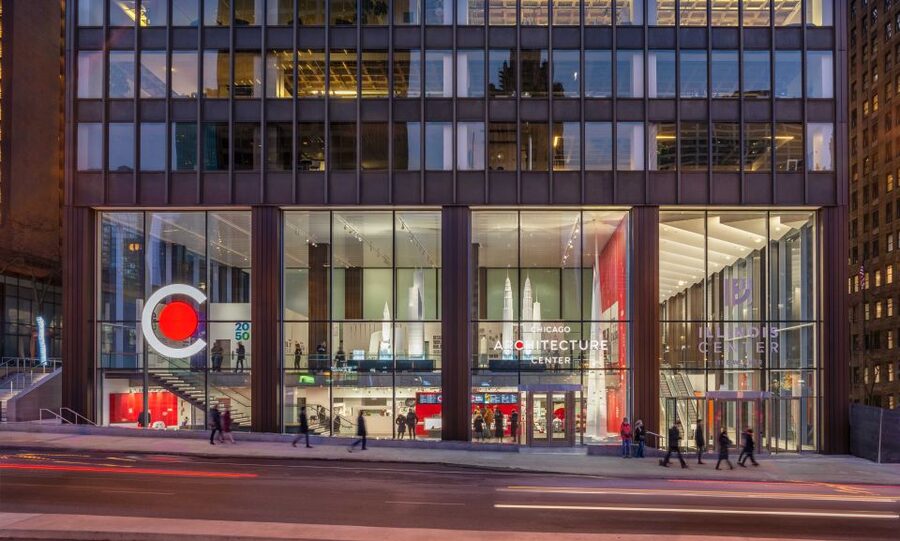
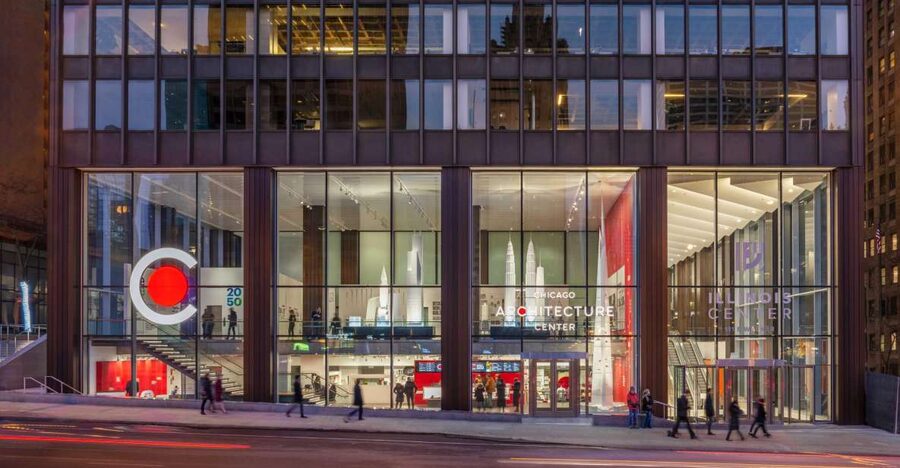
The CAC sits at 111 E Upper Wacker Drive, steps from Michigan Avenue and above the dock area for the Chicago First Lady river cruise. The setting is a mash-up of architectural credibility: the center’s dramatic space was designed by Adrian Smith + Gordon Gill Architecture, inside a building by the Office of Mies van der Rohe. It is the kind of place where you start learning before you even reach the exhibits.
In This Review
- Key things I’d prioritize when you visit
- Entering the Chicago Architecture Center: a skyline lesson you can walk through
- First impressions: 40-foot glass, Mies roots, and what you see before you read
- Building Tall gallery: how architects keep breaking the rules of height
- Supersized world models: from Chicago’s first skyscraper to Jeddah Tower
- The Chicago City Model Experience: 4,000-plus buildings in cinematic form
- Touch screens and self-guided walking routes: practical learning you can use outside
- Museum size and pacing: why your time might feel short
- Price and value: is $15 worth it?
- Who should book this admission, and who might want a different plan
- Should you book the Chicago Architecture Center exhibit admission?
- FAQ
- How long is the Chicago Architecture Center exhibit admission?
- What is included with this ticket?
- Is there a guided tour included?
- Where is the meeting point?
- Is the Chicago Architecture Center wheelchair accessible?
- Are pets allowed?
- Is food or drink allowed inside the center?
- Are flash photography and large bags allowed?
Key things I’d prioritize when you visit
- 4,200+ buildings in one room through the Chicago City Model Experience, with film and light show storytelling
- Supersized scale models that connect Chicago’s first skyscrapers to global giants like Jeddah Tower
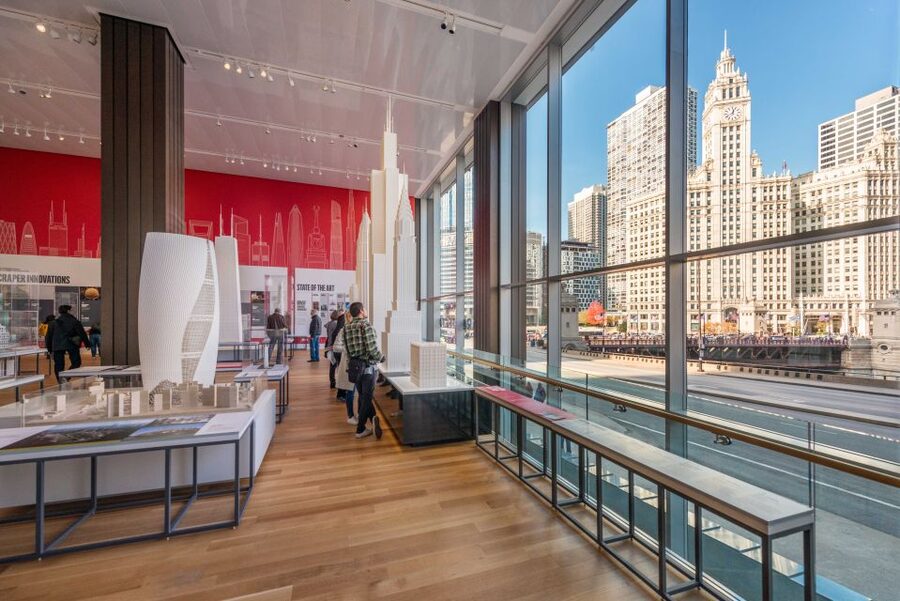
- 40-foot wall of glass views of Tribune Tower, the Wrigley Building, and the new flagship Apple Store
- Touch screens for building and architect search, plus walking tour routes you can follow on your own
- 3D printing in the process, showing how accurately scaled model buildings are made
- A nonstop architecture education mission, with ticket sales supporting programs like Girls Build! and Teen Fellows
Chicago's skyline, explained block by block
Entering the Chicago Architecture Center: a skyline lesson you can walk through
The Chicago Architecture Center is one of those rare museum experiences that feels built for first-time visitors and design nerds at the same time. You are not starting with abstract theory. You start with size, scale, and skyline views, then you move into galleries where the city’s architectural evolution becomes visual and interactive.
Admission gets you into the exhibits, so you can go at your pace. The catch is that the experience is designed to be explored, not scheduled around a specific guided storyline. That is a great fit if you like to read, look closely, and spend extra time where your curiosity lands. It is less ideal if you prefer everything to be paced for you with a guided walkthrough.
The overall setup also makes it easy to combine with other Chicago plans. You are close to Michigan Avenue, and the center is above the dock for the river cruise. So, even though this is an indoor, one-day admission experience, it plays well with a half-day walking plan or a cruise that covers the riverfront from the outside.
First impressions: 40-foot glass, Mies roots, and what you see before you read
Right when you arrive, you get a massive visual appetizer. There is a 40-foot tall wall of glass that looks out onto major Chicago landmarks. It gives you a real-world frame while you are learning names, eras, and styles. You can keep checking the skyline outside, then turn back to the exhibits and instantly connect what you see in person with what you’re learning inside.
The building itself matters. The center’s dramatic space was designed by Adrian Smith + Gordon Gill Architecture, inside a structure associated with the Office of Mies van der Rohe. Even if you do not have architecture vocabulary at the start, you can feel that this place was built to make architecture feel like an everyday subject, not a stuffy lecture topic.
Practical note: do not plan to linger with bulky items. The CAC does not provide storage for luggage, strollers, or coats. And pets are not allowed (service animals are welcome). If you show up with a lot of gear, you will spend time managing it instead of enjoying the galleries.
Building Tall gallery: how architects keep breaking the rules of height
One of the standout exhibit areas is the Drake Family Skyscraper Gallery. The inaugural display, Building Tall, is built around a simple idea: designing tall and super tall buildings is not just engineering. It is also creativity, risk-taking, and problem solving.
You can expect a focus on how architects and designers push boundaries as buildings reach higher into the sky. That framing is useful because it stops the story from becoming only technical. Even if you are not studying structural systems, the exhibit helps you understand what makes a skyline change. You learn that height comes with tradeoffs, and those tradeoffs shape design choices.
This gallery is a smart place to start because it sets expectations. When you then move into the larger room of skyline models, you will already know what to look for, like design shifts over time and how different eras handled weight, materials, and ambition.
If you are a first-time visitor, this section can also work as your orientation. It gives you the vocabulary to compare what you see next: older Chicago milestones versus later global super-tall landmarks.
Supersized world models: from Chicago’s first skyscraper to Jeddah Tower
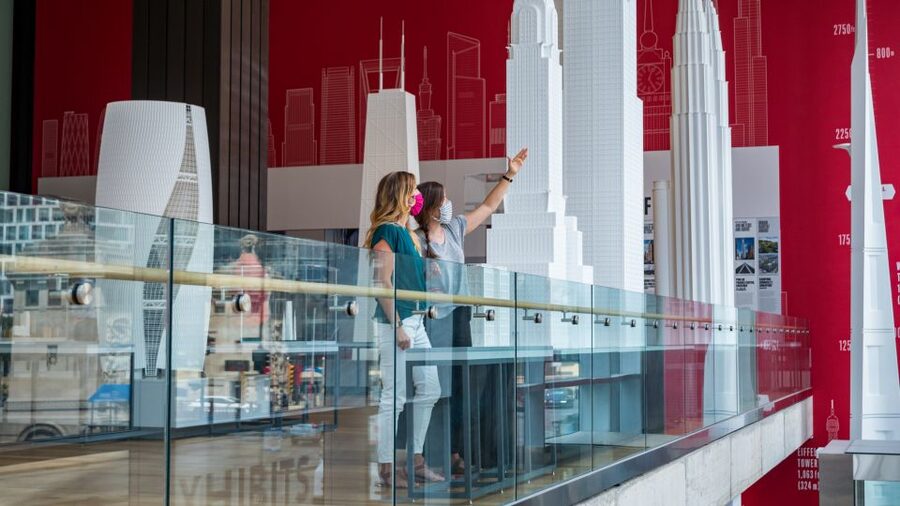
The next phase of the experience leans into scale. You get supersized scale models of famous skyscrapers, and the storytelling follows a clear thread: a race to the top that spans decades and continents.
Key reference points include:
- The Home Insurance Building in Chicago, described as the world’s first skyscraper
- The Willis (also known as Sears) Tower, which was the world’s tallest building for nearly 25 years
- Jeddah Tower, which is slated to become the tallest building in the world, and is also designed in Chicago
What I like about this part is that it does not treat architecture as isolated. You see the progression. You can connect Chicago’s innovation legacy to global ambition. And you get a sense that design ideas travel, get adapted, and resurface when new materials, new calculations, and new technologies show up.
These models also help you spot the human side of big projects. Even at enormous scale, the details are there. You can compare shapes and massing and get a feel for how architects express power, identity, and function through form.
If you are prone to information overload, take a slower pace here. The models are meant for close attention, not a quick glance.
The Chicago City Model Experience: 4,000-plus buildings in cinematic form
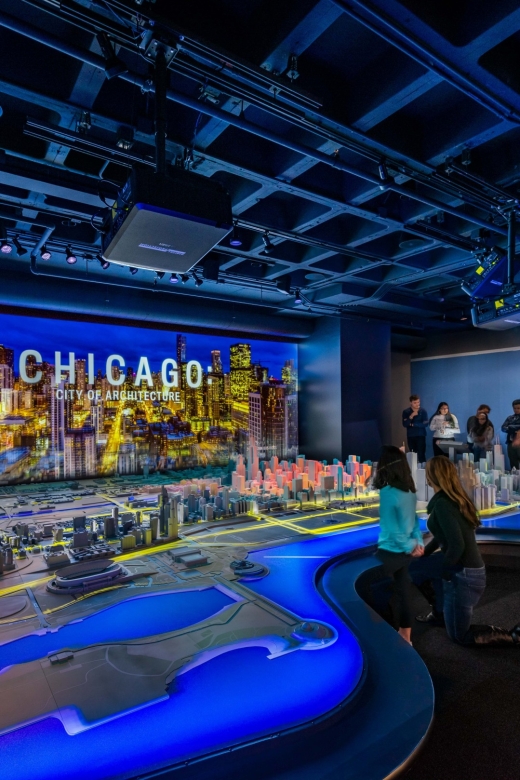
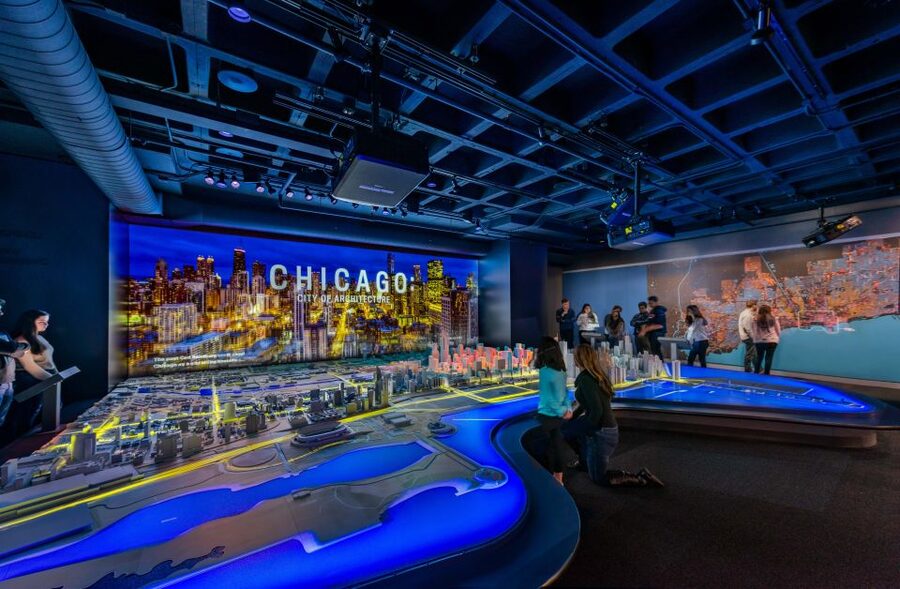
This is the main event. The Chicago City Model Experience puts you in a spectacular room where the city appears as a physical, trackable timeline. The scale is huge, with the model expanded from 1,300 to over 4,000 buildings.
The exhibit is designed to feel cinematic and interactive. A film and light show illuminate the model, telling the story of Chicago’s early growth, the rebirth after the Great Chicago Fire, first-ever skyscrapers, and the modernist masterpieces of steel and glass. That sequence matters because it turns architecture into a cause-and-effect story.
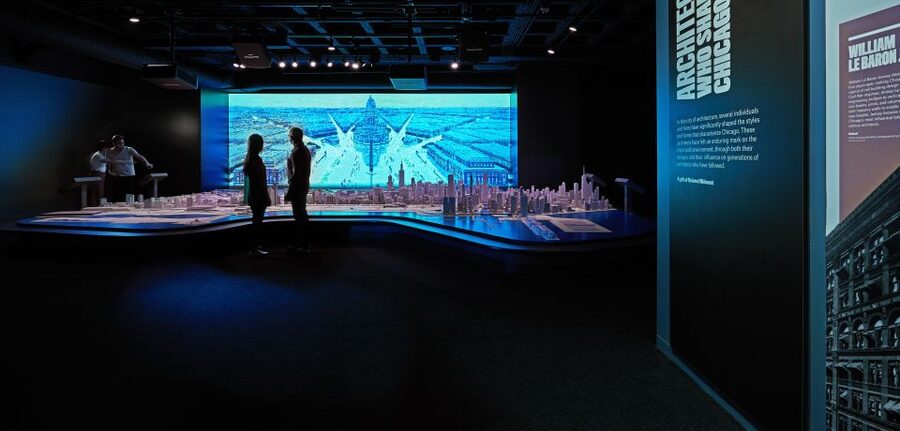
Instead of learning buildings as separate facts, you start thinking like a city planner. You begin to see how neighborhoods expand, how boundaries shift, and how design responds to economic needs and changing lifestyles. If you have ever wondered why Chicago looks the way it does, this room gives you a grounded answer.
You can also use the model to track how the city evolves with new neighborhoods, expanding boundaries, and modern projects that will change the skyline. The exhibit even nods to the role of big data in shaping how cities plan and predict growth patterns.
And one more thing that makes this room feel special: the exhibit references state-of-the-art 3D printing that creates accurately scaled buildings for this model. That turns the model from a static display into a window into how modern fabrication supports architectural storytelling.
Beyond the skyline, the neighborhoods have their own tours and their own stories.
- Chicago: Gangsters and Ghosts Walking Tour★ 5.0 · 7,155 reviews
- Chicago Architecture Center River Cruise aboard First Lady★ 5.0 · 5,536 reviews
- Chicago: Willis Tower Skydeck and The Ledge Ticket★ 4.6 · 4,350 reviews
- Chicago: Architecture River Cruise Skip-the-Ticket Line★ 4.8 · 4,325 reviews
- Chicago Crime and Mob Bus Tour★ 4.5 · 3,186 reviews
Touch screens and self-guided walking routes: practical learning you can use outside
Not every architecture museum gives you tools you can take with you. Here, the touch screens help you stay oriented and make your own plan.
You can use the interactive screens to:
- Orient yourself to Chicago
- Search for buildings by architect or building style
- Find walking tour routes
This is where the experience becomes genuinely useful. You can pick what you want to see next, instead of following someone else’s default route. If you are the type who likes to build a day around your interests, these screens help you do it fast.
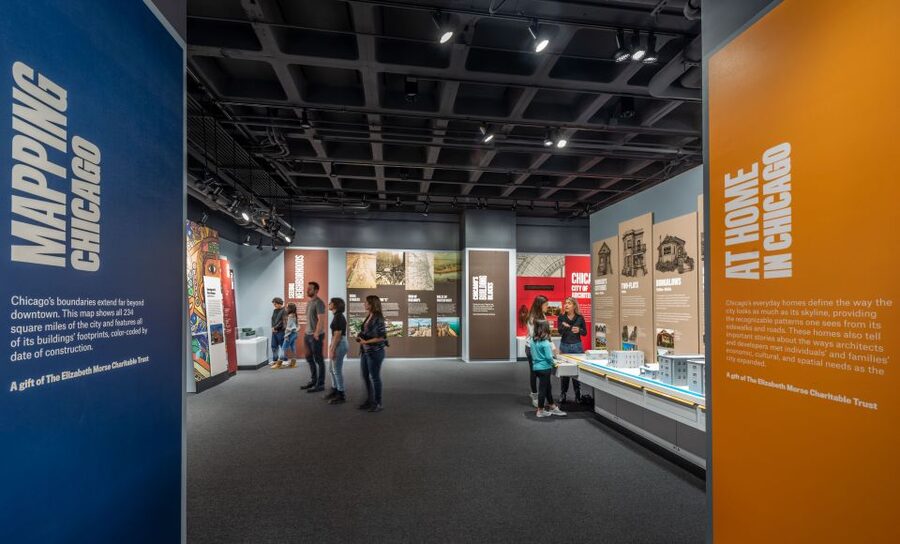
You can also connect the model to real neighborhoods. The exhibit describes how the model tracks the city’s evolution, including booming new areas and modern developments. That helps you look at Chicago street corners with better questions. Instead of just seeing a building, you start asking which era it belongs to and why it looks the way it does.
If you want the experience to feel longer and more personal, build a short walking loop afterward using the routes found on the touch screens. A compact museum plus a focused walk is often the best way to make the learning stick.
Museum size and pacing: why your time might feel short
One thing to know up front is that the CAC exhibits are not trying to fill an entire day with constant programming. The museum is designed as a concentrated architecture lesson, with a lot of high-impact visual content packed into one visit.
So if you arrive expecting a multi-hour guided tour with built-in pacing, you might feel a little rushed through the galleries. Admission includes entry to exhibits, but guided tours are not included, and the center emphasizes self-guided exploration.
That does not mean it is low value. It means the experience is best for visitors who are okay driving the pace. Come ready to read labels, spend time with the supersized models, and then linger in the Chicago City Model room. If you do that, you will naturally slow down.
If you prefer a more structured narrative, plan your own structure. Start with Building Tall, then move into the skyline model comparisons, then save the big Chicago Model room for last or mid-visit when you want a visual payoff.
Price and value: is $15 worth it?
The listed admission price is $15, and the ticket covers admission to all CAC exhibits. In practical terms, that pricing makes sense because the experience includes multiple major components in one package: skyline views, the skyscraper-scale model galleries, and the large Chicago Model room with film and light show.
Value improves when you use the ticket to guide your whole day. If you go right after you arrive, then use the touch screens to map a short walking route, the experience keeps paying you back beyond the gallery walls.
Also, ticket purchases support local education and community engagement. CAC is described as a certified nonprofit, and ticket sales directly support education initiatives including Girls Build!, Teen Fellows, and the Newhouse Architecture + Design Competition. The ticket also helps keep Open House Chicago free for participants over time.
So you are not just paying for entertainment. You are paying for an education mission that is tied to the local community and long-running programs.
Who should book this admission, and who might want a different plan
This experience fits best if you:
- Like architecture but need a clear, visual entry point
- Want something compact that still feels meaningful
- Enjoy interactive displays and self-guided planning tools
- Are curious about Chicago’s skyline, and also want global context
It might feel less ideal if you:
- Prefer fully guided, step-by-step tours, because guided tours are not included with admission
- Are traveling with a lot of luggage, since the CAC cannot store luggage, strollers, or coats
- Need food and drink on site, since food and drink are not allowed inside
Because it is wheelchair accessible, it is also a good option for visitors who want an indoor, navigable experience. Just plan around the no-luggage rule to keep things smooth.
Should you book the Chicago Architecture Center exhibit admission?
If you want a smart, high-impact introduction to Chicago architecture, I’d book it. For $15, you get skyline views through a 40-foot glass wall, multiple major exhibit zones, and the Chicago City Model Experience with 4,000-plus buildings and a film-and-light story.
Book it especially if you enjoy making your own route. Use the touch screens to search by architect or style, then take what you learn into a short walk after. That pairing helps the experience feel fuller and more connected to real streets.
Skip or rethink the plan if you need a guided tour to feel satisfied, or if you are not ready to travel light. With no secure storage and no food inside, it works best when you treat it like a focused museum stop, not an all-day hang.
FAQ
How long is the Chicago Architecture Center exhibit admission?
The experience is listed as valid for 1 day.
What is included with this ticket?
Your ticket includes admission to all Chicago Architecture Center exhibits.
Is there a guided tour included?
No, a guided tour of the exhibits is not included.
Where is the meeting point?
The meeting point is Chicago Architecture Center, 111 E Upper Wacker Drive.
Is the Chicago Architecture Center wheelchair accessible?
Yes, it is wheelchair accessible.
Are pets allowed?
Pets are not allowed, but service animals are welcome.
Is food or drink allowed inside the center?
No, food and drink are not allowed.
Are flash photography and large bags allowed?
Flash photography is not allowed, and luggage or large bags are not allowed. The center also cannot provide secure storage for coats, luggage, or strollers.
Just Added






Architecture Tours, compared.

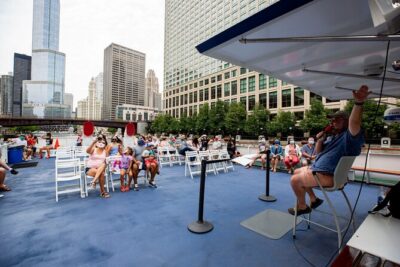


Chicago Architecture Center River Cruise aboard First Lady
Read our review →
Architecture River Cruise Skip-the-Ticket Line
Read our review →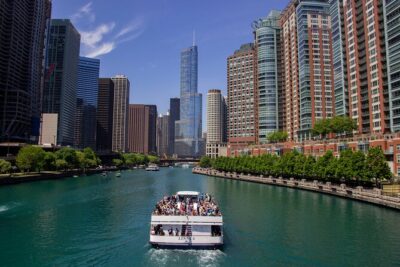
Chicago River 45-Minute Architecture Tour from Magnificent Mile
Read our review →

45-Minute Family-Friendly Architecture River Cruise
Read our review →Browse the lists this tour appears in